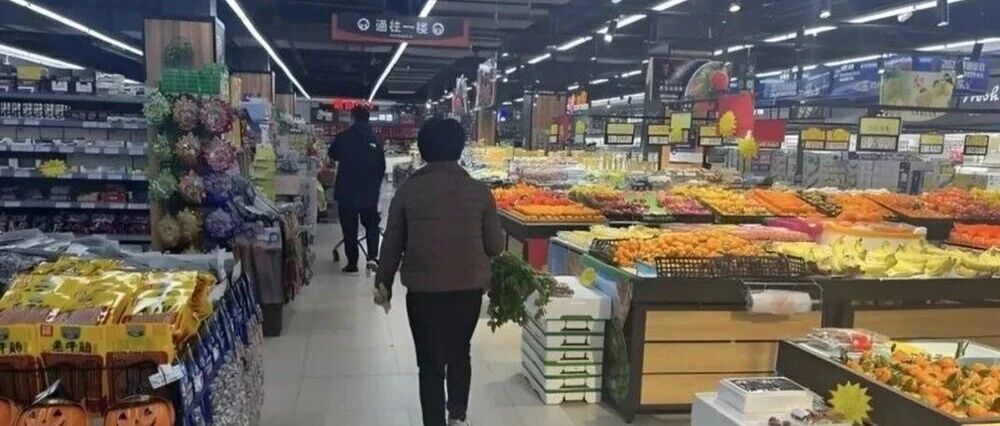
猪肉脯

Search documents
炒货为何定高价
Xin Lang Cai Jing· 2026-02-24 22:23
Core Insights - The high pricing of snack nuts is influenced by brands targeting the high-end market, product taste recognition, enhanced marketing efforts, and seasonal supply-demand changes [1][2] Group 1: Pricing Factors - Brands are focusing on high-end markets, emphasizing premium ingredients and upgraded processes, leading to higher costs [2] - Unique product flavors are gaining recognition among certain consumer groups, who are willing to pay for differentiated experiences [2] - Intensive marketing has increased brand awareness and recognition, allowing for higher pricing power [2] - Seasonal demand spikes during holidays contribute to increased sales of snack nuts [2] Group 2: Consumer Behavior - The influence of social media and peer effects drives consumers to purchase trending products, as seen in posts describing them as "the ceiling of New Year goods" [2] - Sales tactics such as "filling to round up" and "taste testing" can lead consumers to unintentionally increase their purchase amounts [2] - Consumers often lack a clear perception of the relationship between weight and price, leading to acceptance of bills that exceed their budget due to social pressures [2] Group 3: Market Outlook - The snack food industry in China is projected to reach a scale of 11,804 billion yuan by 2025, indicating significant market potential but increasing competition [3] - Brands should focus on technological upgrades and enhancing consumer experiences by developing healthy recipes and offering flexible packaging options [3] - Clear pricing and measurement labeling are essential to avoid misleading consumers and ensure that innovation serves health needs and convenience [3] - Long-term brand sustainability requires aligning prices with product value, avoiding blind pursuit of high-end labels, and optimizing supply chain management for cost efficiency [3]
金融点亮广货行天下新路径!岭南年货节背后的消费新逻辑
Nan Fang Du Shi Bao· 2026-02-11 12:57
Core Insights - The "Guangdong Goods Going Global" Spring Festival event aims to enhance consumer engagement and promote local products through a combination of media and financial services [1][2][4] Group 1: Event Overview - The event, held in Guangzhou, features traditional cultural performances and showcases local products from over 20 renowned brands, creating a festive atmosphere [1][3] - The event is designed to respond to national and provincial calls for stimulating consumption during the Spring Festival, utilizing a "government-platform-enterprise" model to promote local goods [2][4] Group 2: Media and Financial Collaboration - The collaboration between Southern Metropolis Daily and Guangzhou Bank exemplifies the integration of media credibility and financial expertise to enhance consumer experiences [2][5] - The event achieved over 540,000 online views through diverse media channels, extending the reach of the festival beyond physical attendance [3][4] Group 3: Consumer Engagement and Product Offerings - The event features a variety of traditional and modern products, including festive foods and health products, appealing to contemporary consumer preferences [6][7] - Local brands like Guangzhou Restaurant and Li Kou Fu showcased popular festive items, emphasizing quality and cultural significance [7][9] Group 4: Financial Services Integration - Guangzhou Bank introduced various consumer benefits and payment discounts during the event, aligning with national policies to boost consumption and support local economies [11][12] - The bank's new credit card integrates multiple service offerings, enhancing consumer access to cultural experiences and financial services [11][12] Group 5: Cultural Significance - The event serves as a platform for cultural exchange, blending traditional crafts with modern consumer trends, thereby attracting younger audiences [6][8] - Activities such as calligraphy and traditional sugar painting highlight the cultural heritage of Guangdong, fostering community engagement [8][10]
这届年轻人买年货也要松弛感拉满丨新春消费青观察
Sou Hu Cai Jing· 2026-02-11 10:53
Core Insights - The consumer behavior during the 2026 Spring Festival in Beijing has shifted from bulk purchasing to a more flexible, experiential, and self-indulgent shopping approach [1][2][3] Group 1: Changes in Consumer Behavior - Consumers are no longer stockpiling goods for the Spring Festival, opting instead for a shopping experience that emphasizes immediacy and personal enjoyment [2][3] - The demand for delivery services has surged, with some delivery points experiencing a business volume increase of 15% to 20% compared to regular days [3] - Instant retail has emerged as a new growth driver, with a 48% year-on-year increase in consumption for fresh produce and other goods on platforms like Dingdong Maicai [3][4] Group 2: Trends in Gift-Giving and Health Consciousness - The perception of the Spring Festival is evolving, with 74% of consumers viewing it as a time for mental and physical relaxation, and 76% prioritizing the recipient's preferences when giving gifts [5][6] - Health-conscious products are becoming increasingly popular, with over 58% of consumers considering health attributes when selecting gifts [6][8] - New trends in gift items include health-focused snacks and beverages, reflecting a growing awareness of health among younger consumers [6][8] Group 3: Emotional Value and Personalization - The younger generation is prioritizing products that fulfill emotional needs, with gaming consoles and related products becoming popular during the festival [10] - The rise in gold prices has made investment gold bars a sought-after item, indicating a blend of emotional value and rational investment during the Spring Festival [10] - The diversity in consumer preferences highlights a shift from collective rituals to individual expressions, driven by personal interests [11]


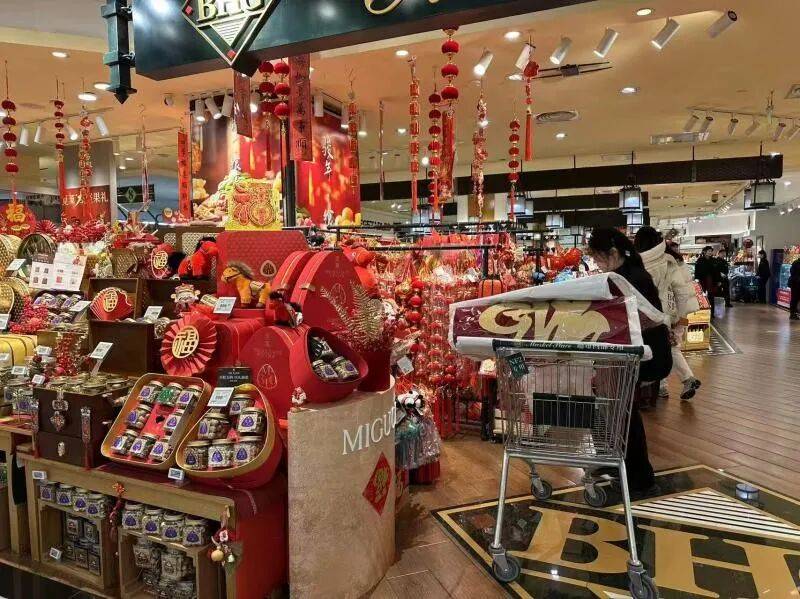
坚果200块一斤,你要拿多少年终奖才敢走进薛记炒货?
3 6 Ke· 2026-02-11 05:50
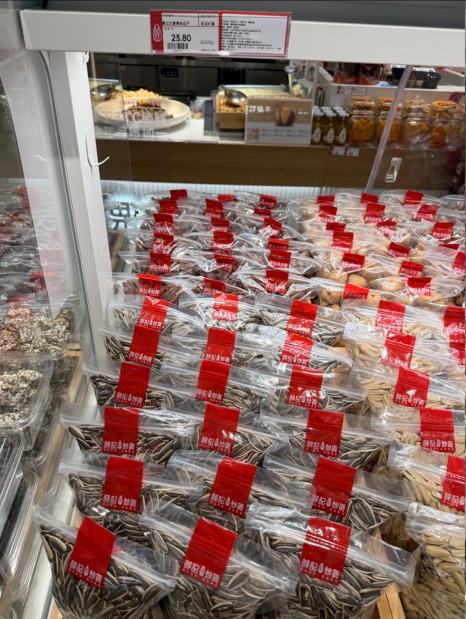
Core Viewpoint - The article discusses the rising popularity and high pricing of Xueji Snacks, a brand known for its premium nuts and snacks, drawing comparisons to other high-end brands and exploring consumer behavior and perceptions around its pricing strategy [2][4][12]. Group 1: Pricing and Consumer Behavior - Xueji Snacks has gained notoriety for its high prices, with products like sunflower seeds priced at 23.8 yuan per jin and cashews nearing 100 yuan per jin, yet it remains popular among consumers [4][12]. - Despite the high prices, consumers express a desire for the products, often feeling compelled to purchase after trying samples in-store, indicating a psychological tactic employed by the brand [6][8][12]. - The brand's strategy of allowing customers to sample products before purchase creates a dilemma for consumers, as they may feel pressured to buy after tasting [11][19]. Group 2: Brand Positioning and Market Strategy - Xueji Snacks positions itself as a high-end snack brand, with store designs reminiscent of jewelry shops, which contributes to its premium image [6][14]. - The brand's marketing emphasizes quality, sourcing ingredients from core production areas and utilizing advanced preservation techniques, justifying its higher price point [14][21]. - Xueji Snacks has expanded rapidly, with over 1,100 stores projected by the end of 2025, indicating a strong growth strategy despite potential market saturation [21][25]. Group 3: Consumer Expectations and Market Challenges - There is a growing divide in consumer expectations, with some seeking affordable options while others are willing to pay for premium quality, posing a challenge for Xueji Snacks to balance its high-end positioning with broader market appeal [23][25]. - The brand faces competition from other snack companies that offer more affordable alternatives, which may impact its long-term sustainability if it cannot justify its pricing to consumers [23][25]. - Feedback from consumers indicates a desire for transparency in pricing and product quality, suggesting that Xueji Snacks must adapt to maintain customer loyalty and avoid being perceived as overpriced [25].
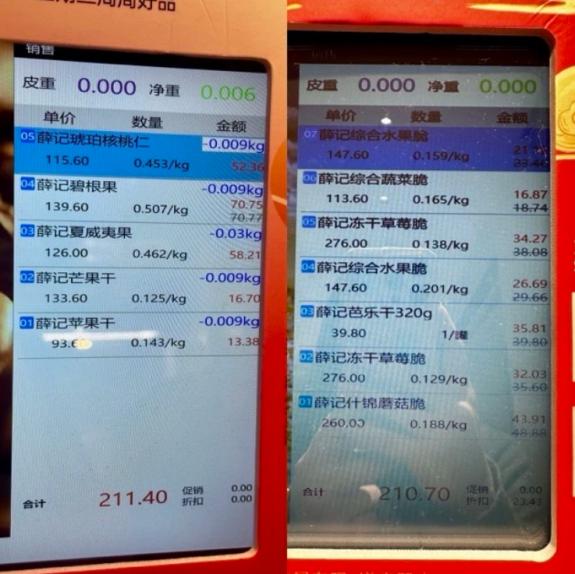
薛记炒货被戏称“薛记珠宝”,为啥年轻人还排队买?
Sou Hu Cai Jing· 2026-02-09 02:45
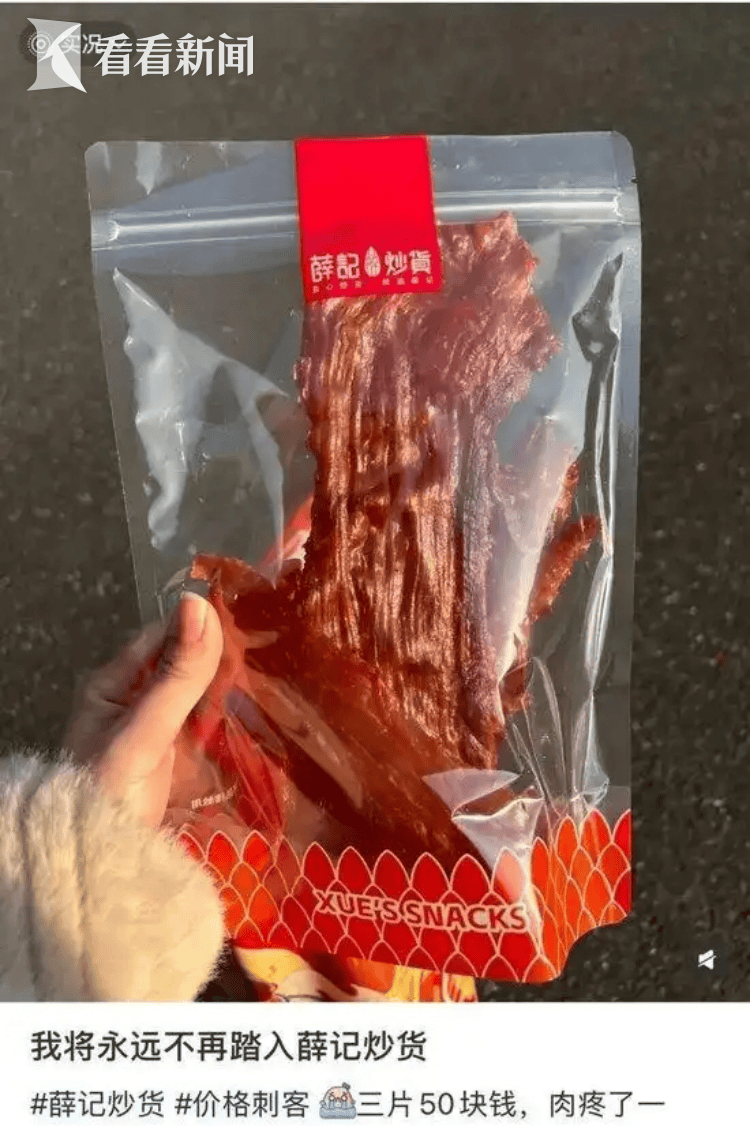
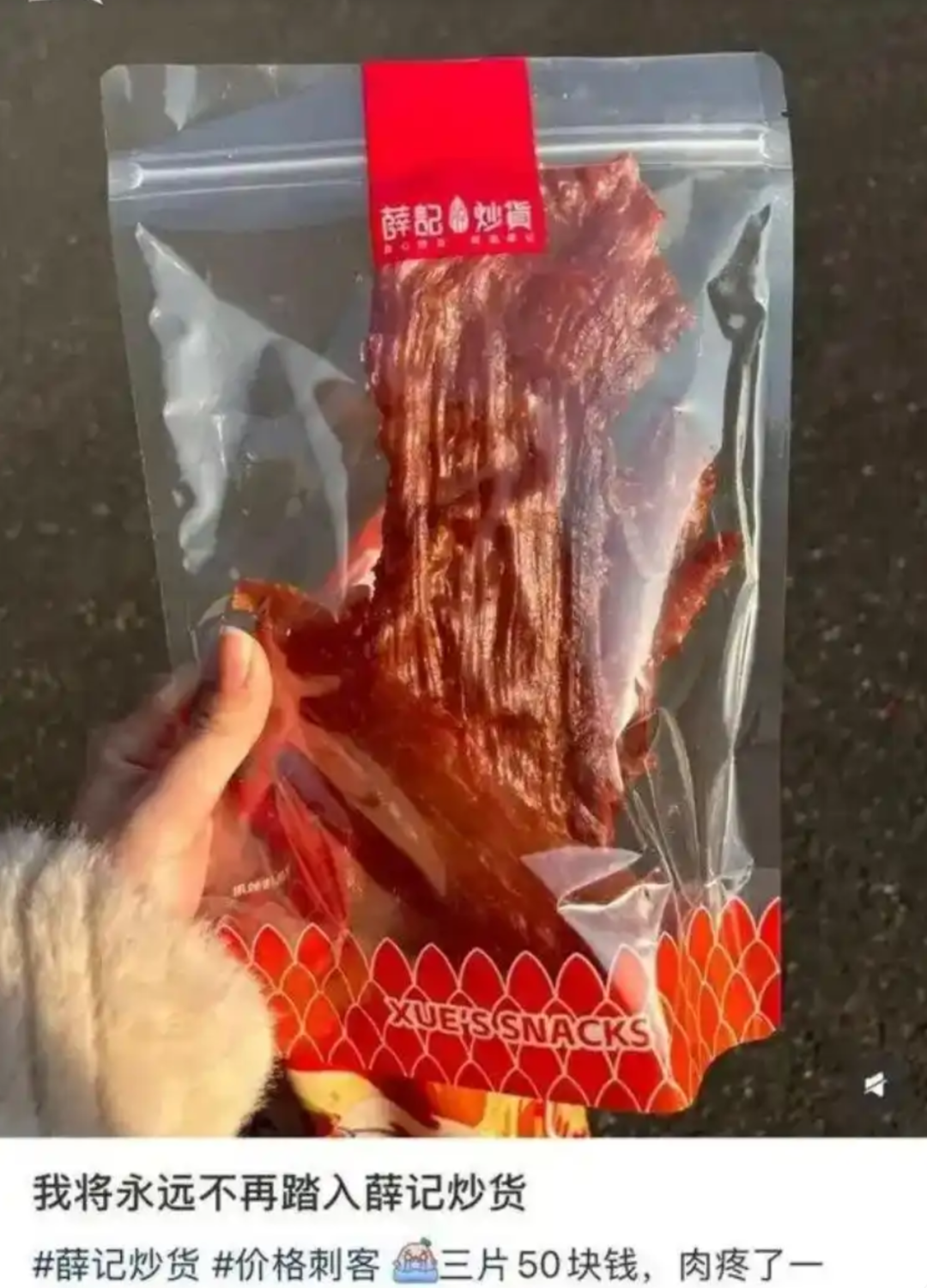
Core Viewpoint - The rising prices of high-end snack brands like "Xueji Fried Goods" have sparked discussions on social media, with consumers expressing shock at the costs, leading to comparisons with luxury goods and questioning the sustainability of such pricing strategies [1][3][4] Company Summary - "Xueji Fried Goods" has gained attention for its high prices, with products like pork jerky costing 50 yuan for three pieces and sunflower seeds priced at 23.8 yuan per jin, significantly higher than the average pork price of about 10 yuan per jin [1][3] - The brand emphasizes quality and cost, citing high rental costs in prime locations (50 to 80 yuan per square meter) and significant investments in store decoration and raw materials [3] - The company has adjusted its strategic positioning for 2024 to focus on "quality and cost-effectiveness," aiming to balance its high-end image with broader consumer acceptance [4] Industry Summary - The nut and snack market is becoming increasingly significant in the Chinese New Year gift market, with nuts accounting for 42.3% of the market share in 2024, indicating a growing consumer preference [3] - The overall market size for nuts and snacks in China has surpassed 300 billion yuan in 2024, with expectations for continued growth in the coming years [3] - There is a noticeable consumer divide, with some expressing dissatisfaction over prices while others are willing to pay for the experience and quality, reflecting a complex consumer mindset in the leisure consumption sector [4]
薛记珠宝VS琦王金铺 高端炒货成“轻奢”
Mei Ri Shang Bao· 2026-02-02 23:24
Core Insights - The high-end snack market, particularly for nuts, is experiencing significant price increases, leading to consumer backlash on social media [1][2] - The trend of premiumization in the nut snack sector is evident, with brands like Xueji and Qiwang positioning themselves as luxury products [2][3] Pricing and Consumer Sentiment - Consumers are expressing frustration over high prices, with products like Hawaiian nuts priced at 185 yuan and hand-peeled pine nuts at 218 yuan per 500 grams [2] - Comparatively, mainstream brands offer more affordable options, such as a box of cashews for 40.9 yuan, highlighting the price disparity [2] Brand Positioning and Costs - Xueji and Qiwang emphasize high-quality ingredients and artisanal production methods, which contribute to their higher pricing [3] - The brands invest heavily in packaging and marketing to position their products as premium, with significant costs associated with store rent and employee salaries [3] Market Expansion and Challenges - Despite expanding store counts, the pace of new openings for Xueji and Qiwang is slowing, indicating potential challenges in maintaining consumer interest [4] - The perception of freshness associated with "freshly roasted" products is being questioned, as only a limited range of items are actually prepared on-site [4] Consumer Trends and Market Growth - Nuts have become a staple in Chinese New Year celebrations, with nut gift boxes dominating the market, accounting for 42.3% of new year gift purchases [5] - The nut snack market in China is projected to grow from over 300 billion yuan in 2024 to 428.3 billion yuan by 2029, indicating a substantial market expansion [6]
从炒货摊到“珠宝店”,谁给瓜子镶了金边?
Xin Lang Cai Jing· 2026-02-01 08:00
Group 1 - The core issue highlighted is the high pricing of premium snacks, particularly at brands like Xueji, where products such as sunflower seeds and pine nuts are priced at 23.8 yuan per jin and 218 yuan per jin respectively, while pork averages around 10 yuan per jin [1][6] - Social media reactions indicate that consumers are frustrated with the pricing, with some referring to Xueji as a "jewelry store" and "the Hermes of snacks" due to its high prices [1][3] - The rise in prices is attributed to several factors, including consumption upgrades, increased costs from rent and decoration for high-end brands, and a surge in demand during the Spring Festival [7] Group 2 - The market for nuts and snacks in China is experiencing significant growth, with the market size surpassing 300 billion yuan in 2024 and projected to reach 428.3 billion yuan by 2029, indicating a market increment of over 100 billion yuan in five years [7] - Despite the growth, issues such as product homogenization and excessive brand premiums are becoming more pronounced, with many brands offering similar flavors and products [7] - Consumer complaints are rising regarding the value of snack gift boxes, with examples of misleading packaging where a significant portion of the weight is attributed to non-nut items, further aggravating perceptions of high prices [8]
1斤瓜子价格贵过猪肉 高端炒货价格猛涨至200元/斤
2 1 Shi Ji Jing Ji Bao Dao· 2026-02-01 00:01
Core Insights - The rising prices of high-end snacks, particularly nuts and seeds, have led to consumer outrage, with some products priced higher than pork, indicating a significant shift in consumer perception and market dynamics [1][2][7]. Pricing Trends - The price of raw sunflower seeds at Xueji Snack Shop is reported at 23.8 yuan per jin, while various nuts like pistachios and cashews approach 100 yuan per jin, with hand-shelled pine nuts reaching as high as 218 yuan per jin [1][3][10]. - The pricing of high-end nuts has led to social media comparisons, with Xueji Snack Shop being humorously referred to as a "jewelry store" or "the Hermes of snacks" due to its premium pricing [2][4]. Market Dynamics - The demand for nuts and dried fruits has surged, especially during the Chinese New Year, with nuts becoming a staple in festive gift boxes, accounting for 42.3% of new year gift purchases [17]. - The overall market for nut snacks in China surpassed 300 billion yuan in 2024 and is projected to grow to 428.3 billion yuan by 2029, indicating a substantial market expansion [18]. Consumer Behavior - Over 80% of consumers spend between 20 to 100 yuan monthly on nut snacks, with many purchasing them at least once a month, reflecting a shift in consumption patterns towards these products [17]. - The popularity of freshly made snacks, particularly among younger consumers, is attributed to their freshness and the social experience associated with purchasing them in upscale environments [19]. Industry Challenges - The snack industry faces challenges such as product homogenization and high brand premiums, leading to consumer complaints about the value and quality of snack gift boxes [19][20]. - Instances of misleading product representations, such as snack boxes containing a significant portion of non-nut items, have raised concerns about consumer rights and trust in the market [20].
1斤瓜子价格贵过猪肉,高端炒货价格猛涨至200元/斤
21世纪经济报道· 2026-01-31 13:51
Core Viewpoint - The article highlights the rising prices of high-end snacks, particularly nuts and seeds, which have become more expensive than traditional food items like pork, reflecting a significant shift in consumer behavior and market dynamics [1][3][4]. Group 1: Price Trends and Consumer Perception - The price of basic roasted seeds like sunflower seeds has reached 23.8 yuan per jin, while high-end nuts such as pistachios and cashews are nearing 100 yuan per jin, with some products like hand-shelled pine nuts priced at 218 yuan per jin [1][3][10]. - Consumers are increasingly perceiving these snacks as luxury items, with social media users humorously referring to high-end snack stores as "jewelry stores" and "the Hermes of snacks" [4][12]. - The demand for high-priced snacks has surged, especially with the upcoming Spring Festival, leading to a notable increase in sales and consumer interest [13][15]. Group 2: Market Dynamics and Consumer Behavior - The snack market is experiencing a consumption upgrade, with high-end brands entering shopping malls, which increases costs related to rent and decoration that are passed on to consumers [13]. - The market for nuts and dried fruits is expanding, with data indicating that Chinese consumers consume 8 million tons of nuts annually, accounting for 15% of the world's nut production [16]. - According to a report, nuts are the top choice for consumers purchasing Spring Festival gift boxes, making up 42.3% of the market share, significantly outpacing traditional options like candies and pastries [17]. Group 3: Industry Growth and Brand Landscape - The snack industry is projected to grow significantly, with the market size for nuts and snacks expected to exceed 300 billion yuan in 2024 and reach 428.3 billion yuan by 2029, indicating a substantial market increase over five years [17]. - Major companies in the sector, such as Qiaqia Food, Ganyuan Food, and Three Squirrels, reported combined revenues exceeding 13.7 billion yuan in the first three quarters of 2025 [19]. - The market is characterized by two main types of brands: pre-packaged snack brands and freshly made snack brands, with the latter gaining popularity among younger consumers due to freshness and social attributes [19]. Group 4: Challenges and Consumer Complaints - Despite the booming market, issues such as product homogenization and high brand premiums are becoming more pronounced, leading to consumer complaints about the value and quality of snack gift boxes [20]. - Instances of misleading product representations, such as snack boxes containing a significant portion of non-nut items, have raised concerns about consumer rights and fair trading practices [20].
县城零售,冰火两重天
虎嗅APP· 2025-11-23 10:01
Core Viewpoint - The retail landscape in county-level cities is experiencing a stark contrast, with discount stores thriving while traditional supermarkets and convenience stores struggle to survive [2][11][30]. Group 1: Retail Performance Disparity - In a county commercial street, a well-established cooked food store is thriving, selling around 500 kg of cold dishes daily, while nearby stores face poor sales [3][6][8]. - Discount stores are attracting significant customer traffic, with one store reporting daily sales of 5,000 yuan in its first month and reaching over 10,000 yuan during peak periods [15][17]. - Traditional supermarkets are witnessing a drastic decline in sales, with one store's weekend sales dropping from 7,000-8,000 yuan to 3,000-4,000 yuan, reflecting a nearly 50% decrease in revenue over two years [19][21]. Group 2: Consumer Behavior Changes - Consumers in county areas are increasingly price-sensitive, with 71% prioritizing cost-effectiveness in their shopping decisions, significantly higher than the 58% in first- and second-tier cities [17][30]. - The shift towards online shopping is notable, with the proportion of online purchases in county areas rising from 32% in 2019 to 58% in 2024 [32]. Group 3: Industry Trends and Challenges - The number of discount stores is rapidly increasing, with a projected growth of 67% in 2024, particularly in county markets where over 55% of new stores are located [17][30]. - Convenience stores are facing high closure rates, with an 18% closure rate in county areas, compared to 12% in first- and second-tier cities [24]. - The restaurant industry is also struggling, with a closure rate of 16% in county markets, indicating a challenging environment for many dining establishments [28]. Group 4: Structural Changes in Retail - The retail industry is shifting from a "big and comprehensive" model to a "small and specialized" approach, with businesses focusing on niche markets to enhance competitiveness [34][36]. - Rising operational costs, particularly in rent and labor, are reshaping the industry landscape, making it difficult for traditional supermarkets to maintain profitability [36][37]. - Capital investment is increasingly favoring growth-oriented sectors like discount stores and specialty shops, leaving traditional retail formats with limited funding opportunities [37][38].