
大豆种植与出口

Search documents
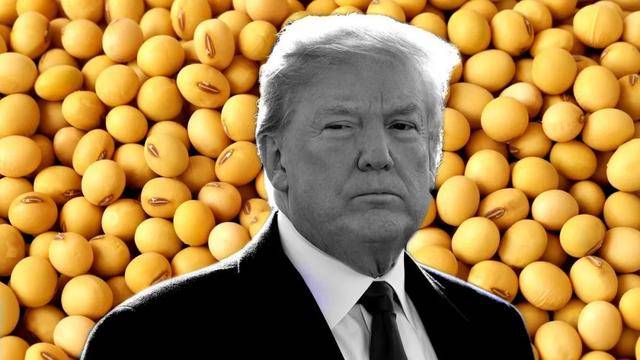
特朗普剩下3年多的任期,中方已备好一份大礼,美财长揭晓了答案
Sou Hu Cai Jing· 2025-12-01 06:10
Core Viewpoint - The recent agreement between China and the U.S. regarding soybean purchases signifies a shift in U.S. policy, moving from a confrontational stance to one of cooperation in the agricultural sector, with China committing to buy up to 87.5 million tons of U.S. soybeans over the next three and a half years [1][9]. Group 1: Agreement Details - China will purchase up to 87.5 million tons of U.S. soybeans over the next three and a half years, marking a significant commitment [1]. - The agreement comes after a period of strained relations, where U.S. soybean exports to China were severely disrupted due to trade tensions [7]. - The U.S. Department of Agriculture estimates that U.S. soybean exports in 2024 will be around 50 million tons, with less than 40% going to China, making this agreement a substantial boost for U.S. agricultural exports [9]. Group 2: Political Context - Trump's visit to China is seen as an attempt to secure political support from agricultural states ahead of upcoming elections, reflecting his shifting stance on agricultural issues [3][5]. - The agreement is perceived as a strategic move by China to diversify its agricultural supply sources while maintaining leverage in negotiations with the U.S. [9][14]. - The cautious approach from China indicates that cooperation is contingent upon genuine U.S. commitment, rather than mere political posturing [5][11]. Group 3: Strategic Implications - The soybean agreement serves as a litmus test for future U.S.-China relations, with the potential for deeper cooperation depending on U.S. actions in other contentious areas such as technology and military issues [11][16]. - China's willingness to engage in this agreement reflects its broader strategy to manage risks in global agricultural supply chains, emphasizing the importance of diversified sourcing [9][14]. - The agreement is not just a commercial transaction but also a diplomatic signal, highlighting the need for mutual respect and cooperation between the two nations [14][16].


美大豆协会CEO坦言,希望中国需要大豆时,第一个电话能打给美国
Sou Hu Cai Jing· 2025-11-14 14:11
Core Viewpoint - The U.S. soybean industry is facing significant challenges in regaining its market share in China, as recent trade tensions have led to a substantial decline in soybean exports to China, with U.S. farmers expressing concerns about their market security and the need for a stable political environment to restore trust [1][3][19]. Group 1: Current Market Situation - In 2025, U.S. soybean exports to China dropped to 200 million bushels in the first eight months, a decrease of 80% compared to nearly 1 billion bushels in the same period of 2024 [3]. - The U.S. Department of Agriculture reported that as of September, there were 316 million bushels of soybeans in U.S. storage, indicating a surplus that many farmers are struggling to sell [3]. - Brazil has significantly increased its soybean exports to China, reaching over 100 million tons in 2025, marking a historical high, while Argentina is also making efforts to capture the market by eliminating export tariffs [8][10]. Group 2: U.S. Soybean Farmers' Perspectives - U.S. farmers are aware that they are not irreplaceable in the market, as China can easily shift its orders to Brazil, Argentina, or even Russia if U.S.-China relations deteriorate [6]. - Farmers like Darin Johnson from Minnesota highlight the logistical challenges of soybean production, emphasizing that even if China were to place orders now, they would not be able to fulfill them in time for the current harvest [5]. - The recent participation of the U.S. Soybean Export Council in the China International Import Expo indicates a proactive approach to re-establishing trade relations, with efforts to secure contracts and partnerships [11]. Group 3: Political and Strategic Considerations - The fluctuating nature of U.S.-China trade relations has made agricultural products, particularly soybeans, vulnerable to political changes, leading to a lack of trust from Chinese buyers [15][19]. - U.S. soybean industry leaders express anxiety about the sustainability of recent agreements, recognizing that long-term market access depends on stable political policies and reliable trade practices [15][20]. - The sentiment among U.S. soybean exporters is that regaining priority in China's market is not solely about pricing or production levels, but rather about establishing a trustworthy and consistent partnership [19][20].

美国大豆出口协会CEO:希望当中国需要大豆时,第一个电话能打给美国
第一财经· 2025-11-12 09:57
Core Viewpoint - The article discusses the importance of U.S.-China agricultural cooperation, particularly in soybean trade, highlighting the challenges faced by U.S. farmers due to tariffs and market dynamics [2][5][6]. Group 1: U.S.-China Agricultural Cooperation - The U.S. Soybean Export Council CEO emphasizes the natural synergy between the U.S. and China in agricultural trade, particularly in soybeans, due to China's large market and rapid development [2][5]. - Historical cooperation in agriculture between the U.S. and China dates back 43 years, with ongoing projects aimed at enhancing agricultural modernization and technology transfer [5][6]. - The establishment of the U.S.-China Soybean Product Application Value Chain Innovation Center in Zhengzhou is seen as a platform for deepening cooperation [5]. Group 2: Trade Dynamics and Economic Impact - In 2024, soybean exports from the U.S. are projected to reach $24.58 billion, accounting for 14% of total agricultural exports, with China purchasing over $12.64 billion worth of soybeans [5]. - The U.S. soybean market has faced significant challenges, with a 58% drop in imports from the U.S. to China in the first half of 2025 compared to the previous year [5]. - The U.S. agricultural sector is experiencing increased bankruptcy rates, with a 57% rise in farm bankruptcies in the first half of the year, attributed to the impacts of tariff policies [5][6]. Group 3: Market Challenges and Future Outlook - U.S. farmers are facing rising production costs, with soybean planting costs increasing nearly 50% since 2019, and current selling prices leading to significant losses [10]. - The article notes that U.S. farmers are concerned about climate change, which is affecting crop yields and weather patterns, further complicating their situation [10]. - The future market share of U.S. soybeans in China is expected to stabilize between 30% to 40%, down from over 50% during peak periods, indicating a cautious outlook for recovery [10][11].

美国大豆出口协会CEO:希望当中国需要大豆时,第一个电话能打给美国
Di Yi Cai Jing· 2025-11-12 09:20
Core Viewpoint - The U.S. soybean industry is facing significant challenges due to tariffs and trade tensions with China, leading to a decline in exports and financial strain on farmers [1][4][6]. Group 1: U.S.-China Soybean Trade Dynamics - U.S. soybean exports are crucial, with a projected value of $24.58 billion in 2024, accounting for 14% of total agricultural exports [3]. - China is expected to purchase $12.64 billion worth of soybeans in 2024, representing over half of U.S. soybean exports [3][4]. - The U.S. soybean industry has a long history of cooperation with China, dating back 43 years, emphasizing the importance of maintaining strong ties [1][3]. Group 2: Impact of Tariffs and Market Conditions - The introduction of tariffs has led to a 58% decrease in U.S. soybean imports by China in the first half of 2025, with imports dropping to 12 million tons [4]. - The number of U.S. farm bankruptcies increased by 57% in the first half of the year, attributed to the adverse effects of the tariff policies [4]. - U.S. farmers are currently facing a significant inventory surplus, with some holding stocks for up to two years due to low prices [5][6]. Group 3: Future Outlook and Challenges - The cost of soybean production has risen nearly 50% since 2019, with fertilizer prices increasing by 120% and fuel costs by approximately 80% [7]. - Farmers are currently losing $3 for every bushel of soybeans sold, leading to potential losses of tens of thousands of dollars for those farming around 80 hectares [8]. - The future market share of U.S. soybeans in China is expected to stabilize between 30% and 40%, down from previous highs of over 50% [8].

求中国也没用,眼看丢掉数十亿美元大单,特朗普追悔莫及
Sou Hu Cai Jing· 2025-08-18 10:22
Group 1 - The core issue is that the U.S. soybean industry is facing significant losses as China shifts its purchases to Brazil, resulting in billions of dollars in missed orders for American farmers [3][5][11] - In September and October, China purchased 8 million tons and 4 million tons of soybeans from South America, respectively, compared to 7 million tons from the U.S. during the same period last year [3] - The price of soybeans at the Chicago futures exchange has dropped to a five-year low, reflecting the dire situation for U.S. farmers [3] Group 2 - President Trump has called for China to quadruple its soybean orders to reduce the trade deficit, but analysts believe this is unrealistic given the 23% tariffs on U.S. soybeans [5][7] - The Chinese government has indicated that the resolution of trade issues requires the U.S. to reconsider its tariff policies, emphasizing that there are no winners in a trade war [7][9] - The U.S. soybean export association reports that many farmers are struggling due to inventory buildup and are urging the government to negotiate a new agreement with China [11] Group 3 - China's diversification strategy has led to a decrease in the share of U.S. soybeans in its imports, with a 5.7% reduction and an increase in Brazilian soybeans by 6.7% [9] - The ongoing trade tensions have created chaos in the U.S. soybean industry, with political decisions overshadowing the livelihoods of farmers [11] - As the midterm elections approach, the impact of these trade policies on votes in agricultural states remains a concern for the Trump administration [11]
美国大豆出口协会承认市场份额被南美反超|链博会
Zhong Guo Jing Ying Bao· 2025-07-18 15:58
Core Insights - The market share of South American soybeans has surpassed that of the United States in China, which is now the world's largest soybean importer, processor, and consumer [1][3] - The U.S. Soybean Export Council has been actively involved in technology transfer and market development in China since 1982, focusing on enhancing the efficiency of soybean utilization in livestock and aquaculture [1][2] - The U.S. soybean industry emphasizes sustainable development, with approximately 75% of soybean farms in the U.S. having biodiversity protection areas and adhering to the Sustainable Soy Assurance Protocol (SSAP) [2][3] Industry Developments - The third China International Supply Chain Promotion Expo highlighted advancements in manufacturing, showcasing over 110 renowned companies and their latest achievements in high-tech industries [3] - The expo emphasized the importance of green development and international cooperation in green manufacturing, encouraging industry leaders to build green factories and enhance green supply chains [3] U.S. Soybean Industry Strategy - The U.S. soybean industry has a long history of strategic foresight, with initiatives dating back to the establishment of the U.S. Soybean Export Council in 1920 and the launch of international promotion in 1956 [2] - The industry has introduced advanced global technologies into China's livestock and feed processing sectors, fostering local innovation and contributing to domestic soybean research and industry upgrades [2]