
天然气发电设施

Search documents
海外政策周聚焦:特殊时期的访美,日本在中东问题上的困局
Western Securities· 2026-03-28 15:06
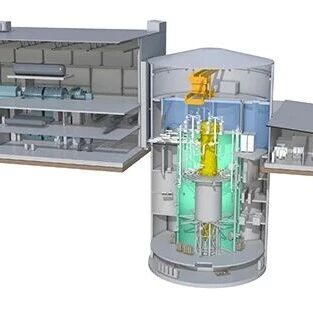
Investment and Economic Relations - Japanese Prime Minister Fumio Kishida's visit to the U.S. from March 18 to 22 resulted in the announcement of a second batch of investment projects totaling $73 billion, representing 20% of the $550 billion investment framework[1] - Japan's total investment in the U.S. has reached $109 billion, focusing on energy, electricity, and mineral projects, aligning with former President Trump's support for traditional energy[1] - Key projects include the construction of small modular reactors by GE and Hitachi in Tennessee and Alabama, and natural gas power facilities in Texas and Pennsylvania[1] Trade Relations and Economic Dependencies - Japan is progressing rapidly in trade agreements with the U.S., with American exports to Japan accounting for 18% of Japan's total exports in 2025, heavily reliant on automotive and semiconductor industries[2] - Japan's economic interests are intertwined with U.S. security alliances, making it difficult for Japan to adopt a confrontational stance against the U.S. in trade matters[2] Geopolitical Risks and Market Implications - Japan's energy security is precarious, with over 94% of its oil imports coming from the Middle East, leading to a complicated diplomatic relationship with Iran[3] - Optimistic scenarios suggest that if the Strait of Hormuz reopens, Japanese stocks could rise, particularly in the automotive and export manufacturing sectors, with potential yen appreciation[3] - Conversely, if Middle Eastern tensions persist, Japan could face heightened inflation risks, a widening trade deficit, and significant yen depreciation, leading to a bearish outlook for the stock market[3] Risk Factors - The report highlights the potential for geopolitical risks to exceed expectations, which could further complicate Japan's economic landscape[4]
中金 • 全球研究 | 日本对美投资第二弹与日美稀土合作
中金点睛· 2026-03-22 23:35
Core Viewpoint - Japan announced the second phase of its investment in the U.S., totaling approximately $73 billion, which includes funding for small modular reactors and two natural gas power projects, as part of a broader $550 billion investment framework [1][3]. Investment Details - The second phase includes three main projects: small modular reactors (SMR) with a maximum investment of $40 billion and two natural gas power projects with a combined maximum investment of $33 billion [3][4]. - The first phase of investment was $36 billion, making the total investment from both phases $109 billion [3]. Project Breakdown - **Small Modular Reactors**: GE Vernova and Hitachi will construct SMRs in Tennessee and Alabama, which are expected to provide stable power supply for AI data centers and enhance Japan's energy security [4]. - **Natural Gas Power Projects**: Investments of up to $17 billion in Pennsylvania and $16 billion in Texas will support the construction of natural gas facilities to meet the growing electricity demand from AI data centers [4]. Future Potential Projects - Future projects under consideration include infrastructure to increase U.S. crude oil production, large nuclear power plants, advanced display panel factories, copper smelting facilities, and large-scale energy storage projects [5]. Rare Earth Cooperation - Japan and the U.S. are collaborating on rare earth projects, with Mitsubishi Materials exploring investments in U.S. rare earth projects and enhancing recycling and refining capabilities [6]. - The cooperation includes four projects aimed at strengthening the critical mineral supply chain, with a focus on rare earths and copper mining [6]. Broader Strategic Context - The investment initiatives are part of a broader strategy to enhance energy security and economic competitiveness between Japan and the U.S., with ongoing discussions about energy supply stability and procurement diversification [7]. - The projects are expected to have limited short-term impacts on Japanese and U.S. stock markets, but may exert some downward pressure on the yen due to the scale of investments [7][8].

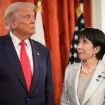
为求关税减免,高市早苗送给美国730亿美元投资“大礼”
中国能源报· 2026-03-20 11:53
Group 1 - The core viewpoint of the article highlights the agreement between Japan and the U.S. during Prime Minister Suga's visit, which includes a $73 billion investment project aimed at easing tariff issues [1][2] - A significant part of the investment includes a $40 billion nuclear reactor project to be constructed in Tennessee and Alabama, along with a $33 billion investment in natural gas power facilities in Pennsylvania and Texas [1] - This investment is part of Japan's commitment to a larger $550 billion investment plan to gain tariff reductions from the U.S., which includes opening markets for various products [1] Group 2 - Following the U.S. Supreme Court ruling that invalidated the "reciprocal tariffs" policy of the Trump administration, Japan remains committed to fulfilling the $550 billion investment agreement to avoid escalating tensions with the U.S. [2]
日本730亿美元押注美国能源项目
第一财经· 2026-03-20 08:22
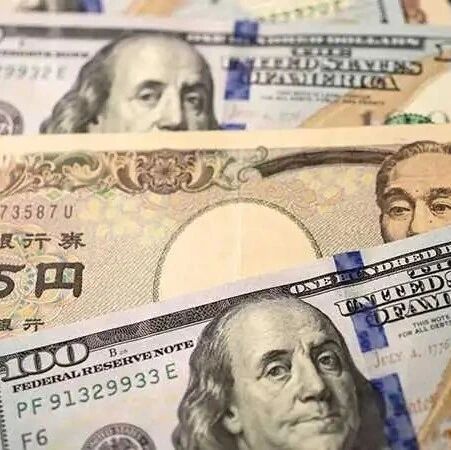
Core Viewpoint - The article discusses Japan's urgent need to diversify its oil supply sources due to rising gasoline prices and economic challenges stemming from its reliance on Middle Eastern oil, with a focus on strengthening energy cooperation with the United States [3][4]. Group 1: Japan's Energy Strategy - Japan is seeking to reduce its dependence on Middle Eastern oil by increasing investments in the U.S. energy sector, particularly in oil and gas [3][5]. - The recent meeting between Japanese Prime Minister Fumio Kishida and U.S. President Donald Trump emphasized economic security cooperation in energy and rare earths [3][5]. - Japan has committed to investing $55 billion in the U.S. as part of a trade agreement, with specific projects already outlined [5][6]. Group 2: Investment Projects - The second batch of investment projects includes a $40 billion investment by GE Vernova and Hitachi for small modular reactor power plants, and a $33 billion investment in natural gas power facilities in Pennsylvania and Texas [5][6]. - The largest project involves a $33 billion natural gas power facility in Ohio, which will have a capacity of 9.2 GW, making it the largest in the U.S. [6]. - Japan plans to invest $2.1 billion in a deep-water crude oil export facility in Texas, expected to generate $20 billion to $30 billion in annual export revenue for the U.S. [6]. Group 3: Challenges and Risks - Japan faces logistical challenges in transitioning to U.S. oil, as transportation costs and time are significantly higher compared to Middle Eastern oil [8]. - The existing infrastructure in Japan is primarily designed for heavy crude oil from the Middle East, necessitating costly modifications to handle U.S. light shale oil [8]. - Increased investment in U.S. energy means Japanese companies will incur substantial capital expenditures, which could exacerbate trade deficits and impact the Japanese economy negatively if oil prices remain high [9].
日本第二轮对美投资3项目达成协议,金额超730亿美元
日经中文网· 2026-03-20 08:01
Core Viewpoint - The US and Japan have reached an agreement to advance three energy-related projects, including next-generation small modular reactors (SMRs), with a total investment of up to $73 billion (over 11 trillion yen) [2][4]. Group 1: Investment Projects - The agreement includes a maximum investment of $40 billion for the construction of small modular reactors by GE Vernova and Hitachi in Tennessee and Alabama [4]. - An additional investment of up to $17 billion will be made in Pennsylvania for natural gas power facilities to meet the rising electricity demand from AI data centers, and up to $16 billion in Texas for similar facilities [4]. - The natural gas power facilities will be constructed in conjunction with AI data centers, with contracts for power procurement from data center operators [4]. Group 2: Future Projects and Discussions - The three projects are currently in the pre-decision stage, with ongoing discussions between the US and Japan to push for final decisions [5]. - Future candidate projects include infrastructure development aimed at increasing oil production in Alaska and the construction of large nuclear reactors [5]. - Other potential projects under discussion involve advanced display factories operated by Japan Display (JDI), copper smelting facilities by Falcon Copper, and large battery projects for data centers, although these are not included in the current plan due to supply chain and profitability considerations [5]. Group 3: Previous Investment Round - In February, the US and Japan announced a first-round investment plan totaling $36 billion, which includes natural gas power generation, the construction of oil shipping ports, and projects related to synthetic diamonds [5].
美国数据中心规划总量已达245GW!“缺电”转向“发电”,扎堆德州争夺天然气
Hua Er Jie Jian Wen· 2025-11-22 03:57
Group 1 - The core viewpoint of the articles highlights the unprecedented expansion of data centers in the U.S. driven by the AI boom, leading to a significant shift in energy strategies from "grid access" to "self-built energy" [1] - As of mid-October, the total planned capacity of U.S. data centers has surged to 245 GW, with an increase of 45 GW in just the third quarter [1] - Texas has emerged as the focal point of this investment trend, accounting for over a quarter of the national planned capacity, with 67 GW planned, primarily leveraging natural gas resources from the Permian Basin [1] Group 2 - Developers are now prioritizing power supply over traditional factors like proximity to fiber networks and end-users, leading to the planning of gigawatt-scale data center parks in regions like West Texas, Pennsylvania, and Wyoming [2] - Companies such as Pacifico Energy, Poolside, and FO Permian are planning large-scale projects in Texas, aiming to bypass overloaded natural gas pipelines and the high costs and lengthy timelines associated with new pipeline construction [2] - Although only 10% of projects include on-site power generation, they account for 34% of the total planned capacity, with most located in Texas [2] Group 3 - The new development strategies are distorting capital markets, with mega-projects costing over $17 billion attracting 42% of capital deployment, despite representing only 2% of the total number of projects [3] - Notable projects like Project Jupiter in New Mexico ($160 billion) and Project Kestrel in Missouri ($100 billion) are utilizing innovative financial instruments such as Industrial Revenue Bonds (IRBs) to secure tax incentives, significantly exceeding traditional tech giants' investment levels [3]