智能家居家电

Search documents
是“神器”还是“摆设”?智能家居“伪智能”现象调查
Yang Guang Wang· 2026-01-21 02:38
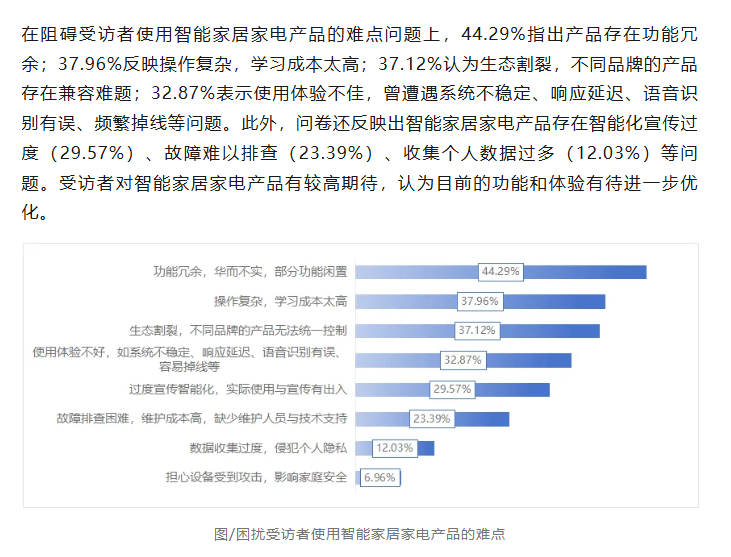
Core Insights - The rapid development of technology has led to increased consumer interest in smart home appliances, with sales data reaching new highs, but there are significant discrepancies between consumer experiences and marketing claims [1][5] - A recent consumer survey by the Jiangsu Consumer Protection Committee highlighted issues with "pseudo-intelligence" in smart home products, indicating a need for improved functionality and user experience [5][12] Consumer Feedback - Many consumers report that smart appliances, such as robotic vacuum cleaners, do not perform as advertised, with issues like poor obstacle avoidance and inability to return to charging stations [2][7] - Complaints about smart appliances often focus on exaggerated claims of intelligence and functionality, leading to dissatisfaction among users [2][5] Industry Challenges - The survey identified that 47.76% of complaints were related to robotic vacuum cleaners and washing machines, with 34.60% concerning smart washing machines and 28.12% regarding smart locks, indicating a significant prevalence of issues in these categories [7] - Compatibility issues among different brands' products require users to manage multiple apps, contradicting the convenience that smart home technology aims to provide [7][12] Regulatory Developments - The National Market Supervision Administration has approved new national standards for smart appliances, set to take effect in May 2026, which will define "smart capabilities" and establish a framework for product development and consumer understanding [11][12] - The new standards will categorize smart appliances into five levels of intelligence, providing clarity for consumers and setting benchmarks for manufacturers [11][12] Future Outlook - Experts believe that the smart home appliance industry is still in the functional development stage and has the potential for significant growth as technology evolves [8][12] - There is a call for the industry to focus on genuine user needs, improve core algorithms, and enhance service quality to transition from "pseudo-intelligence" to true smart technology [12]

功能夸大、操作复杂……这些“伪智能”家居需严监管
Xin Lang Cai Jing· 2026-01-21 01:01
Core Insights - The rapid development of technology has led to increased consumer interest in smart home appliances, but there are concerns regarding the actual performance versus advertised capabilities [1][2] - A significant portion of smart home products are identified as "pseudo-smart," with issues such as exaggerated functionalities and compatibility problems [2][3] Group 1: Consumer Feedback - A consumer in Shanghai reported that a robot vacuum purchased for over 4000 yuan did not meet the advertised smart capabilities, failing to return to its base and accurately identify areas [1] - Complaints about smart appliances, particularly robot vacuums and washing machines, are prevalent, with 47.76% of complaints related to these products [2] Group 2: Industry Standards and Regulations - The market regulatory authority has approved two national standards for smart appliances, set to be implemented on May 1, 2026, focusing on "smart capabilities" and "scenario effects" [3] - The establishment of a smart appliance certification system is essential for promoting industry health and addressing the "pseudo-smart" phenomenon [3] Group 3: Technical Challenges - Many smart home products are still in the "function" development stage and have not yet transitioned into a new AI ecosystem, leading to a reliance on marketing rather than actual technological advancement [3] - Compatibility issues among different brands require users to manage multiple apps, contradicting the convenience that smart home technology aims to provide [2][3]
“伪智能”需要真监管(纵横)
Ren Min Ri Bao· 2026-01-14 23:04
Group 1 - The core issue highlighted is the prevalence of "pseudo-intelligent" home appliances that fail to meet consumer expectations, often requiring frequent manual intervention and not delivering on their promised convenience [1][2] - The rapid development of artificial intelligence has led some manufacturers to exaggerate the capabilities of their products, misleading consumers and ignoring real user pain points [1] - The long-term viability of these "pseudo-intelligent" products is questioned, as they lack genuine technological innovation and may harm consumer trust while stifling market space for innovative companies [1] Group 2 - Strengthening regulatory measures is essential to combat the "pseudo-intelligent" phenomenon, with calls for improved laws and standards in the smart home appliance sector to ensure effective enforcement [1][2] - Companies are urged to adhere to ethical business practices, focusing on genuine product development and user needs rather than resorting to deceptive marketing tactics [1] - Consumers are encouraged to make informed purchasing decisions through legitimate channels and to support high-quality products rather than being swayed by the allure of "black technology" concepts [1][2]
部分智能家居家电产品存在“伪智能”现象
Xin Lang Cai Jing· 2026-01-07 19:17
Core Insights - The article highlights the prevalence of "pseudo-intelligence" in smart home appliances, where the actual functionality does not meet consumer expectations, leading to dissatisfaction [1][2] Group 1: Issues with Smart Appliances - A significant portion of consumers reported that smart washing machines failed to automatically adjust washing parameters based on fabric type and weight, with 44.8% of respondents indicating issues with inaccurate detergent dispensing [2] - In the case of smart cooking machines, 60.49% of users experienced frequent manual intervention during cooking, contradicting the expectation of hands-free operation, which diminishes the product's practical value [2] - The smart watch marketed for real-time blood oxygen monitoring did not fulfill its promise, as it failed to send data instantly to parents, highlighting a disconnect between marketing claims and actual product capabilities [1] Group 2: Recommendations for Improvement - Experts suggest that companies should focus on enhancing consumer experience by prioritizing product quality, intelligence level, and practical value through technological innovation and ecosystem integration [2] - It is recommended that businesses provide accurate representations of their products' smart features to avoid exaggerated claims, thereby fostering better integration of artificial intelligence in consumer products [2]
近六成受访者用智能家居家电曾遇麻烦,比例最高的是扫地机器人
Yang Zi Wan Bao Wang· 2025-12-25 10:48
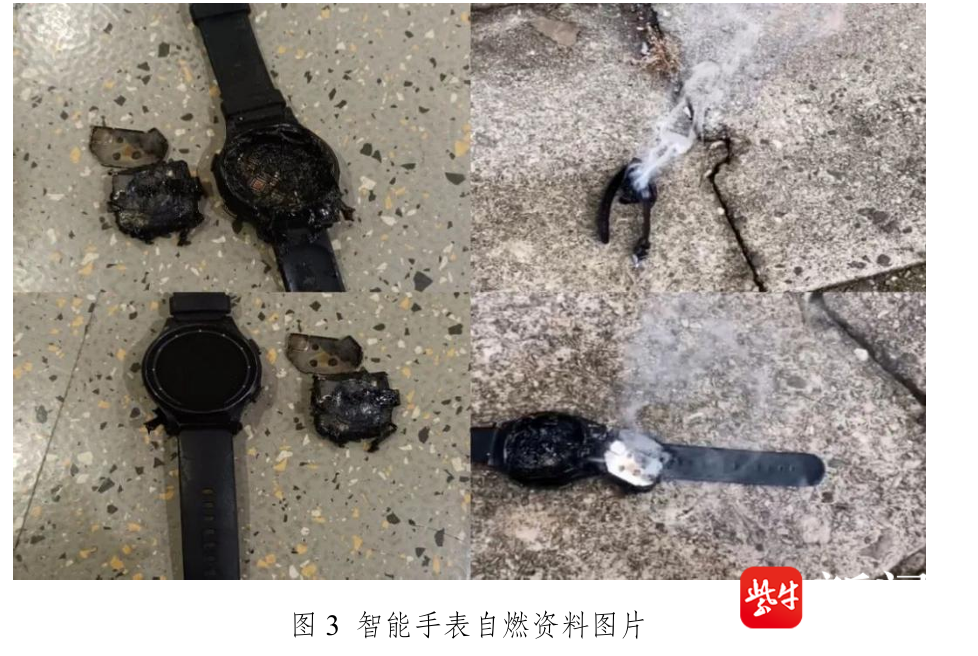
Core Insights - The report by Jiangsu Consumer Protection Committee highlights significant consumer concerns regarding smart home appliances, particularly issues related to product quality and data privacy risks [1][3][11] Group 1: Consumer Satisfaction and Issues - Over 80% of respondents expressed satisfaction with smart home appliances, with 34.96% very satisfied and 46.88% somewhat satisfied [2] - Among the 10 popular smart home products surveyed, the highest issue rate was reported for robotic vacuum cleaners and floor washers at 47.76%, followed by smart washing machines at 34.60% and smart locks at 28.12% [9][10] - A total of 59837 consumer protection complaints related to smart home appliances were recorded in Jiangsu from January 1 to November 30, 2025 [2] Group 2: Privacy and Security Concerns - Analysis revealed that some smart home products pose data leakage risks, with reports of unauthorized access to camera feeds and personal data [3][4] - Specific incidents included a brand of smart camera being remotely activated while in sleep mode, leading to unauthorized video recordings [3] Group 3: Product Quality and Functionality - Issues with product quality were noted, including a case where a smart watch caused burns to a user due to malfunction [5] - Consumers reported difficulties with device compatibility, leading to a fragmented user experience where multiple apps are required for different devices [7][11] - For robotic vacuum cleaners, 64.67% of users reported problems with objects getting stuck, and 47.58% faced issues with navigation functionality [10] Group 4: Recommendations for Improvement - The Jiangsu Consumer Protection Committee recommends that manufacturers enhance data security measures, simplify app interfaces, and ensure compatibility across different brands to improve user experience [11]

TCL智家:Q3营收48.69亿降2.3%,净利润增27.51%
Sou Hu Cai Jing· 2025-10-29 14:15
Core Insights - TCL Smart Home reported its Q3 2025 financial results, showing a mixed performance in revenue and profit [1] Revenue Performance - In Q3 2025, the company achieved operating revenue of 4.869 billion yuan, a year-on-year decrease of 2.30% [1] - For the first three quarters of 2025, TCL Smart Home recorded total operating revenue of 14.346 billion yuan, reflecting a year-on-year growth of 2.87% [1] Profit Performance - The net profit attributable to shareholders in Q3 2025 was 339 million yuan, representing a year-on-year increase of 27.51% [1] - For the first three quarters of 2025, the net profit attributable to shareholders reached 977 million yuan, marking an 18.45% year-on-year growth [1]

云米上涨5.45%,报3.48美元/股,总市值2.37亿美元
Jin Rong Jie· 2025-08-21 14:22
Core Viewpoint - Yunmi (VIOT) has shown significant financial growth, with a notable increase in revenue and net profit, reflecting its strong position in the IoT home appliance market [1] Financial Performance - As of December 31, 2024, Yunmi's total revenue is projected to be 2.119 billion RMB, representing a year-on-year growth of 29.31% [1] - The net profit attributable to the parent company is expected to reach 63.414 million RMB, marking a substantial year-on-year increase of 174.89% [1] Company Overview - Yunmi is a holding company established in January 2015 under the laws of the Cayman Islands [1] - The company's mission is to redefine future living through the concept of IoT home [1] Product and Service Offering - Yunmi has developed a unique IoT home platform that includes an innovative ecosystem of smart home products, along with complementary consumables and value-added services [1] - This platform serves as an attractive entry point into consumers' homes, enabling them to interact with a wide range of IoT products in an intuitive and human-like manner, enhancing convenience, efficiency, and enjoyment in daily life [1]

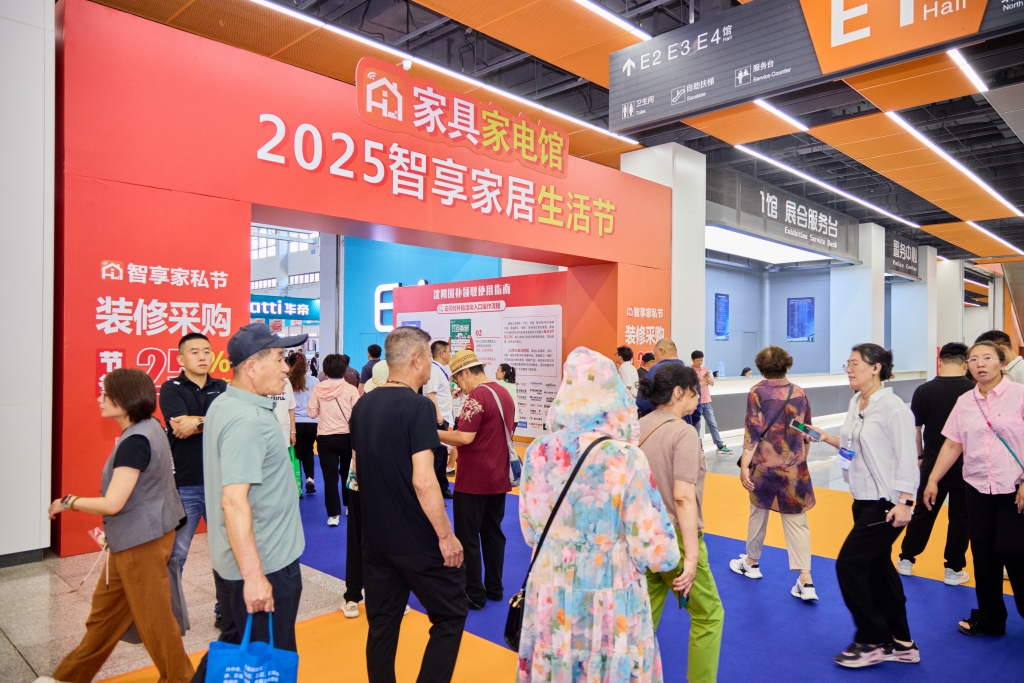
沈阳:智享家居生活节上智能家居无处不在
Xin Hua Wang· 2025-06-23 02:13
Group 1 - The "2025 Smart Home Life Festival" was inaugurated on June 20 in Shenyang, showcasing nearly a hundred global home appliance brands and over ten thousand products, emphasizing innovation in smart home technology [1] - The festival serves as a comprehensive linkage of the upstream and downstream supply chain in the home appliance industry, with frequent interactions among various exhibition areas, enhancing consumer choices and providing a platform for exhibitors to collaborate [1] - The event coincided with the "Northeast Asia Consumer Goods Expo" and three other exhibitions, creating a rich environment for consumer engagement and business networking [1] Group 2 - The festival actively supports Shenyang's policy for replacing old consumer goods, offering consumers up to 2000 yuan in subsidies for participating home appliances and kitchen products [3] - Smart home products gained significant attention from consumers, exemplified by the latest "Andes Electric Sofa" from the brand Zhi Huashi, which features stylish design and smart adjustments for various activities [3] - Numerous well-known brands introduced new products with enhanced aesthetics and functionality, including smart appliances that can be controlled remotely via mobile apps, providing a more convenient lifestyle for consumers [5] Group 3 - Exhibitors showcased a variety of smart, age-friendly, and eco-friendly home appliances, reflecting the industry's exploration and practice in product innovation to meet diverse consumer needs [5]