港口经济

Search documents
我国财收20强城市大洗牌:杭州2200亿,天津略胜广州,合肥入围!
Sou Hu Cai Jing· 2025-11-26 04:51
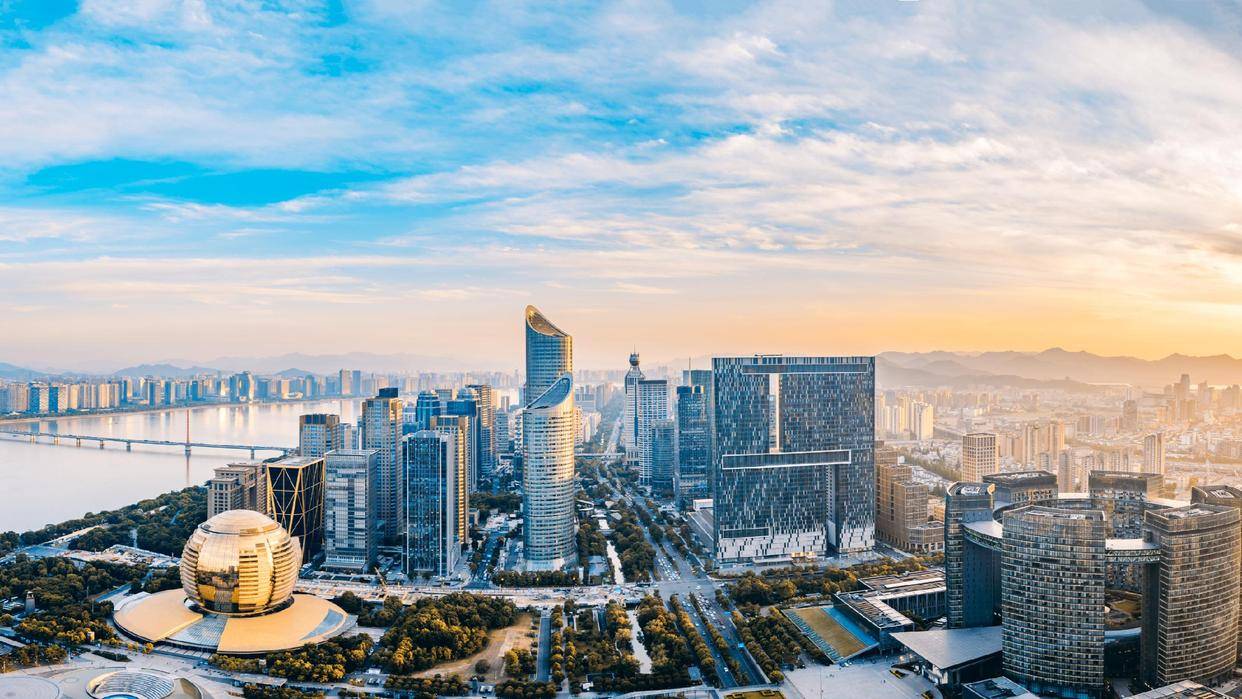
Core Insights - The article highlights the significant transformation in local fiscal revenue patterns in China as of the third quarter of 2025, with cities like Shanghai, Beijing, and Shenzhen leading in fiscal income, reflecting the country's shift towards high-quality economic development [1][10]. Group 1: Fiscal Revenue Rankings - Shanghai ranks first with a fiscal revenue of 655.57 billion, followed by Beijing at 503.99 billion and Shenzhen at 313.21 billion [6]. - Hangzhou maintains the fourth position with 220 billion, while Tianjin surpasses Guangzhou with 167.8 billion compared to Guangzhou's 163.21 billion [6][10]. - Hefei enters the top twenty for the first time with a notable performance of 74.58 billion [1][6]. Group 2: Economic Drivers - Hangzhou's fiscal resilience is attributed to its strong digital economy, with a slight increase in public budget revenue and significant contributions from tech giants like Ant Group and Alibaba Cloud [3]. - Tianjin's growth is driven by the implementation of the Beijing-Tianjin-Hebei coordinated development strategy, with new projects in aerospace and petrochemicals boosting tax revenue [5][10]. - Hefei's remarkable growth in the new energy vehicle sector, with a 42% increase in tax revenue, showcases its successful long-term investment strategy in technology and innovation [7]. Group 3: Insights Beyond the Data - The article emphasizes that fiscal health should be assessed through various dimensions, including industrial structure and innovation concentration, rather than solely relying on revenue rankings [9]. - Cities like Ningbo and Xi'an demonstrate strong potential despite their current rankings, indicating that future market dynamics may shift based on emerging industries [9][10]. - Guangzhou's growth in the new generation information technology service sector, with a 24% tax revenue increase, suggests a possible future reshaping of the economic landscape [9].

着力激发“港产城”融合发展蓝色动能
Zheng Quan Ri Bao· 2025-07-16 16:25
Core Viewpoint - The port economy is becoming a crucial driver for the development of coastal cities and emerging industries in China, with a projected value of 6.7 trillion yuan in 2024, necessitating a shift from scale expansion to quality improvement in the face of global industrial restructuring and green transformation challenges [1] Group 1: Port Economy Development - The port economy is identified as a core engine for regional economic development, emphasizing the need to overcome bottlenecks such as insufficient industrial capacity, loose land-sea planning connections, and ineffective innovation transformation [1] - There is a call for a comprehensive approach to integrate port and city development, moving beyond a narrow focus on ports alone to enhance the synergy between maritime and land economies [1] Group 2: Innovation and Technology - The establishment of an "innovation closed loop" in the land-sea industrial chain is essential, with examples of advanced technologies like precision unloading robots and AI unmanned ships highlighting the importance of smart ports [2] - Recommendations include fostering collaboration among government, industry, academia, and research to focus on key technologies such as offshore wind power and deep-sea exploration, while also creating research and low-carbon funds to support innovation [2] Group 3: Ecological and Economic Integration - The development of a marine economy "ecological community" is encouraged, with initiatives for environmental governance and the exploration of composite business models that integrate various industries [2] - The potential for blue carbon trading mechanisms is highlighted as a way to convert ecological value into economic value, promoting joint development of industries like wind power and fisheries [2]
城市24小时 | 竞逐新风口,中部第一城又出手了
Mei Ri Jing Ji Xin Wen· 2025-06-17 16:09
Core Insights - Wuhan has launched a three-year action plan and policy measures to accelerate the development of the humanoid robot industry, aiming to establish itself as a national hub for humanoid robot sensors, application scenarios, and smart manufacturing [1][2] - The plan includes the establishment of a 1 billion yuan investment fund for the humanoid robot industry and a 10 billion yuan mother fund for artificial intelligence in Hubei province, with a focus on fostering innovation and supporting enterprises [1][2] - The humanoid robot industry in Wuhan is expected to grow significantly, with a compound annual growth rate of over 40% in the artificial intelligence sector over the past five years, leading to a related industry scale exceeding 500 billion yuan [2][3] Investment and Funding - Wuhan will guide the establishment of a 1 billion yuan investment fund specifically for the humanoid robot industry and participate in a 10 billion yuan provincial fund [1] - The government will implement a fault-tolerance system for guiding funds, allowing for a maximum 100% loss on individual projects in seed and angel investments [1] - Support for leading enterprises in establishing innovation laboratories can reach up to 60 million yuan, while concept verification centers and shared manufacturing platforms can receive up to 10 million yuan [1] Industry Development Goals - The development goals for the humanoid robot industry in Hubei include a phased approach: one year to start, three years to see results, and five years to establish a strong presence [2] - The establishment of the Hubei humanoid robot innovation center and industry alliance aims to create a complete ecosystem from research and development to manufacturing and application [2][3] Market Potential - According to research from the China Academy of Information and Communications Technology, humanoid robots are expected to become a new terminal market worth trillions, following personal computers, smartphones, and new energy vehicles [3] - The industry is positioned as a new wave of industrial development, with Wuhan aiming to take a leading role in this emerging sector [3]
新华视点|创新驱动 开放共赢:经济高质量发展新图景
Xin Hua She· 2025-05-28 08:39
Digital Empowerment - The establishment of the first domestic 10,000-card computing power cluster in Qingyang in 2024, with a computing power scale exceeding 50,000 P, ranking among the top in the country in terms of growth rate, increment, and intelligent computing proportion [4] - Qingyang is driving computing power construction through multiple industries and scenarios, gathering artificial intelligence ecosystems and expanding "AI+" new industries and scenarios, fostering new productive forces [6] Open Leadership - In the first quarter, Tianjin's container throughput exceeded 5.71 million standard containers, setting a historical record, contributing significantly to the city's GDP growth of 5.8%, which is above the national average [10][11] - Tianjin Port has engaged with over 500 key enterprises in the Beijing-Tianjin-Hebei region and inland areas, completing nearly 100 contracts, enhancing the integration of domestic and foreign trade [10] Innovation Breakthrough - Jiangxi Lanwei Electronics Technology Co., Ltd. has successfully broken the foreign monopoly on insulation bonding wires through continuous R&D investment, achieving domestic substitution [17] - The company’s advancements in micro-level bonding wires are pivotal in the context of global chip competition, showcasing the importance of fine technology breakthroughs [17] Intelligent Manufacturing Upgrade - The precision of domestic CNC machine tools has been significantly improved, with Jiangxi Jiasite CNC Co., Ltd. achieving a full-process precision of 0.6 microns and a repeat positioning precision of 0.4 microns, reaching international leading levels [22] - The shift from reliance on imports to self-sufficiency in high-precision machine tools marks a significant advancement in China's high-end equipment industry [22] Overall Economic Development - The comprehensive layout of digital infrastructure, high-level openness, continuous breakthroughs in key technologies, and accelerated construction of a modern industrial system indicate that China's economy is steadily advancing on the path of high-quality development driven by innovation and openness [24]