
现制酸奶

Search documents
2年关店超400家,茉酸奶并购自救
虎嗅APP· 2026-01-11 09:52
Core Viewpoint - The acquisition of the emerging brand "Yogurt Can" by the leading brand "Mo Yogurt" is a strategic move aimed at resource integration and market share enhancement amidst a challenging operational environment for both companies [4][6][10]. Group 1: Acquisition Details - Mo Yogurt has completed the acquisition of Yogurt Can, with both brands maintaining independent operations at the consumer-facing level while integrating backend functions such as human resources, finance, and supply chain [4][6]. - The acquisition is seen as a response to the operational challenges faced by both brands, with Mo Yogurt closing over 400 stores in two years, reducing its store count by nearly 30% from its peak [4][10]. - Yogurt Can, launched in 2023, has also struggled to meet its ambitious expansion goals, falling short of its target of 1,000 stores [10][11]. Group 2: Market Context - The fresh yogurt market is experiencing increased competition and is transitioning from rapid expansion to consolidation, indicating a shift in the industry dynamics [4][12]. - The current market for fresh yogurt is not yet saturated, but the competition is intensifying, leading to a narrowing survival space for smaller brands [4][13]. - The acquisition reflects a broader trend in the fresh yogurt industry, where brands are facing operational challenges and are seeking strategic partnerships to enhance supply chain stability and market presence [15][17]. Group 3: Operational Challenges - Mo Yogurt has faced growth pressures and operational challenges, including food safety issues and management controversies, which have contributed to its store closures [10][11]. - Yogurt Can's rapid expansion has led to significant challenges in cost control and supply stability, with its business model facing scrutiny due to a lack of differentiation and increasing competition [11][12]. - The integration of the two brands will require careful management of cultural and operational differences, as well as a focus on maintaining food safety and service quality across all locations [17].

2年关店超400家!茉酸奶“危局”,“吞下”酸奶罐罐自救?
Xin Lang Cai Jing· 2026-01-11 08:27
Group 1 - The core point of the article is the acquisition of the emerging brand "Yogurt Can" by the leading brand "Mo Yogurt," aimed at resource integration and market share enhancement [2][3][14] - Both brands will unify management in backend operations such as human resources, finance, and supply chain, while maintaining independent front-end operations [3][14][17] - The acquisition is seen as a response to the operational challenges faced by both companies, with Mo Yogurt closing over 400 stores in two years and Yogurt Can falling short of its expansion goals [2][7][17] Group 2 - Mo Yogurt, established in 2014, has faced growth pressures and operational challenges, including a significant reduction in store count from 1,603 at its peak to 1,166 by December 2025 [7][17] - Yogurt Can, a younger brand launched in 2023, has struggled with supply chain challenges and has not publicly disclosed its financing history, making it less stable compared to Mo Yogurt [16][19] - The acquisition reflects a broader trend in the ready-to-drink yogurt industry, which is transitioning from rapid expansion to consolidation as market competition intensifies [10][21] Group 3 - The ready-to-drink yogurt market in China is still not fully saturated, with only about 23,000 stores as of the end of 2023, compared to over 400,000 for ready-to-drink tea [19][20] - Experts suggest that the industry is entering a reshaping phase, with smaller brands facing narrowing survival space and potential market exit [10][21] - The acquisition is expected to enhance supply chain stability and operational efficiency, which are becoming critical competitive factors in the industry [21]
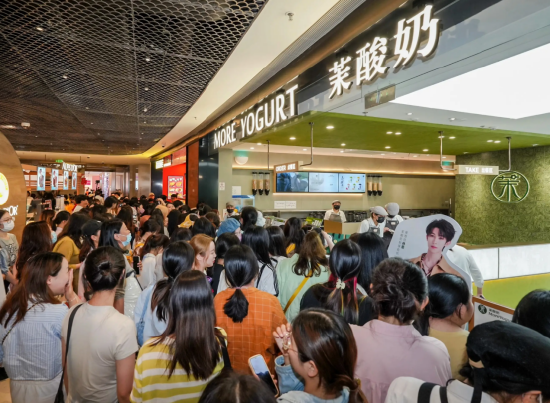
2年关店超400家!茉酸奶“危局”,“吞下”酸奶罐罐自救?
新浪财经· 2026-01-11 08:12
Core Insights - The acquisition of the emerging brand "Yogurt Can" by the leading brand "Mo Yogurt" marks a significant consolidation in the fresh yogurt market, aimed at resource integration and market share enhancement [3][5][8] - The fresh yogurt industry is entering a reshaping phase, with increased competition and diminishing market advantages for smaller brands [4][12][16] Acquisition Details - The acquisition is confirmed by an insider, emphasizing the goal of resource integration while maintaining independent operations for both brands at the consumer-facing level [5][8] - Post-acquisition, both brands will unify management in areas such as human resources, legal, financial, and supply chain, while keeping their brand identities and store operations separate [5][10] - The founder of "Yogurt Can" and the initial team have reportedly exited, although there are conflicting statements regarding their complete departure [5][8] Market Context - The fresh yogurt market is not yet saturated, but competition is intensifying, indicating a shift from rapid expansion to rational adjustment within the industry [4][12] - "Mo Yogurt" has faced significant challenges, including a reduction of nearly 30% in operational stores from its peak, alongside food safety controversies [8][10] - "Yogurt Can," launched in 2023, has struggled to meet its ambitious expansion goals, with only 635 operational stores compared to its target of 1,000 [8][10] Industry Dynamics - The fresh yogurt market is still in its early stages compared to the more mature fresh tea beverage market, with a total of 23,000 fresh yogurt stores as of the end of 2023 [11] - The acquisition reflects a broader trend of smaller brands facing existential challenges, leading to potential market exits or consolidations [14][16] - The competition is expected to shift focus towards supply chain stability, operational efficiency, and brand value, rather than just store count [14][16] Future Challenges - Post-acquisition, the integration of different corporate cultures and management styles presents a significant challenge for both brands [16] - Ensuring food safety and service quality across franchise operations will be critical for maintaining brand reputation and customer trust [16] - Operational strategies, including supply chain systems and promotional tactics, will need to be aligned to address the challenges of the evolving market landscape [16]
茉酸奶收购“酸奶罐罐”?现制酸奶行业整合尚未开启
Xin Jing Bao· 2026-01-07 13:41
Core Viewpoint - The acquisition of the yogurt brand "Yogurt Can" by Mo Yogurt has been reported, indicating a potential consolidation in the ready-to-drink yogurt market, although official confirmation is still pending from both companies [1][2][4]. Company Overview - Mo Yogurt was founded in 2014 and has expanded rapidly, reaching over 1,600 stores by 2023, with two-thirds located in first- and second-tier cities [2]. - Yogurt Can was established in April 2023 and has quickly grown to over 100 stores within six months, with plans to reach 600 stores by May 2025 and 3,000 stores in three years [2]. Market Position - Both Mo Yogurt and Yogurt Can are among the top five brands in the ready-to-drink yogurt market, with Mo Yogurt's pricing between 18-27 yuan and Yogurt Can's between 13-22 yuan, suggesting potential market complementarity post-acquisition [3]. - The industry is currently experiencing a slowdown in growth, with a downward trend in pricing, indicating that the ready-to-drink yogurt sector is still in its early development stage rather than a consolidation phase [1][9]. Strategic Implications - The acquisition could allow Mo Yogurt to penetrate third- and fourth-tier markets more effectively, achieving economies of scale and cost advantages in the supply chain [3]. - The trend of traditional dairy companies, like Junlebao, increasing their stakes in yogurt brands reflects a broader strategy to enhance their business structures and leverage supply chain efficiencies [6][7]. Industry Dynamics - The ready-to-drink yogurt sector is still perceived to be in a growth phase, with significant investment needed for supply chain infrastructure, which is more capital-intensive compared to the ready-to-drink tea sector [8][11]. - Despite the potential for consolidation, the industry has not yet reached a saturation point, with many brands still focusing on expansion and market penetration [9][11].
酸奶罐罐被茉酸奶收购,初创团队离场 | 茶咖独家
Sou Hu Cai Jing· 2026-01-04 12:22
Core Insights - The yogurt brand "Yogurt Can" has been acquired by "Mo Yogurt," leading to the departure of its founder and initial team, with its international expansion plans now shelved [2][3] - The yogurt industry is entering a consolidation phase, with several brands facing challenges and restructuring [15][16] Company Overview - "Yogurt Can" was established in 2023 as a project incubated by the tea brand "Gui Gui Tea," with ambitious plans to open 1,000 stores by 2024 and expand to 3,000 stores within three years [5] - As of December 9, 2024, "Yogurt Can" had 571 operational stores, experiencing a decline in store numbers, with 52 closures in the past month [5][12] Market Dynamics - The yogurt market is facing a downturn, with the compound annual growth rate for new-style tea drinks dropping from 24.9% (2017-2022) to an expected 6.4% in 2024 [15] - The challenges faced by "Yogurt Can" reflect broader issues in the fresh yogurt and new tea drink sectors, including seasonal product limitations and high operational costs [15][16] Strategic Moves - The acquisition of "Yogurt Can" by "Mo Yogurt" is seen as a strategic move to quickly increase market share and enhance distribution networks, particularly in lower-tier cities [16] - "Mo Yogurt" is also undergoing a leadership change, with its founder stepping down, which may complicate the integration of "Yogurt Can" [3][16] Operational Challenges - "Yogurt Can" has a dispersed store distribution, with 47.81% of its 571 stores located in East China, leading to logistical challenges and increased operational costs [6][9] - The brand's strategy of opening stores in high-rent shopping centers has created a mismatch between low-priced products and high operational costs, contributing to financial strain [12][15]
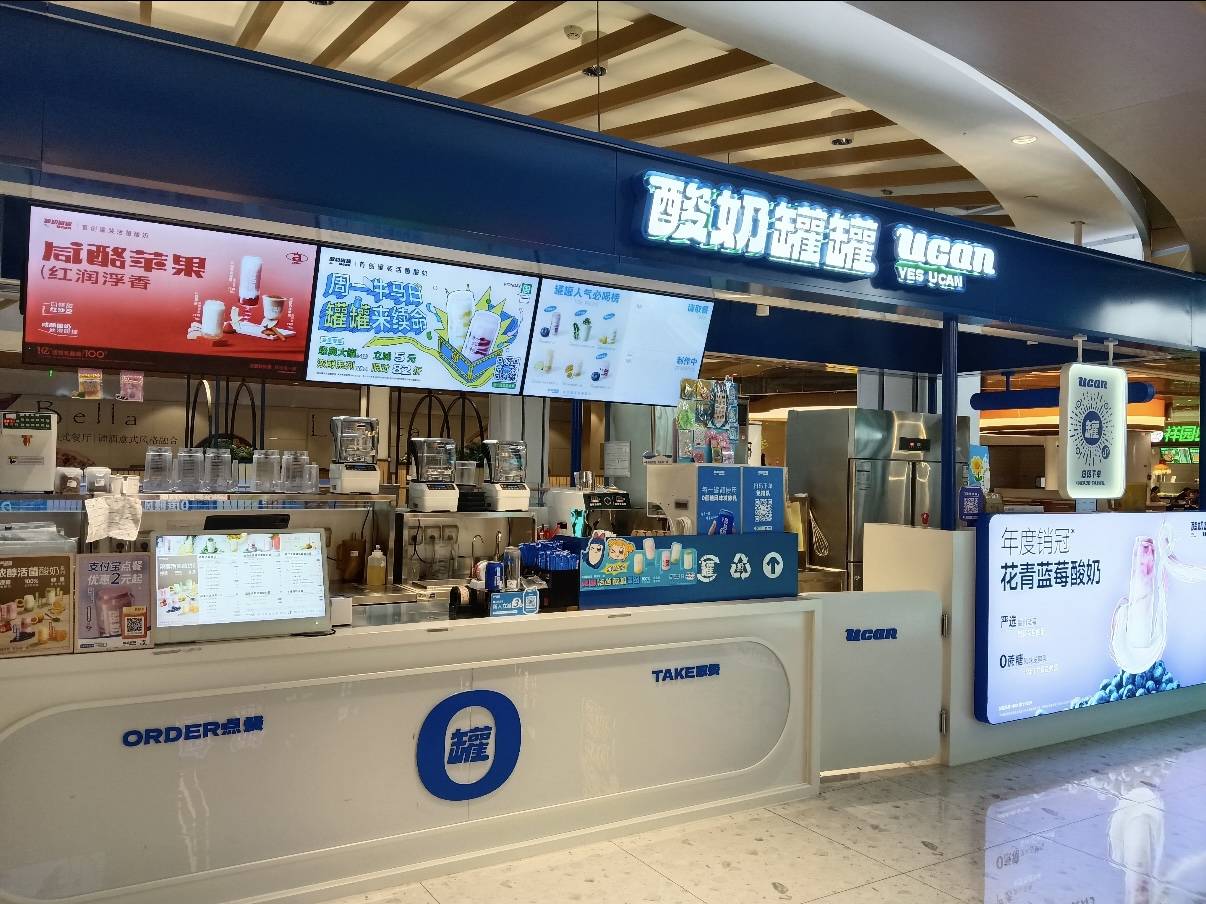
创始人离场、门店锐减:茉酸奶的“狂飙”与失速
Xin Lang Cai Jing· 2025-12-30 03:43
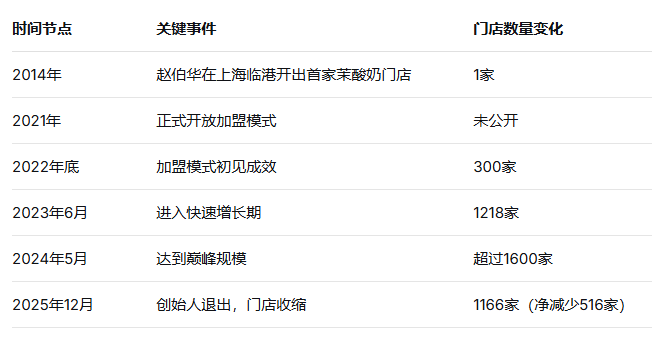
Core Viewpoint - The recent changes in Shanghai Boyi Catering Management Co., Ltd. reflect a significant power shift within the company, with founder Zhao Bohua stepping down and Gu Hao becoming the actual controller with a 57.14% stake, while dairy giant Junlebao re-enters as a shareholder with 42.86% [1][13]. Group 1: Company Background and Growth - The establishment of Mo Yogurt began in 2014, with Zhao Bohua opening the first store in Shanghai. The brand gained traction with products like avocado yogurt smoothies [2][14]. - In 2023, Mo Yogurt experienced a pivotal year, adding 1,368 new stores, bringing the total to 1,682 [2][14]. - The brand adopted an aggressive franchise model starting in 2021, implementing a strategy of "large stores in small cities and small stores in large cities" to rapidly expand market share [3][16]. Group 2: Franchise Model and Challenges - The initial investment for a standard 30-square-meter franchise store starts at 270,000 yuan, including various fees, but the payback period has extended from 8-10 months to 14-18 months [3][16]. - A media investigation in 2024 revealed serious food safety issues in several Mo Yogurt stores, leading to an apology from the brand for not adhering to operational standards [3][16]. - The brand's pricing strategy has faced criticism, particularly for high-priced products, which has affected its market perception [3][16]. Group 3: Store Network and Financial Performance - As of December 2025, Mo Yogurt's store count dropped to 1,166, a net decrease of 516 from its peak of 1,682 [7][20]. - In 2024, the brand opened only 110 new stores while closing 760, indicating a failure in its growth model [8][21]. - To stabilize its franchise system, Mo Yogurt significantly reduced the franchise fee from nearly 800,000 yuan to about 300,000 yuan and introduced flexible payment options [8][21]. Group 4: Future Prospects and Strategic Moves - The departure of Zhao Bohua marks the end of the brand's "product-driven" era, raising questions about the new management's ability to navigate challenges [9][22]. - Gu Hao has attempted to explore new sub-brands, but many have faced setbacks, including the closure of several stores [10][22]. - Mo Yogurt is looking to expand internationally, testing markets in Canada and Singapore while collaborating with Junlebao on supply chain and product development [10][22].
茉酸奶创始人清仓退出,君乐宝投资加码!门店较巅峰期下降 516家,加盟费用已减半
Sou Hu Cai Jing· 2025-12-29 12:19
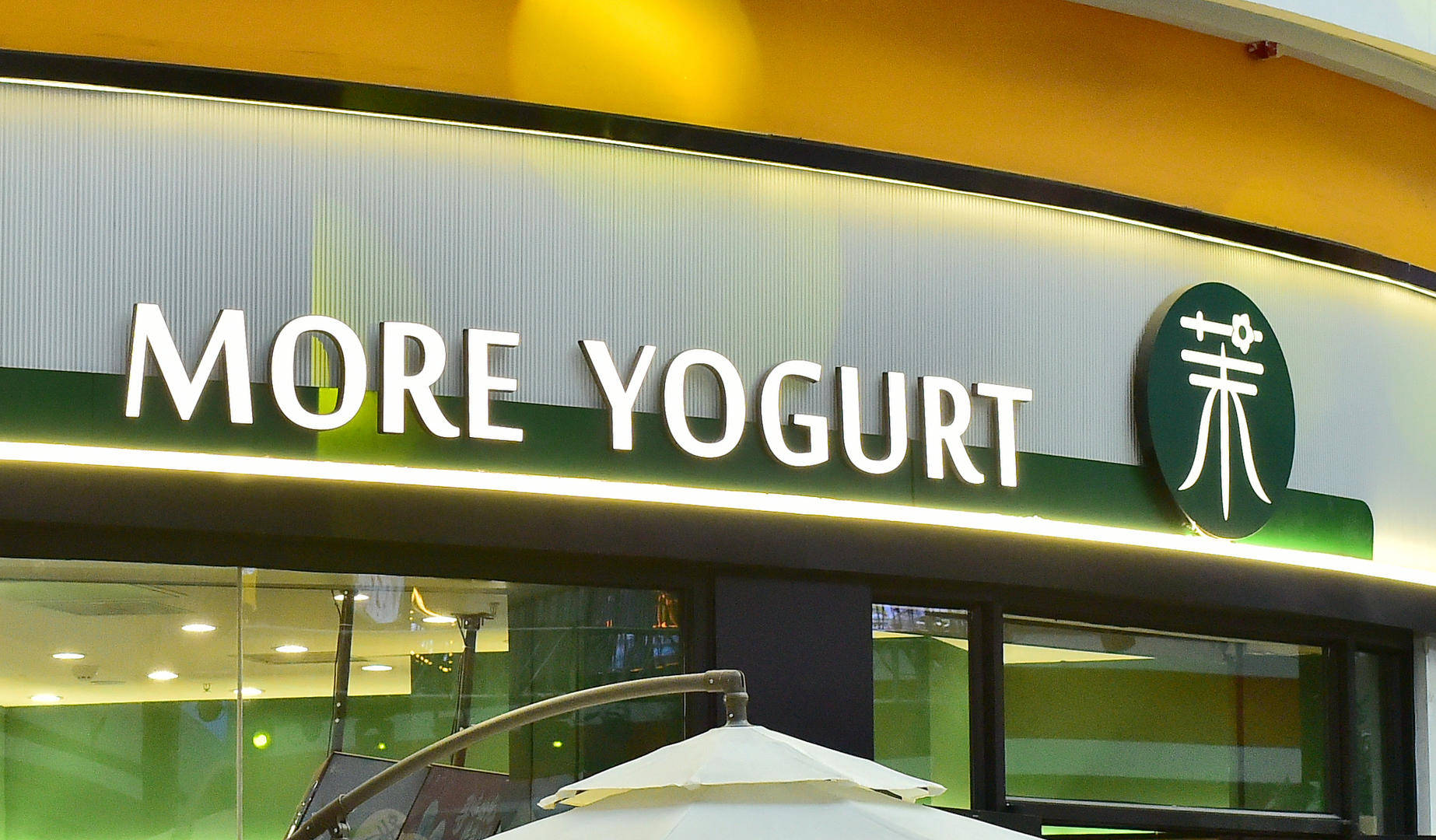
Core Insights - The founder of the yogurt brand More Yogurt, Zhao Bohua, has resigned from all positions in the parent company Shanghai Boyi Catering Management Co., Ltd., and has sold his 30% stake, with co-founder Gu Hao taking over as the legal representative [3][4] - The company has faced challenges, including a food safety scandal in May 2024, which has damaged its reputation [8][10] - More Yogurt has significantly reduced its franchise fees and opened up to county-level city franchises to attract new franchisees [8][10] Company Changes - Zhao Bohua has exited the company he founded 11 years ago, with Gu Hao now serving as the legal representative [3][4] - The company has undergone multiple changes in its shareholder structure, with Junlebao Hebei Company becoming the second-largest shareholder with a 42.86% stake [3][4] Sales and Market Position - More Yogurt's original avocado yogurt series sold 21 million cups in 2023, but the company has struggled to produce a second hit product [8][10] - The total number of stores has decreased from a peak of 1,682 to 1,166, a reduction of 516 stores [10][12] Pricing and Franchise Strategy - The price of products has decreased, with the cheapest item now priced at 18 yuan and the most expensive at 30 yuan, down from a previous high of 34 yuan [8][11] - Franchise costs have been slashed from 50-60 thousand yuan to below 25 thousand yuan, with new policies introduced to attract franchisees [8][10] Challenges and Future Outlook - The company faces ongoing issues related to food safety and inconsistent product quality, which are attributed to rapid franchise expansion [12] - Analysts suggest that the investment from Junlebao could provide necessary support, but success will depend on addressing core operational issues [6][12]
创始人离场,君乐宝接盘:现制酸奶龙头能否触底反弹?
Guan Cha Zhe Wang· 2025-12-13 04:01
Core Viewpoint - The recent management changes at the fresh yogurt brand "Mo Yogurt" indicate a significant shift from a founder-led model to one dominated by industrial capital, as the company seeks to address challenges and reshape its strategy in the competitive yogurt market [1][3][9]. Company Changes - Founder Zhao Bohua has completely exited from all positions and shareholder status, with co-founder Gu Hao taking over as the legal representative and holding 57.14% of the shares [1]. - Junlebao Group has increased its stake in Mo Yogurt from 30% to 42.86%, becoming one of the two major shareholders alongside Gu Hao [1][8]. Market Position and Challenges - Mo Yogurt, founded in 2014, grew rapidly to over 1,600 stores at its peak, leveraging a health-focused brand image with products like avocado yogurt smoothies [3][6]. - The brand faced significant backlash in 2023 due to high pricing and allegations of using inferior ingredients, leading to a damaged reputation [3][4]. - A food safety crisis in 2024, involving expired ingredients and improper storage practices, further harmed the brand's image and resulted in store closures [4][6]. Strategic Shift - The management transition aims to pivot from aggressive expansion to a focus on supply chain development and product quality, with Junlebao's involvement expected to enhance brand credibility and operational efficiency [7][9]. - Junlebao's investment is seen as a strategic move to secure a stable distribution channel for high-end dairy products, especially in first-tier cities [8]. Future Outlook - The integration of Junlebao's traditional supply chain practices with Mo Yogurt's fast-paced marketing and franchise model presents a management challenge that will need to be navigated carefully [10]. - The success of this strategic shift will be critical in determining whether Mo Yogurt can recover and achieve sustainable growth in a post-consumer investment bubble environment [10].

Blueglass大幅降价引争议 高价现制酸奶如何说服市场?
Zhong Guo Jing Ying Bao· 2025-11-28 21:12
Core Viewpoint - Blueglass Yogurt has significantly reduced its prices in response to market competition and changing consumer behavior, indicating a shift in strategy to regain market traction [3][4][5] Pricing Strategy - Blueglass is offering discounts of around 50% on some products online and a promotion of 99 yuan for 5 cups offline, making the price per cup less than 20 yuan [3][4] - The brand's previous pricing strategy has been challenged as it has never offered such discounts before 2023 [4] Market Position and Challenges - Blueglass, established in 2012, has faced difficulties in achieving its goal of opening 1,000 stores within three years, with only 214 stores currently operational [4][9] - The brand's rapid expansion has slowed, and it has entered new markets in cities like Xuzhou and Dongguan this year [5] Marketing and Brand Perception - Blueglass initially gained popularity through effective marketing strategies targeting urban professionals and fitness enthusiasts, but recent price cuts suggest a need to adapt to a more price-sensitive consumer base [5][6] - The brand has faced criticism for exaggerated health claims and has been penalized for misleading advertising, which has negatively impacted its reputation [6][7] Product Quality and Consumer Trust - There are concerns regarding the efficacy of Blueglass's high-end yogurt products, with some consumers reporting adverse effects such as diarrhea, leading to skepticism about the brand's claims [7][8] - Industry experts suggest that the brand's marketing-driven approach rather than product-driven innovation has led to a decline in consumer trust [8][9] Future Outlook - Experts recommend that Blueglass focus on product quality and innovation to regain consumer confidence and market share, rather than relying solely on marketing tactics [8][9]
Blueglass降价:高端现制酸奶品牌的困境与行业变局
Xin Lang Cai Jing· 2025-11-28 10:13
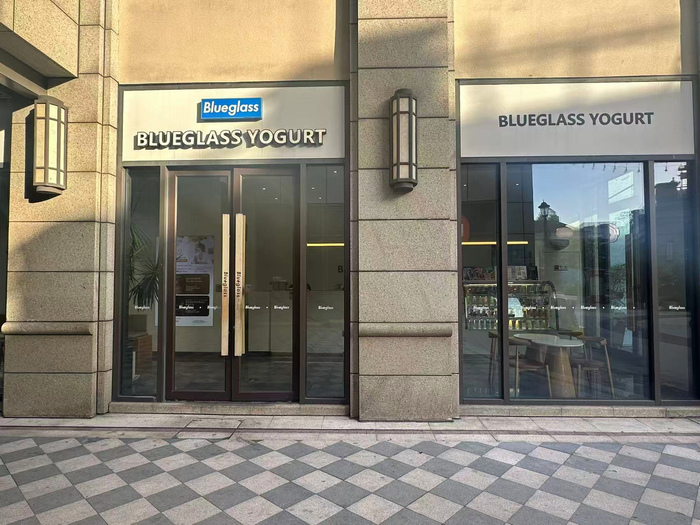
Core Insights - Blueglass, once known as the "Hermès of yogurt," has significantly reduced prices for several products, with the "Slim Waist" series dropping to 22.9 yuan per cup, over 50% lower than the original price of 49 yuan [1] - The price cuts reflect a necessary response to pressures from capital, regulation, industry competition, and internal operations, indicating a deep transformation in the high-end yogurt market [1] Group 1: Brand Foundation and Market Positioning - Blueglass established its high-end positioning through capital investment and targeted marketing, completing two rounds of financing between 2020 and 2021, which provided expansion funds and a "new consumption internet celebrity brand" label [2] - The brand strategically located 82.24% of its stores in core shopping malls and 10.75% in high-end office buildings, often near Starbucks and lululemon, targeting health-conscious women aged 25-35 [2] Group 2: Pricing and Marketing Strategy - Regular product prices typically range from 40 to 49 yuan, with the SVIP membership system launched in 2024 offering 4 free cups and 12 discounted cups, resulting in an effective price of around 38 yuan per cup [3] - The introduction of the "AI Doctor Customized Yogurt" in September 2025 aimed to elevate the brand's high-end narrative, claiming a 91.3% increase in butyrate levels in the gut, attracting 970,000 participants for customization [3] Group 3: Challenges Leading to Price Cuts - The price reduction is a survival strategy amid multiple challenges, including a lack of capital support and cash flow issues, with new store openings decreasing from 76 in 2023 to 59 in 2024, and further to 33 in 2025 [4] - Regulatory penalties for promotional violations and a decline in consumer willingness to pay for "health premiums" have contributed to a trust crisis, with the repurchase rate for high-priced yogurt dropping from 35% in 2023 to 22% in 2025 [5] - The experience of the "AI Customized Yogurt" did not meet consumer expectations, leading to dissatisfaction, while high rental costs and marketing expenditures strained the cost structure [5] Group 4: Industry Impact and Brand Positioning Dilemma - Blueglass's price cuts have broader implications for the yogurt industry, creating a dilemma of losing high-end positioning while struggling to attract lower-end consumers [6] - The price reduction accelerates the collapse of the high-end bubble in the yogurt market, highlighting the need for brands to focus on product value rather than relying solely on health concepts and high-end marketing [7]