
生态保护和环境治理

Search documents
山西|企业在电子税务局如何通过添加快捷开票方式进行开票?操作步骤
蓝色柳林财税室· 2026-03-26 00:34
Group 1 - The announcement states that from September 2025, eligible VAT general taxpayers can apply for refunds of their end-of-period input tax credits under specific conditions [8][10]. - Taxpayers in the manufacturing, scientific research and technical services, software and information technology services, and ecological protection and environmental governance sectors can apply for monthly refunds of their end-of-period input tax credits [8]. - Real estate developers can apply for a refund of 60% of the newly increased input tax credits if they meet certain criteria, including having a new increase of at least 500,000 yuan in the sixth month [9][10]. Group 2 - Other taxpayers, excluding those in the specified sectors and real estate, can apply for refunds if they have a new increase in input tax credits of at least 500,000 yuan compared to the previous year's end-of-period input tax credits [9]. - The refund rate is 60% for the portion of newly increased input tax credits up to 100 million yuan, and 30% for the portion exceeding 100 million yuan [9]. - Taxpayers must have an A or B credit rating and must not have committed tax fraud or been penalized for tax evasion in the past 36 months to be eligible for the refund [12][13].


信用债市场周度回顾260316:理财配债的季节性规律:关注4Y位置的骑乘机会-20260316
GUOTAI HAITONG SECURITIES· 2026-03-16 05:14
Core Insights - The report highlights the seasonal growth characteristics of bank wealth management in Q2 and Q3, which will support short-term allocation demand, particularly around the 4Y curve point [6][11] - It suggests focusing on riding opportunities near the 4Y curve point, as the current short- to medium-term credit spreads are at historically low levels, supported by the growth of bank wealth management and the opening of amortized debt funds [6][9] Group 1: Bank Wealth Management Growth - Bank wealth management growth in Q2 from 2022 to 2025 is projected at 906.2 billion, 532.6 billion, 1,758.5 billion, and 1,385.4 billion respectively, with Q3 growth at 1,454.2 billion, 775.8 billion, 932.3 billion, and 995.6 billion [6][11] - The monthly growth in April over the past two years has exceeded 2 trillion, providing support for the credit bond market [6][11] Group 2: Amortized Debt Funds - The opening of amortized debt funds is concentrated in two periods: January to March and May to July, with a focus on 3-year maturities during the latter period [6][11] - The allocation structure indicates that bank funds are more inclined towards interest rate bonds, while bank wealth management favors credit, commercial paper, and broker bonds [6][11] Group 3: Credit Bond Market Review - In the primary market, net financing was positive for two consecutive weeks, with a total issuance of 3,172 billion and a net financing of 730 billion for the week of March 9 to March 13, 2026 [11][12] - The secondary market saw a decrease in transaction volume, with total transactions amounting to 8,348 billion, down by 260 billion from the previous week [11][12] Group 4: Credit Rating Adjustments - During the week of March 9 to March 13, 2026, there were two issuers with upgraded ratings and one issuer with a downgraded rating, with no bonds experiencing extensions or defaults [11][12]
透过“税”数据读懂"十四五"经济社会绿色转型加速推进
Yang Shi Wang· 2026-02-10 02:10
Group 1 - During the "14th Five-Year Plan" period, the manufacturing industries of important green products such as new energy vehicles, photovoltaic equipment and components, lithium-ion batteries, and solar appliances have an average annual sales growth rate of over 30% [3] - The sales revenue of green technology service industries, including new energy, energy-saving, and environmental protection, has increased by an average of 51.1%, 28.5%, and 18.2% respectively [3] - The ecological protection and environmental governance industry has seen an average annual sales growth of 13.2%, providing technical support for green transformation [3] Group 2 - By 2025, the sales revenue from clean energy generation, including wind, solar, hydro, and nuclear power, is expected to account for 42.6% of total power generation sales revenue, an increase of 7.2 percentage points compared to the end of the "13th Five-Year Plan" [5] - The sales revenue from wind and solar power generation is projected to grow at an average annual rate of 25.4% during the "14th Five-Year Plan" period [5] Group 3 - Since the implementation of the environmental protection tax in 2018, a total of 111.06 billion yuan in tax reductions and exemptions have been granted nationwide [7] - By 2025, the environmental protection tax revenue from key regulated air pollutants, such as sulfur dioxide and nitrogen oxides, is expected to decrease by 33.8% and 34.03% respectively compared to 2020 [7] Group 4 - In 2025, the amount of groundwater extracted by taxpayers in pilot areas for the water resource fee reform is expected to be 5.47 billion tons, a decrease of 7.1% compared to 2024 [9] - The special water usage for golf courses, ski resorts, car washes, and bathing facilities is projected to decline by 34.3% compared to 2024, promoting water resource conservation and ecological protection [9]
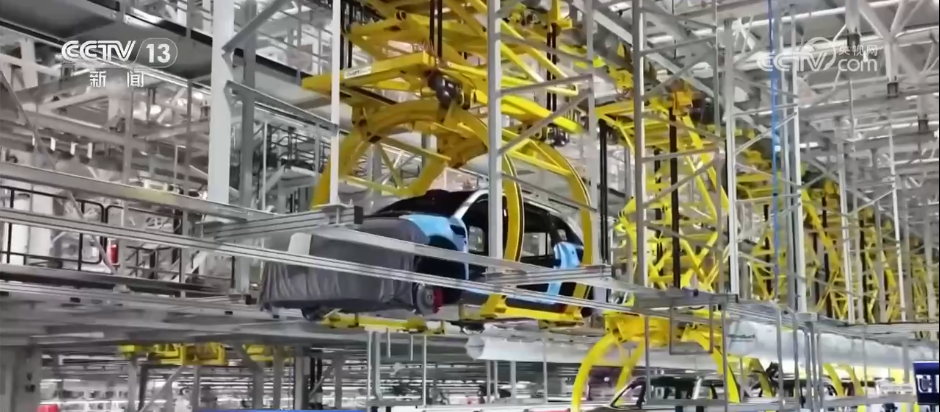
中国经济社会绿色转型加快
Ren Min Ri Bao Hai Wai Ban· 2026-02-10 02:01
Core Viewpoint - China's economic and social green transformation is accelerating, driven by structural optimization in industries, energy, and transportation, along with effective tax policies promoting emission reduction and water conservation [2][3]. Industry Structure - The proportion of "dual high" industries is continuously decreasing, while green and low-carbon industries are developing well. During the 14th Five-Year Plan period, key green product manufacturing sectors such as new energy vehicles, photovoltaic equipment, lithium-ion batteries, and solar appliances are expected to see annual sales growth rates exceeding 30% [2]. - Sales revenue in green technology service industries, including new energy, energy-saving, and environmental protection, is projected to grow annually by 51.1%, 28.5%, and 18.2% respectively, while ecological protection and environmental governance industries are expected to grow by 13.2% annually [2]. Energy Structure - The share of clean energy is steadily increasing, with high-energy-consuming manufacturing industries optimizing their energy use. By 2025, sales revenue from clean energy generation, including wind, solar, hydro, and nuclear power, is expected to account for 42.6% of total power generation revenue, an increase of 7.2 percentage points from the end of the 13th Five-Year Plan [2]. - Sales revenue from wind and solar power generation is projected to grow at an annual rate of 25.4% during the 14th Five-Year Plan period [2]. Transportation Structure - The new energy vehicle industry is experiencing strong growth, with an increase in the proportion of railway and waterway freight. By 2025, domestic sales of new energy vehicles are expected to grow by 25.9% year-on-year [2]. Pollution Reduction and Water Conservation - The environmental protection tax policy has released tax reduction benefits, with cumulative tax reductions amounting to 111.06 billion yuan since its implementation in 2018. This includes 59.945 billion yuan for promoting centralized treatment and improving pollution control efficiency, 24.37 billion yuan for promoting clean production, and 26.134 billion yuan for enhancing governance efficiency [3]. - The number of urban and rural sewage and solid waste treatment plants benefiting from environmental tax incentives is expected to increase from 5,589 in 2021 to 6,415 by 2025 [3]. - By 2025, the environmental tax revenue from key air pollutants such as sulfur dioxide and nitrogen oxides is projected to decrease by 33.8% and 34.03% respectively compared to 2020 [3]. - The pilot program for converting water resource fees to taxes is expected to yield positive results, with a projected 7.1% decrease in underground water extraction in new pilot areas by 2025, totaling 5.47 billion tons [3].
数据显示我国经济社会绿色转型加速推进
Ke Ji Ri Bao· 2026-02-10 00:18
Group 1 - During the "14th Five-Year Plan" period, the manufacturing industries of key green products such as new energy vehicles, photovoltaic equipment, lithium-ion batteries, and solar appliances have an average annual sales growth rate of over 30% [1] - China has maintained its position as the world's largest producer and seller of new energy vehicles for ten consecutive years, with a projected year-on-year growth of 25.9% in domestic new energy vehicle sales by 2025 [1] - The sales revenue share of five high-energy-consuming industries, including petroleum, coal, and other fuel processing, has decreased from 27% at the end of the "13th Five-Year Plan" to 24.9% at the end of the "14th Five-Year Plan" [1] Group 2 - The sales revenue of green technology service industries, including new energy, energy-saving, and environmental protection, has grown at an average annual rate of 51.1%, 28.5%, and 18.2% respectively during the "14th Five-Year Plan" [1] - By 2025, the sales revenue from clean energy generation, including wind, solar, hydro, and nuclear power, is expected to account for 42.6% of total power generation sales revenue, an increase of 7.2 percentage points from the end of the "13th Five-Year Plan" [1] - The sales revenue from wind and solar power generation is projected to grow at an average annual rate of 25.4% during the "14th Five-Year Plan" [1] Group 3 - The environmental protection tax policy has released tax reduction benefits, with a cumulative implementation of 111.06 billion yuan in tax reductions since its introduction in 2018 [2] - The number of urban and rural sewage and solid waste treatment plants benefiting from environmental protection tax incentives has increased from 5,589 in 2021 to 6,415 by 2025 [2] - The revenue from environmental protection taxes on major air pollutants, such as sulfur dioxide and nitrogen oxides, is expected to decrease by 33.8% and 34.03% respectively by 2025 compared to 2020 [2] Group 4 - The water resource fee reform has shown significant results, with the amount of underground water extracted in new pilot areas decreasing by 7.1% to 5.47 billion tons by 2025 [2] - Special water usage in golf courses, ski resorts, car washes, and bathing facilities has decreased by 34.3% compared to 2024 [2] - The collaboration between policy guidance and business initiatives has led to substantial progress in green transformation, reinforcing ecological safety and promoting sustainable economic development [2]
税收数据显示我国经济社会绿色转型加速推进
Qi Huo Ri Bao Wang· 2026-02-09 23:14
Group 1 - The core viewpoint of the articles highlights the continuous optimization of China's industrial and energy structure, driven by tax policies that promote green and low-carbon industries [1][2] - During the "14th Five-Year Plan" period, key green product manufacturing industries such as new energy vehicles, photovoltaic equipment, and lithium-ion batteries have seen annual sales revenue growth rates exceeding 30% [1] - The sales revenue of green technology services, including new energy, energy-saving, and environmental protection, has grown annually by 51.1%, 28.5%, and 18.2% respectively, supporting the green transition [1] Group 2 - The proportion of clean energy is steadily increasing, with sales revenue from clean energy sources expected to account for 42.6% of total power generation revenue by 2025, an increase of 7.2 percentage points from the end of the "13th Five-Year Plan" [1] - The annual sales revenue growth for wind and solar power during the "14th Five-Year Plan" period is projected to be 25.4% [1] - Since the implementation of the environmental protection tax in 2018, a total of 111.06 billion yuan in tax reductions has been granted, promoting pollution control and clean production [2]
税务总局:“十四五”期间我国绿色低碳产业发展良好
Zhong Guo Jing Ying Bao· 2026-02-09 16:06
Core Insights - During the "14th Five-Year Plan" period, five high-energy-consuming industries, including petroleum, coal, and other fuel processing, have seen their average annual sales growth rate fall below the industrial average by 1.8 percentage points [1] - The share of these industries in total industrial sales revenue decreased from 27% at the end of the "13th Five-Year Plan" to 24.9% by the end of the "14th Five-Year Plan" [1] - In contrast, key green product manufacturing sectors, such as new energy vehicles, photovoltaic equipment, and lithium-ion batteries, have experienced average annual sales growth rates exceeding 30% [1] - Green technology service industries, including new energy, energy-saving, and environmental protection, reported average annual sales growth rates of 51.1%, 28.5%, and 18.2% respectively [1] - The ecological protection and environmental governance sector achieved an average annual sales growth rate of 13.2%, providing technical support for green transformation [1] Industry Analysis - The robust growth of the green industry and the continuous release of transformation dividends are attributed to the collaboration between policy guidance and business entities [1] - The successful outcomes of China's green transition not only strengthen ecological safety but also promote economic development towards a green and low-carbon model, injecting sustainable momentum into high-quality development [1]
税收数据显示:“双高”产业占比持续下降 绿色低碳产业发展良好
Zheng Quan Ri Bao Wang· 2026-02-09 13:26
Group 1: Industry Structure - The proportion of "dual high" industries is continuously decreasing, while green and low-carbon industries are developing well. During the 14th Five-Year Plan period, the annual sales revenue growth rate of five high-energy-consuming industries is 1.8 percentage points lower than the average growth rate of industrial enterprises, with their share of industrial sales revenue dropping from 27% at the end of the 13th Five-Year Plan to 24.9% at the end of the 14th Five-Year Plan [1] - Key green product manufacturing industries, such as new energy vehicles, photovoltaic equipment, lithium-ion batteries, and solar appliances, have an annual sales revenue growth rate exceeding 30%. Green technology service industries, including new energy, energy-saving, and environmental protection, have annual sales revenue growth rates of 51.1%, 28.5%, and 18.2%, respectively [1] Group 2: Energy Structure - The proportion of clean energy is steadily increasing, with the energy structure of high-energy-consuming manufacturing industries optimizing. By 2025, the sales revenue from clean energy generation, including wind, solar, hydro, and nuclear power, is expected to account for 42.6% of total power generation sales revenue, an increase of 7.2 percentage points from the end of the 13th Five-Year Plan. Wind and solar power generation sales revenue is projected to grow at an annual rate of 25.4% during the 14th Five-Year Plan [2] Group 3: Pollution Reduction and Water Conservation - The environmental protection tax policy has released tax reduction benefits, with significant pollution reduction effects. Since the implementation of the environmental protection tax in 2018, a total of 111.06 billion yuan in tax reductions has been granted, promoting centralized treatment and improving pollution control efficiency [3] - The pilot program for the water resource fee reform, which will be expanded nationwide starting December 1, 2024, has shown positive results. By 2025, the amount of groundwater extracted in new pilot areas is expected to decrease by 7.1% compared to 2024, with over 4,500 self-owned wells shut down [3] Group 4: Green Transition - The solid achievements in China's green transition are attributed to the collaboration between policy guidance and business entities. The robust growth of the green industry and the continuous release of transformation dividends not only strengthen ecological security but also promote the economy's shift towards green and low-carbon development, injecting sustainable momentum into high-quality growth [4]
税收大数据:我国经济社会绿色转型加速推进
Bei Jing Shang Bao· 2026-02-09 06:12
Group 1 - During the "14th Five-Year Plan" period, the manufacturing industries of key green products such as new energy vehicles, photovoltaic equipment, lithium-ion batteries, and solar appliances have an average annual sales revenue growth rate exceeding 30% [1] - The sales revenue of green technology services, including new energy, energy-saving, and environmental protection, has an average annual growth of 51.1%, 28.5%, and 18.2% respectively, while the ecological protection and environmental governance industry has an average annual growth of 13.2% [1] - By 2025, the sales revenue from clean energy generation, including wind, solar, hydro, and nuclear power, is expected to account for 42.6% of total power generation sales revenue, an increase of 7.2 percentage points from the end of the "13th Five-Year Plan" [1] Group 2 - Since the implementation of the environmental protection tax in 2018, a total of 111.06 billion yuan has been granted in tax incentives [2] - By 2025, the revenue from environmental protection taxes on key air pollutants such as sulfur dioxide and nitrogen oxides is projected to decrease by 33.8% and 34.03% respectively compared to 2020 [2] - In 2025, the amount of groundwater extracted in pilot areas for the water resource fee reform is expected to be 5.47 billion tons, a decrease of 7.1% from 2024 [2]
旺能环境:12月15日召开董事会会议
Mei Ri Jing Ji Xin Wen· 2025-12-15 08:37
Group 1 - The core point of the article is that Wangneng Environment (SZ 002034) announced the convening of its 15th meeting of the 9th board of directors on December 15, 2025, to discuss the proposal for the third extraordinary shareholders' meeting of 2025 [1] - For the first half of 2025, the revenue composition of Wangneng Environment is entirely from the ecological protection and environmental governance industry, accounting for 100.0% [1] - As of the time of reporting, the market capitalization of Wangneng Environment is 6.9 billion yuan [1] Group 2 - The article also highlights a separate issue regarding a company related to the "童颜针" (youthful needle) product, which has annual sales of 300 million yuan, and raises concerns about the legitimacy of associated parties [1]
