电子代工

Search documents
比亚迪电子:短期看手机、汽车,长期看AI、人形机器人
市值风云· 2026-03-23 10:13
Core Viewpoint - BYD Electronics is facing significant challenges in maintaining its competitive position against Luxshare Precision, with a notable decline in revenue and profit margins over the years, primarily due to strategic differences and market positioning [4][10][12]. Revenue and Profit Comparison - In 2016, BYD Electronics had a revenue of 37 billion, significantly higher than Luxshare Precision's 13.8 billion. By 2024, BYD Electronics' revenue is projected to be 177.3 billion, while Luxshare Precision's is expected to reach 268.8 billion [5]. - The net profit for BYD Electronics in 2016 was 1.22 billion, compared to Luxshare Precision's 1.18 billion. However, by 2024, BYD Electronics' net profit is expected to be 3.94 billion, which is only a third of Luxshare Precision's projected 14.58 billion [6]. Strategic Positioning - BYD Electronics is primarily positioned as a subsidiary of the BYD Group, which affects its strategic decisions and leads to slower expansion and fewer acquisitions compared to Luxshare Precision, which operates independently and is more agile in its strategic maneuvers [10]. - The business structure of BYD Electronics focuses heavily on serving the automotive sector, with 60% of its revenue coming from BYD vehicles, limiting its external growth potential and pricing power [11]. Profit Margins - The gross margin for BYD Electronics is significantly lower than that of Luxshare Precision, with BYD's gross margin ranging from 6% to 18% compared to Luxshare's higher margins [12]. - For the first three quarters of 2025, Luxshare Precision reported a net profit margin of 5.2%, while BYD Electronics had a net profit margin of only 2.5% [14]. R&D and Innovation - BYD Electronics invests heavily in R&D, with annual expenditures exceeding its net profits, indicating a strong focus on innovation and technological development [25][26]. - The company has established a collaborative development model across its three core business segments: consumer electronics, new energy vehicles, and smart products, with a growing international customer base [15]. Future Growth Prospects - BYD Electronics is expected to see growth in various segments, including consumer electronics driven by new product launches, automotive electronics linked to BYD's strategic initiatives, and smart products such as AI and robotics [28][30]. - The company is positioning itself to capitalize on the AI market, with expectations for significant growth in AI-related products and services [30][34].

富士康为何重仓河南
He Nan Ri Bao· 2026-02-05 22:40
Core Viewpoint - Foxconn is deepening its commitment to Henan by establishing a new electric vehicle R&D center in Zhengzhou, signaling a shift from mere investment to a strategic partnership focused on future growth [1][2] Group 1: Company Strategy - Foxconn is investing 1 billion yuan to build a new headquarters in Zhengzhou by July 2024, accelerating its "3+3" strategic layout in new energy vehicles and energy storage [1] - The establishment of the R&D center marks a significant advancement in Foxconn's strategic deployment in Henan, indicating a transformation in the relationship from simple investment to deep collaboration [1] Group 2: Industry Context - Foxconn's traditional manufacturing model faces challenges due to global supply chain restructuring, rising labor costs, and saturation in the consumer electronics market, prompting a shift towards electric vehicles as a key growth area [1] - Henan's advantages, including a leading automotive industry chain, comprehensive transportation infrastructure, a mature talent pool, and strong policy support, make it an ideal location for Foxconn's strategic initiatives [1] Group 3: Collaborative Dynamics - The partnership between Foxconn and Henan represents a new cooperation paradigm, emphasizing mutual growth and empowerment, with Henan benefiting from Foxconn's global resources and technology to elevate its industrial capabilities [2] - This collaboration is seen as a rational choice to anchor future development amid uncertainties in the global manufacturing landscape [2]
中邮证券:维持TCL科技“买入”评级,盈利增速彰显强劲增长动能
Xin Lang Cai Jing· 2026-02-04 06:21
Core Viewpoint - TCL Technology demonstrates strong growth momentum with significant increases in revenue and net profit for the first three quarters of 2025, indicating robust operational performance and market competitiveness [1] Financial Performance - The company achieved operating revenue of 136.065 billion yuan, a year-on-year increase of 10.50% [1] - The net profit attributable to shareholders reached 3.047 billion yuan, reflecting a remarkable year-on-year growth of 99.75% [1] Business Segments - The semiconductor display business shows multiple breakthroughs, highlighting resilience and growth potential [1] - The company maintains its position as the largest and most comprehensive semiconductor materials enterprise in China, serving key domestic and international clients [1] - The new energy photovoltaic business has improved revenue by 22% quarter-on-quarter, effectively responding to industry cyclicality and enhancing profitability through product structure optimization and cost control [1] Other Business Developments - Maojia Technology, as the world's largest TV OEM, has experienced rapid growth in TV and display monitor OEM volumes [1]

6年前背刺,扣华为7亿物资,今报应来了,连年亏损全球第2已变第5
Sou Hu Cai Jing· 2026-01-31 07:23
Core Viewpoint - The article discusses the downfall of Flextronics (伟创力) after it severed ties with Huawei in response to U.S. sanctions, highlighting the consequences of its actions and the resilience of Huawei in overcoming challenges [2][38]. Group 1: Flextronics' Relationship with Huawei - Flextronics was a key partner for Huawei, receiving $2.5 billion in orders in 2018, which accounted for 10% of its total revenue [6][9]. - The company invested $5 billion to build a factory in Changsha dedicated to Huawei, demonstrating the importance of this partnership [9]. - Following the U.S. sanctions on Huawei in May 2019, Flextronics quickly halted production and withheld $700 million worth of Huawei's materials, disrupting Huawei's supply chain [10][11][13][15]. Group 2: Consequences for Flextronics - Flextronics' revenue dropped by 3.48% and net profit plummeted by 61.4% in Q1 2019, continuing a trend of financial decline [29]. - The company's market ranking fell from the second to the fifth largest electronics manufacturer globally, losing market share to competitors like BYD and Foxconn [31]. - Flextronics sold its Changsha factory at a loss and faced significant operational challenges, with a debt ratio reaching 78.4% [33][29]. Group 3: Huawei's Resilience - Huawei swiftly adapted by reallocating orders to domestic manufacturers like Foxconn and BYD, ensuring continuity in its supply chain [21][22]. - The company increased its investment in R&D, leading to the launch of products free from U.S. components, such as the Mate 60 Pro with self-developed 5G chips [24]. - Huawei's operating system, HarmonyOS, gained over 700 million users, establishing itself as the third-largest mobile operating system globally [27].
深圳宝安这家SMT厂,靠“数字化大脑”打赢了消费电子突围战
Sou Hu Cai Jing· 2026-01-28 08:01
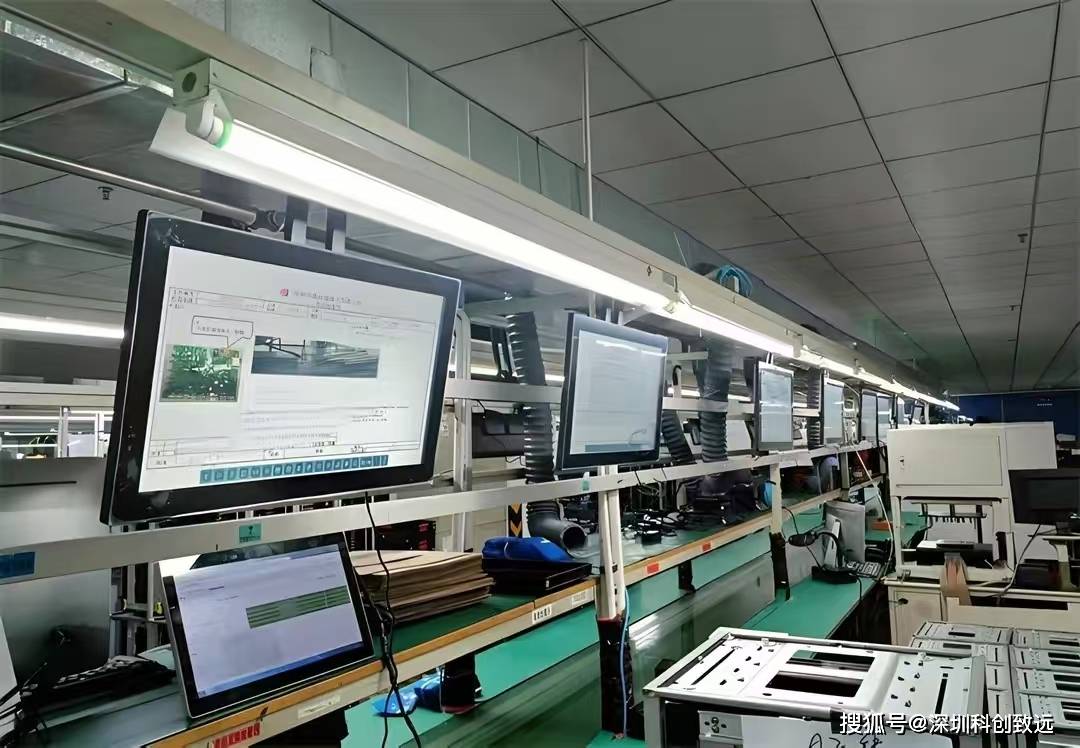
Core Insights - The article highlights the significant reduction in material error rates from 3.2% to 0.8% at a SMT factory in Bao'an, Shenzhen, achieved through the implementation of a digital ESOP (Electronic Standard Operating Procedure) system [2][4]. Group 1: Pain Points - The factory faced production challenges due to reliance on paper-based SOPs, leading to high material error rates and operational inefficiencies [2]. - Frequent material changes caused anxiety among staff, as the risk of incorrect component placement was a constant concern [2][4]. Group 2: Solutions - The introduction of the ESOP system transformed the production process into a digital closed-loop, enhancing accuracy and efficiency [3]. - The system allows for real-time updates and version control, significantly reducing the likelihood of errors associated with outdated paper instructions [4]. Group 3: Results - Within three months of implementing the ESOP system, the factory reported a dramatic decrease in material error rates and improved operational confidence among staff [3][4]. - Changeover efficiency improved, with a reduction in mold and program switching time by approximately 20% [4].
仁宝总经理兼CEO:内存在PC原料成本中的占比已然翻倍
Sou Hu Cai Jing· 2026-01-23 06:20
Core Insights - The CEO of Compal Electronics, Anthony Peter Bonadero, stated that memory currently accounts for nearly 40% of the raw material cost of a PC, compared to the normal range of 15-18% [1][3] - To mitigate future memory cost pressures, some clients are pre-producing to stock up on inventory, which may lead to Compal's PC shipments exceeding traditional seasonal influences in Q4 2025 and Q1 2026, although deliveries may slow down starting Q2 of this year [3] - The current memory supply tightness may extend until 2027 or even 2028, but the shortage is not expected to return to the levels seen five years ago; Compal is maintaining close communication with the three major memory manufacturers [3] - Industry participants are expected to respond to the current challenges through price increases, component adjustments, and cost reductions [3]

新股暗盘|龙旗科技暗盘收涨19.74% 一手赚612港元
Ge Long Hui A P P· 2026-01-21 12:31
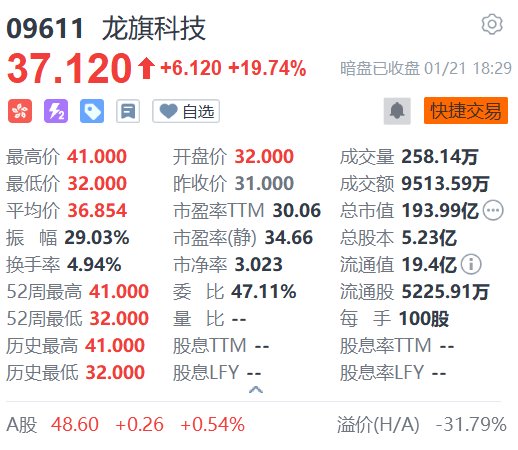
Group 1 - The core viewpoint of the article is that Longqi Technology (9611.HK), a major electronic product OEM, is set to be listed in Hong Kong on January 22, with its stock price in the dark market rising by 19.74% to HKD 37.12, compared to the offering price of HKD 31 [1] - Longqi Technology, established in 2004, is one of the top three ODM manufacturers in mainland China, primarily providing OEM services for brands such as Xiaomi, Samsung, Lenovo, Honor, OPPO, and vivo [1] - Xiaomi is the largest customer of Longqi Technology, holding a 4.9% equity stake in the company [1] Group 2 - In terms of market position, Longqi Technology is the second-largest consumer electronics ODM globally, with a market share of 22.4% based on 2024 shipment volumes, and the largest smartphone ODM, holding a 32.6% market share [1] - The stock's trading data shows a total market capitalization of HKD 19.399 billion, with a price-to-earnings ratio of 30.06 and a trading volume of 2.5814 million shares [1] - The stock experienced a price range of HKD 32.00 to HKD 41.00, with a closing price of HKD 31.00 prior to the dark market trading [1]
永安期货日报-20260106
Xin Yong An Guo Ji Zheng Quan· 2026-01-06 03:11
Market Performance - The Shanghai Composite Index rose by 1.38% to 4023.42 points, while the Shenzhen Component increased by 2.24% and the ChiNext Index surged by 2.85%[1] - The Hang Seng Index in Hong Kong slightly increased by 0.03% to 26347.24 points, with the Hang Seng Tech Index up by 0.09% and the Hang Seng China Enterprises Index down by 0.22%[1] - The total trading volume in the Hong Kong market reached 2834.623 million HKD[1] Economic Indicators - The US ISM Manufacturing Index fell to a one-year low of 47.9, indicating continued contraction in factory activity, marking the tenth consecutive month below the neutral level of 50[11] - New orders in the US manufacturing sector have contracted for the fourth consecutive month, with employment indicators remaining below the growth threshold for eleven months[11] International Developments - China has requested banks to report their loan exposure risks related to Venezuela, emphasizing the need for enhanced risk monitoring of all credit related to Venezuela[11] - The Swiss government has frozen assets belonging to Venezuelan President Nicolás Maduro and his associates for a provisional period of four years[11] Sector Highlights - The AI pharmaceutical and brain-computer interface sectors saw significant gains, reflecting strong investor interest in technology-driven healthcare solutions[1] - The insurance, medical, and semiconductor sectors also showed robust performance in the market[1]
AI需求强劲 富士康第四季度营收激增22% 创历史新高
Xin Lang Cai Jing· 2026-01-05 10:24
Core Viewpoint - Foxconn, the world's largest electronics manufacturer, reported record revenue in Q4 driven by strong demand for AI products, with revenue reaching NT$2.6028 trillion (approximately US$82.73 billion), a year-on-year increase of 22.07% [1] Group 1: Financial Performance - Foxconn's Q4 revenue growth in USD terms was 26.4%, primarily driven by the cloud and networking product division due to explosive demand for AI products [2] - In December alone, Foxconn's revenue reached NT$862.86 billion, a year-on-year increase of 31.77%, marking the highest revenue for that month in history [3] - The company's Q4 performance exceeded the London Stock Exchange Group's forecast of NT$2.418 trillion, indicating a strong market position [1] Group 2: Market Dynamics - The strong performance in Q4 sets a high baseline for comparison in Q1 2026, despite the upcoming seasonal downturn in information and communication technology products [1] - The smart consumer electronics division, which includes iPhones, experienced a slight revenue decline due to currency fluctuations [2] - Demand for AI server rack products is expected to continue driving performance, potentially reaching the upper limits of the company's performance over the past five years [1]
郭台铭终于想通了!千亿投资打水漂后放弃“美国梦”,带46台光刻机回国求合作
Sou Hu Cai Jing· 2026-01-05 08:25
Core Insights - The article discusses the dramatic shift in the business strategy of Terry Gou, founder of Foxconn, as he returns to the Chinese market with 46 lithography machines, indicating a strategic correction after previously underestimating the mainland market [1][3] - It highlights the contrast between Gou's past decisions, such as investing in a liquid crystal panel factory in Wisconsin, which turned out to be a loss-making venture, and the need to reconnect with the core Chinese market [3][4] - The article emphasizes the importance of understanding market trends and core technological innovation for sustained growth, as demonstrated by BYD's rise in the automotive and electronics sectors, surpassing Foxconn [6] Company Strategy - Terry Gou's return to China is not merely about relocating equipment but signifies a renewed understanding of the importance of the Chinese manufacturing ecosystem and consumer market potential [3] - Gou's previous investments in the U.S. were criticized for being detached from the realities of the industry, leading to significant losses and a weakened connection to the Chinese supply chain [3][4] - The article points out that the gross margin for 5nm chips produced in Taiwan is 62%, while it drops to 8% in the U.S., illustrating the financial impracticality of U.S. production for semiconductor companies [4] Industry Trends - The narrative contrasts the fortunes of Foxconn with BYD, which has successfully built a complete industry chain through independent research and development, highlighting the critical role of core technological capabilities in market resilience [6] - The article suggests that companies must maintain humility and a deep understanding of market dynamics to thrive, as the Chinese market is no longer a "cash cow" but requires respect and commitment [6] - It concludes that the lessons from Gou's business journey reflect broader truths about corporate survival and growth in a changing economic landscape [6]