
能源计量

Search documents
一批国家标准本月起实施
Ren Min Ri Bao· 2026-02-02 19:29
Group 1: National Standards Implementation - A set of national standards related to industrial upgrading, public safety, and consumer protection has been implemented as of February 1 [1] - The standards cover key areas such as software and communication, energy management, technological innovation, education health, elderly care services, consumer environment, special equipment safety, and emergency rescue [1] Group 2: Technological Innovation and Industrial Upgrading - The "Software Process Capability Maturity Model" standard aims to enhance software companies' management levels and overall capabilities [1] - The "5G Mobile Communication Network Security Technical Requirements" standard establishes security architecture for 5G networks, focusing on access security, network security, and user privacy protection [1] Group 3: Energy Efficiency and Green Development - The revised "Energy Measurement Equipment Configuration and Management Guidelines" standard imposes mandatory requirements on energy measurement equipment, supporting energy-saving and efficiency management for enterprises [2] Group 4: Focus on Vulnerable Groups - The "General Technical Requirements for Student Rest Desks and Chairs" standard addresses the health needs of school students, ensuring product quality and improving their rest conditions [2] - The "Guidelines for Designing Furniture for the Elderly" standard provides specific design instructions for furniture used by older adults, enhancing their quality of life [2] Group 5: Consumer Rights and Public Safety - The "Barcode Placement Requirements" standard standardizes barcode placement on retail goods, improving data collection efficiency [3] - The "Elevator Safety Requirements Part 2" standard specifies safety parameters for elevators, providing a unified technical benchmark for safety evaluations [3] - New standards aim to guide the development of emerging industries, protect consumer rights, and ensure public safety [3]
涉及5G移动通信安全等,这些国家标准2月1日起实施
Xin Hua She· 2026-02-01 01:15
Group 1 - The implementation of new national standards starting February 1 aims to guide and regulate emerging industries, protect consumer rights, and ensure public safety [1][2][3][4] - The "5G Mobile Communication Network Security Technical Requirements" standard establishes a security framework for 5G networks, enhancing communication security capabilities during integration with vertical industries [1] - The "Software Process Capability Maturity Model" standard outlines requirements for software process improvement, promoting the overall capability level of the software industry in China [1] Group 2 - The "Energy Metering Equipment Provision and Management Guidelines" standard mandates principles and accuracy requirements for energy metering, aiding energy conservation and economic efficiency for enterprises [2] - The "Guidelines for the Conversion of Scientific and Technological Achievements into Standards" standard facilitates the transformation of cutting-edge technologies into standards, promoting deep integration of standards with technological and industrial innovation [2] - The "General Technical Requirements for Student Rest Desks and Chairs" standard ensures the quality of rest furniture for students, addressing the needs of non-boarding school students [2] Group 3 - The "Design Guidelines for Elderly Furniture" standard provides design recommendations to better meet the needs of elderly users, improving their quality of life and safety [3] - The "Barcode Symbol Placement Requirements" standard standardizes barcode placement on products, enhancing data collection efficiency in the supply chain [3] - The "Consumer Experience Center Construction and Service Guidelines" standard establishes principles for building consumer experience centers, promoting high-quality economic development through improved product evaluation and service levels [3] Group 4 - The "Elevator Safety Requirements Part 2" standard specifies safety parameters for elevators and their components, providing technical support for safety evaluations [4] - The "Basic Requirements for Earthquake Rescue Team Capability" standard outlines overall requirements for rescue teams, enhancing the effectiveness of life-saving operations during earthquake disasters [4]
半两财经|涉及通信安全、商品条码等,2月1日起将实施一批国家标准
Xin Lang Cai Jing· 2026-01-31 11:12
Group 1 - The implementation of several important national standards starting from February 1 includes software process capability maturity model, 5G mobile communication security, energy metering equipment management, and others [1] - The Software Process Capability Maturity Model (GB/T 45989—2025) aims to improve software processes and management levels in the software industry, promoting sustainable development [3] - The 5G Mobile Communication Network Security Technical Requirements (GB/T 46462—2025) establish security architecture and requirements for 5G networks, enhancing communication security capabilities [4] Group 2 - The Energy Metering Equipment Management Guidelines (GB 17167—2025) set mandatory standards for energy metering equipment, aiding in energy conservation and management for enterprises [5] - The Guidelines for the Transformation of Scientific and Technological Achievements into Standards (GB/T 33450—2025) provide guidance for converting technological achievements into standards, fostering innovation [6] - The National Standard for Student Physical Health Testing Equipment (GB/T 19851.12—2025) ensures the quality and safety of physical education equipment in schools [8] Group 3 - The General Technical Requirements for Student Nap Desks and Chairs (GB/T 46016—2025) aim to ensure the quality of nap furniture for students, addressing their health needs [9] - The Design Guidelines for Elderly Furniture (GB/T 46015—2025) provide recommendations for designing furniture that meets the needs of elderly users, improving their quality of life [10] - The Barcode Symbol Placement Requirements (GB/T 14257—2025) standardize barcode placement on products, enhancing data collection efficiency in the supply chain [11] Group 4 - The Consumer Experience Center Construction and Service Guidelines (GB/T 46705—2025) establish principles for consumer service centers, promoting product quality and service improvement [12] - The Elevator Safety Requirements (GB/T 24803.2—2025) set safety parameters for elevators, providing a technical basis for safety evaluations [13] - The Basic Requirements for Earthquake Rescue Teams (GB/T 46578—2025) outline capabilities and training for rescue teams, enhancing disaster response effectiveness [14]

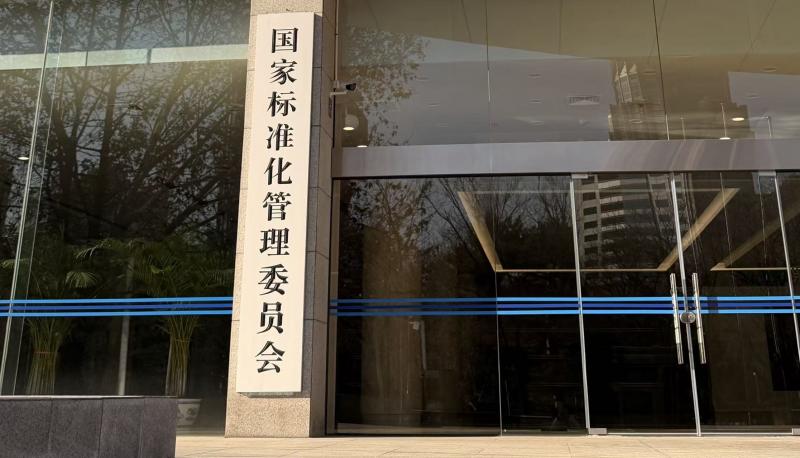
聚焦民生关切与产业升级 一批国家标准2月1日正式施行
Xin Lang Cai Jing· 2026-01-31 09:10
Core Points - A series of important national standards will be implemented starting February 1, aimed at guiding and regulating the development of emerging and future industries, promoting the application of results and standards, protecting consumer rights, and ensuring public safety [1] Group 1: Software and Communication Standards - The Software Process Capability Maturity Model (GB/T 45989—2025) establishes a framework for software process capability, enhancing management levels and promoting the sustainable development of the software industry in China [2] - The 5G Mobile Communication Network Security Technical Requirements (GB/T 46462—2025) set forth security architecture and requirements for access, network security, user privacy protection, and safety services, enhancing communication security capabilities [3] Group 2: Energy and Technology Standards - The Energy Metering Equipment Allocation and Management Guidelines (GB 17167—2025) outline mandatory requirements for energy metering equipment, aiming to improve energy management and economic efficiency in energy-consuming units [4] - The Guidelines for the Transformation of Scientific and Technological Achievements into Standards (GB/T 33450—2025) provide guidance for analyzing and assessing the feasibility of transforming technological achievements into standards, promoting integration with innovation [5] Group 3: Educational and Health Standards - The National Standard for Student Physical Health Testing Equipment (GB/T 19851.12—2025) defines requirements and testing methods for physical health testing equipment, ensuring quality and safety in school sports equipment [6] - The General Technical Requirements for Student Nap Desks and Chairs (GB/T 46016—2025) establish standards for nap furniture in schools, addressing the needs of non-boarding students and promoting their health [7] Group 4: Consumer and Safety Standards - The Guidelines for the Design of Elderly Furniture (GB/T 46015—2025) provide design principles and considerations for furniture aimed at elderly users, enhancing their quality of life and safety [8] - The Barcode Symbol Placement Requirements (GB/T 14257—2025) standardize barcode placement on products, improving data collection efficiency in the supply chain [10] - The Consumer Experience Center Construction and Service Guidelines (GB/T 46705—2025) and the Comparative Testing Requirements for Consumer Goods (GB/T 46708—2025) aim to enhance product quality and service levels through objective evaluations [11] - The Elevator Safety Requirements (GB/T 24803.2—2025) establish safety parameters for elevators, providing a technical basis for safety evaluations [12] - The Basic Requirements for Earthquake Rescue Teams (GB/T 46578—2025) outline capabilities and training requirements for rescue teams, improving disaster response effectiveness [13]
去年全国城镇新增就业1267万人 发改委正研究制定城乡居民增收计划
Xin Lang Cai Jing· 2026-01-26 06:39
Employment and Labor Market - In 2025, the new urban employment reached 12.67 million, with an average urban survey unemployment rate of 5.2%, indicating overall stability in the employment situation [1] - The Ministry of Human Resources and Social Security plans to implement new employment policies for youth, including college graduates, and enhance recruitment activities [1] - Measures will be taken to support migrant workers and improve employment assistance for vulnerable groups, including veterans [1] Energy Sector - In 2025, 7,084 out of 7,480 key energy-consuming units passed energy measurement reviews, achieving a compliance rate of 94.71% [1] - The energy measurement reviews aim for full coverage of key energy-consuming units during the 14th Five-Year Plan period [1] Financial Sector - The Loan Prime Rate (LPR) for one year is set at 3.0% and for five years or more at 3.5%, remaining unchanged for eight consecutive months [2] - The People's Bank of China indicates there is still room for further reductions in reserve requirements and interest rates [2] Consumer Finance - The implementation period for the personal consumption loan interest subsidy policy has been extended to the end of 2026, with a 1% annual subsidy rate for eligible consumption [4] - The policy now includes credit card installment payments as part of the support scope [4] Tourism Sector - The 2026 version of the team tourism contract template will be implemented nationwide starting March 31, 2026, focusing on enhancing service quality and consumer protection [5] Investment and Economic Development - A special guarantee plan for private investment totaling 500 billion yuan will be implemented over two years to support small and micro enterprises [6] - The plan aims to provide loan guarantees for various business activities, including equipment purchases and digital transformation [6] Pharmaceutical Sector - In 2025, the National Medical Products Administration approved 76 innovative drugs, with 30 of them successfully entering the national medical insurance directory, achieving a coverage rate of 70% for new drugs approved in the first half of the year [6] Fiscal Policy - In 2025, the issuance of ultra-long special government bonds reached 1.3 trillion yuan to support consumption and economic transformation [7] - The funds are allocated for consumer subsidies and to stimulate sales in related sectors, enhancing the quality of life for citizens [7] Regulatory Framework - The National Supervisory Commission will implement the "Regulations on the Disclosure of Supervisory Work Information" starting March 1, 2026, to enhance transparency in supervisory activities [8] Economic Strategy - The National Development and Reform Commission is developing plans to stabilize employment and increase residents' income, which are crucial for boosting domestic demand [8]

市场监管总局:2025年发布国家计量技术规范213项
Yang Shi Xin Wen· 2026-01-19 03:29
Core Viewpoint - The State Administration for Market Regulation has reported that the number of national metrology technical standards will increase to 2,273 by 2025, representing a growth of 63.8% compared to 2024 [1] Group 1: Supporting Public Welfare - The release of national metrology technical standards for electronic weighing scales, optical lens boxes, digital electric energy meters, and weighing scales aims to ensure fair transactions and enhance public satisfaction [1] Group 2: Supporting Manufacturing Strength - New national metrology technical standards for satellite navigation interference simulation sources, metrology instrument software identification, and Bluetooth testing instruments are designed to support the development of high-end manufacturing [1] Group 3: Promoting Green Development - The introduction of national metrology technical standards for energy resource measurement reviews in key public institutions, zero-carbon building measurement evaluations, and vehicle emission gas testing instruments will facilitate the achievement of carbon neutrality goals [1]
大浪淘沙:香港中小市值股票专题报告
Guoyuan International· 2025-10-16 14:05
Group 1: Characteristics of Small and Medium-sized Stocks - Small and medium-sized stocks in the Hong Kong market are defined as those with a market capitalization below HKD 30 billion[11] - Companies with a market capitalization below HKD 10 billion account for approximately 77.5% of the total number of companies, but only 3.5% of the total market capitalization[13] - The average daily trading volume for small and medium-sized stocks is only 20%, with 80% of trading concentrated in 200 blue-chip stocks[16] Group 2: Valuation Discounts and Investment Opportunities - Small-cap stocks are currently trading at a significant discount, with a PE ratio of approximately 9.2x and a PB ratio of 0.8x, compared to the Hang Seng Index's 14.8x PE and 1.1x PB[17] - The lack of institutional investor interest and poor liquidity contribute to the low valuation levels of small-cap stocks[17] - High-quality small-cap stocks are identified as having a "low valuation + stable fundamentals + high growth" characteristic, indicating potential investment opportunities[17] Group 3: Market Dynamics and Investor Behavior - Institutional investors dominate the Hong Kong market, with a trading share of 56.5%, while individual investors account for only 15.5%[27] - Foreign institutional investors hold nearly two-thirds of the market capitalization, leading to a preference for high-liquidity large-cap stocks[27] - The lack of research coverage for small-cap stocks results in insufficient market analysis and investor information, further exacerbating their undervaluation[32] Group 4: Performance and Growth Potential - Small-cap stocks have shown significant price elasticity and potential for high returns, with several stocks increasing over 500% since 2024[36] - The growth potential of small-cap companies is enhanced by their ability to quickly adapt to market changes and focus on niche markets[37] - Historical data indicates that small-cap stocks have outperformed large-cap stocks during bull markets, particularly in periods of increased investor risk appetite[41]
北京发布6项绿色低碳地方标准,涉及能源计量体系建设等关键领域
Zhong Guo Xin Wen Wang· 2025-10-13 06:07
Core Points - Beijing's market supervision authority has released six local standards aimed at promoting the city as a benchmark for international green economy, focusing on carbon emissions, energy consumption limits, resource recycling, and energy measurement systems [1] Group 1: Carbon Emissions - The new guideline for carbon emissions in industrial parks outlines technical requirements for carbon emission evaluation indicators, accounting, analysis, and pollution reduction measures, integrating low-carbon concepts into planning stages [1] - The standard aims to upgrade environmental impact assessments to include climate change responses, enhancing resource allocation and carbon efficiency in industrial parks [1] Group 2: Energy Consumption Limits - Revised standards for energy consumption limits in the production of liquor and synthetic detergents provide specific energy consumption thresholds based on production processes, encouraging the adoption of advanced energy-saving technologies [2] - These standards are designed to optimize energy management levels in production enterprises and provide a scientific basis for government energy-saving monitoring [2] Group 3: Resource Recycling - A new technical specification for the use of sludge products in mine soil reconstruction sets requirements for utilization, environmental monitoring, and documentation, supporting the large-scale application of sludge in mine restoration [2] - The revision of the sewage source heat pump system design specification enhances the design level and operational reliability of sewage source heat pump systems, promoting broader application of this technology [2] Group 4: Energy Measurement - A guideline for energy measurement in enterprise energy systems focuses on the hierarchical measurement of energy use, including renewable energy systems, and specifies measurement methods for various renewable energy technologies [3] - The standard outlines two main applications for renewable energy measurement data: energy audits and carbon footprint accounting, aiding enterprises in optimizing energy structure and carbon reduction strategies [3]
北京发布6项绿色低碳地方标准 涉及碳排放等关键领域
Zhong Guo Xin Wen Wang· 2025-10-13 04:30
Core Points - Beijing has released six local standards aimed at promoting green and low-carbon development, focusing on carbon emissions, energy consumption limits, resource recycling, and energy measurement systems [1][2][3] Group 1: Carbon Emission Standards - The standard titled "Technical Guidelines for Environmental Impact Assessment of Industrial Park Planning - Carbon Emissions" establishes technical requirements for carbon emission evaluation, accounting, and pollution reduction measures, targeting industrial parks and key industries [1] - This standard aims to upgrade environmental impact assessments to include climate change considerations, facilitating the integration of low-carbon concepts in the planning phase of industrial parks [1] Group 2: Energy Consumption Limits - The revised standards for "Energy Consumption Limits for White Spirit Products" and "Energy Consumption Limits for Synthetic Detergents" provide specific energy consumption limits based on production processes, encouraging the adoption of advanced energy-saving technologies [2] - These standards are designed to optimize energy consumption management in the production of white spirit and synthetic detergents, ultimately reducing production costs [2] Group 3: Resource Recycling - The "Technical Specifications for the Reconstruction and Utilization of Sludge Products in Mining Soil" outlines requirements for the use of sludge products in mining restoration, including environmental monitoring and record-keeping [2] - With an annual sludge production of approximately 2.19 million tons in Beijing, this standard aims to promote large-scale application of sludge in mine restoration, contributing to carbon neutrality goals [2] Group 4: Energy Measurement - The "Technical Guidelines for Energy Measurement Systems Coupling Renewable Energy for Enterprises" focuses on energy measurement levels and methods for various renewable energy systems, including solar, wind, and biomass [3] - The guidelines specify two main applications for renewable energy measurement data: energy audits for optimizing energy structure and carbon footprint accounting for improving carbon reduction strategies [3] - The implementation of this standard is expected to enhance energy measurement management and efficiency, supporting sustainable development in Beijing [3]
中阿经贸合作提质升级动能强劲
Jing Ji Ri Bao· 2025-08-28 22:11
Group 1 - The seventh China-Arab States Expo was held in Yinchuan, focusing on cooperation in traditional fields like trade, energy, and technology, while also expanding into emerging areas such as digital economy and artificial intelligence [1][2] - The event attracted over 17,800 participants, including representatives from 75 countries and regions, showcasing its significant influence and appeal [1][3] - The UAE was the guest country, with its representatives expressing a desire to deepen cooperation with Ningxia and expand into more sectors [2] Group 2 - China has maintained its position as the largest trading partner of Arab countries, with a projected trade volume of $407.4 billion in 2024, marking a 2.3% increase year-on-year [3] - The expo provided opportunities for companies like Ningxia Longi Ningguang Instrument Co., Ltd. to explore the Arab market, indicating a shift from a domestic focus to international expansion [3][4] - The event highlighted the growing trade relations between China and Syria, with a focus on cultural heritage products and the potential for further collaboration [4] Group 3 - The expo introduced several firsts, including a green electricity application zone and an artificial intelligence exhibition, reflecting a new wave of cooperation in technology and sustainable practices [6] - Companies showcased innovative products, such as humanoid robots and advanced agricultural systems, aiming to enhance their international presence and explore new markets [6][7] - Ningxia's trade with Arab countries saw a significant increase, with a 41.5% rise in import and export value in the first seven months of the year [8]