
评级服务

Search documents
穆迪AI业务面临挑战,股价回调反映市场担忧
Jing Ji Guan Cha Wang· 2026-02-11 21:36
Core Viewpoint - Moody's stock has recently experienced a significant pullback, with its AI business facing critical challenges that may not fully support the current valuation pressure [1] Financial Performance - Moody's Analytics (MA) reported a 9.4% year-over-year revenue growth in Q3 2025, but specific contributions from AI-related business were not disclosed, raising market concerns about its ability to offset the slowdown in traditional rating services [2] - Moody's Investor Services (MIS) saw a 12% revenue increase in Q3 2025, but a potential delay in corporate refinancing activities due to economic slowdown could directly impact rating revenues [2] Business Development - To maintain its AI platform "Moody's Dash" in partnership with Microsoft, Moody's needs to invest heavily in cloud computing and talent resources, leading to stagnation or even a slight decline in return on assets (ROA) from 2025 to 2026 [3] - Clients facing profit pressures are reluctant to accept significant price increases for AI functionalities, putting Moody's in a dilemma of needing to invest in AI without the ability to effectively raise prices [3] Industry and Risk Analysis - The private credit market has surpassed $2 trillion, and a wave of defaults could raise questions about the effectiveness of Moody's risk models, potentially dragging down the valuation of the MA segment [4] - The ESG rating business is expected to face stringent regulatory scrutiny in 2026, shifting anticipated growth into compliance burdens [4] - Emerging markets are mandating the use of local rating agencies, reducing reliance on U.S. firms and potentially squeezing Moody's long-term growth prospects [4] Company Valuation - Wall Street has high expectations for Moody's, with a current price-to-earnings (P/E) ratio of 33.16, significantly above the industry average [5] - If major institutions downgrade their ratings, it could trigger a chain reaction of sell-offs [5] - As of February 11, 2026, Moody's market capitalization stood at $73.542 billion, but the stock price has declined by 19.31% year-to-date, reflecting ongoing market concerns about the efficiency of its AI business transformation [5] Future Development - While Moody's AI business has long-term potential in terms of technological investment and partnerships, it faces multiple short-term pressures including cost control, insufficient pricing power, and headwinds from traditional business [6] - The recent stock price pullback is more indicative of the market's re-evaluation of these risks rather than a substantive support from the AI business [6] - Investors should closely monitor the revenue conversion progress and cost control effectiveness of the AI business in Moody's Q1 2026 financial report [6]
标普全球股价大跌 全年利润展望逊于分析师预期
Jin Rong Jie· 2026-02-10 15:49
Core Viewpoint - S&P Global's stock price fell significantly due to disappointing earnings forecasts for 2026, which were below analyst expectations [1] Group 1: Earnings Forecast - The company projected adjusted diluted earnings per share for the year to be between $19.40 and $19.65, which is lower than the average analyst expectation of $20 [1] - This earnings forecast has led to a notable decline in investor confidence, reflected in the stock price drop [1] Group 2: Stock Performance - Following the earnings forecast announcement, S&P Global's stock price decreased by 8.8%, reaching $404.99 [1] - At one point, the stock price had dropped as much as 11% during trading [1]
2026年全球信用风险八大展望:大国博弈与全球秩序重塑
Lian He Zi Xin· 2026-02-03 13:44
Geopolitical Risks - The geopolitical conflicts are expected to remain the biggest risk in 2026, with the U.S. focusing on Monroe Doctrine in the Western Hemisphere and increasing geopolitical tensions in Latin America and the Arctic[11] - The global geopolitical risk index is hovering around 140, indicating a second structural peak since the post-9/11 era, driven by systemic strategic competition among major powers[11] - The U.S. military operation against Venezuela's President Maduro marks a shift in U.S. strategy towards focusing on regional control of strategic resources[13][14] Economic Outlook - The global economy is projected to grow at around 3.0% in 2026, with developed economies expected to grow at approximately 1.6% and emerging economies at about 4.0%[31] - The U.S. economy is anticipated to maintain a growth rate of around 2%, supported by fiscal policies and technological advancements, despite facing structural challenges in the labor market[32] - The EU's economic growth is expected to remain sluggish at about 1.4%, hindered by high core inflation and weak performance in key economies like Germany and France[34] Monetary Policies - The Federal Reserve is likely to adopt a more accommodative monetary policy in 2026, with potential rate cuts of 2-3 times, influenced by political pressures and economic conditions[20][23] - The European Central Bank is expected to maintain a "middle strategy" in its monetary policy, balancing between controlling inflation and stimulating economic growth, with rates around 2%[24][26] - The Bank of Japan is projected to continue its gradual rate hikes, potentially reaching around 1% by 2026, amid challenges from fiscal policies and inflationary pressures[27][28] Fiscal Policies - Expansionary fiscal policies are expected to dominate globally, with developed economies' fiscal deficit rates around 5.0% and emerging economies around 6.0%[38][40] - The U.S. fiscal deficit is projected to remain high at approximately 7.5%, driven by the "Big and Beautiful Act" aimed at stimulating economic activity[38] - Japan's fiscal deficit is expected to expand to around 2.0%, as the government continues to prioritize fiscal expansion to boost domestic demand[40]
【碳路司南·ESG圆桌会】ESG评价:如何构建标准、数据与价值的闭环联动,赋能企业可持续发展?
Xin Hua Cai Jing· 2025-12-26 06:35
Core Insights - The article emphasizes the growing importance of ESG (Environmental, Social, and Governance) ratings in assessing corporate sustainability and the need for alignment between local ESG evaluations and international standards [1] Group 1: ESG Ratings and Their Role - ESG ratings are becoming essential for investment decisions, with a shift from companies as mere information providers to strategic leaders in the market [2][3] - MSCI ESG ratings measure a company's resilience to sustainability risks and opportunities, with over 3,000 institutional investors relying on MSCI's sustainability data, and assets tracking MSCI sustainability indices expected to exceed $1 trillion by the end of 2024 [2] Group 2: Potential Value of ESG Ratings - ESG ratings help quantify non-financial information, enabling investors to assess long-term value and risks that traditional financial analysis may overlook [3] - The ratings guide capital allocation towards sustainable sectors and provide companies with a roadmap for improving management and transparency, thus enhancing competitive advantage and rebuilding public trust [3] Group 3: Avoiding "Greenwashing" Risks - To mitigate "greenwashing," companies should shift from compliance-based disclosures to strategic tools, with 64% of leading companies having climate transition plans aligned with the 1.5°C target [4] - Leading companies show significant differences in practices, such as 40% implementing internal carbon pricing compared to only 20% in the overall sample [4] Group 4: Current State of China's ESG Rating Market - China's ESG rating market is transitioning from concept awareness to standardized development, driven by policy and increasing market demand [8] - The number of Chinese companies rated AA and AAA by MSCI increased by 66% from 2023 to 2024, indicating a growing integration of sustainability into corporate strategies [7] Group 5: Enhancing ESG Information Disclosure - Chinese companies are encouraged to improve disclosure quality, with 87% of responding companies aligning with international sustainability disclosure standards [12] - Collaboration across the value chain is essential, particularly in managing "Scope 3" emissions, which are significantly higher than operational emissions [13] Group 6: Future Directions for ESG Ratings - Future ESG ratings will increasingly emphasize the financial impact of ESG factors, incorporating climate scenario analysis and industry-specific transition risks [14] - Companies should proactively integrate ESG into their core strategies, using rating results as diagnostic tools to identify and manage risks, thereby gaining long-term trust from capital markets [14]
标普预测阿塞拜疆2025-2028年年均经济增长1.9%
Shang Wu Bu Wang Zhan· 2025-12-25 02:26
Economic Growth Forecast - S&P Global Ratings predicts Azerbaijan's GDP growth to be 1.8% in 2025, followed by 1.7% in 2026, and reaching 2% and 2.1% in 2027 and 2028 respectively, resulting in an average annual GDP growth rate of 1.9% from 2025 to 2028 [1] Sector Performance - The growth in the second half of 2025 is expected to be driven primarily by the non-oil and gas sectors, with a year-on-year increase of 1.5% [1] - The oil sector continues to negatively impact overall economic growth due to declining prices and reduced production [1] Oil and Gas Production - In the first ten months of 2025, oil production decreased to approximately 556,000 barrels per day, a year-on-year reduction of about 27,000 barrels per day, representing a decline of 4.6% [1] - Natural gas production was around 849,000 barrels per day (oil equivalent), with a modest year-on-year increase of approximately 14,000 barrels per day (oil equivalent), reflecting a growth of 1.7% [1] - The slight increase in natural gas production is insufficient to offset the decline in oil production, indicating that the traditional oil and gas sector remains in a state of negative growth [1]

S&P Global (NYSE:SPGI) Conference Transcript
2025-12-09 18:22
Summary of S&P Global Conference Call - December 09, 2025 Company Overview - **Company**: S&P Global (NYSE: SPGI) - **Key Speaker**: Martina Cheung, CEO Industry Insights Growth Targets - **Medium-term organic revenue growth**: 7%-9% with **margin expansion** of 50-75 basis points per year [2][6] - **Division-specific growth rates**: - Market Intelligence: 6%-8% - Ratings: 6%-9% - Commodity Insights: 6%-8% - Index: 10%-12% [3] Key Growth Drivers - **Private Markets**: Significant opportunities in private credit, private equity, hedge funds, and infrastructure [20] - **Energy Expansion**: Anticipated 50% increase in overall energy demand by 2050 and tripling of electricity demand [24] - **AI Integration**: Leveraging proprietary data and AI to enhance product offerings and customer engagement [8][12] Market Dynamics - **Refinancing Wall**: High levels of refinancing expected, with 9% growth in 2024 [27] - **Economic Outlook**: No anticipated recession; balanced growth expected [28] Core Business Segments Ratings - Focus on transparency in credit rating methodologies to build trust with investors and issuers [21] - Growth driven by both transaction and non-transaction revenue, including surveillance fees [29] Market Intelligence - Strong execution and innovation, particularly in integrating generative AI into workflows [31] - Recent acquisition of WIP intelligence aimed at enhancing data integration capabilities [32] Index - Fastest-growing segment with a focus on private market indices and decentralized finance [38] - Continued investment in growth opportunities while maintaining high margins [36] Risks and Challenges - **Macro-exogenous factors**: Potential risks from external economic conditions [6] - **Regulatory impacts**: Specific sanctions affecting revenue projections in the energy sector [34] AI and Technology Integration - **AI Opportunities**: Significant potential for new product creation and improved customer outcomes through AI [11][14] - **Partnerships**: Collaborations with LLMs and IBM to enhance data distribution and integration [15] Conclusion - S&P Global is well-positioned to leverage growth opportunities in private markets and energy while integrating AI to enhance its product offerings. The company maintains a positive outlook on revenue growth and margin expansion across its divisions, despite potential macroeconomic risks.
标普全球评级发布了亚太区首个第二方意见(SPO)存续期复核
Sou Hu Cai Jing· 2025-12-04 13:49
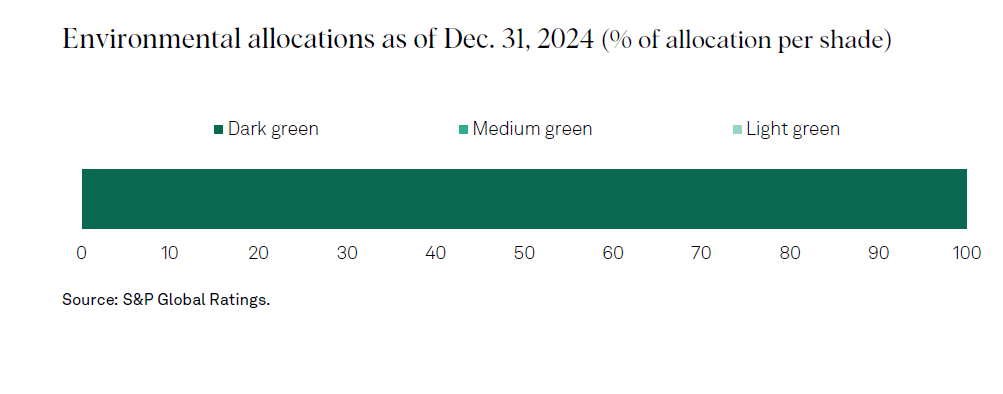
Group 1 - The core viewpoint of the news is that S&P Global Ratings has issued a second-party opinion (SPO) lifecycle review for China Power Construction Group Overseas Investment Co., marking it as the first lifecycle review in Greater China and the Asia-Pacific region [1] - The lifecycle review awarded a deep green assessment, confirming that the company's fundraising allocation remains consistent with pre-issuance commitments, fully directed towards renewable energy projects in solar and wind [1] - S&P Global Ratings has established itself as a comprehensive service provider for sustainable financing opinions, covering all stages before and after issuance [2] Group 2 - The "Shade of Green" rating by S&P Global Ratings reflects a qualitative opinion on the alignment of economic activities or financial investments with low-carbon climate resilience (LCCR) futures, consistent with the Paris Agreement [2][4] - LCCR aims to limit the global average temperature rise to below 2 degrees Celsius compared to pre-industrial levels, with efforts to restrict it to within 1.5 degrees Celsius [4] - S&P Global Ratings has been recognized as the leading provider of second-party opinions (SPO) in the Environmental Finance rankings for the first half of 2025, highlighting the trust of clients and the professionalism of its team [2][4]

穆迪:确认南丰国际控股“Baa3”发行人评级展望“稳定”
Jin Rong Jie· 2025-12-03 06:49
Core Viewpoint - Moody's has confirmed the issuer rating of Nan Fung International Holdings Limited at "Baa3" [1] Group 1 - The confirmation of the rating indicates a stable outlook for Nan Fung International Holdings Limited [1]
Why Is Moody's (MCO) Down 1% Since Last Earnings Report?
ZACKS· 2025-11-21 17:31
Core Viewpoint - Moody's reported strong Q3 earnings with adjusted earnings per share of $3.92, exceeding estimates and reflecting a 22.1% year-over-year growth [2][3] Financial Performance - Revenues reached $2.01 billion, surpassing the consensus estimate of $1.96 billion, and increased by 10.7% year-over-year [4] - Total expenses were $1.09 billion, a 1.4% increase year-over-year, while adjusted operating income rose 22.5% to $1.06 billion, with an adjusted operating margin of 52.9% [4] - Net income attributable to Moody's was $646 million, or $3.60 per share, up from $534 million, or $2.93 per share, in the prior-year quarter [3] Segment Performance - Moody's Investors Service revenues increased by 11.8% year-over-year to $1.10 billion, driven by strong performance across various finance sectors [5] - Moody's Analytics revenues rose 9.4% year-over-year to $909 million, supported by growth in Decision Solutions, Research and Insights, and Data & Information [5] Balance Sheet and Cash Flow - As of September 30, 2025, Moody's had total cash and short-term investments of $2.26 billion, down from $2.97 billion at the end of 2024 [6] - The company reported $7 billion in outstanding debt and $1.25 billion in additional borrowing capacity [6] Share Repurchase and Guidance - Moody's repurchased 1 million shares at an average price of $503.66, with $398 million remaining in share repurchase authorization [7] - The company raised its guidance for adjusted earnings to $14.50-$14.75 per share and projected revenue growth in the high-single-digit percent range [8][9] Strategic Initiatives - Moody's is implementing a Strategic and Operational Efficiency Restructuring Program aimed at generating annual savings of $250–$300 million, with substantial completion expected by the end of 2026 [13] Market Outlook - Following the earnings release, there has been an upward trend in estimates, with a consensus estimate shift of 7.98% [14] - Moody's holds a Zacks Rank 2 (Buy), indicating expectations for above-average returns in the coming months [17]


Moody’s(MCO) - 2025 Q3 - Earnings Call Transcript
2025-10-22 14:02
Financial Data and Key Metrics Changes - Moody's achieved record quarterly revenue exceeding $2 billion for the first time, marking an 11% increase from the same quarter last year [6] - Adjusted operating margin reached almost 53%, up over 500 basis points year-over-year, indicating significant operating leverage [6] - Adjusted diluted EPS was $3.92, reflecting a 22% increase from the previous year [6] Business Line Data and Key Metrics Changes - The Ratings business (MIS) reported a 12% revenue growth, surpassing $1 billion in quarterly revenue for the third consecutive quarter [7] - Transaction revenue in MIS rose 14%, with recurring revenue increasing by 8% year-over-year [20] - Moody's Analytics (MA) experienced a 9% revenue growth, with ARR reaching nearly $3.4 billion, up 8% compared to last year [12][26] Market Data and Key Metrics Changes - The issuance pipeline remains robust, with demand for debt financing strong in private credit, AI-powered data center expansion, and infrastructure development [8][9] - Refunding needs over the next four years are projected to exceed $5 trillion, indicating a compound annual growth rate of 10% from 2018 to 2025 [9] - Spec-grade bond maturities in the U.S. increased by over 20%, while EMEA spec-grade bonds and loans rose by approximately 20% [10] Company Strategy and Development Direction - Moody's is focused on investing in scalable solutions across high-growth markets while simplifying its product suite [12] - The company is expanding its presence in emerging markets, including acquiring a majority interest in Meris, a leading ratings agency in Egypt [18] - Partnerships, such as with Salesforce, are crucial for embedding data into partner ecosystems, enhancing customer integration and retention [16] Management's Comments on Operating Environment and Future Outlook - Management expressed optimism about the issuance environment heading into 2026, citing tight spreads and potential Fed easing as positive factors [58] - The company anticipates continued growth in private credit and a robust M&A environment, with expectations for M&A issuance to increase by 15% to 20% for the full year 2025 [25][58] - Risks remain, including ongoing tariff negotiations and potential impacts from a prolonged government shutdown [26] Other Important Information - Moody's is increasing its full-year guidance across almost all metrics, reflecting strong growth and operating leverage [5][19] - The company is raising its adjusted diluted EPS guidance to a range of $14.50 to $14.75, implying roughly 17% growth at the midpoint compared to last year [34] - Free cash flow is anticipated to be approximately $2.5 billion, with share repurchase guidance increased to at least $1.5 billion [34] Q&A Session Summary Question: Thoughts on AI in the analytics business - Management indicated that AI is being embedded into various workflow solutions and that they have developed over 50 domain-specific agents leveraging proprietary data [38][40] Question: Impact of third quarter's record issuance - Management noted that pull forward activity is more prevalent in spec-grade than in investment-grade issuers, with healthy maturity walls expected [44] Question: Proprietary data sets in KYC solutions - Management highlighted the unique data sets used in KYC solutions, including Orbis and politically exposed persons data, which provide a comprehensive view of business relationships [47][49] Question: Differences in refi walls portrayal - Management clarified that the article referenced a decline in U.S. spec-grade refi walls, which is a subset of broader maturities, and emphasized the overall favorable refinancing environment [52][54] Question: Outlook for issuance in 2026 - Management expressed optimism about the issuance environment, citing more tailwinds than headwinds, including tight spreads and a robust M&A pipeline [58][60] Question: Concerns about private credit health - Management acknowledged potential credit stress in the private market but emphasized the importance of independent credit assessments and the flow back into public markets [70]