“爱国者”导弹

Search documents
谈判进入“决定性回合”,美舰机仍向中东集结,世界紧盯美伊“摊牌”时刻
Huan Qiu Shi Bao· 2026-02-26 22:59
Group 1 - The core point of the article revolves around the third round of indirect negotiations between Iran and the United States, which is seen as a decisive moment that could determine the future of U.S.-Iran relations, whether it leads to peace or conflict [1][6]. - Iran's Foreign Minister Zarif emphasized that the success of the negotiations depends on the seriousness of the U.S. and its ability to avoid contradictory actions [1]. - The U.S. continues to exert pressure on Iran through sanctions and military deployments, including the addition of F-22 fighter jets to Israel [1][7]. Group 2 - Iran's proposed agreement includes maintaining a symbolic uranium enrichment capability, with plans to suspend nuclear activities for 3 to 5 years and keep enrichment levels at a low 1.5% for medical research [4]. - The proposal also involves gradually diluting its stock of 400 kilograms of high-enriched uranium and allowing international oversight of the process [4]. - Iran is open to discussing a multilateral verification mechanism for its nuclear program, although it is unlikely to accept a zero enrichment requirement [4]. Group 3 - Iranian President Raisi expressed optimism about the negotiations, stating that there is no intention to develop nuclear weapons, and sees the talks as a historic opportunity [5]. - Iran is considering offering business opportunities to U.S. companies, including investments in oil, gas, and mining sectors, to persuade the U.S. to reach a nuclear agreement [5]. - The negotiations are viewed as a critical test of U.S. sincerity and willingness to engage in a mutually beneficial agreement [6]. Group 4 - The U.S. continues to impose sanctions on Iran, targeting over 30 entities and individuals involved in what it describes as illegal oil sales and missile production [5]. - The upcoming negotiations are expected to focus on nuclear issues while Iran aims to push for the lifting of economic sanctions [5]. - The international community is closely monitoring the situation, with many countries advising their citizens to leave Iran amid rising tensions [7].


新华财经晚报:1月份制造业PMI为49.3%
Xin Lang Cai Jing· 2026-01-31 11:12
Domestic News - In January, China's manufacturing Purchasing Managers' Index (PMI) was reported at 49.3%, a decrease of 0.8 percentage points from the previous month [2] - The production index for January was 50.6%, indicating continued expansion in manufacturing, while the new orders index fell to 49.2%, suggesting a decline in market demand [2] - Industries such as agricultural product processing and aerospace equipment showed production and new orders indices above 56.0%, indicating rapid release of supply and demand [2] - Conversely, industries like petroleum, coal, and automotive had indices below the critical point, reflecting a slowdown in market demand and production [2] - On January 30, soybean meal and corn options were officially listed for trading on the Dalian Commodity Exchange, providing more flexible hedging options for enterprises in the agricultural sector [2] International News - The U.S. Department of State approved a military sales package to Saudi Arabia, including 730 Patriot missiles and related equipment, with a total value of $9 billion [4] - Russian President Putin announced a significant increase in military exports by 2026, focusing on cooperation with the Collective Security Treaty Organization and CIS countries, with last year's military product exports generating over $15 billion [4] - According to Russian data, fish and seafood exports are expected to remain stable at approximately 2.1 million tons in 2025, with export value increasing by 14% to around $6 billion [4] - Cuba's President Díaz-Canel emphasized the country's readiness to respond to a new round of U.S. oil sanctions, condemning the actions and asserting Cuba's determination to cope with the situation [4]

日本被曝迈向全领域作战
Jing Ji Guan Cha Wang· 2025-12-04 02:21
Core Viewpoint - The Japanese government has approved a supplementary budget for the fiscal year 2025, increasing defense spending to 2% of GDP, indicating a significant shift in Japan's military strategy towards comprehensive operational capabilities [1] Defense Spending - The approved budget reflects Japan's commitment to enhancing its military capabilities, moving beyond mere maintenance to a more robust defense posture [1] - Recent military procurements include the acquisition of American-made F-35 fighter jets and the purchase of "Patriot" missiles from the U.S., showcasing a strategic partnership with the United States [1] Military Developments - Japan is establishing specialized electronic warfare units and upgrading its Aegis destroyers, which are part of a broader initiative to enhance its military readiness and capabilities [1] - The series of military actions taken by Japan suggests an underlying ambition for military expansion that is becoming increasingly evident [1]
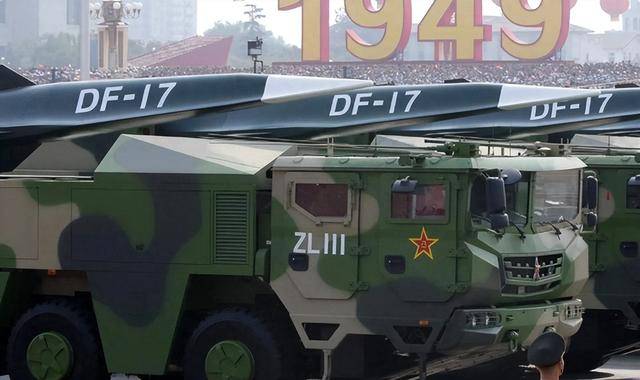
中国稀土传喜讯,高超音速有新进展,美专家:留给美国时间不多了
Sou Hu Cai Jing· 2025-06-30 14:05
Group 1 - The core issue revolves around the strategic competition between China and the United States regarding rare earth supplies, with the U.S. making concessions on tariff trade to gain some relaxation of China's export controls on rare earths [1][9]. - China is accelerating its efforts to consolidate its leading position in the rare earth industry, achieving significant breakthroughs in hypersonic technology [3][11]. - A notable technological advancement is the development of a low-inertia, high-dynamic-response permanent magnet motor system for hypersonic vehicles, which utilizes rare earth materials to enhance performance [5][7]. Group 2 - The new permanent magnet motor, made from neodymium-iron-boron, is 40% lighter than traditional motors and can switch from stationary to full speed in 0.1 seconds, tripling dynamic response speed [7][9]. - This technology improves energy efficiency by 60% compared to traditional motors, allowing vehicles to travel further and faster, exemplified by the increase in range of the Dongfeng-17 hypersonic missile from 1,800 km to 2,500 km [7][9]. - China's control over the rare earth supply chain is significant, with 90% of global rare earth permanent magnet production capacity concentrated in China, particularly in Inner Mongolia [8][11]. Group 3 - The U.S. military's heavy reliance on Chinese rare earths has been highlighted, with 80% of the magnetic components in its intercontinental missiles sourced from China, exposing vulnerabilities in its supply chain [9][13]. - China's strategic response includes reinforcing export controls and accelerating the conversion of rare earth technologies, with 53 related technological achievements expected in 2024 [11][12]. - The U.S. faces a strategic dilemma as it attempts to rebuild its domestic rare earth supply chain, which could take at least 10 years and may only meet 30% of its needs by 2030, despite significant investment [13][15]. Group 4 - The technological gap in hypersonic capabilities is widening, with China reportedly leading the U.S. by at least five years in hypersonic glide vehicle technology, and this gap is increasing at a rate of 20% per year [15][17]. - The U.S. attempts to support its domestic rare earth industry through legislation have been hampered by environmental regulations and high costs, delaying production timelines [17][18]. - The outcome of this strategic competition is beginning to take shape, with China's advancements in rare earth technology and strategic control potentially reshaping the global military industrial landscape [17][20].