
宙斯盾驱逐舰

Search documents
被中方“点名”的日本实体究竟啥来路
Xin Lang Cai Jing· 2026-02-25 17:54
Group 1 - The Chinese Ministry of Commerce has announced the inclusion of 20 entities, including Mitsubishi Heavy Industries, in an export control list aimed at curbing Japan's military expansion and nuclear ambitions [1][4] - Mitsubishi Heavy Industries, a major player in Japan's military industry, has a historical background linked to World War II, having built significant naval vessels and aircraft for the Japanese military [2][3] - Subaru Corporation, originally part of Nakajima Aircraft Company, has a history of producing military aircraft during World War II, contributing to Japan's wartime efforts [2][3] Group 2 - The recent measures by China are seen as a targeted response to Japan's increasing militarization and provocative statements from Japanese officials regarding Taiwan and nuclear policies [4] - The export control list serves as a legal mechanism for China to safeguard national security and oppose regional arms races, indicating a firm stance against any revival of militarism in Japan [4]
日本被曝迈向全领域作战
Jing Ji Guan Cha Wang· 2025-12-04 02:21
Core Viewpoint - The Japanese government has approved a supplementary budget for the fiscal year 2025, increasing defense spending to 2% of GDP, indicating a significant shift in Japan's military strategy towards comprehensive operational capabilities [1] Defense Spending - The approved budget reflects Japan's commitment to enhancing its military capabilities, moving beyond mere maintenance to a more robust defense posture [1] - Recent military procurements include the acquisition of American-made F-35 fighter jets and the purchase of "Patriot" missiles from the U.S., showcasing a strategic partnership with the United States [1] Military Developments - Japan is establishing specialized electronic warfare units and upgrading its Aegis destroyers, which are part of a broader initiative to enhance its military readiness and capabilities [1] - The series of military actions taken by Japan suggests an underlying ambition for military expansion that is becoming increasingly evident [1]
专栏丨美国最大航母战斗群剿毒,谁信?
Xin Hua She· 2025-11-13 00:54
Group 1 - The deployment of the USS Gerald R. Ford aircraft carrier in the Caribbean, under the pretext of combating drug trafficking, raises questions about the underlying geopolitical motives of the U.S. government [1][2] - Historical context shows that the U.S. has a long history of military interventions in Latin America, with nearly 400 interventions globally since 1776, 34% of which targeted Latin America and the Caribbean [2] - The USS Ford's presence is perceived as a demonstration of U.S. military power, signaling that the U.S. can still enforce its will in its "backyard" [2][3] Group 2 - The U.S. military buildup in the Caribbean is viewed as a significant threat to peace and stability in the Western Hemisphere, suggesting that non-compliant regimes may face military consequences [3] - The narrative of "fighting drugs" is seen as a facade for U.S. interventionism, with the real intent being the protection of U.S. interests and hegemony in the region [2][3] - The changing dynamics in Latin America, characterized by greater sovereignty and diverse development, challenge the effectiveness of traditional U.S. interventionist strategies [3]
普京发总统令,涉及稀土,他不是不信任中国,只是没有安全感
Sou Hu Cai Jing· 2025-11-09 07:03
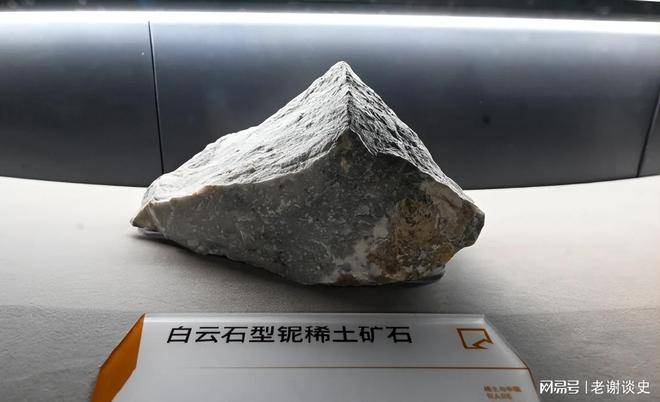
Group 1: Russia's Strategic Concerns - Russia's President Putin has signed a decree to establish a roadmap for rare earth and critical metals production by December 1, indicating a sense of urgency regarding the country's position in the global rare earth market [1][9] - The global competition for rare earth elements has intensified, with countries like the US and EU heavily reliant on China, which controls 90% of the world's rare earth refining capacity [2][8] - Putin's actions reflect a broader concern for national security and the need for Russia to develop its own rare earth capabilities to avoid dependency on foreign sources, especially in the context of military and technological advancements [6][12] Group 2: Global Rare Earth Market Dynamics - The US has expressed a strong desire to achieve "rare earth independence" within two years, as many advanced military technologies depend on these materials [6] - The EU and Japan also show high dependency on Chinese rare earths, with the EU relying on China for 82% and Japan for 91% of its needs [8] - The recent US-China trade negotiations highlighted the strategic value of rare earths, with both sides recognizing the potential disruptions caused by China's control over this resource [5] Group 3: Russia's Rare Earth Resources and Industry - Russia possesses significant rare earth resources, particularly in Siberia and the Far East, but lacks the necessary refining technology and industrial infrastructure to exploit these resources effectively [10][12] - Historically, Russia has not prioritized the development of its rare earth industry, focusing instead on its abundant energy resources [9][12] - The urgency for Russia to develop its rare earth sector is driven by the global shift towards green technologies and the need for rare earths in various applications, including military and civilian sectors [9][12] Group 4: Sino-Russian Cooperation - Despite Russia's push to develop its own rare earth capabilities, the relationship between Russia and China remains strong, particularly in the energy sector, where both countries benefit from mutual cooperation [13][15] - The collaboration extends beyond energy to include trade in coal, iron ore, and non-ferrous metals, indicating a growing interdependence in various resource sectors [15] - Both nations are working together in international forums to address global challenges, emphasizing the importance of their partnership in the current geopolitical landscape [15]

美被爆拟派三艘驱逐舰赴委内瑞拉海岸,马杜罗发声
Huan Qiu Wang· 2025-08-19 10:16
Core Viewpoint - The United States is deploying three Aegis destroyers to the Caribbean Sea as part of an operation to combat drug trafficking organizations designated as "foreign terrorist organizations" in Latin America [1] Military Deployment - The destroyers being deployed include the USS Gravely, USS Jason Dunham, and USS Sampson [1] - Approximately 4,000 sailors and Marines are expected to participate in the operation [1] - Additional military assets will be deployed, including P-8 reconnaissance aircraft, multiple warships, and at least one attack submarine [1] Operational Scope - The operation is expected to last several months, with U.S. forces operating in international airspace and waters [1] - The naval forces will conduct intelligence and surveillance operations and can serve as platforms for precision strikes if necessary [1] Response from Venezuela - Venezuelan President Nicolás Maduro stated that the country will defend its waters, airspace, and territory, referring to the U.S. actions as a threat from a "fading empire" [1]