《奇迹暖暖》

Search documents
“游戏经济”展现出广阔生态
Zhong Guo Zheng Quan Bao· 2025-12-22 11:16
Core Insights - The Chinese gaming industry is transitioning from rapid growth to a focus on "high-quality development," with projected sales revenue reaching 350.79 billion yuan in 2025, reflecting a year-on-year growth rate of 7.68% [1][2] - The industry is evolving towards a "game economy" with a market size exceeding 1.2 trillion yuan, driven by technological innovations like artificial intelligence and a deepening of traditional cultural content [1][2] - The gaming sector is at a pivotal point, shifting from "product export" to "cultural export," emphasizing long-term value creation in response to new challenges [1][2] Industry Growth and Structure - The gaming market in China is expected to achieve historical highs, with actual sales revenue surpassing 350 billion yuan and a user base reaching 683 million by 2025 [2] - Client games are experiencing significant growth, with a year-on-year revenue increase of 14.97%, while the console gaming market is seeing explosive growth at 86.33% [2] - The esports sector is becoming a vital industry engine, with market revenue exceeding 170 billion yuan, reflecting a nearly 19% increase [2] Economic Impact - The gaming economy is structured into three layers: the core economic layer generating over 480 billion yuan, the associated economic layer contributing approximately 554.8 billion yuan, and the radiating economic layer adding over 173 billion yuan [3] - Examples of successful integration of gaming with cultural and urban development include the "Metaverse" districts in Shanghai and major events like the "Honor of Kings" finals attracting 60,000 global spectators [3] Regional Development - Shanghai's gaming industry is projected to generate 170.7 billion yuan in sales by 2025, with a growth rate of 9.57%, supported by initiatives like the "Game Ten Measures" [4] Technological and Cultural Drivers - Artificial intelligence is becoming a core productivity tool in game development, enhancing efficiency by over 80% in art asset production and achieving a 95% accuracy rate in localization [7] - The gaming industry is increasingly viewed as a vehicle for cultural transmission, with traditional elements being integrated into popular games, enhancing their global appeal [8] International Expansion and Responsibility - By 2025, China's self-developed games are expected to generate 20.455 billion USD in overseas sales, with mobile games contributing over 90% of this revenue [10] - The industry is recognizing the importance of social responsibility, with over 70% of minors' gaming time being controlled to within three hours, although challenges remain regarding account misuse [11] - Companies are exploring the social value of gaming beyond commercial returns, with initiatives aimed at integrating cultural heritage into educational programs [11]
锚定高质量发展 万亿元级“游戏经济”生态浮现
Zhong Guo Zheng Quan Bao· 2025-12-21 20:12
Core Insights - The Chinese gaming industry is transitioning from a phase of rapid growth to a new stage focused on "high-quality development" amid an improving policy environment and sufficient supply of game licenses [1] - The 2025 China Gaming Industry Report forecasts that the domestic gaming market will achieve actual sales revenue of 350.79 billion yuan, with a year-on-year growth rate of 7.68% [1] - The industry is experiencing a structural transformation, with the "gaming economy" showcasing a vast ecosystem exceeding 1.2 trillion yuan, driven by technological innovations like artificial intelligence and a deepening of traditional cultural content [1][2] Industry Growth - By 2025, the domestic gaming market is expected to reach a historical high with actual sales revenue surpassing 350 billion yuan and a user base of 683 million [1] - The client game segment is projected to see a significant revenue increase of 14.97% due to the simultaneous release of high-quality mobile and PC games, while the console gaming market is expected to grow by 86.33% [1] - The esports sector is becoming a crucial industry engine, with market revenue exceeding 170 billion yuan, reflecting a nearly 19% year-on-year growth [1] Economic Impact - The gaming industry is evolving beyond mere entertainment, becoming a new economic force that integrates culture and technology, contributing over 1.2 trillion yuan to the economy by 2025 [2] - The core economic layer of the gaming economy generates over 480 billion yuan, while the associated economic layer, including hardware and esports, is valued at approximately 554.8 billion yuan [2] - The outer radiation economic layer contributes over 173 billion yuan, showcasing the deep integration of gaming with sectors like cultural tourism and education [2] Technological and Cultural Drivers - The gaming industry is experiencing a qualitative leap driven by technological innovations and cultural depth, with AI becoming a core productivity tool in game development [4] - AI is enhancing production efficiency by over 80% in art asset creation and is widely adopted across the game development process, with 62% of studios utilizing AI technology [4] - Games are increasingly serving as digital vessels for the transmission and innovation of traditional Chinese culture, enhancing their global appeal [5][6] Global Expansion and Responsibility - By 2025, China's self-developed games are expected to generate overseas sales revenue of 20.455 billion USD, with mobile games contributing over 90% of this revenue [6] - Successful overseas strategies emphasize localization and community engagement, with companies establishing local teams to maintain user connections [7] - The industry is also addressing social responsibilities, with over 70% of minors' gaming time controlled within three hours, although challenges remain regarding account misuse [7][8] Social Value Exploration - The "gaming+" initiative is exploring the social significance of gaming beyond commercial returns, with companies integrating cultural education into their offerings [8] - This approach reflects a mature development perspective in the gaming industry, aiming to unify commercial and social values for sustainable growth [8]
“游戏沪十条”让全球玩家迷上上海
Xin Lang Cai Jing· 2025-12-20 06:42
Core Insights - The 2025 China Game Industry Conference highlighted the release of the "Game Shanghai Ten Measures," aimed at supporting the high-quality development of domestic games and injecting strong momentum into the industry [1][4]. Group 1: Industry Growth - China's game industry achieved steady growth, with actual sales revenue reaching 350.79 billion yuan in 2025, a year-on-year increase of 7.68%, and a user base expanding to 683 million, up 1.35% [1]. - Self-developed games contributed significantly, with domestic market sales reaching 291.09 billion yuan, a growth of 11.64%, supported by stable long-term products and new releases [1]. - The overseas market for self-developed games saw actual sales of $20.46 billion, marking a 10.23% increase, maintaining a scale exceeding 100 billion yuan for six consecutive years [1]. Group 2: Policy Support - The "Game Shanghai Ten Measures" includes systematic support policies with an annual funding total of 50 million yuan, aimed at creating a globally influential game and esports industry ecosystem [2]. - Key functional areas identified for development include Xuhui Caohejing, Yangpu Dazhongzhi, and Jing'an Daning, focusing on building a robust industry hub with comprehensive services and active consumer engagement [2]. - Xuhui District attracted over 70 game companies, including Tencent and NetEase, with the gaming industry revenue reaching 52.17 billion yuan in the first three quarters of 2025, a 5.0% year-on-year increase [2]. Group 3: Cultural Integration and Innovation - The "Game Shanghai Ten Measures" encourages the development of original high-quality games that incorporate traditional Chinese culture and reflect Shanghai's urban characteristics [3]. - Companies like Paper Games collaborate with national cultural institutions, while Century Huatong emphasizes technological innovation, viewing the gaming industry as a platform for cultural and technological advancement [3]. Group 4: Esports Development - Shanghai aims to become a global hub for esports, with plans to accelerate the development of a globally influential proprietary event system and promote synergy between international top events and local IPs [3]. - The Perfect World Esports event attracted nearly 90,000 attendees and generated 370 million yuan in surrounding consumption, showcasing the potential of esports to drive economic growth [3].
姚润昊退出上海叠纸科技公司,联创姚飞为新法定代表人
Guo Ji Jin Rong Bao· 2025-10-27 12:24
Core Points - The topic "Yao Runhao resigns from Shanghai Paper Technology Company" has become a trending topic on Weibo [1] - Yao Runhao, the founder of Paper Games, has stepped down as the legal representative and executive director of Shanghai Paper Technology Co., Ltd., with Yao Fei, the co-founder and COO, taking over [1] - The reason for this change has not been disclosed as the company has not responded to inquiries [1] Company Overview - Shanghai Paper Technology Co., Ltd. was established on March 22, 2019, with a registered capital of 100 million RMB, fully owned by Suzhou Paper Network Technology Co., Ltd. [2] - The company specializes in software development, animation design, and online cultural operations, with notable products including the "Nuan Nuan" series of dress-up games and the "Lian Yu" series of dating simulation games [2] Recent Changes - In July, a series of corporate changes occurred within related companies, including Yao Runhao resigning as the legal representative of Wuhu Paper and former president Liu Chenxi stepping down from Shanghai Paper Entertainment and Shanghai Warm Paper, with all positions being transferred to Yao Fei [5]

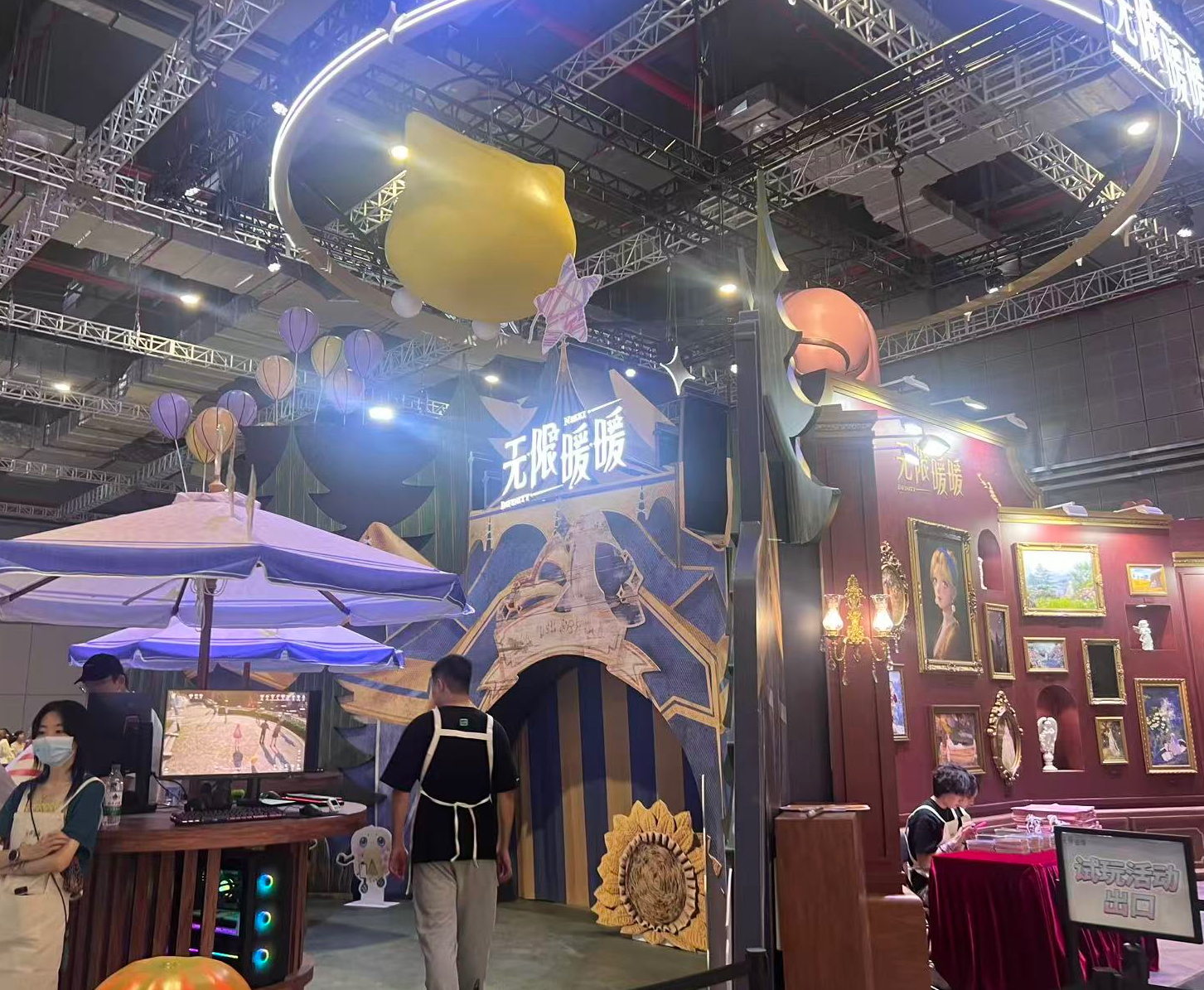
一起点燃创作火种!这个杨浦周末打卡好去处,你去了吗?
第一财经· 2025-09-22 10:15
Core Insights - The 2025 Shanghai Network Audio-Visual Content Creators Conference successfully concluded on September 20, showcasing a vibrant atmosphere for creators and industry stakeholders [2][19]. Group 1: Event Overview - The conference took place at the Da Chuang Zhi Public Service Platform in Yangpu District, featuring a variety of activities and interactions among content creators [1][21]. - The event included a series of discussions and performances, emphasizing the importance of community and collaboration in content creation [15][29]. Group 2: Key Themes and Discussions - The value co-creation of game IPs was highlighted, with examples of how games like "Miracle Nikki" have evolved into cultural symbols over a decade [22]. - The transformation of local dialect memes into social currency was discussed, showcasing the power of language in breaking cultural barriers [23]. - Food content was presented as a bridge connecting serious topics with public interest, emphasizing the role of narrative in engaging audiences [24]. - AI's role as a production partner for creators was explored, indicating its growing importance in enhancing content [25]. - The long-term sustainability of domestic IPs was emphasized, with insights on how enduring value and emotional connection are crucial for success [26]. - The impact of short videos on urban storytelling was discussed, highlighting their role in reshaping cultural narratives [35]. Group 3: Creator Perspectives - Creators shared their motivations and experiences, emphasizing that passion drives their work and that unique perspectives are essential for impactful storytelling [28][44]. - The significance of community and genuine expression in content creation was reiterated, with a focus on building trust and long-term relationships with audiences [56]. Group 4: Future Directions - The conference underscored Shanghai's unique advantages as a hub for content creation, with strong infrastructure, an open atmosphere, and supportive policies [33]. - The potential for niche interests to connect globally was discussed, with a call for more tools and strategies to discover and link diverse passions [54].
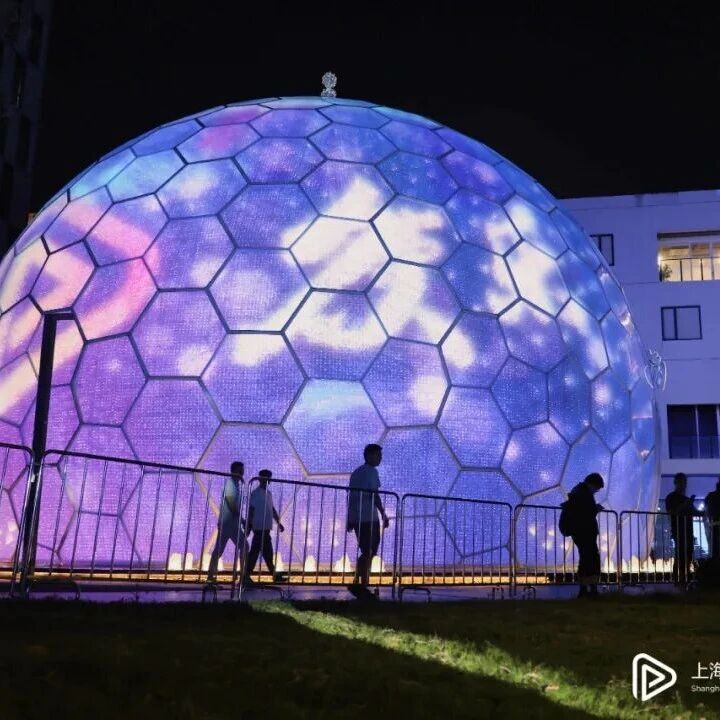
打破次元壁,汇聚众声成乐——2025上海网络视听内容创作者大会盛大启幕
第一财经· 2025-09-19 14:15
Core Viewpoint - The second Shanghai Network Audiovisual Content Creator Conference emphasizes the importance of creators in the network audiovisual industry, showcasing Shanghai's cultural strength and innovative drive as a hub for content creation [1][24]. Group 1: Conference Overview - The conference, themed "Many Voices Create Music," gathered renowned creators, industry leaders, and experts to discuss the future of the network audiovisual industry [1]. - The event has evolved since its inaugural session in 2023, becoming a significant indicator of the network audiovisual industry in China [1]. - The conference featured the release of the "2025 Network Audiovisual Content Creator White Paper," which outlines industry trends and highlights the shift towards high-quality content creation [1][11]. Group 2: Industry Trends - By the end of 2024, the number of network audiovisual users in China is expected to exceed 1 billion, accounting for over 90% of the internet population [5]. - The industry is witnessing rapid growth in segments such as short videos, audio, knowledge sharing, and live streaming, which are driving the digital cultural industry's expansion [5]. - There is a transition from fragmented content to high-quality, long-term value content, with AI reshaping the creative process [5][11]. Group 3: Shanghai's Role - Shanghai is positioned as an ideal observation point for these trends, with over 500 million registered users on key local platforms, covering more than half of the national internet population [5]. - The city has become a breeding ground for high-quality content, supported by policies and a vibrant urban environment [6][18]. - The "Shanghai Nine Measures" policy aims to establish content creation hubs in Huangpu and Yangpu districts, incentivizing quality content creation [6][24]. Group 4: Yangpu District Development - Yangpu has been designated as a national-level cultural industry demonstration zone and is home to over 8,300 digital economy enterprises, contributing significantly to Shanghai's digital economy [18][19]. - The district's digital economy enterprises accounted for over 30% of the total number in 2024, with revenue exceeding 320 billion yuan, representing one-fifth of the city's total [18]. - Yangpu is fostering a unique ecosystem by integrating educational resources from universities with the operational capabilities of internet giants, creating a "knowledge community" [22]. Group 5: Future Prospects - The conference highlighted the potential for creators to build cultural assets and emphasized the need for platforms to evolve into "cultural asset operating systems" [11][24]. - The event also showcased various activities, including a creator carnival, which aimed to engage the public and enhance the interaction between creators and the city [16][20]. - As more creators establish themselves in Shanghai, the network audiovisual industry is expected to generate greater cultural, social, and economic value, contributing to China's modernization narrative [24].

2025上海网络视听内容创作者大会
第一财经· 2025-09-18 11:56
Core Viewpoint - The Chinese online audio-visual industry is experiencing explosive growth and profound transformation, becoming a core part of the digital economy and a main platform for cultural dissemination [1] Group 1: Event Overview - The "2025 Shanghai Online Audio-Visual Content Creator Conference" will be held on September 19-20, 2025, in Yangpu District, Shanghai, focusing on the theme "Many Voices Create Harmony" [1] - The conference aims to gather regulatory bodies, leading platforms, top creators, and industry leaders to explore the future of the digital content industry [1] - The event seeks to establish Shanghai as a "dream factory" for high-quality internet content, promoting the growth of creators alongside the city [1] Group 2: Key Sessions and Speakers - Various sessions will feature discussions on topics such as transforming local dialects into social currency, bridging heavy topics with public interest through food, and the role of AI in connecting technology with human empathy [3][4] - Notable speakers include industry leaders and creators, such as the producer of the game "Miracle Warm" and the head of Tencent Video's AI products [3][4] - The conference will also include performances by well-known music creators from platforms like Bilibili [6] Group 3: Opening Ceremony and Keynotes - The opening ceremony will feature performances and the release of the "2025 Online Audio-Visual Content Creator White Paper" [7] - Keynote speeches will cover topics like quality content in the internet age and innovative urban narratives in the short video era [7][8] - The event will culminate in a roundtable discussion on the impact of content creation in the current digital landscape [12][15]