游戏经济

Search documents
5000万元年度扶持落地,上海“游戏沪十条”来了
Guo Ji Jin Rong Bao· 2025-12-26 05:13
Core Viewpoint - Shanghai has officially launched the "Game Shanghai Ten Measures" to support the development of the gaming and esports industry, with an annual special funding of 50 million yuan as the core, aiming to create a comprehensive and systematic support system for the industry [1] Group 1: Policy Overview - The "Game Shanghai Ten Measures" breaks the previous district-level support model and covers ten areas including industrial cluster construction, high-quality creation, technological innovation, cultural export, and financial support [1][2] - The policy aims to build a world-class gaming and esports cluster, enhance the industry ecosystem, and promote international cooperation [2][5] Group 2: Financial Support and Investment - The policy includes the establishment of an industrial investment fund to support key enterprises and small teams in the industry, providing systematic support for small and medium-sized gaming companies [3][6] - The investment fund will help identify and nurture talent and teams in the gaming and esports sectors, benefiting the entire industry [4] Group 3: Industry Growth and Projections - Shanghai's gaming industry is projected to achieve sales revenue of 170.7 billion yuan by 2025, with a year-on-year growth of approximately 9.6%, and overseas revenue expected to reach 30.3 billion yuan, growing by 13.7% [2][3] - The city has already formed a complete ecosystem with major companies like Tencent and NetEase leading, and international firms like Blizzard and EA establishing a presence [3] Group 4: Talent and Innovation - The policy emphasizes talent cultivation and innovation incentives, including the establishment of a knowledge property rights protection mechanism to combat infringement [6] - Shanghai aims to create a supportive environment for startups through incubators and one-stop services for new gaming enterprises [3][6] Group 5: International Expansion - The "Game Shanghai Ten Measures" focuses on facilitating the international expansion of gaming companies, addressing challenges such as copyright infringement and complex processes in overseas markets [9] - A comprehensive overseas service platform will be established to support localization, compliance, and financial services for gaming products [9] Group 6: Cultural Integration and Industry Events - The policy encourages the integration of original gaming content with traditional Chinese culture and Shanghai's urban characteristics, promoting cross-industry collaboration [9] - It aims to enhance the level of industry exhibitions, such as the China International Digital Interactive Entertainment Expo, to build bridges for domestic and international industry exchanges [9]


逐鹿万亿“游戏经济”,第一城又出手了
Mei Ri Jing Ji Xin Wen· 2025-12-22 14:38
Group 1 - The core initiative "Game Shanghai Ten Measures" aims to support the development of the gaming and esports industry in Shanghai with an annual funding of 50 million yuan, focusing on high-quality development and creating a globally influential industrial ecosystem [1] - The measures will emphasize the construction of gaming and esports clusters, premium content creation, technological innovation, cultural export, and financial support, providing comprehensive services to enterprises [1] - Shanghai plans to enhance international cooperation and build a full-chain service platform for cultural export, positioning itself as a global hub for esports events [1] Group 2 - The 2025 China Game Industry Report indicates that the domestic gaming market revenue is expected to reach approximately 350.8 billion yuan, with a year-on-year growth of 7.7%, and the user base exceeding 680 million, growing by about 1.4% [2] - The estimated economic scale of China's gaming and related industries is projected to surpass 1.2 trillion yuan by 2025, highlighting the emergence of a trillion-level "gaming economy" ecosystem [2] - The gaming industry is increasingly recognized as a dual engine driving cultural and digital economic innovation [2] Group 3 - Shanghai is recognized as the first city globally to host three major international esports events and continues to lead in the number of esports events held, accounting for 17.8% of the national total [3] - In the first half of this year, Shanghai's online gaming industry generated total sales revenue of 83.283 billion yuan, with esports live streaming revenue at 2.122 billion yuan and event revenue at 507 million yuan, both ranking first in the country [3] - The city aims to strengthen its clustering effect in the esports gaming industry while establishing sustainable advantages in cultural expression, technological innovation, and globalization [3] Group 4 - Other cities like Guangzhou, Beijing, and Chengdu are also focusing on the gaming and esports industry as a key avenue for digital economic development, with various supportive policies being introduced [4] - These initiatives aim to enhance city image, cultural influence, and competitiveness in the gaming and esports sector [4] - The gaming and esports industry is becoming a critical battleground for regional digital economic development, playing a vital role in technological integration, cultural dissemination, and global competition [4]
城市24小时 | 逐鹿万亿“游戏经济”,第一城又出手了
Mei Ri Jing Ji Xin Wen· 2025-12-22 14:29
Core Insights - Shanghai is set to launch ten initiatives to support the development of the gaming and esports industry, with an annual funding of 50 million yuan, aiming for high-quality growth and a globally influential industry ecosystem [1] - The gaming industry in China is projected to reach approximately 350.8 billion yuan in revenue by 2025, with a user base exceeding 680 million, indicating a year-on-year growth of 7.7% and 1.4% respectively [2] - Shanghai has established itself as a leading city for esports, hosting the most esports events in the country, accounting for 17.8% of the total, and achieving a total sales revenue of 83.283 billion yuan in the online gaming sector in the first half of the year, marking a 10.8% increase [3][4] Group 1: Shanghai's Initiatives - The "Game Shanghai Ten Measures" focuses on building influential esports clusters and providing comprehensive services to enterprises, targeting key areas such as creative excellence and technological innovation [1] - Shanghai aims to enhance international cooperation and create a full-chain service platform for cultural export, positioning itself as a global hub for esports [1] Group 2: Industry Growth and Trends - The gaming industry is evolving from mere entertainment to a digital medium that integrates culture, technology, and cross-industry collaboration, becoming a dual engine for cultural and digital economic innovation [2] - Other cities like Guangzhou, Beijing, and Chengdu are also developing policies to support the gaming and esports industry, indicating a competitive landscape for digital economic development [5][6]

“游戏经济”展现出广阔生态
Zhong Guo Zheng Quan Bao· 2025-12-22 11:16
Core Insights - The Chinese gaming industry is transitioning from rapid growth to a focus on "high-quality development," with projected sales revenue reaching 350.79 billion yuan in 2025, reflecting a year-on-year growth rate of 7.68% [1][2] - The industry is evolving towards a "game economy" with a market size exceeding 1.2 trillion yuan, driven by technological innovations like artificial intelligence and a deepening of traditional cultural content [1][2] - The gaming sector is at a pivotal point, shifting from "product export" to "cultural export," emphasizing long-term value creation in response to new challenges [1][2] Industry Growth and Structure - The gaming market in China is expected to achieve historical highs, with actual sales revenue surpassing 350 billion yuan and a user base reaching 683 million by 2025 [2] - Client games are experiencing significant growth, with a year-on-year revenue increase of 14.97%, while the console gaming market is seeing explosive growth at 86.33% [2] - The esports sector is becoming a vital industry engine, with market revenue exceeding 170 billion yuan, reflecting a nearly 19% increase [2] Economic Impact - The gaming economy is structured into three layers: the core economic layer generating over 480 billion yuan, the associated economic layer contributing approximately 554.8 billion yuan, and the radiating economic layer adding over 173 billion yuan [3] - Examples of successful integration of gaming with cultural and urban development include the "Metaverse" districts in Shanghai and major events like the "Honor of Kings" finals attracting 60,000 global spectators [3] Regional Development - Shanghai's gaming industry is projected to generate 170.7 billion yuan in sales by 2025, with a growth rate of 9.57%, supported by initiatives like the "Game Ten Measures" [4] Technological and Cultural Drivers - Artificial intelligence is becoming a core productivity tool in game development, enhancing efficiency by over 80% in art asset production and achieving a 95% accuracy rate in localization [7] - The gaming industry is increasingly viewed as a vehicle for cultural transmission, with traditional elements being integrated into popular games, enhancing their global appeal [8] International Expansion and Responsibility - By 2025, China's self-developed games are expected to generate 20.455 billion USD in overseas sales, with mobile games contributing over 90% of this revenue [10] - The industry is recognizing the importance of social responsibility, with over 70% of minors' gaming time being controlled to within three hours, although challenges remain regarding account misuse [11] - Companies are exploring the social value of gaming beyond commercial returns, with initiatives aimed at integrating cultural heritage into educational programs [11]
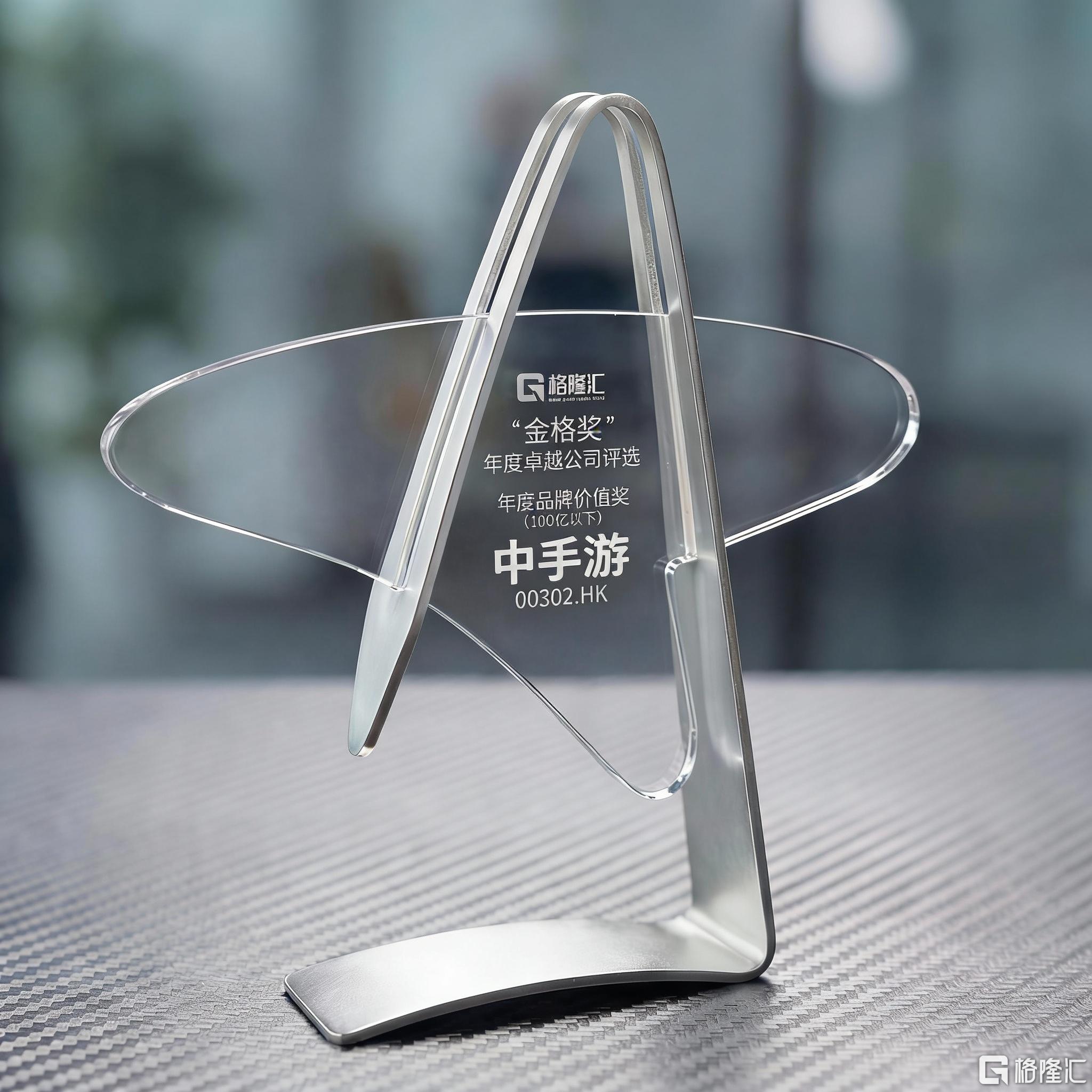
中手游(0302.HK):获“年度品牌价值奖”,IP筑底与多元协同构筑行业竞争力
Ge Long Hui· 2025-12-22 10:43
Core Insights - The gaming economy is projected to exceed 1.2 trillion yuan by 2025, with brand differentiation, user loyalty, and long-term value creation becoming key metrics for assessing core competitiveness [1] - Zhongjiu Mobile has been awarded the "Annual Brand Value Award" by Gelonghui, reflecting its strategic alignment with the high-quality development trends in the gaming industry [1] Industry Overview - The gaming industry has seen stable growth this year, supported by policy optimization and an ample supply of game licenses, with actual sales revenue reaching 350.79 billion yuan, a year-on-year increase of 7.68%, and a user base surpassing 683 million [3] - The rise of quality IP has become a core carrier connecting cultural essence and commercial value, forming the foundation of Zhongjiu Mobile's brand value [6] Company Strategy - Zhongjiu Mobile's brand value enhancement is attributed to its focus on core IP, global expansion, and technological innovation, which has provided solid support for its recognition in the capital market [4] - The company has achieved a significant increase in IP licensing revenue, reaching 33.1 million yuan in the first half of the year, a year-on-year surge of 134.8%, showcasing the strong vitality and commercial potential of classic IPs [6] IP Ecosystem - The company has developed a multi-dimensional ecosystem around its IPs, including content creation, experiential scenarios, and cultural derivatives, enhancing its brand value [6] - Zhongjiu Mobile's IP advantages in recognition and fan base provide a natural competitive edge in game development and commercialization, which is central to its ongoing brand value increase [7] Global Expansion - In the first half of the year, Zhongjiu Mobile's overseas business revenue reached 235 million yuan, a year-on-year increase of 33.2%, with its share of total revenue rising from 14.1% to 30.8% [9] - The company has successfully launched several titles in overseas markets, demonstrating the broad appeal of its domestic IPs [9] Monetization Strategies - Zhongjiu Mobile is diversifying its revenue streams by developing multiple IAA (advertising monetization) products, which are currently being tested in overseas markets [10] - The rise of mini-games has become another significant growth point for the company's brand value, with its self-developed mini-game "Spring and Autumn Mysteries" generating over 100 million yuan in revenue within three months [10] Technological Innovation - The company is leveraging its IP advantages to advance the RWA (Real World Asset) blockchain initiative and develop a decentralized esports platform, aligning with regulatory trends and opening new avenues for IP value realization [11] - The application of AIGC technology is enhancing game development efficiency, improving product iteration speed and market responsiveness [11] Conclusion - In the context of the gaming industry's high-quality development and the expanding gaming economy, Zhongjiu Mobile's IP-centric brand moat continues to deepen, with collaborative growth in overseas business and mini-game sectors forming a clear value logic and growth resilience [13] - Despite short-term performance adjustments, the company is expected to gradually restore profitability as new games launch and cost-reduction measures take effect, revealing its long-term investment value [13]

12.22犀牛财经早报:万亿元级“游戏经济”生态浮现
Xi Niu Cai Jing· 2025-12-22 01:39
Group 1 - The public fund issuance market has seen a significant shift, with equity funds taking the lead over bond funds, marking a new phase focused on innovation and diverse product offerings [1] - A total of 1,468 new public funds were established this year, reaching a four-year high, while the total fundraising scale remained stable compared to the past two years [1] - The expansion of the ChiNext 50 ETF products indicates a competitive focus among leading public funds, driven by the need to diversify product lines and capitalize on the performance of core assets in the market [1][1] Group 2 - The People's Bank of China has announced a one-time credit repair policy, which will not display overdue information for personal debts under 10,000 RMB if repaid by March 31, 2026 [2] - The Chinese gaming industry is transitioning towards high-quality development, with projected market revenue reaching 350.79 billion RMB in 2025, reflecting a 7.68% year-on-year growth [2] - The gaming economy is expected to exceed 1.2 trillion RMB, with a focus on technological innovation and cultural content as new competitive barriers [2] Group 3 - The embodied intelligence sector is anticipated to evolve into a trillion-yuan industry, with numerous entrepreneurial opportunities within its supply chain [3] - A new silicon-based quantum processor has achieved stable connectivity of 11 qubits, marking a significant advancement in quantum computing [3] - ASML's EUV lithography machine has successfully manufactured nanopores at the full wafer level, which holds significant research value in biomedical applications [4] Group 4 - The AI sector in the US stock market is experiencing volatility, with Oracle's stock dropping over 5% amid concerns about the profitability of AI investments [5] - Uniqlo has faced backlash for allegedly surveilling customers in stores, raising concerns about privacy and customer experience [5] Group 5 - The Hong Kong IPO market is active, with companies like Wallen Technology planning to issue over 247 million shares at a price range of 17-19.6 HKD per share [8] - Estun Automation is progressing with its H-share issuance and listing application on the Hong Kong Stock Exchange, pending final regulatory approval [9] - Upwind Cement's investment in Yu Xin Semiconductor has been accepted for IPO on the ChiNext, indicating a growing interest in the semiconductor sector [10]
四大证券报精华摘要:12月22日
Xin Hua Cai Jing· 2025-12-22 01:05
Group 1: Game Industry Transformation - The gaming industry is evolving from being primarily an entertainment product to a flexible tool that drives digital transformation in traditional sectors like healthcare, education, and manufacturing [1] - The integration of gaming technology and design thinking is creating new growth opportunities and reshaping perceptions of the industry [1] Group 2: High-Quality Development in Gaming - China's gaming industry is transitioning to a new phase focused on "high-quality development," with projected market revenue reaching 350.79 billion yuan by 2025, reflecting a year-on-year growth rate of 7.68% [2] - The "game economy" is emerging as a vast ecosystem with a market size exceeding 1.2 trillion yuan, driven by technological innovations and cultural content [2] - The industry is shifting from "product export" to "cultural export," emphasizing long-term value creation [2] Group 3: Energy Sector Developments - The central economic work conference highlighted the need for a green transition in energy, with a focus on renewable energy sources and carbon reduction [5] - Companies in the energy sector are expected to play a significant role in the construction of a new energy system, particularly in areas like storage, wind power, and solar energy [5] Group 4: Public Fundraising Trends - The public fund issuance market has seen a significant shift, with 1,468 new funds launched in 2025, marking a four-year high, while total fundraising remains stable compared to the past two years [8] - This trend indicates a move towards a more diversified and innovative approach in the equity fund sector [8] Group 5: Mergers and Acquisitions in State-Owned Enterprises - There have been 1,001 merger and acquisition cases involving state-owned companies in the A-share market this year, indicating a steady growth trend [9] - The focus of these transactions is on core business areas, with an emphasis on shedding non-core assets and accelerating investments in strategic emerging industries like semiconductors and renewable energy [9] Group 6: Platinum Market Dynamics - Platinum prices have surged over 110% this year, significantly outpacing gold's 65% increase, driven by changes in supply and demand dynamics [10] - The highest recorded price for platinum reached $1,987 per ounce, the highest since July 2008 [10] Group 7: AI and State-Owned Enterprises - The State-owned Assets Supervision and Administration Commission plans to deepen the "AI+" initiative during the 14th Five-Year Plan, focusing on overcoming technological bottlenecks and enhancing digital transformation [11] - Emphasis will be placed on traditional industry upgrades and the development of core technologies [11]
锚定高质量发展 万亿元级“游戏经济”生态浮现
Zhong Guo Zheng Quan Bao· 2025-12-21 20:12
Core Insights - The Chinese gaming industry is transitioning from a phase of rapid growth to a new stage focused on "high-quality development" amid an improving policy environment and sufficient supply of game licenses [1] - The 2025 China Gaming Industry Report forecasts that the domestic gaming market will achieve actual sales revenue of 350.79 billion yuan, with a year-on-year growth rate of 7.68% [1] - The industry is experiencing a structural transformation, with the "gaming economy" showcasing a vast ecosystem exceeding 1.2 trillion yuan, driven by technological innovations like artificial intelligence and a deepening of traditional cultural content [1][2] Industry Growth - By 2025, the domestic gaming market is expected to reach a historical high with actual sales revenue surpassing 350 billion yuan and a user base of 683 million [1] - The client game segment is projected to see a significant revenue increase of 14.97% due to the simultaneous release of high-quality mobile and PC games, while the console gaming market is expected to grow by 86.33% [1] - The esports sector is becoming a crucial industry engine, with market revenue exceeding 170 billion yuan, reflecting a nearly 19% year-on-year growth [1] Economic Impact - The gaming industry is evolving beyond mere entertainment, becoming a new economic force that integrates culture and technology, contributing over 1.2 trillion yuan to the economy by 2025 [2] - The core economic layer of the gaming economy generates over 480 billion yuan, while the associated economic layer, including hardware and esports, is valued at approximately 554.8 billion yuan [2] - The outer radiation economic layer contributes over 173 billion yuan, showcasing the deep integration of gaming with sectors like cultural tourism and education [2] Technological and Cultural Drivers - The gaming industry is experiencing a qualitative leap driven by technological innovations and cultural depth, with AI becoming a core productivity tool in game development [4] - AI is enhancing production efficiency by over 80% in art asset creation and is widely adopted across the game development process, with 62% of studios utilizing AI technology [4] - Games are increasingly serving as digital vessels for the transmission and innovation of traditional Chinese culture, enhancing their global appeal [5][6] Global Expansion and Responsibility - By 2025, China's self-developed games are expected to generate overseas sales revenue of 20.455 billion USD, with mobile games contributing over 90% of this revenue [6] - Successful overseas strategies emphasize localization and community engagement, with companies establishing local teams to maintain user connections [7] - The industry is also addressing social responsibilities, with over 70% of minors' gaming time controlled within three hours, although challenges remain regarding account misuse [7][8] Social Value Exploration - The "gaming+" initiative is exploring the social significance of gaming beyond commercial returns, with companies integrating cultural education into their offerings [8] - This approach reflects a mature development perspective in the gaming industry, aiming to unify commercial and social values for sustainable growth [8]
游戏展会背后的游戏经济密码
3 6 Ke· 2025-11-10 11:45
Core Insights - The number and scale of offline gaming-themed events have significantly increased this year, showcasing broad economic and social impacts, with attendance at events like ChinaJoy exceeding 400,000 and participation from nearly 800 companies across various sectors [1][3][31] - Game exhibitions have evolved into comprehensive economic ecosystems, driving new productivity through technology releases, cross-industry collaborations, and consumer engagement, with major players like Xbox, Nintendo, and Tencent showcasing a plethora of products [3][5][25] - The integration of advanced technologies such as AI, XR, and cloud computing into gaming exhibitions highlights their role as platforms for future digital innovations, with events like ChinaJoy introducing next-generation entertainment experiences [5][25][28] Industry Trends - Game exhibitions are becoming vital platforms for non-gaming companies to penetrate Gen Z culture, with traditional brands successfully launching gaming IP collaborations to attract younger consumers [7][25] - The rise of independent games is notable, with the number of showcased indie titles at events like BW tripling compared to four years ago, reflecting a diverse and vibrant gaming ecosystem [3][5] - The global gaming market is projected to reach $188.8 billion in 2025, with a 3.4% year-on-year growth, indicating a robust demand for gaming products and experiences [31][33] Economic Impact - Game exhibitions are pivotal in driving local economies, with events like ChinaJoy generating approximately 661 million yuan in surrounding service consumption, and the Cologne Game Show transforming the city into an immersive entertainment space [33][34] - The synergy between gaming and urban economies is evident, as gaming events stimulate related sectors such as hospitality and transportation, creating significant multiplier effects [33][34] - The cultural significance of gaming is growing, with events fostering community engagement and youth culture, as seen in the popularity of esports and gaming-related activities [35][38] International Dynamics - Chinese gaming companies are increasingly participating in international exhibitions, with nearly 110 firms attending the Tokyo Game Show in 2025, marking a significant rise from previous years [12][28] - The differentiation between domestic and international gaming events is becoming more pronounced, with overseas shows like Gamescom emphasizing high internationalization and technological foresight, while domestic events focus on user experience and market conversion [28][30] - The evolution of gaming exhibitions from product showcases to cross-industry platforms reflects the growing importance of gaming as a cultural and economic driver in the digital age [29][30]


游戏展会背后的游戏经济密码
腾讯研究院· 2025-11-10 11:08
Core Viewpoint - The gaming industry is experiencing significant growth, with offline gaming events becoming key drivers of economic and cultural influence, showcasing a vibrant ecosystem that connects various sectors and demographics [2][36]. Group 1: Growth of Gaming Events - The number and scale of gaming-themed offline events have significantly increased, with over 400,000 attendees at ChinaJoy and nearly 800 companies participating, including traditional brands entering the youth market [2][7]. - Major gaming exhibitions like Tokyo Game Show and Gamescom have seen substantial participation, with the latter attracting 35.7 million visitors from 128 countries, highlighting the global appeal of gaming [2][4][12]. - The rise of independent games is notable, with the number of independent game exhibitors at BW increasing more than threefold compared to four years ago, reflecting the diverse and dynamic nature of the gaming industry [4][5]. Group 2: Technological Integration - Gaming exhibitions are becoming platforms for showcasing future digital technologies such as AI, XR, and cloud computing, with events like ChinaJoy introducing innovative experiences like smart entertainment robots and brain-machine interfaces [5][27]. - The integration of cutting-edge technologies is driving new productivity in the gaming sector, with companies like NVIDIA presenting advanced rendering technologies and AI solutions at these events [5][27]. Group 3: Cross-Industry Collaboration - Non-gaming companies are leveraging gaming exhibitions to tap into Gen Z culture, with brands like Old Fengxiang and Yadi launching co-branded products to connect with younger consumers [7][27]. - The presence of global brands such as LEGO and Disney at gaming events underscores the economic value of the "gaming plus" cross-industry model, enhancing brand visibility and engagement [7][27]. Group 4: Economic Impact - Gaming events are becoming vital for urban economies, generating significant ancillary spending in areas like food, accommodation, and transportation, with ChinaJoy alone driving approximately 661 million yuan in surrounding service consumption [39][40]. - The gaming industry is projected to reach a global market revenue of $188.8 billion by 2025, with a user base of 3.6 billion gamers, indicating a robust growth trajectory [36][38]. Group 5: Cultural Significance - Gaming is increasingly recognized as a cultural cornerstone for youth, fostering community and identity through unique cultural practices and social interactions at events [40][42]. - Events like ChinaJoy and KPL finals are not only entertainment spectacles but also serve as platforms for cultural expression and community building among young audiences [40][42].