联邦政府停摆

Search documents
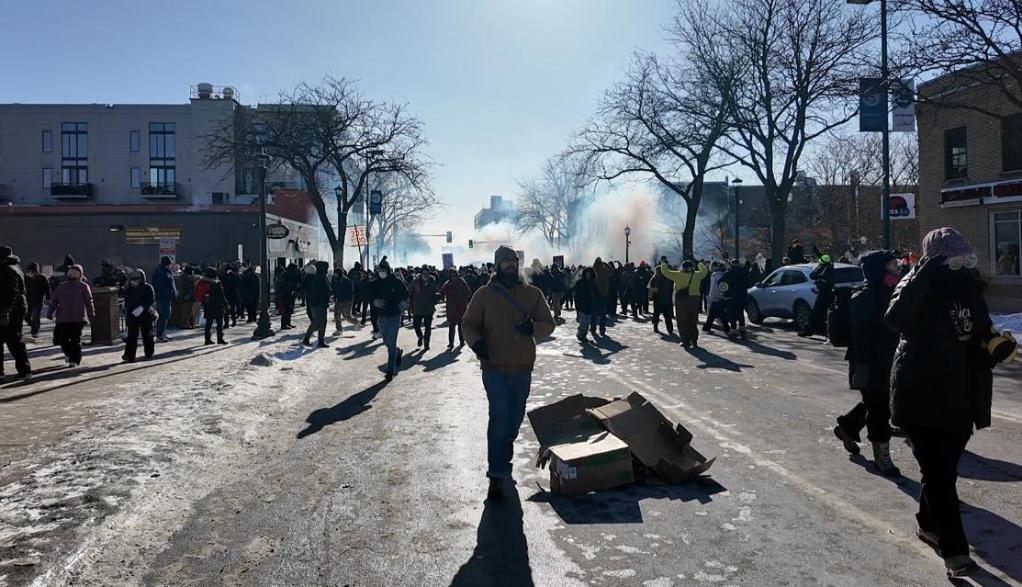
美“移民执法”再杀美国公民
Xin Hua Wang· 2026-01-25 13:39
Core Viewpoint - The recent shooting incident involving federal law enforcement in Minnesota has intensified public protests and increased tensions between federal and local governments, raising concerns about potential government shutdowns due to opposition from Democratic senators regarding funding for federal enforcement agencies [1][5]. Group 1: Incident Details - A shooting incident in Minneapolis resulted in the death of a 37-year-old American citizen, Alex Preti, who was a nurse and legally permitted to carry a firearm [2]. - The federal agency claims the shooting was in self-defense, while local police and video evidence suggest the deceased was not armed but was filming the enforcement action [2][3]. - This incident marks the fifth shooting by federal law enforcement this year, contributing to a growing wave of protests against such actions [1][3]. Group 2: Political Reactions - Several Democratic senators have condemned the federal enforcement actions and indicated they will vote against a temporary funding bill that includes budgets for federal law enforcement agencies, increasing the risk of a government shutdown [1][5]. - The current political climate reflects a significant divide, with Democratic leaders in Minnesota calling for an end to federal immigration enforcement actions in the state [2][6]. - The potential for a government shutdown looms as the temporary funding bill must be passed by the end of the month, and opposition from key Democratic senators could jeopardize its approval [5]. Group 3: Immigration Enforcement Statistics - According to the U.S. Immigration and Customs Enforcement, approximately 69,000 individuals have been detained in immigration enforcement actions this year, with about 43% having no criminal charges or records [5].

金十独家:美国11月CPI报告全文
Jin Shi Shu Ju· 2025-12-18 13:46
Core Insights - The Consumer Price Index for All Urban Consumers (CPI-U) increased by 0.2% from September to November 2025, with a year-over-year increase of 2.7% as of November [1][6] - The CPI excluding food and energy also rose by 0.2% over the same two-month period, with a year-over-year increase of 2.6% [1][5] Inflation Trends - The overall CPI-U for the past 12 months was reported at 324.122, reflecting a 2.7% increase [6] - The CPI for urban wage earners and clerical workers (CPI-W) also saw a 2.7% increase, with an index level of 317.414 [6] - The chained CPI (C-CPI-U) increased by 2.6% over the past year [7] Food Prices - The food index rose by 2.6% over the past year, with the index for food at home increasing by 1.9% [3] - Specific categories such as meat, poultry, fish, and eggs saw a 4.7% increase, while dairy products decreased by 1.6% [3] Energy Prices - The energy index increased by 4.2% over the past year, with gasoline prices rising by 0.9% and fuel oil by 11.3% [4] - Electricity and natural gas prices also saw significant increases of 6.9% and 9.1%, respectively [4] Excluding Food and Energy - The index excluding food and energy saw a 2.6% increase over the past year, with notable increases in housing (3.0%) and medical care (2.9%) [5] - Other categories such as household furnishings and operations increased by 4.6%, while used cars and trucks rose by 3.6% [5] Data Collection Issues - Due to a government shutdown, the Bureau of Labor Statistics was unable to collect data for October 2025, leading to reliance on non-survey data for some indices [2]
美国免除部分农产品“对等关税”
Xin Hua She· 2025-11-15 05:15
Core Points - The U.S. government has signed an executive order to eliminate "reciprocal tariffs" on certain agricultural products starting November 13 [1] - The products affected include coffee, tea, tropical fruits, juices, cocoa, spices, bananas, citrus fruits, tomatoes, beef, and some fertilizer products [1] - The adjustment is influenced by trade negotiations with partners and current domestic demand and production capacity [1] Economic Context - Rising inflation pressures have been a significant factor in the government's decision to adjust tariffs [1] - Recent electoral losses for the Republican Party indicate voter dissatisfaction with rising prices [1] - The anticipated impact of a record federal government shutdown is expected to weaken U.S. economic growth in Q4 [1] Price Trends - The U.S. Consumer Price Index (CPI) has shown a rising trend, increasing from 2.3% in April to 3% in September [1] - Specific price increases noted include over 10% year-on-year for beef, coffee, and tea in September [1]

基差方向周度预测-20251114
Guo Tai Jun An Qi Huo· 2025-11-14 11:31
1. Report Industry Investment Rating - No relevant content provided 2. Core Viewpoints of the Report - The central bank's third - quarter monetary policy implementation report indicates a natural decline in financial aggregate growth, and mentions points such as downplaying monetary policy quantity targets, maintaining a reasonable interest - rate ratio, and vigorously developing the bond market's "science and technology board". [2] - In October, both CPI and PPI increased year - on - year and month - on - month. Besides the contribution of the low - base effect, the effects of monetary and fiscal policies and industrial policies like anti - involution and capacity reduction are evident, especially in industries such as non - ferrous metals, building materials, and new energy. [2] - October financial data shows a slowdown in social financing and credit growth, with insufficient credit demand. At the same time, non - bank deposits increased by 77 billion yuan year - on - year, and the process of deposit transfer continues. [2] - The US federal government's temporary appropriation bill was passed, ending the 6 - week shutdown. The shutdown pulled down the US fourth - quarter annualized GDP growth rate by 1.5%, and the secondary impact on residents' lives is hard to estimate. The annual appropriation is still undetermined, and there may be another shutdown in two months. [2] - After the shutdown ended, the market trading theme shifted to interest - rate cuts. Hawkish remarks from Fed officials led to a significant decline in the market's expectation of a December interest - rate cut, triggering a sharp drop in US stocks and an increase in US bonds. [2] - This week's full - A trading volume was basically flat compared to last week, maintaining at around 2 trillion yuan per day. The margin trading balance rose slightly to nearly 2.5 trillion yuan. The Shanghai Composite Index once reached a new high since 4000 points but fell back at the end of Friday's session, declining 0.18% for the whole week. Major broad - based indexes turned negative at the end of Friday's session, with the CSI 300 and CSI 500 falling more than 1% for the week, the SSE 50 closing flat, and micro - cap stocks performing outstandingly. The correction of the STAR Market and ChiNext continues. [2] - In terms of basis, the recent basis fluctuation range is still small. The annualized basis of each variety has decreased compared to last week. The IH has switched to a slight discount state, and the annualized discounts of IF, IC, and IM have reached around 3%, 11%, and 14% respectively, with the term structure becoming steeper, and far - month contracts having a greater advantage in hedging costs. [2] 3. Summary According to the Catalog 3.1 Weekly Forecast Conclusion - This week's model predicts that the movement directions of the basis for IH, IF, IC, and IM next week are strengthening, weakening, weakening, and weakening respectively [4]
10月经济数据或“断供”美联储面临“失明”
Qi Huo Ri Bao· 2025-11-13 23:06
Core Points - The White House warns that the federal government shutdown may permanently affect the release of October's Consumer Price Index (CPI) and employment data, leading to incomplete information for the Federal Reserve's decision-making [1][2] - The temporary funding bill passed by Congress is set to expire at the end of January, indicating that the risk of another government shutdown remains [1] Group 1 - The White House press secretary stated that even if the government shutdown ends, the October CPI and employment data may be irreparably compromised, resulting in the Federal Reserve being "in the dark" during critical decision-making periods [1] - During the shutdown, the Bureau of Labor Statistics was largely inactive, affecting its data collection and reporting functions, which delayed the release of September's employment data and led to a rushed compilation of CPI data [1] - The Labor Statistics Bureau had to recall some employees who were on unpaid leave due to the shutdown to complete the necessary reports [1] Group 2 - The Federal Reserve is scheduled to hold a monetary policy meeting in the second week of December, and if the October CPI and employment data are not released, the Fed may have to make decisions based on incomplete information [2]
特朗普:所有空中交通管制员必须立即返岗
Zhong Guo Xin Wen Wang· 2025-11-10 23:31
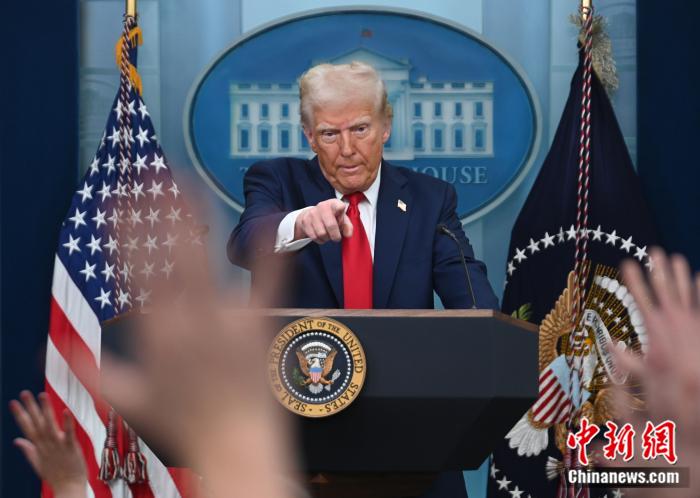
Core Points - President Trump has mandated that all air traffic controllers must return to work immediately, threatening severe penalties for non-compliance [1][2] - Trump proposed a $10,000 bonus for air traffic controllers who did not take leave during the federal government shutdown [2] Group 1: Impact on Air Traffic Control - The federal government shutdown has led to many air traffic controllers working without pay, resulting in a significant "retirement wave" [2] - The shortage of personnel has exacerbated flight restrictions, leading to numerous flight cancellations and delays across the United States [2] - According to the American Airlines Association, over 4 million travelers have had their travel plans affected since the government shutdown began [2]
Wall Street set for gains as Senate takes initial steps to end the shutdown
Fastcompany· 2025-11-10 19:01
Core Insights - Wall Street is anticipating strong gains due to a bipartisan deal aimed at ending the federal government shutdown, which is currently the longest in U.S. history [1] - Futures for the S&P 500 rose by 0.9%, Dow Jones futures increased by 0.4%, and Nasdaq futures climbed by 1.5%, driven by optimism in the technology sector [1] - Health insurers are facing challenges as uncertainty regarding health care subsidies persists, impacting their market outlook [1] Market Reactions - The positive sentiment in the market is reflected in the futures, with S&P 500, Dow Jones, and Nasdaq all showing significant increases [1] - The technology sector is particularly strong, contributing to the rise in Nasdaq futures [1] Legislative Context - A test vote in the Senate has initiated procedural steps towards passing compromise legislation to fund the federal government, although final approval may take several days [1] - The ongoing negotiations lack a clear resolution regarding expiring health care subsidies, which are a point of contention for Democrats [1]

美国联邦政府追平史上最长“停摆”纪录,本周能重启吗?
第一财经· 2025-11-04 09:10
Core Viewpoint - The article discusses the ongoing government shutdown in the United States, which has reached its 35th day, tying the record for the longest shutdown in U.S. history. The impasse is primarily due to disagreements between the Democratic and Republican parties regarding funding and healthcare issues [3]. Group 1: Government Shutdown Status - The U.S. federal government has been in a shutdown for 35 days, with no clear resolution in sight as of November 3 [3][5]. - The Senate has held 13 votes without passing a temporary funding bill proposed by the Republicans, and a 14th vote is scheduled [3]. - Republican Senate leader John Thune expressed optimism about reaching an agreement to restart the government, potentially extending funding through January or later [3][6]. Group 2: Legislative Negotiations - Thune indicated that discussions may focus on regular funding procedures and extending subsidies for the Affordable Care Act [6]. - The Democratic party insists that negotiations must include healthcare reform to maintain government operations, while Republicans remain focused on procedural issues [6]. Group 3: Food Assistance Program - The Trump administration announced plans to restart the Supplemental Nutrition Assistance Program (SNAP) but will only distribute half of the usual amount, utilizing $4.65 billion from emergency funds [7]. - Approximately 1 in 8 Americans rely on SNAP, with an average monthly benefit of $187, and nearly 39% of beneficiaries are children [8]. - The USDA froze SNAP funding starting November 1 due to the shutdown, marking the first time in 60 years that this has occurred [8]. Group 4: Legal and Administrative Actions - Federal judges ruled that freezing SNAP funds was illegal, stating that Congress had allocated over $5 billion in emergency funds for this purpose [8]. - The Trump administration will not appeal the judges' ruling and is working on a process to restore SNAP funding, which could potentially resume by November 5 [9].
美联储理事库克:通胀可能居高不下 12月未必降息
Sou Hu Cai Jing· 2025-11-03 23:59
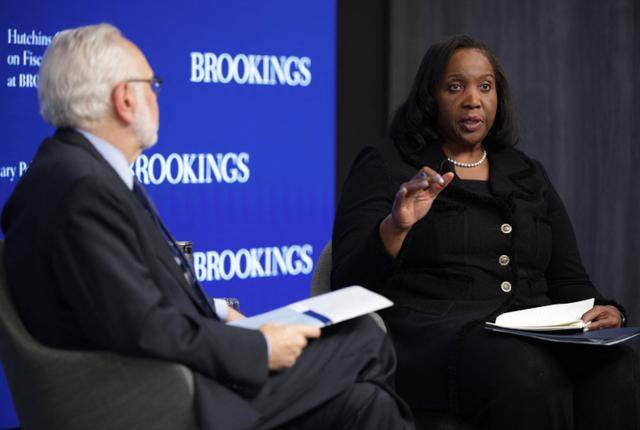
Core Insights - Federal Reserve Governor Lisa Cook anticipates persistent high inflation in the U.S. over the next year due to the impact of tariff policies on the economy [1][3] - The uncertainty surrounding tariffs is affecting corporate pricing strategies, with some companies reducing inventory at lower prices before cost increases [3] - The recent 25 basis point interest rate cut by the Federal Reserve is seen as appropriate, but the balance between rising inflation risks and a weakening labor market is a concern [5] Group 1 - Cook indicated that tariffs are increasing costs for U.S. businesses, which may keep inflation elevated in the coming year [3] - She noted that interactions with business leaders suggest that the impact of tariffs on consumer prices has not fully materialized [3] - Cook is prepared to take strong action if the effects of tariffs are larger or more prolonged than expected [3] Group 2 - The ongoing federal government shutdown is expected to exert pressure on economic activity this quarter and may have spillover effects on the private sector [3] - The Federal Reserve's decision to cut rates again reflects a belief that the downside risks to employment outweigh the upside risks to inflation [5] - Cook emphasized that future monetary policy is not on a predetermined path, leaving the December rate decision uncertain [5]
美国:“停摆”危机逼近“临界点” 吃饭和看病问题沦为党争筹码
Xin Hua Wang· 2025-11-03 01:13
Core Points - The U.S. federal government shutdown has entered its second month, approaching the record for the longest shutdown in U.S. history, with no resolution in sight as both parties remain entrenched in their positions [1][6] - A federal food assistance program, the Supplemental Nutrition Assistance Program (SNAP), which serves approximately 42 million people, is facing funding issues and may stop disbursing benefits due to the shutdown [3][4] - The annual enrollment for the Affordable Care Act (ACA) health insurance began on November 1, but rising premiums are expected if enhanced subsidies are not extended, with potential increases averaging 114% for many enrollees [6][7] Group 1: Federal Food Assistance - The Rhode Island federal district court has ordered the government to utilize emergency funds to continue SNAP benefits, which are critical for low-income individuals [3] - The USDA initially planned to use emergency funds but later stated that funds were exhausted, leading to a halt in food assistance on November 1 [3][4] - The monthly funding requirement for SNAP is approximately $8 billion, and delays in benefit disbursement have already occurred in several states [3] Group 2: Healthcare and ACA Enrollment - The ongoing government shutdown has prevented the Senate from passing a temporary funding bill, primarily due to disagreements over healthcare spending [6][7] - The ACA enrollment period has started, with around 24 million individuals eligible, but the lack of extended subsidies could lead to significant premium increases for many [6] - Political maneuvering by both parties during the shutdown has resulted in a lack of urgency to resolve the funding impasse, impacting healthcare benefits [7]