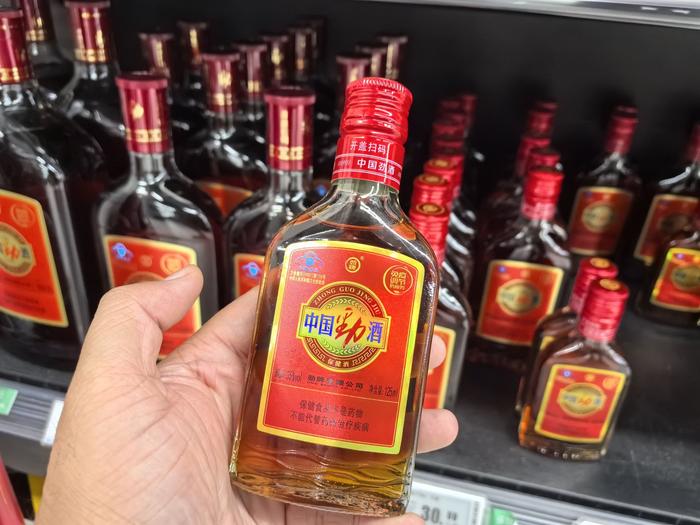
中国劲酒

Search documents
劲牌公司2025年营收预计达137亿元,增长9.6%
Chang Jiang Shang Bao· 2026-02-11 23:31
Core Insights - The company, Jinpai, is solidifying its position as a billion-level enterprise with a projected revenue increase of 9.6% for 2025, reaching 13.7 billion yuan, with its core brand, Jinjiu, expected to grow over 20% [2][6][10] Group 1: Company Performance - Jinpai's revenue growth is notable, especially during a challenging period for the liquor industry characterized by policy adjustments and shifting consumer preferences [3][6] - The company has successfully attracted 9 million young users aged 18-30 and 4 million female users in the past two years, leveraging a strategy focused on "light drinking" and social engagement [6][10] Group 2: Product Strategy - The company has diversified its product offerings by introducing two categories: health-oriented liquor and herbal liquor aimed at social activities, breaking through previous growth barriers [4][5][10] - The herbal liquor, Maopu, has undergone a quality upgrade, incorporating patented technologies and herbal essences, and has received accolades such as the gold award at the WSEAC 2025 [10] Group 3: Research and Development - Jinpai invests over 3% of its sales revenue into research and development, with a focus on enhancing product quality and innovation [11] - The company has established over 6,800 enterprise standards, many of which exceed national standards, and has been recognized with multiple national quality awards [11][12] Group 4: Future Goals - The company has set ambitious long-term sales targets, aiming for over 80 billion yuan by 2042 and over 100 billion yuan by 2053 [12]
劲牌营收预增9.6%夯实百亿级地位 吴少勋“保健+草本”布局冲破增长藩篱
Chang Jiang Shang Bao· 2026-02-11 00:00
Core Viewpoint - The company, Jinpai, is solidifying its position as a billion-level enterprise, with a projected revenue of 13.7 billion yuan in 2025, marking a 9.6% year-on-year growth, and its core brand, Jinjiu, expected to grow over 20% [1][5]. Group 1: Company Performance - Jinpai has been stagnant in revenue growth for several years before launching the herbal liquor, Maopu, to rejuvenate its product line and appeal to younger consumers [2][9]. - The company has successfully attracted 9 million young users aged 18-30 and 4 million female users in the past two years, leveraging a strategy focused on "light drinking" and social engagement [5]. - Jinpai's revenue growth is notable amidst a broader industry downturn characterized by policy adjustments and shifting consumer preferences [4][13]. Group 2: Product Development - The company has diversified its product offerings into three main segments: health liquor, herbal liquor, and traditional Chinese medicine, with a focus on health-oriented products [4]. - The Maopu herbal liquor has undergone a quality upgrade, utilizing aged spirits and herbal essences, and has received accolades, including a gold award at the WSEAC 2025 [10]. - Jinpai invests over 3% of its sales revenue into research and development, resulting in 266 authorized patents, with a focus on enhancing product quality and innovation [11]. Group 3: Quality Assurance and Standards - Jinpai has established a quality information platform for traceability and has set up 54 direct supply bases for medicinal materials, ensuring rigorous quality control [12]. - The company has developed over 6,800 enterprise standards, many of which exceed national standards, and is leading the formulation of new national standards for liquor quality [11][12]. - Jinpai successfully passed the review for the National Quality Award, indicating its commitment to maintaining high-quality standards [12]. Group 4: Future Goals - The company has set ambitious long-term sales targets, aiming for over 80 billion yuan by 2042 and over 100 billion yuan by 2053 [12].
践行“四个友好” 共筑健康未来 ——劲牌有限公司2025年度社会责任报告
Hua Xia Shi Bao· 2026-01-30 09:58
Core Insights - The company, Jinpai Co., Ltd., has released its 2025 Social Responsibility Report, marking the 19th consecutive year of public accountability [1] - In 2025, Jinpai focused on the "Healthy China" strategy, emphasizing user needs and achieving steady growth amid a complex external environment [1] Group 1: Product Development and Quality - Jinpai has maintained steady growth in 2025, appealing to younger and female consumers through a commitment to health and product quality [2] - The company has launched several new products in the health liquor sector, including "Jinpai One Person One Prescription Liquor" and the upgraded "Jinpai Health No. 1" [2] - Jinpai's herbal liquor series, Mao Pu, has undergone a comprehensive quality upgrade, winning a gold medal at the WSEAC 2025 World Spirits Excellence Awards [2][3] Group 2: Technological Innovation - Jinpai has increased its research investment, conducting nearly 100 research projects in 2025 to enhance product competitiveness [4] - The company has clarified the health benefits of its products through modern pharmacological research, focusing on components that aid in fatigue resistance and immune regulation [4] - Jinpai has achieved significant energy savings in its herbal extraction processes and has published research in international journals [5] Group 3: Partnerships and Supply Chain - In 2025, Jinpai engaged 672 long-term distributors in collaborative discussions, strengthening relationships with over 370,000 front-end store owners [6] - The company has shifted supplier relationships from price competition to value co-creation, enhancing product quality and efficiency through technological support [6] - Jinpai employs a transparent pricing mechanism based on comprehensive cost assessments, ensuring sustainable profits for partners [6] Group 4: Employee Welfare - Jinpai has implemented a childbirth incentive policy, benefiting 27 employee families with a total of 330,000 yuan in rewards [8] - The company has established a comprehensive care system for employees, covering major illnesses and providing housing subsidies of up to 100,000 yuan [8][9] - Jinpai has organized matchmaking events for single employees, resulting in 35 romantic relationships and 5 marriages [8] Group 5: Social Responsibility - Jinpai has initiated a packaging innovation project, reducing carbon footprints by 36.5% to 48.2% for certain products [10] - The company has donated over 1.82 billion yuan in 2025 to various social causes, including education and disaster relief, totaling 39.03 billion yuan in cumulative donations [11] - Jinpai has retained its title as a "National Civilized Unit" for five consecutive terms, reflecting its commitment to social contributions [11]
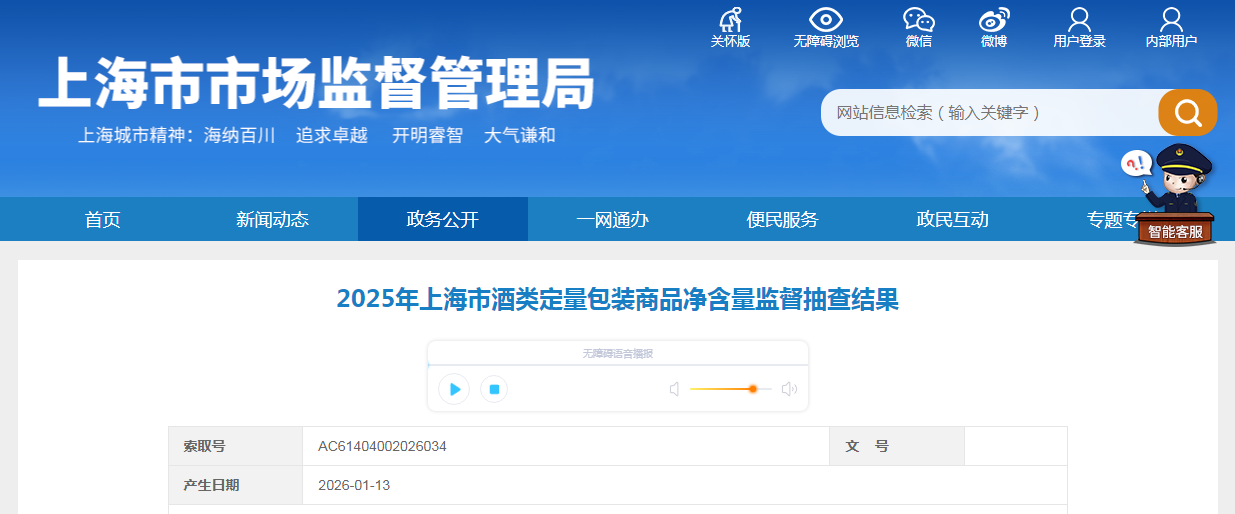
2025年上海市酒类定量包装商品净含量监督抽查结果公布
Zhong Guo Zhi Liang Xin Wen Wang· 2026-01-15 08:37
Core Insights - The Shanghai Municipal Market Supervision Administration conducted a quality inspection of alcoholic beverages, revealing that all 20 sampled products met the required standards for net content labeling and measurement [3]. Group 1: Inspection Results - All 20 batches of alcoholic beverages inspected were found to be compliant with the relevant standards [3]. - The inspection was based on JJF 1070-2023 "Measurement Inspection Rules for Net Content of Quantitative Packaged Goods" [3]. Group 2: Sampled Products - Notable compliant products included: - Qingdao Beer Classic (330ml) produced by Qingdao Beer Shanghai Songjiang Manufacturing Co., Ltd. [3] - RIO Strong Refreshing White Peach Flavored Cocktail (330ml) produced by Shanghai Bacchus Wine Co., Ltd. [3] - Chinese Jin Liquor (520ml) produced by Jinpai Co., Ltd. [3] - The inspection covered various types of alcoholic beverages, including beer, wine, and cocktails, indicating a diverse market presence [3].

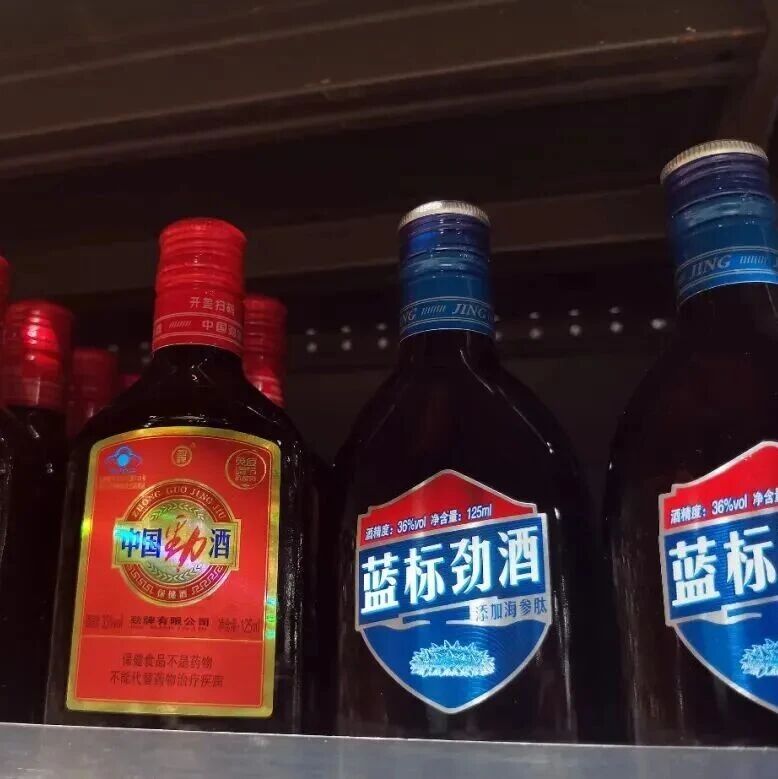
中年男人的酒,被女生买爆了
首席商业评论· 2026-01-08 04:27
Core Viewpoint - The article highlights how Jingjiu, a health wine brand, has successfully captured the attention of younger and female consumers through innovative marketing strategies on social media platforms like Douyin and Xiaohongshu, leading to significant sales growth in a challenging market environment [3][5][11]. Group 1: Market Performance - Jingjiu is expected to achieve over 20% revenue growth this year, with the overall revenue projected to reach approximately 118 billion yuan in 2025, following a 10% growth in 2024 [5][9]. - The company reported a significant increase in its consumer base, adding over 4 million female users and 900,000 young consumers aged 18-30 in the past two years [10][20]. - Jingjiu's sales have been driven by a surge in demand, leading to supply shortages in certain regions due to limited production capacity and strategic volume control by the manufacturer [9][20]. Group 2: Marketing Strategies - The brand has effectively utilized social media to create viral marketing campaigns, leveraging trending topics and user-generated content to enhance brand visibility and engagement [12][13]. - Jingjiu's marketing strategy includes a focus on "good but different" products, innovative content marketing, and a non-saturation sales approach that ensures profitability for distributors [13][15]. - The company has shifted its target demographic from primarily older males to a more diverse audience, including younger consumers and women, by promoting various cocktail recipes and social drinking scenarios [10][16]. Group 3: Industry Context - The broader liquor industry is facing challenges, with many companies struggling with sales and profitability, while Jingjiu stands out as a success story amidst these difficulties [5][20]. - The health wine market, while smaller than the traditional liquor market, has seen Jingjiu emerge as a leading player, demonstrating the potential for growth through targeted marketing and product innovation [18][20]. - The article raises questions about the sustainability of the current marketing trends and the implications of promoting alcohol consumption, particularly among younger demographics [20][21].
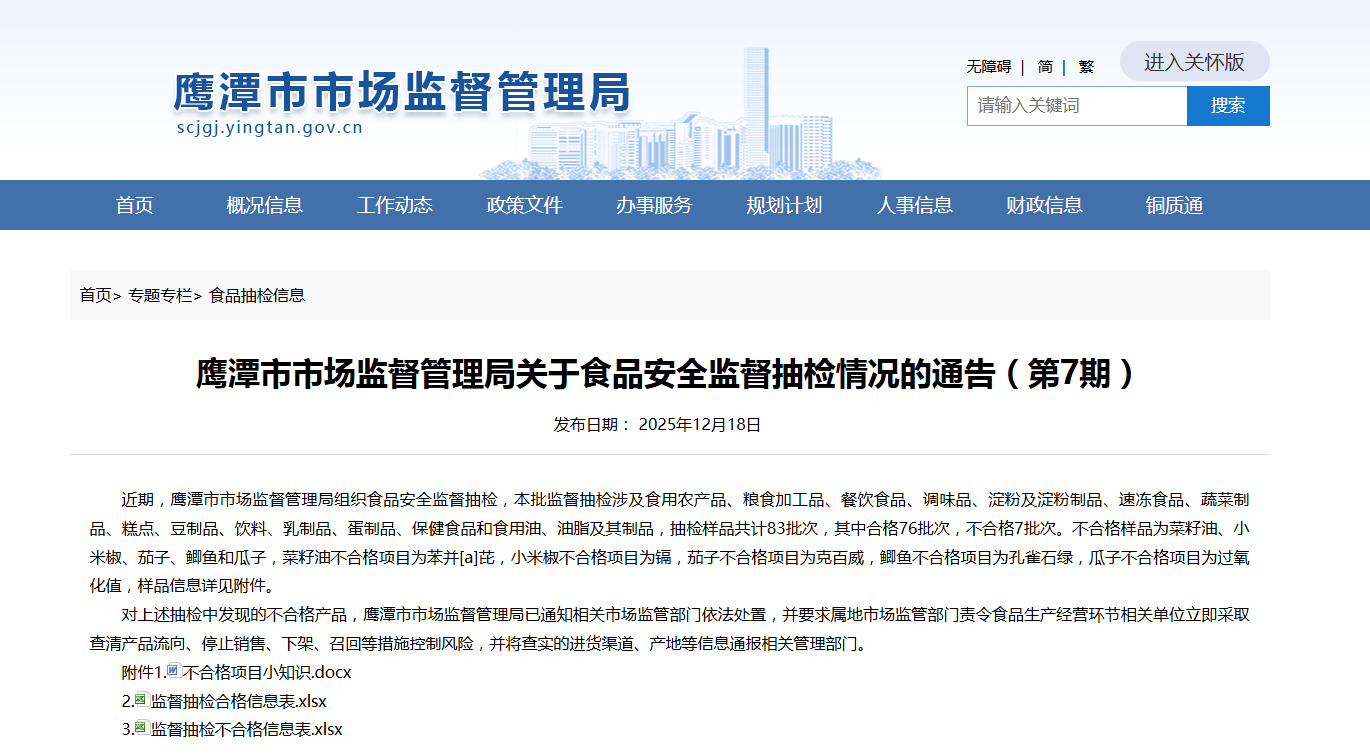
江西省鹰潭市市场监督管理局关于食品安全监督抽检情况的通告(第7期)
Zhong Guo Zhi Liang Xin Wen Wang· 2026-01-07 08:49
Core Insights - The recent food safety supervision and sampling conducted by the Yingtan Market Supervision Administration revealed that out of 83 batches of food products tested, 76 were compliant while 7 were found to be non-compliant [2]. Group 1: Sampling Results - A total of 83 batches of food products were sampled, including edible agricultural products, grain processing products, catering foods, condiments, starch and starch products, frozen foods, vegetable products, pastries, bean products, beverages, dairy products, egg products, health foods, and edible oils [2]. - Among the 83 batches, 76 were found to be compliant, resulting in a compliance rate of approximately 91.57% [2]. Group 2: Non-Compliant Products - The 7 non-compliant samples included canola oil, small chili peppers, eggplants, crucian carp, and sunflower seeds [2]. - Specific non-compliance issues included: - Canola oil: detected benzopyrene - Small chili peppers: detected cadmium - Eggplants: detected chlorpyrifos - Crucian carp: detected malachite green - Sunflower seeds: exceeded peroxide value [2]. Group 3: Regulatory Actions - The Yingtan Market Supervision Administration has notified relevant market supervision departments to take legal action regarding the non-compliant products [2]. - Local market supervision departments are required to trace the product flow, halt sales, remove products from shelves, and initiate recalls to control risks [2].
北京市石景山区市场监督管理局关于2025年食品安全监督抽检信息的公告(2025年第24期)
Zhong Guo Zhi Liang Xin Wen Wang· 2026-01-07 06:20
Core Viewpoint - The announcement from the Beijing Shijingshan District Market Supervision Administration details the results of food safety supervision and sampling inspections conducted in 2025, highlighting compliance and non-compliance of various food products [3]. Group 1: Food Safety Inspection Results - The inspection covered various food products from different manufacturers, with a focus on ensuring compliance with food safety standards [3]. - A total of 22 food items were tested, with most passing the safety standards, indicating a generally high level of compliance in the market [5][6]. - Specific products that passed include "东鹏特饮维生素饮料" from 安徽东鹏食品, "燕麦保健片" from 山东百家兴农业科技股份有限公司, and "维生素C泡腾片" from 仙乐健康科技股份有限公司, among others [5][6]. Group 2: Non-compliance Cases - One notable non-compliance case involved "圆茄子" from 北京惠食佳餐厅, which failed the inspection and was marked as non-compliant [6]. - The inspection results emphasize the importance of ongoing monitoring and compliance checks to ensure food safety in the region [3][6].
江西省鹰潭市市场监督管理局关于食品安全监督抽检情况的通告(第6期)
Zhong Guo Zhi Liang Xin Wen Wang· 2025-11-17 06:34
Core Points - The Eagle Town Market Supervision Administration conducted a food safety supervision sampling, with a total of 130 batches tested, resulting in 123 qualified and 7 unqualified samples, leading to an unqualified rate of 5.38% [2] - The unqualified products included edible vegetable oil, reused dining utensils, homemade steamed buns, and millet peppers, with specific issues such as acid value, coliforms, sweeteners, and cadmium detected [2] - The administration has notified relevant market supervision departments to take legal action against the unqualified products and has mandated local departments to trace product flow, halt sales, and recall products to control risks [2] Summary by Category Sampling Results - Total samples tested: 130 - Qualified samples: 123 - Unqualified samples: 7 - Unqualified rate: 5.38% [2] Unqualified Products - Edible vegetable oil: Issues with acid value - Reused dining utensils: Issues with coliforms and anionic synthetic detergents - Homemade steamed buns: Issues with sweeteners and sodium saccharin - Millet peppers: Issues with cadmium [2] Regulatory Actions - Notification to relevant market supervision departments for legal action - Local departments required to trace product flow, stop sales, and recall products [2]
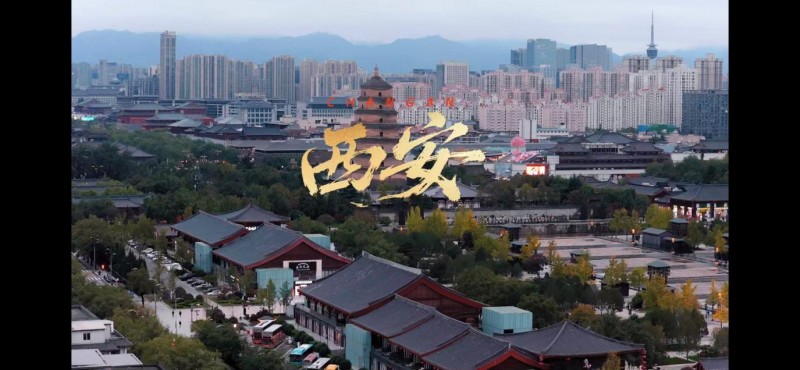
《食养江湖》西安站:刘奕君解密碳水食养,中国劲酒解锁古都“烟火+温润”智慧
Zhong Guo Shi Pin Wang· 2025-11-05 09:41
Core Insights - The show "Food and Health Jianghu" focuses on the unique dietary culture of Xi'an, emphasizing the health benefits of carbohydrate-rich foods [1][3] - The program highlights the historical significance of Shaanxi cuisine and its evolution, showcasing local dishes that align with modern health trends [3][4] Group 1: Cultural Significance - Xi'an, as a historical capital, has a rich culinary heritage that reflects the philosophy of "food should be exquisite and detailed," which is integral to Chinese dietary culture [3] - The region's agricultural advantages, particularly in high-quality winter wheat, contribute to its reputation as the "Carbohydrate Capital," featuring dishes like biangbiang noodles and lamb paomo [3][4] Group 2: Health and Nutrition - The program illustrates how traditional Xi'an dishes incorporate nutritional wisdom, balancing carbohydrates, proteins, and fibers to promote health [4][6] - Dishes such as lamb paomo and oil-splashed noodles are highlighted for their health benefits, including digestive support and nutrient absorption, particularly suited for the local climate [4][7] Group 3: Modern Relevance - The collaboration with the Tang drama group adds cultural depth and engagement, making the exploration of food and health more relatable to contemporary audiences [4][6] - The integration of traditional health concepts with modern dietary preferences positions Chinese medicinal wine, like China Jingjiu, as a convenient health supplement that complements local cuisine [6][7]
劲牌的百亿瓶颈:八年增长失速 保健酒王者如何破局?
Zhong Guo Jing Ying Bao· 2025-08-29 21:39
Core Viewpoint - The company, Jinpai, has faced growth challenges after reaching over 10 billion yuan in revenue in 2017, with its revenue stagnating around the 10 billion yuan mark in subsequent years, while competitors like Luzhou Laojiao and Shanxi Fenjiu have surpassed 30 billion yuan in revenue [3][4][5] Group 1: Company Performance - Jinpai's revenue was approximately 10.2 billion yuan in 2018, increased slightly to 10.7 billion yuan in 2019, and reached about 11 billion yuan in 2021, but then saw a decline [4][5] - In 2022, Jinpai's revenue recovered to the level of 2019, and for 2024, the company projected a revenue of 12.5 billion yuan, reflecting a growth rate of 4.3% [5][6] - The company holds over 50% market share in the health wine sector, indicating limited growth potential due to market saturation [5][6] Group 2: Market Dynamics - The health wine market is relatively niche, with a limited consumer base, primarily consisting of health-conscious retirees and a younger demographic that is less receptive to traditional health wines [6][7] - The overall liquor industry in China is projected to reach 796.38 billion yuan in sales revenue in 2024, with a year-on-year growth of 5.3%, indicating a broader market opportunity despite the niche nature of health wines [6][7] Group 3: Strategic Initiatives - Jinpai has diversified its product offerings, including the introduction of herbal wines and acquisitions in the liquor sector to seek new growth avenues [7][8] - The company has launched marketing initiatives targeting younger consumers through social media and content marketing, aiming to rejuvenate its brand image [8][9] - Jinpai's herbal wine products, such as the Mao Pu herbal wine series, are positioned to appeal to social drinking occasions, with price ranges from 300 to 780 yuan for different aged variants [8][9]