中国美元主权债券

Search documents
中国在沙特发行“黄金美元债”:一场教科书级的国际融资策略
Sou Hu Cai Jing· 2026-01-03 07:23
Group 1 - The core point of the article highlights China's successful issuance of $2 billion sovereign bonds, which attracted $39.73 billion in subscriptions, setting a global record with a 27.1 times oversubscription for five-year bonds [1] - The interest rate for the three-year bonds was set at 4.284% and for the five-year bonds at 4.340%, resulting in a minimal spread of only 1-3 basis points compared to U.S. Treasury bonds, marking the lowest spread in the dollar bond market [3] - This issuance comes after a three-year hiatus, during which China strategically paused bond issuance amid aggressive interest rate hikes by the Federal Reserve, resuming only when U.S. rates began to decline in late 2024 [4] Group 2 - Middle Eastern investors accounted for a historic high proportion of the $39.73 billion in subscriptions, reflecting a growing financial cooperation between China and Saudi Arabia, highlighted by recent financial products linked to each other's markets [6] - The choice of Riyadh as the issuance location, rather than traditional hubs like Paris or Hong Kong, signifies China's efforts to strengthen bilateral relations with Saudi Arabia, as evidenced by increased investments from Chinese companies in the region [7] - The bonds were listed simultaneously on the Hong Kong Stock Exchange and Nasdaq Dubai, creating a pricing coordinate system across Asia and Europe, which will serve as a benchmark for Chinese enterprises seeking overseas financing [9]

特朗普开始着急了,中国手握3万亿外储却发40亿美债,两个原因
Sou Hu Cai Jing· 2025-11-21 11:22
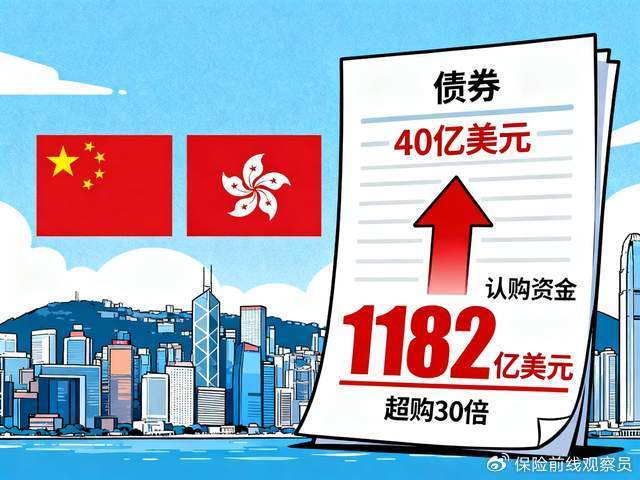
Core Viewpoint - The issuance of $4 billion in sovereign bonds by China in Hong Kong is a strategic move to test its creditworthiness against that of the U.S., showcasing confidence in China's economic potential and providing a new safe asset option for global capital [1][3][40] Group 1: Bond Issuance and Market Response - China successfully issued $4 billion in sovereign bonds, attracting a total subscription of $118.2 billion, nearly 30 times the issuance amount [5][11] - The 5-year bonds saw a subscription rate of 33 times, indicating strong global investor interest [5][11] - The interest rates for the 3-year and 5-year bonds were set at 3.646% and 3.787%, respectively, which, while slightly higher than U.S. Treasury rates, reflect minimal risk premium due to the overwhelming demand [11][14] Group 2: Strategic Implications - The bond issuance serves to position China's credit on par with U.S. credit, allowing international investors to assess the relative risks of lending to China versus the U.S. [11][14] - This move is seen as a challenge to the U.S. dollar's dominance, especially in light of recent geopolitical tensions and the potential for the dollar to be weaponized [18][22] - The bonds come with a unique repayment option, allowing repayment in RMB or physical assets, which mitigates the risk of U.S. financial sanctions [20][22] Group 3: Economic and Geopolitical Context - The issuance is part of a broader strategy to provide low-cost financing to developing countries, particularly in Africa and South America, while allowing them to repay in RMB, thus reducing their exposure to currency risk [26][30] - This strategy encourages trade with China and the use of RMB in international transactions, potentially increasing the currency's global circulation [35][38] - The growing trade relationship with Africa, which has surpassed ASEAN as China's largest trading partner, exemplifies the effectiveness of this approach [37][40]
只有中国敢这么干!美债狂揽1182亿,华尔街沉默,美联储头疼了
Sou Hu Cai Jing· 2025-11-17 10:07
Core Viewpoint - The issuance of a $4 billion sovereign bond by the Chinese Ministry of Finance in Hong Kong attracted a staggering $118.2 billion in subscriptions, indicating a 30-fold oversubscription, which is rare in the international market [1][3]. Group 1: Market Dynamics - The interest rates for the issued bonds were nearly on par with U.S. Treasury bonds, with the three-year bond at 3.646% and the five-year bond at 3.787% [3]. - Asian investors accounted for 53% of the subscriptions, while European investors contributed 25%, and the Middle East and Americas made up 22% [3]. - Sovereign investments represented 42% of the subscriptions, with banks and insurance institutions at 24%, and funds and asset management at 32% [4]. Group 2: Credit Rating Perception - Despite international credit ratings for China being lower than those for the U.S. (A1 vs. AA1), the market response was contrary, with significant capital inflow indicating strong investor confidence [3][5]. - Investors are focusing on China's solid economic fundamentals, including over $3 trillion in foreign exchange reserves, a growing trade surplus, and stable policies [7]. Group 3: Implications for Global Finance - The successful bond issuance signals a shift in the global financial landscape, suggesting that emerging markets can establish their own dollar credit benchmarks [10][20]. - This event may encourage other emerging markets to enter the dollar bond market, leading to a diversification of dollar pricing power [10]. - The issuance reflects a broader trend of financial openness from China, showcasing its market credibility to global investors [14][16]. Group 4: Future Outlook - The bond's performance in the secondary market will serve as a key indicator of China's creditworthiness [12]. - The event highlights China's financial resilience and market responsiveness, which could influence its future interactions in international capital markets [13][18]. - The global capital market's reaction indicates a growing recognition of China's financial strength and its potential to challenge the dominance of U.S. Treasury bonds [20].
川普没想到中国发行四十亿美元债券,竟引来一千一百八十二亿全球资金疯抢,美联储急刹车
Sou Hu Cai Jing· 2025-11-13 16:55
Core Insights - The issuance of $4 billion sovereign bonds by China in Hong Kong on November 5, 2025, attracted a staggering subscription amount of $118.2 billion, achieving a record subscription multiple of 30 times, significantly surpassing the 2.5 to 2.7 times for U.S. Treasury bonds during the same period [1][3][5] - China's bond yields for three-year and five-year bonds were 3.646% and 3.787%, respectively, which were competitive with U.S. Treasury yields, indicating a shift in global investor confidence towards Chinese sovereign credit [1][3] - The issuance reflects a broader trend where global capital is increasingly viewing China as a safe haven, especially in light of the U.S. national debt exceeding $38 trillion and political uncertainties affecting investor confidence in U.S. Treasuries [1][5][12] Investment Demand and Structure - Sovereign investors accounted for 42% of the total subscriptions, with significant participation from central banks and sovereign wealth funds, indicating strong institutional confidence in China's long-term creditworthiness [3][5] - Geographically, 53% of the subscriptions came from Asia, 25% from Europe, and 16% from the Middle East, with 6% from U.S. investors, showcasing a diverse international interest in Chinese bonds [3][5] Strategic Implications - The issuance is part of a broader strategy by China to create an alternative dollar circulation system, challenging the traditional U.S.-dominated financial framework and potentially disrupting the existing global financial order [3][7][10] - By issuing bonds in Hong Kong, China not only reinforces Hong Kong's status as an international financial center but also facilitates cross-border financing and settlement, enhancing the global liquidity of the renminbi [9][10] Market Dynamics - The successful bond issuance sends a clear signal about the resilience of China's financial system, suggesting that it cannot be easily excluded from the global financial landscape [12] - The ongoing trend of "de-dollarization," with the dollar's share in global reserves dropping to 58.9%, indicates a shift towards a more multipolar currency system, with countries increasingly diversifying their reserves into assets like gold, euros, and renminbi [10][12]

特朗普没想到中国敢这么干,发行美债狂揽1182亿,美联储急刹车
Sou Hu Cai Jing· 2025-11-13 10:22
Group 1 - The core point of the article is that China's Ministry of Finance successfully issued USD sovereign bonds in Hong Kong, raising a total of $4 billion, with an unprecedented subscription amount of $118.2 billion, marking a record in the history of USD sovereign bond issuance [1][4][11] - The subscription rate for China's bonds significantly exceeded that of U.S. bonds, indicating strong international investor confidence in China [3][6] - The issuance of these bonds serves multiple purposes, including improving the yield curve of USD sovereign bonds and balancing China's sovereign debt structure, which currently has a low proportion of foreign debt [9][11] Group 2 - The issuance is also aimed at demonstrating global investor confidence in China's economy, as evidenced by the willingness of investors to accept a bond yield of 3.646%, only slightly higher than that of U.S. bonds [11][13] - The successful bond issuance reflects China's economic stability and healthy environment, countering recent credit ratings from Wall Street agencies that rated China lower than the U.S. [15] - The deeper strategic intent behind issuing these bonds includes providing financial support to smaller countries burdened by debt, thereby enhancing China's economic cooperation with these nations and promoting the Belt and Road Initiative [23][25] Group 3 - The funds raised from the bond issuance can be used to help these smaller countries repay their debts to the U.S., reducing their vulnerability to U.S. financial institutions [20][22] - Additionally, the repayment of these loans could potentially be made in RMB, indirectly promoting the internationalization of the Chinese currency [25] - The article suggests that the successful bond issuance will lead to increased global capital inflow into China, enhancing the influence of the RMB and potentially reducing the dominance of the USD in international markets [25][27]

特朗普被中国金融高手打懵!发行美债狂揽1182亿,美联储急刹车
Sou Hu Cai Jing· 2025-11-13 09:29
Core Insights - The stark difference in subscription rates between U.S. and Chinese dollar bonds highlights a significant shift in global investor confidence, with China's bonds attracting a subscription rate of 30 times compared to the U.S. bonds' 2.5 to 2.7 times [1][4][8] Group 1: Subscription Rates and Market Dynamics - China's recent issuance of $4 billion in dollar-denominated sovereign bonds received an overwhelming $118.2 billion in subscriptions, marking a historic achievement [4] - The 5-year bonds from China were particularly popular, achieving a subscription rate of 33 times, showcasing strong international demand [4] - In contrast, U.S. Treasury bonds are struggling to attract buyers, with only a few "staunch allies" continuing to purchase them, indicating a decline in their desirability [4][6] Group 2: Economic Context and Investor Sentiment - The U.S. national debt has surpassed $38 trillion, with annual interest payments exceeding military expenditures, leading to skepticism about the U.S.'s ability to meet its debt obligations [6] - Political gridlock in the U.S. over fiscal reforms has resulted in a persistent government shutdown, contributing to an unstable investment environment [6] - In contrast, China's strong trade surplus and substantial foreign exchange reserves position it as a "stabilizer" in the global economy, enhancing investor confidence in its bonds [8] Group 3: Strategic Implications of China's Bond Issuance - China's issuance of dollar bonds aims to challenge the dominance of the U.S. dollar and provide an alternative for countries facing debt crises, potentially undermining U.S. financial strategies [10] - The ability for countries to repay Chinese bonds in renminbi instead of dollars represents a strategic move to increase the renminbi's share in international finance, thereby reducing the dollar's global circulation [10][12] - The current U.S. monetary policy, characterized by excessive money supply, poses risks to the dollar's credibility, with potential consequences for global financial stability [12]
特朗普没料到中国敢这么干,发行美债增持1182亿,美联储急刹车
Sou Hu Cai Jing· 2025-11-13 08:24
Core Insights - The issuance of $4 billion in Chinese sovereign bonds attracted a staggering $118.2 billion in subscriptions, achieving a subscription rate 30 times higher than the amount issued, indicating a strong global interest in Chinese dollar bonds compared to U.S. Treasury bonds [4][6]. Group 1: Bond Issuance Details - The Chinese bonds had competitive interest rates, with a 3-year rate of 3.646% and a 5-year rate of 3.787%, which are nearly on par with U.S. Treasury rates [3][4]. - The distribution of investors showed that 53% of the subscription funds came from Asia, 25% from Europe, 16% from the Middle East, and 6% from U.S. investors, highlighting a diverse global interest [3][4]. Group 2: Financial Context - The U.S. national debt has surpassed $38 trillion, with annual interest payments exceeding $1.1 trillion, raising concerns about fiscal sustainability [6]. - China, with over $3 trillion in foreign exchange reserves, is not issuing dollar bonds due to a cash shortage but rather as a strategic financial maneuver [6][10]. Group 3: Market Implications - The issuance sets a new interest rate benchmark for Chinese enterprises seeking to raise funds in international markets, providing a reference point for future dollar bond issuances [8]. - The funds raised will support infrastructure projects along the Belt and Road Initiative, creating a cycle where international capital flows into China and then is reinvested globally [8][10]. Group 4: Global Financial Dynamics - This issuance allows China to redefine the concept of "safe assets" in the international financial system, challenging existing credit ratings by demonstrating strong market demand [6][10]. - By becoming an active dollar allocator rather than a passive holder, China is reshaping global capital flows and potentially paving the way for the internationalization of the renminbi [10][14]. Group 5: Hong Kong's Role - The choice to issue bonds in Hong Kong reinforces its status as an international financial center, with China having issued a total of $25 billion in sovereign bonds there since 2017 [12]. - The high subscription rates for Chinese bonds compared to U.S. Treasuries suggest that international investors view Chinese sovereign credit ratings as comparable to those of the U.S. [12][14].

发行40亿美债狂揽1182亿美元,特朗普没料到中方敢这么干,美联储紧急刹车
Sou Hu Cai Jing· 2025-11-12 23:21
Core Insights - The issuance of $4 billion sovereign bonds by the Chinese Ministry of Finance attracted $118.2 billion in subscriptions, achieving a record oversubscription rate of 30 times, indicating a strong global confidence in Chinese sovereign credit [1][3][5] - The bonds were issued at competitive rates close to U.S. Treasury yields, with a 3-year rate of 3.646% and a 5-year rate of 3.787%, contrasting with lower demand for U.S. bonds [1][3][12] - The issuance reflects a strategic move by China to establish a pricing benchmark for Chinese enterprises seeking overseas financing, thereby reducing overall financing costs [5][14] Investor Composition - Sovereign investors, including central banks and sovereign wealth funds, accounted for 42% of the subscriptions, while banks and insurance institutions made up 24%, and funds and asset management institutions comprised 32% [3][5] - The geographical distribution of investors showed that 53% were from Asia, 25% from Europe, 16% from the Middle East, and 6% from the U.S., indicating a broad international interest in Chinese bonds [3][5] Market Dynamics - The issuance highlights a reversal in credit confidence between China and the U.S., with China's zero default record contrasting sharply with the U.S.'s history of technical defaults [3][10] - The trend of "de-dollarization" is gaining momentum, with the dollar's share in global foreign exchange reserves dropping to 58.9%, the lowest in 25 years [9][12] Strategic Intent - The issuance is not merely for financing needs but is part of a broader financial strategy to enhance China's role in the international financial system and support development projects under the Belt and Road Initiative [5][10] - The introduction of a renminbi settlement option for global investors facilitates the internationalization of the renminbi and strengthens Hong Kong's position as a financial hub [7][14] Long-term Implications - The issuance is expected to influence U.S. Treasury yields, potentially increasing them by 50-75 basis points, thereby adding pressure to U.S. fiscal policy [12][16] - The shift in investor behavior indicates a growing preference for Chinese sovereign bonds as a safe asset, which could diminish the U.S.'s ability to attract capital during times of geopolitical tension [12][17] Financial Infrastructure - The successful issuance in Hong Kong underscores the city's role as a key financial center, providing a robust infrastructure for cross-border financing and settlement [14][16] - The careful design of the bond issuance, including the controlled size and diverse investor base, sets a precedent for future larger-scale issuances [16][17]
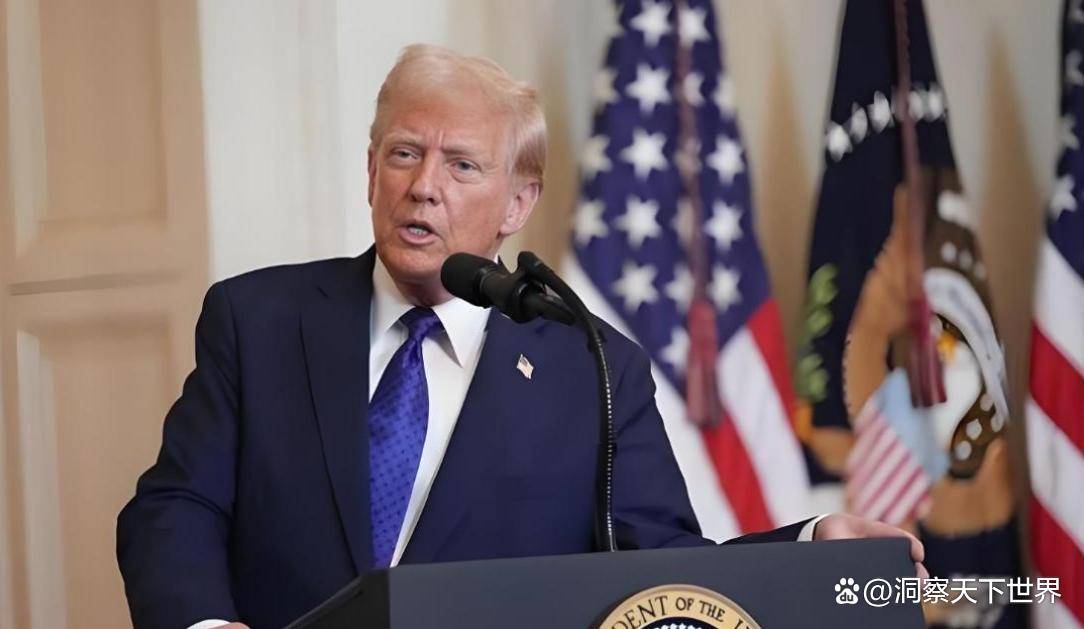
只有中国敢这么干!发行美债狂揽1182亿,华尔街沉默,美联储头疼
Sou Hu Cai Jing· 2025-11-12 17:47
Core Viewpoint - The issuance of $4 billion in sovereign bonds by the Chinese Ministry of Finance in Hong Kong attracted an unprecedented $118.2 billion in global subscriptions, marking a historical record in market response [1] Group 1: Bond Issuance Details - The bond issuance was highly sought after, with an overall subscription rate nearing 30 times, and the 5-year bonds reaching a staggering 33 times [3] - The yields on these bonds were comparable to U.S. Treasury yields, with the 3-year yield at 3.646% and the 5-year yield at 3.787%, only slightly higher than U.S. bonds by 0.02 percentage points [3] Group 2: Market Sentiment and Trust - The overwhelming demand for these bonds, despite minimal additional interest incentives, signals a collective vote of confidence in China's sovereign credit [5] - In contrast, U.S. Treasury bond subscriptions were much cooler, typically ranging between 2.5 to 2.7 times [7] Group 3: Credit Ratings and Economic Fundamentals - There is a stark contrast between the market's perception and the official ratings from international agencies, with China rated A1 by Moody's while the U.S. holds a higher AA1 rating [8] - Investors are focusing on China's strong fundamentals, including over $3 trillion in foreign exchange reserves and a consistent trade surplus, which bolster its debt repayment capacity [8] Group 4: Implications for Global Finance - The successful bond issuance challenges the traditional pricing power of the U.S. dollar in global liquidity, suggesting a new offshore dollar credit benchmark is emerging [17] - This development enriches investor choices and undermines the status of U.S. Treasuries as the sole "risk-free" asset, positioning China as an alternative safe haven for international capital [19] Group 5: Strategic Financial Maneuvers - The issuance can assist developing countries caught in "debt traps" by providing flexible dollar loans, allowing repayments in various currencies, including the renminbi [21] - This process not only promotes the international use of the renminbi but also facilitates capital flow back to China, potentially reducing global demand for the dollar [23][24] Group 6: Broader Market Impact - The bond issuance sets a precedent for other emerging markets, demonstrating that strong fundamentals can lead to fairer pricing in international capital markets [28]

特朗普没想到中国敢这么干,发行美债狂揽 1182 亿,美联储急刹车
Sou Hu Cai Jing· 2025-11-12 07:59
Core Viewpoint - China's issuance of $4 billion in sovereign bonds in Hong Kong attracted overwhelming interest, with subscription amounts reaching $118.2 billion, resulting in a subscription ratio of 30 times, highlighting a significant shift in global capital preferences towards Chinese bonds over U.S. Treasuries [1][3][5] Group 1: Market Reaction - The subscription amount for China's bonds was $118.2 billion against a $4 billion issuance, indicating a staggering demand with a 29-fold oversubscription [3][5] - In contrast, U.S. Treasury bonds saw a subscription ratio of only 2.6 times, reflecting a stark decline in investor confidence in U.S. debt [1][3] Group 2: Creditworthiness and Investor Confidence - Investors are drawn to Chinese bonds not due to higher interest rates but because of China's strong credit backing, supported by $3 trillion in foreign exchange reserves and a stable trade surplus [5][10] - China's debt repayment capability is perceived as more stable compared to many countries, enhancing the attractiveness of its bonds as a safe investment [5][10] Group 3: Strategic Objectives of Bond Issuance - The primary goal of issuing these bonds is to establish a "capital safe haven" alternative to U.S. Treasuries, challenging the long-held belief that U.S. assets are the safest [7][9] - This issuance serves as a strategic move to diversify global financial options and reduce reliance on U.S. dollar assets [7][9] Group 4: Implications for U.S. Financial Dominance - The influx of capital into Chinese bonds may force the U.S. to raise its borrowing costs, as it competes for limited global capital [14][16] - The Federal Reserve's policy-making space is constrained, complicating its ability to manage inflation and economic slowdown due to the competitive pressure from Chinese bonds [14][16] Group 5: Long-term Financial Landscape Changes - The current dynamics suggest a potential decline in U.S. financial hegemony, as investor confidence shifts towards Chinese bonds, reminiscent of historical shifts in global currency dominance [16][18] - China's proactive integration into the global financial system through bond issuance is aimed at enhancing its international credibility and providing a viable alternative for global capital [18][20]