中式米饭快餐

Search documents
三次递表港交所!这个快餐品牌用1700+家门店撑起45亿营收
Sou Hu Cai Jing· 2026-01-17 01:08
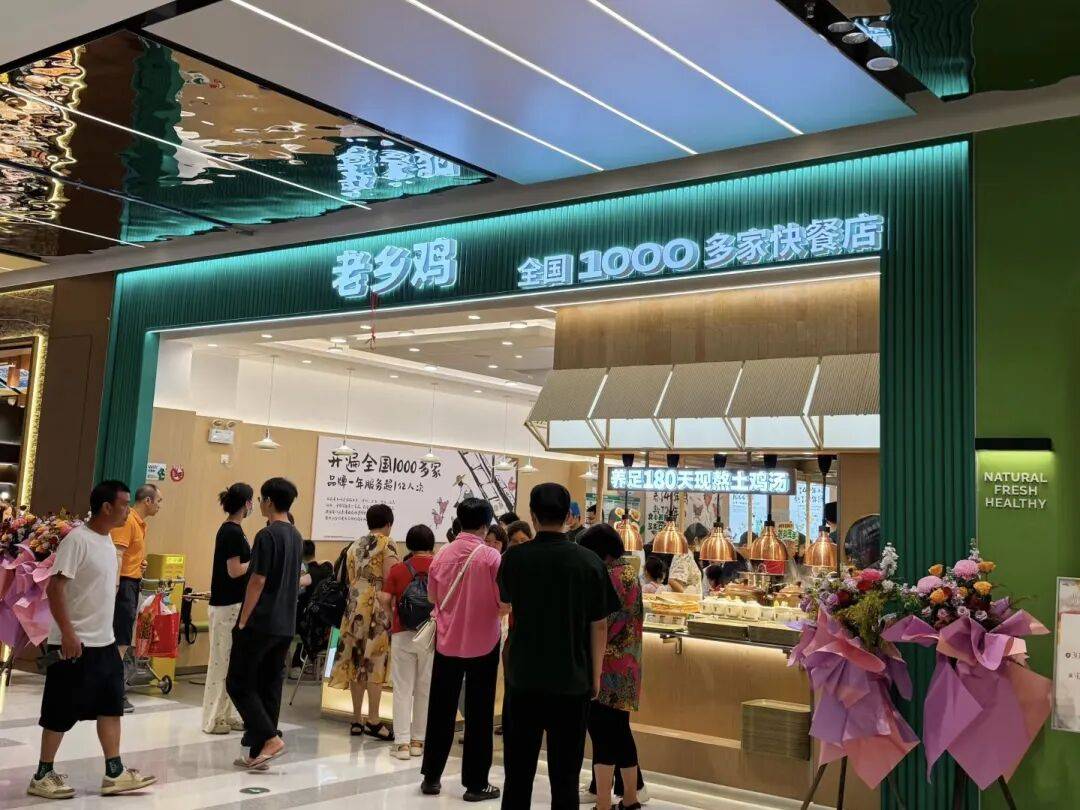
Core Viewpoint - LXJ International Holdings Limited, known as "Laoxiangji," has submitted its prospectus to the Hong Kong Stock Exchange for the third time, indicating its determination to enter the capital market amid stable growth in its operations and expansion plans [1][9]. Group 1: Financial Performance - For the period from January 1 to August 31, 2025, Laoxiangji achieved a revenue of 4.578 billion yuan, representing a year-on-year growth of 10.9% [2]. - Net profit increased from 332 million yuan in the first eight months of 2024 to 371 million yuan in the same period of 2025, reflecting an 11.8% year-on-year increase [2]. - Same-store sales rose from 3.489 billion yuan in the first eight months of 2024 to 3.621 billion yuan in 2025, marking a growth of 3.8% [6]. Group 2: Store Expansion - As of the latest date, Laoxiangji operates 1,777 stores nationwide, including 969 direct-operated stores and 808 franchise stores, with plans to reach nearly 2,000 stores by 2025 [4]. - The proportion of franchise stores has increased significantly from 10.5% in 2022 to 45.5% currently, indicating a shift towards a "direct-operated + franchise" dual-drive model [5]. - Most of Laoxiangji's stores are concentrated in East China, with 1,434 stores located in provinces such as Anhui, Jiangsu, Zhejiang, and Shanghai, accounting for over 80% of total stores [4]. Group 3: Market Position and Strategy - Laoxiangji claims to be the largest Chinese fast-food brand, holding a 0.9% market share in the Chinese fast-food industry as of 2024, ranking first among Chinese rice fast-food companies [10]. - The overall market for Chinese rice fast food is projected to reach 300 billion yuan in 2025, growing at a rate of 10.2% year-on-year [9]. - The company emphasizes its standardized operations and full industry chain layout as key advantages in overcoming challenges associated with scaling in a fragmented market [13].

门槛100万 大米先生不再执着纯直营
Bei Jing Shang Bao· 2025-11-17 16:40
Core Viewpoint - The Chinese fast food brand "Dami Xiansheng" is shifting from a pure direct sales model to a partnership model, aiming to expand its market presence and fill gaps in high-demand areas like Beijing and Shanghai, following the example of its parent company, Xiangcunji Group [1][3][4]. Group 1: Company Strategy - Dami Xiansheng has officially announced a recruitment notice for partners, breaking its direct sales-only approach established since its founding in 2011 [1]. - The first batch of partnerships will cover 13 provinces and cities, focusing on high-tier cities and underdeveloped markets [3]. - The selection criteria for partners include alignment with corporate philosophy, good reputation, and significant resource and financial capabilities, with a minimum startup capital of 1 million yuan [3]. Group 2: Market Context - The Chinese rice fast food sector dominates the market, holding a 91.8% market share, with the market size expected to reach 277 billion yuan in 2024, growing at 10.1% year-on-year [4]. - The competition in the rice fast food sector is intensifying, with other dining brands entering the market through various strategies, including introducing sub-brands and meal options [5]. Group 3: Challenges and Opportunities - The average consumer price in the rice fast food sector is declining, which poses operational challenges for companies [6]. - Dami Xiansheng's transition to a partnership model could leverage the resources of partners to quickly fill market gaps and reduce operational costs through the supply chain advantages of Xiangcunji Group [5]. - The company needs to maintain quality control and management during rapid expansion, and should consider building a digital management platform to enhance operational efficiency [6].

研判2025!中国中式米饭快餐行业市场政策、产业链、发展现状、竞争格局及发展趋势分析:19-40岁消费群体占比高达86.7%[图]
Chan Ye Xin Xi Wang· 2025-06-05 01:42
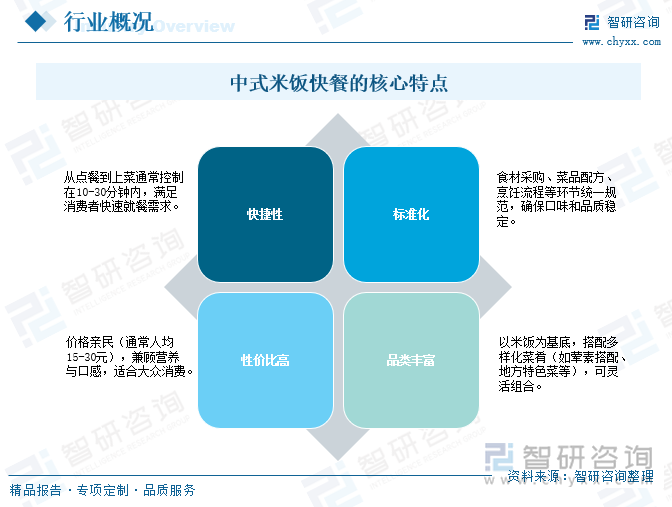
Overview - The demand for fast, convenient, and nutritionally balanced dining options is increasing among consumers, leading to a growing preference for Chinese rice fast food, which meets these needs [1][12] - The market size of China's Chinese rice fast food industry is projected to reach 277 billion yuan in 2024, with a year-on-year growth of 10.23% [1][12] Market Policies - The Chinese government has issued several policies to support the development of the restaurant industry, including guidance on promoting traditional food production areas and enhancing service consumption [3][4] - Policies aim to improve the standardization, convenience, modernization, and branding of the restaurant sector, providing a favorable environment for the growth of the Chinese rice fast food industry [3] Industry Chain - The upstream of the Chinese rice fast food industry includes suppliers of agricultural products such as rice, vegetables, and meat, as well as suppliers of cooking equipment and packaging materials [5][8] - The downstream consists of individual and corporate consumers whose demand directly influences the industry's development [5] Development Status - The Chinese rice fast food industry is characterized by its quick service, standardization, and high cost-performance ratio, making it popular among consumers [1][12] - The industry is experiencing a shift towards fresh, stir-fried options as consumers increasingly value freshness over pre-prepared meals [1][12] Competitive Landscape - The Chinese rice fast food market is highly fragmented, with numerous small to medium-sized street vendors, although brand concentration has been increasing due to capital investment [14][16] - Major players in the industry include Lao Niang Jiu, Anhui Laoxiangji, and Xiangcunji, among others, with a significant presence in various regions [14][16] Industry Trends - Future trends indicate a shift towards branding and chain operations, with companies focusing on brand image and product quality to attract consumers [20] - The diversification of product offerings is expected, with the introduction of snacks, noodles, and beverages to cater to varying consumer preferences [20]
小红书既要“独特”,又放不下“规模”丨南财号联播
2 1 Shi Ji Jing Ji Bao Dao· 2025-05-15 08:25
Monetary Policy - The People's Bank of China announced a 0.5 percentage point reduction in the reserve requirement ratio for financial institutions, effective May 15, releasing approximately 1 trillion yuan in long-term liquidity into the market [1] - The reserve requirement ratio for auto finance companies and financial leasing companies was reduced by 5 percentage points, enhancing their credit supply capabilities [1] Gold Market - Gold prices experienced a significant drop, falling 2.1% overnight and trading around $3,150 per ounce, with a low of $3,147 per ounce [1] - The decline in international gold prices has led to a noticeable decrease in domestic gold jewelry prices, with major brands like Chow Tai Fook seeing prices drop below 1,000 yuan per gram [1] Pharmaceutical Industry - Heng Rui Pharmaceutical launched its H-share global public offering, aiming to issue 224,519,800 H-shares, with a price range set between 41.45 and 44.05 HKD per share [1] - If the overallotment option is fully exercised, the maximum fundraising amount could reach 13.08 billion HKD [1] U.S. Treasury Market - The yield on 30-year U.S. Treasury bonds approached 5%, while the yield on 10-year bonds surpassed 4.5% [1] E-commerce and Social Media - Xiaohongshu (Little Red Book) partnered with Alibaba to open a traffic channel to external e-commerce platforms, allowing users to link directly to Taobao stores [2] - Xiaohongshu's overall commercial scale is projected to reach 100 billion yuan in 2024, but it still lags behind major platforms with trillion-level GMV [2] Fast Food Industry - The Chinese rice fast food market is expected to exceed 300 billion yuan by 2025, driven by its convenience, taste, and cost-effectiveness [2] Pet Industry - The domestic pet industry is experiencing significant growth, with increasing consumer interest and changing pet ownership trends [3] Billiards Market - The billiards market in China is projected to surpass 100 billion yuan by 2025, with over 210 million enthusiasts and an annual growth rate of 180% [3] - The resurgence of billiards is attributed to a growing audience base, improved event systems, and innovations in venue operations and equipment [3]