中概互联

Search documents
金融工程周报:春季行情在犹豫中启动-20260104
Huaxin Securities· 2026-01-04 14:25
- The report mentions an A-share timing model, specifically the "wave model," which turned bullish on November 14, 2025, and has maintained a high position since then. This model is used to determine optimal market entry and exit points based on market trends and signals[1][29] - Another timing model, the "short-term model," is highlighted for its bullish signal on the CSI 1000 index, while the bullish signals for the CSI 300 and CSI 500 indices have ended. This model focuses on short-term market movements and provides directional signals for specific indices[1][29] - The report also discusses a "Hong Kong stock timing model," which indicates a high certainty of a liquidity-driven bullish trend post-New Year. This model is used to assess market conditions and timing for Hong Kong stocks, with a focus on buy-side activity confirmation[4][29] - A "gold timing model" is mentioned, which has been adjusted to a higher position. This model evaluates the market conditions for gold investments, considering factors like the U.S. dollar index and short-term trading opportunities[5][29] - The report includes a "small-cap A-share timing model," which suggests a bullish outlook for small-cap stocks in January 2026. This model is used to analyze and predict trends in small-cap segments of the A-share market[6][29] - The "dividend growth A-share timing model" is also highlighted, which has been adjusted to favor growth stocks in January 2026. This model focuses on identifying opportunities in dividend-paying growth stocks within the A-share market[6][29]
中概互联、恒生科技和港股通科技有何异同
雪球· 2025-09-20 01:53
Core Viewpoint - The article discusses the recent performance of three major indices: the Hang Seng Tech Index, the Hong Kong Stock Connect Tech Index, and the China Internet 50 Index, highlighting their significant gains and the underlying factors driving these increases [4][5]. Group 1: Index Performance - On September 17, the Hang Seng Tech Index rose by 4.22%, the Hong Kong Stock Connect Tech Index by 3.27%, and the China Internet 50 Index by 3.40%, all reaching nearly four-year highs [4]. - The Hang Seng Tech Index has seen a year-to-date increase of 41.77%, while the Hong Kong Stock Connect Tech Index and China Internet 50 Index have increased by 58.54% and 47.51% respectively [5]. Group 2: Factors Driving Performance - External factors include rising expectations for a Federal Reserve interest rate cut and a more accommodative global liquidity environment, which benefit the overall liquidity of Hong Kong stocks [4]. - Internally, the ongoing AI wave and breakthroughs in core technologies like large models and cloud computing among domestic tech companies have significantly contributed to the strong performance of key tech stocks [4]. Group 3: Index Composition and Strategy - The China Internet 50 Index is characterized by a "head concentration + low-frequency adjustment" strategy, with over 50% of its weight concentrated in Tencent and Alibaba, and adjustments made semi-annually [7]. - The Hang Seng Tech Index employs a "diversified holding + high-frequency adjustment" strategy, with a maximum weight of 8% per stock and quarterly adjustments, allowing it to quickly capture emerging opportunities [7][8]. - The Hong Kong Stock Connect Tech Index has a middle-ground approach, with a maximum weight of 15% per stock and semi-annual adjustments, benefiting from liquidity premiums due to the inclusion of mainland investors [8]. Group 4: Industry Composition - The China Internet 50 Index focuses primarily on internet companies, with over 90% of its components in social media, e-commerce, and online entertainment, making it highly dependent on the internet industry cycle [9][10]. - The Hang Seng Tech Index has a balanced layout with approximately 55% in internet and over 40% in hard tech sectors like semiconductors and new energy vehicles [10]. - The Hong Kong Stock Connect Tech Index features a more diversified industry coverage, including hard tech, internet, and innovative pharmaceuticals, with a focus on growth [11]. Group 5: Valuation Analysis - As of September 16, the price-to-earnings (PE) ratio for the China Internet 50 Index is 21.11, placing it in the 18.01% historical percentile, indicating it is at a historical low [15]. - The Hang Seng Tech Index has a PE ratio of 24.24, in the 35.07% historical percentile, while the Hong Kong Stock Connect Tech Index has a PE ratio of 25.84, in the 53.31% historical percentile [15]. - All three indices are currently at relatively low or reasonably low valuation levels, suggesting potential for valuation recovery [16]. Group 6: Investment Suitability - The China Internet 50 Index is suitable for investors who believe in core assets, benefiting from the certainty of leading companies like Tencent and Alibaba [18]. - The Hang Seng Tech Index is recommended for balanced exposure to both soft and hard tech sectors, with a diversified holding strategy reducing single-industry risk [18]. - The Hong Kong Stock Connect Tech Index is ideal for investors looking to capture multidimensional growth opportunities in technology, with a focus on both growth and liquidity [18].




等了中概互联3年,它没亏待我
雪球· 2025-09-19 08:37
Core Viewpoint - The article discusses the recovery and growth of the Chinese internet sector, highlighting a 47% increase in the China Internet ETF since early 2025, emphasizing the importance of patience and strategic investment during challenging times [4][5][6]. Group 1: Historical Context and Recovery - The Chinese internet sector faced significant challenges over the past three years, including regulatory pressures and market sentiment issues, leading to a decline that tested investors' beliefs and strategies [4][5]. - The author previously addressed concerns about the potential collapse of the Chinese internet industry, asserting that while some companies may falter, the overall sector is unlikely to disappear due to its deep integration into daily life [7]. - The recovery of the sector is likened to a "smile curve," illustrating the importance of time and common sense in investment [6]. Group 2: Interest Rate Cycle and Valuation - The article explains that interest rates significantly influence the valuation of technology sectors, with rising rates increasing costs and pressuring growth assets, while falling rates create a more favorable environment for valuations [10][11]. - Recent actions by the Federal Reserve, including a rate cut from 4.25-4.5% to 4-4.25%, signal a shift towards a more accommodative monetary policy, which could benefit growth sectors like the internet [12][13]. - The historical context of post-pandemic monetary easing is referenced, noting that it previously led to a rapid recovery in technology and internet asset valuations [14]. Group 3: Safety Margin and Current Valuation Strategies - The article recommends using the Price-to-Sales (PS) ratio for evaluating the Chinese internet sector, as traditional Price-to-Earnings (PE) ratios may not accurately reflect the volatility of early-stage companies [16]. - Current PS and PE ratios indicate that the sector is undervalued, with a PS of 3.04 and a PE of 21.65, suggesting a favorable safety margin compared to historical averages [19][20][26]. - A comparative analysis shows that the Chinese internet sector has a lower valuation relative to other technology indices, indicating a potential investment opportunity [27]. Group 4: Investment Strategy and Recommendations - The article emphasizes the importance of maintaining a diversified portfolio and managing positions carefully, especially during market fluctuations [8][9]. - Investors are advised to remain patient and not be swayed by short-term market movements, with a focus on long-term strategies and safety margins [28][29]. - For those unfamiliar with the sector, caution is advised, and starting with broader indices may be a prudent approach [30].



发车!这波回调会跌多少?
Sou Hu Cai Jing· 2025-09-10 11:24
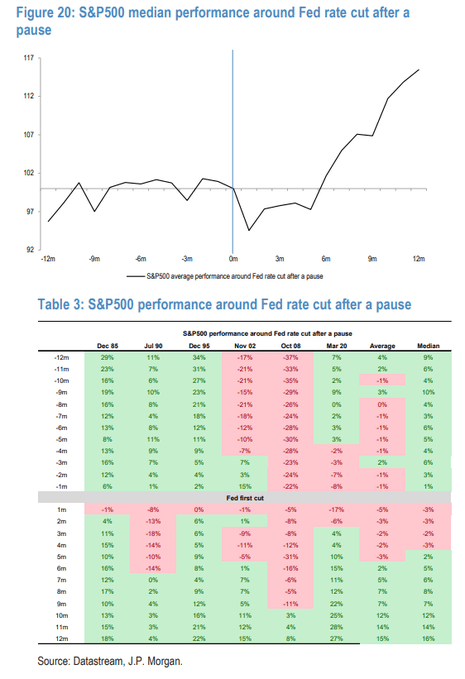
Group 1: Market Overview - The global investment strategy includes buying equities across various markets such as A-shares, US stocks, European stocks, and emerging markets, focusing on sectors like technology, healthcare, and Chinese internet companies, while also investing in commodities for balanced asset allocation [1] - The upcoming Federal Reserve meeting on September 16-17 is anticipated to be a significant macro event, with a nearly full market expectation of a 25 basis point rate cut, and a 10% probability of a 50 basis point cut following a downward revision of non-farm data [1][2] - Historical data indicates that the stock market typically performs poorly in the month following a Federal Reserve rate cut, with the S&P 500 showing an average return of -5% in the first month after a cut [4][5] Group 2: Seasonal Trends and Investor Behavior - September is traditionally a weak month for US stocks, with pension funds and mutual funds rebalancing portfolios, leading to potential selling pressure [3] - Retail investor participation tends to decline in September, and companies often reduce stock buybacks during the quiet period before third-quarter earnings announcements [3] Group 3: Earnings and Economic Outlook - Despite concerns about economic slowdown, major companies have shown strong earnings growth, particularly in the technology sector, which has driven profits year-to-date [8] - The combination of upcoming Federal Reserve easing and fiscal stimulus from policies like Trump's "Big Beautiful Plan" suggests potential for stock market gains, even amidst volatility [11] Group 4: A-Share Market Insights - The recent adjustment in the A-share market is viewed as healthy, with volume contraction being a normal phenomenon during bull market corrections [12][15] - The Chinese stock market is currently in a "recovery" phase, with improving earnings momentum, which is a relative advantage compared to other economies in the region [17] Group 5: Commodity Market Dynamics - The report emphasizes the importance of including commodities in investment portfolios as a hedge against future risks, particularly in a world moving towards multipolarity [19][20] - Goldman Sachs highlights a "commodity control cycle" where government interventions lead to a concentration of supply among a few dominant players, raising concerns about future supply security [20]
本周热点:4年前开始吃贴水全纪录
集思录· 2025-06-27 13:48
Core Viewpoint - The article discusses the performance of various investment strategies over the past four years, highlighting the effectiveness of certain strategies in navigating a challenging market environment, particularly in the context of a significant bear market in Chinese assets. Group 1: Investment Performance - The CSI 500 index has dropped from 6628 points to 5639 points over four years, resulting in a decline of 1000 points, but an 800-point gain from the discount strategy has helped offset this loss, leading to an overall return of 18% based on a nominal principal of 1 million [1][3]. - In the period from 2022 to 2025, the real estate market has been in decline without signs of recovery, marking a unique bear market that surpasses previous stock market downturns [3]. Group 2: Strategy Evaluation - The article rates various investment strategies, assigning a score of 70 to the IM discount strategy, 65 to the IC discount strategy, and a failing score of 50 to broad indices like the CSI 300 and CSI 500, while the low-volatility dividend and dual-low convertible bonds receive a score of 80 [2]. - The performance of different asset classes in 2021 is highlighted, showing significant losses: real estate down 40% (60% including interest), CSI 300 down 23%, Chinese concept stocks down 37%, and CSI white liquor down 48% [4].