中深层地热井下换热技术

Search documents
以地热能支撑零碳园区建设——专访万江新能源股份有限公司董事长陈泽民
Zhong Guo Neng Yuan Wang· 2026-02-02 03:39
Core Viewpoint - Geothermal energy is gaining traction as a clean, efficient, and stable renewable energy source in the context of China's "dual carbon" goals, with expanding application scenarios and significant opportunities for development in the energy sector [1][2]. Industry Development - China possesses approximately 1/6 of the global geothermal resources and leads in direct utilization, accounting for about 37.7% of the global total [2]. - The development of geothermal energy technology has advanced significantly, with innovations such as containerized geothermal power generation reducing construction time to 1/10 and costs to 1/2 compared to international standards [2]. - The shift towards geothermal energy is crucial for achieving carbon neutrality and enhancing energy security, especially given China's reliance on imported fossil fuels [2]. Zero Carbon Park Construction - The construction of zero carbon parks presents new opportunities for geothermal energy, with the EU's carbon border adjustment mechanism emphasizing the importance of sustainable energy supply systems [3]. - Notable projects include the Liaoning Shenyang Sino-German High-end Equipment Manufacturing Industrial Park and the Zhengzhou Airport Economic Zone, which utilize geothermal energy for clean heating solutions [3]. Economic Benefits - Implementing geothermal heating in buildings can save significant amounts of natural gas and reduce energy expenditures, with estimates suggesting a savings of approximately 3 billion yuan annually for every 100 million square meters of buildings [4]. - The transition to geothermal energy not only lowers carbon emissions but also significantly reduces operational costs, as demonstrated in projects like the one in Xinxiang, Henan [4]. Future Prospects - The geothermal industry is expected to develop into a distinctive industrial cluster worth over 100 billion yuan, driven by continuous technological advancements and supportive government policies [5]. - The growth of the geothermal sector is anticipated to encompass a wide range of applications, including residential heating, hospitals, schools, and industrial uses, contributing to new economic growth points and production capabilities [5].

两会聚焦丨立足省情加强科技创新推动产业升级
He Nan Ri Bao· 2026-01-27 23:17
Group 1: Core Insights - The development of new quality productivity is a systematic project that emphasizes innovation-driven growth tailored to local conditions [1] - Artificial intelligence (AI) is identified as a key driver for the development of new quality productivity, with applications in agriculture through integrated monitoring networks [2] - Companies like China Mobile are leveraging their technological and resource advantages to establish AI innovation centers and collaborate with the provincial government on strategic applications [2] Group 2: Industry Applications - The integration of regional resources with advanced technologies is crucial, as demonstrated by Wanjiang New Energy's geothermal heating solutions that reduce costs and provide green energy [3] - The focus on public service innovation is highlighted by Yuanfang Group's development of an intelligent management platform that improves operational efficiency in healthcare [3] - The commitment to training and matching labor with job opportunities is supported by a digital human resource service system [3] Group 3: Talent Development and Education - Higher education institutions play a vital role in cultivating innovative talent, with suggestions to optimize academic structures and enhance industry-education integration [4] - The establishment of interdisciplinary research institutes at universities aims to address gaps in fields like integrated circuits and AI [4] - Local application-oriented colleges are expected to support industrial upgrades and technological innovation, focusing on energy and chemical sectors [4]

履职尽责这一年丨将“地下宝藏”转化为发展动能
He Nan Ri Bao· 2026-01-24 23:01
Core Viewpoint - Wanjiang New Energy has positioned itself as a leader in geothermal energy development, focusing on transforming geothermal resources into green development momentum and contributing to energy security and carbon neutrality goals [1][2]. Group 1: Company Overview - Wanjiang New Energy has become a comprehensive geothermal development enterprise, covering shallow to medium-depth geothermal resources and multi-energy coupling [1]. - The company has successfully developed two key technologies: rock-soil energy storage recycling technology and medium-deep geothermal heat exchange technology, which have revolutionized geothermal energy utilization [1]. Group 2: Economic Impact - The adoption of geothermal systems in large buildings can save approximately 10 billion cubic meters of natural gas annually, translating to a cost saving of about 3 billion yuan, while also significantly reducing electricity consumption and carbon dioxide emissions [2]. - In the context of China's 40% dependence on foreign natural gas, utilizing domestic geothermal energy reduces winter gas supply pressure and builds a self-reliant and secure energy system [2]. Group 3: Future Development - The company advocates for the rapid expansion of diversified geothermal applications, aiming to create "zero-carbon parks" and "zero-carbon factories" in industrial sectors, and prioritize geothermal systems in public facilities like hospitals and schools [2]. - There is a call for the geothermal industry to be included in provincial key planning, with the potential to form a geothermal industry cluster worth over 100 billion yuan by integrating resources across exploration, design, equipment manufacturing, and intelligent operation management [2].
迈向全面覆盖:碳市场扩围锁定减排新机遇
Zhong Guo Zheng Quan Bao· 2025-11-30 20:21
Group 1: Carbon Market Expansion - The national carbon market is expanding in an orderly manner, with the inclusion of steel, cement, and aluminum industries, covering over 60% of national CO2 emissions [1] - The Ministry of Ecology and Environment plans to include more industries such as chemicals, aviation, and paper by 2027, aiming for comprehensive coverage of major industrial emissions [1] - The expansion of the carbon market is expected to drive companies to innovate and invest in low-carbon technologies, providing technical and financial support for green transformation [1] Group 2: Corporate Responses and Opportunities - Companies like Shougang Group view the inclusion in the carbon market as a long-term driver for technological innovation and energy structure optimization [2] - Shougang plans to build new electric furnaces to achieve over 70% carbon reduction in steel production and is focusing on developing a low-carbon product system [2] - The carbon market's tightening will push high-emission companies to adopt advanced energy-saving technologies to reduce compliance costs [2] Group 3: Technological Innovations and Market Trends - Green low-carbon technologies are experiencing unprecedented market opportunities, with a focus on multi-energy collaboration and large-scale applications [3] - Companies are developing solutions like geothermal heating and integrated renewable energy systems to provide clean energy for high-consumption industries [3] - Energy efficiency technologies are becoming active innovation sectors, with companies implementing measures to achieve near-zero carbon emissions [4] Group 4: Challenges and Barriers - Despite the promising outlook for green technologies, there are significant barriers to large-scale application, primarily related to technology maturity and high initial costs [5] - The lack of a mature market and business models, along with insufficient carbon pricing, hampers investment in green technologies [5] - Recommendations include establishing national technology projects and integrating various funding sources to support the scaling of green technologies [5]

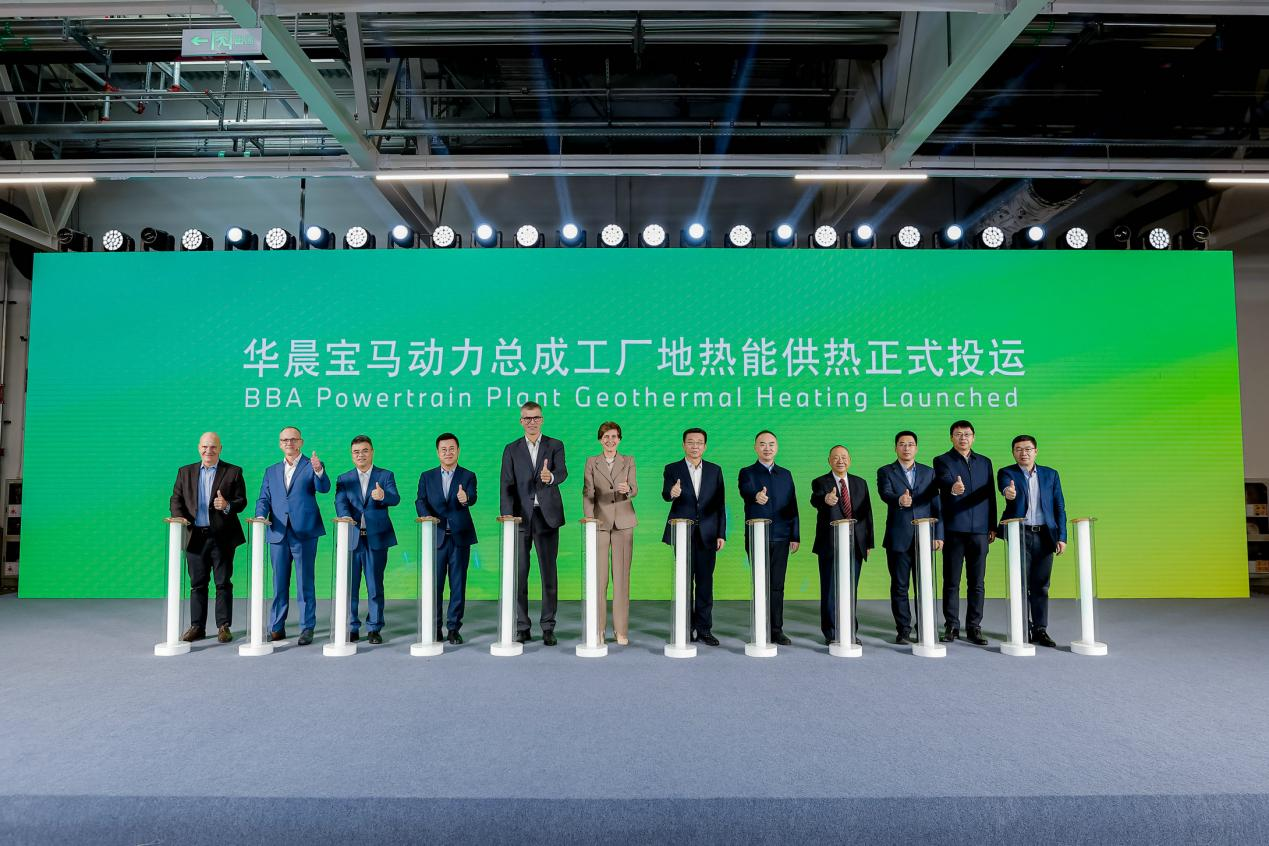
地热+工业!万江宝马华能联手掀起零碳园区供热新革命
Zhong Guo Neng Yuan Wang· 2025-10-31 09:13
Core Insights - The completion and operation of the geothermal heating project at the Brilliance BMW powertrain plant in Shenyang marks a significant shift from traditional fossil fuel reliance to clean, low-carbon energy in the industrial heating sector [1][10] - This project serves as a replicable and promotable model for low-carbon transformation in northern industrial cities, contributing to the broader goal of sustainable development [1][10] Group 1: Project Overview - The geothermal heating project was inaugurated on October 31, with key government and corporate leaders in attendance, highlighting its importance as a model for industrial and ecological leadership [2][3] - The project is a collaboration between Brilliance BMW, China Huaneng Group, and Wanjing New Energy Co., showcasing cross-sector cooperation [4][6] Group 2: Strategic Importance - The project aligns with the global trend towards green development and is seen as a critical step in the automotive industry's green upgrade [4] - It is positioned as a new benchmark for zero-carbon parks and factories in Shenyang, contributing to the region's clean energy goals [4][10] Group 3: Technological Innovation - The project utilizes advanced geothermal technology, including a closed-loop system that avoids water extraction, ensuring efficient heat collection while protecting groundwater resources [7][9] - The geothermal wells reach a depth of 2,900 meters, equivalent to stacking nearly ten Eiffel Towers, demonstrating significant technological achievement [9] Group 4: Environmental Impact - The project is expected to provide 100% non-fossil energy heating over an area of approximately 580,000 square meters, reducing carbon emissions by 18,000 tons annually [10] - This reduction is comparable to the carbon emissions produced by a car circling the Earth 3,000 times, reinforcing the project's ecological benefits [10] Group 5: Future Implications - The successful implementation of this project is anticipated to support further low-carbon transitions in other northern industrial cities, contributing to China's dual carbon goals and revitalizing old industrial bases [10]