
碳市场扩围

Search documents
全国碳市场:运行平稳,“双力”待增
Zhong Guo Hua Gong Bao· 2026-01-23 02:33
Core Insights - The national carbon market in China has completed three compliance cycles by the end of 2025, with a total trading volume of 865 million tons and a transaction value of 57.633 billion yuan, indicating a stable and gradually improving market operation [1] Group 1: Market Expansion and Characteristics - The most significant highlight of the national carbon market in 2025 is the first expansion, which includes the steel, cement, and aluminum smelting industries into quota management, enhancing market effectiveness [2] - The number of covered enterprises increased from approximately 2,200 to about 3,700, and the covered emissions rose from around 5 billion tons to over 8 billion tons, accounting for about 66% of national CO2 emissions [2] - The types of greenhouse gases under control have expanded to include perfluorocarbons (CF4) and hexafluoroethane (C2F6), in addition to CO2 [2] Group 2: Voluntary Emission Reduction Market - The voluntary emission reduction trading market has made substantial progress, with 18 methodologies published covering various sectors, providing methodological support for project development and emission reduction accounting [3] - By the end of 2025, 33 voluntary reduction projects were registered, with a total reduction volume exceeding 17 million tons and a cumulative transaction of 9.2194 million tons, reflecting a stable market price expectation [3][4] Group 3: Carbon Price Trends - In 2025, despite an increase in trading scale, carbon prices fell, with a total quota transaction volume of 235 million tons, a year-on-year increase of about 24%, but a transaction value of 14.630 billion yuan, down approximately 20% [5] - The average carbon price in 2025 was 62.4 yuan per ton, a decrease of 37% from 99.4 yuan per ton in 2024 and a 17% drop from 75.2 yuan per ton in 2023 [5] - Factors contributing to the decline in carbon prices include the introduction of a quota transfer mechanism and reduced expectations of quota scarcity due to transitional arrangements for newly included industries [6] Group 4: Future Market Optimization Suggestions - To enhance market vitality and international connectivity, it is suggested to stimulate trading activity among state-owned enterprises and optimize the quota transfer mechanism [7][8] - Recommendations include establishing clear long-term reduction targets, exploring multi-year quota allocations, and improving the trading structure and risk management tools [8] - Additionally, it is advised to actively engage with global carbon pricing mechanisms and cross-border reduction rules to enhance international cooperation [9]
鲁政委:碳核算相关领域发展机遇值得重点关注
Xin Lang Cai Jing· 2026-01-10 10:19
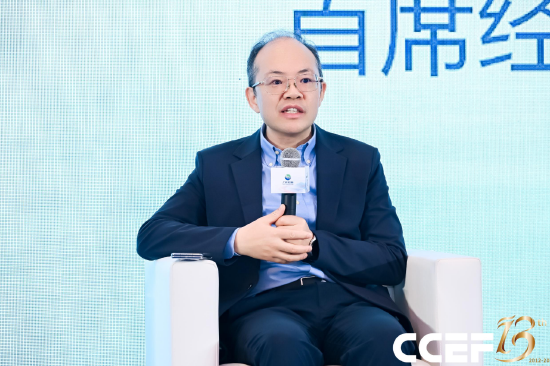
Core Viewpoint - The 2026 China Chief Economist Forum held in Shanghai emphasized the theme "Chess in the Middle Game: Building a Strong Nation" and highlighted the development of a carbon governance mechanism over the next five years, focusing on carbon accounting as a foundation for market opportunities in carbon and electricity sectors [1][3]. Group 1: Carbon Governance Mechanism - The future carbon governance mechanism will include local carbon assessment, local carbon control, enterprise carbon management, project carbon evaluation, product carbon footprint, and international carbon coordination [1][3]. - Carbon accounting will be essential for accurately determining peak carbon emissions, formulating reduction pathways, and facilitating effective coordination in international trade [1][3]. Group 2: Market Opportunities - Two significant market opportunities are anticipated: the expansion of the carbon market and the differentiation in the electricity market, where green and non-green electricity will have distinct value differences [1][3]. - The marketization of green energy pricing and application will be driven by these developments, making carbon accounting-related fields a key area for investment focus [1][3].

迈向全面覆盖:碳市场扩围锁定减排新机遇
Zhong Guo Zheng Quan Bao· 2025-11-30 20:21
Group 1: Carbon Market Expansion - The national carbon market is expanding in an orderly manner, with the inclusion of steel, cement, and aluminum industries, covering over 60% of national CO2 emissions [1] - The Ministry of Ecology and Environment plans to include more industries such as chemicals, aviation, and paper by 2027, aiming for comprehensive coverage of major industrial emissions [1] - The expansion of the carbon market is expected to drive companies to innovate and invest in low-carbon technologies, providing technical and financial support for green transformation [1] Group 2: Corporate Responses and Opportunities - Companies like Shougang Group view the inclusion in the carbon market as a long-term driver for technological innovation and energy structure optimization [2] - Shougang plans to build new electric furnaces to achieve over 70% carbon reduction in steel production and is focusing on developing a low-carbon product system [2] - The carbon market's tightening will push high-emission companies to adopt advanced energy-saving technologies to reduce compliance costs [2] Group 3: Technological Innovations and Market Trends - Green low-carbon technologies are experiencing unprecedented market opportunities, with a focus on multi-energy collaboration and large-scale applications [3] - Companies are developing solutions like geothermal heating and integrated renewable energy systems to provide clean energy for high-consumption industries [3] - Energy efficiency technologies are becoming active innovation sectors, with companies implementing measures to achieve near-zero carbon emissions [4] Group 4: Challenges and Barriers - Despite the promising outlook for green technologies, there are significant barriers to large-scale application, primarily related to technology maturity and high initial costs [5] - The lack of a mature market and business models, along with insufficient carbon pricing, hampers investment in green technologies [5] - Recommendations include establishing national technology projects and integrating various funding sources to support the scaling of green technologies [5]

碳市场扩围“路线图”官宣 2027年化工石化民航造纸全入场
2 1 Shi Ji Jing Ji Bao Dao· 2025-11-20 23:05
Core Points - The Ministry of Ecology and Environment has released a roadmap for expanding the national carbon market, aiming to cover major industrial sectors by 2027 [1][2] - The national carbon market currently includes approximately 3,700 key emission units, covering around 8 billion tons of carbon emissions, which accounts for over 60% of the national total [2][3] - The eight key industries targeted for inclusion in the carbon market account for about 75% of China's carbon dioxide emissions [2][3] Summary by Sections Carbon Market Expansion - The Ministry has initiated preparatory work for expanding the carbon market to include the chemical, petrochemical, civil aviation, and paper industries [4] - The expansion will follow a principle of "mature one, include one," based on industry development status and carbon emission characteristics [1][4] Current Market Status - As of August 2025, 1,277 key emission units from newly included industries have opened trading accounts [5] - The carbon market has expanded to include three major industries: steel, cement, and aluminum smelting, with a total of 1,500 key emission units [6] Allocation and Pricing Mechanism - The allocation method for carbon quotas will be similar to that of the power generation sector, with free allocation based on carbon emissions per unit of output for 2024 and 2025 [6][7] - By 2027, a new mechanism combining total quota control and both free and paid allocation will be implemented, potentially raising carbon prices from around 50 yuan/ton to between 130 and 180 yuan/ton [7][10] Industry Impact - Different industries will experience varying impacts from the carbon market, with power, steel, cement, and aluminum sectors being better prepared compared to the more complex petrochemical and chemical industries [7][8] - The paper industry, primarily composed of small and medium-sized enterprises, may face significant cost pressures and management challenges [7] Data Quality and Management - Ensuring data quality is critical for the carbon market's success, with the Ministry planning to enhance the monitoring and verification (MRV) system [5][11] - The Ministry will also upgrade infrastructure to support the expanded carbon market, focusing on regulatory capacity and data security [4][11] Future Directions - The carbon market aims to establish a transparent and unified pricing mechanism by 2030, with a focus on effective emission reduction and a robust regulatory framework [10][12] - The transition to a paid allocation system and total quota control is a key focus for the upcoming "15th Five-Year Plan" period [12]
碳市场扩围“路线图”官宣!2027年化工石化民航造纸全入场
2 1 Shi Ji Jing Ji Bao Dao· 2025-11-20 13:20
Core Points - The Ministry of Ecology and Environment (MEE) has released a roadmap for expanding the national carbon emissions trading market, aiming to cover major industrial sectors by 2027 [1][2][3] - The carbon market currently includes approximately 3,700 key emission units, covering around 8 billion tons of emissions, which accounts for over 60% of national carbon emissions [1][2][3] - The MEE has initiated preparatory work for including additional sectors such as chemicals, petrochemicals, civil aviation, and papermaking, adhering to a principle of gradual inclusion based on industry maturity [1][4] Industry Coverage - The eight key industries targeted for carbon market inclusion account for about 75% of China's carbon dioxide emissions, including power generation, steel, building materials, non-ferrous metals, petrochemicals, chemicals, papermaking, and aviation [2][3] - By 2025, the MEE plans to finalize the inclusion of steel, cement, and aluminum smelting into the carbon trading market, which will significantly enhance the market's coverage [3][4] Quota Distribution - The quota distribution for 2024 and 2025 will be free and based on carbon emissions per unit of output, following a gradual approach [6][7] - New enterprises that commence operations in 2024 and 2025 will not be included in the quota distribution for those years, ensuring that only established units are considered [6] Market Dynamics - The carbon price is expected to rise significantly by 2027, from approximately 50 yuan per ton to between 130 and 180 yuan per ton, reflecting the transition to a more stringent quota control and paid allocation system [7][9] - The current carbon market has a high participation rate, with over 90% engagement in spot trading, indicating a robust market structure [10] Future Directions - The MEE aims to enhance data quality management and regulatory frameworks to support the expansion of the carbon market, ensuring accurate emissions reporting from newly included sectors [5][9] - The transition to a paid allocation system and total quota control is a key focus for the 14th Five-Year Plan period, with an emphasis on establishing a fair and effective carbon pricing mechanism [11]
链博会向“绿”而行:绿色、零碳工厂风潮已来,先进制造企业抢先一步
Hua Xia Shi Bao· 2025-07-20 11:26
Core Insights - The third China International Supply Chain Promotion Expo showcased advancements in automation and sustainability within the supply chain industry, emphasizing the importance of green and low-carbon practices in manufacturing [1][3][4] Group 1: Event Overview - The expo took place from July 16 to 20 in Beijing, focusing on the theme "Linking the World, Creating the Future" [1] - Over 650 enterprises and organizations participated, representing 75 countries and regions, with more than 65% being Fortune Global 500 companies [3] Group 2: Industry Trends - Automation and green practices are becoming essential features in advanced manufacturing, with many companies prioritizing the establishment of green supply chains [1][3] - Schneider Electric reported a 15.9% reduction in overall energy consumption in its supply chain since 2019, while improving production efficiency by nearly 10% [2] Group 3: Company Initiatives - APP (China) is focusing on building a green circular industry chain, implementing energy-saving upgrades, and establishing five "national-level green factories" [3] - CITIC Group showcased its innovations in various sectors, including the creation of the world's first "lighthouse factory" for aluminum wheels, achieving a weight reduction of 33.4% [4] Group 4: Carbon Market Developments - The national carbon market has expanded to include steel, cement, and aluminum industries, with an estimated 3,700 key emission units expected to participate, covering approximately 8 billion tons of emissions [5][6] - Companies like Zhejiang Xizi Aviation Manufacturing have implemented renewable energy technologies to achieve "zero carbon" status for their facilities [6] Group 5: Policy Support - The National Development and Reform Commission has initiated support for zero-carbon park construction, encouraging enterprises to adopt energy-efficient practices and reduce carbon emissions [7]