数字消费

Search documents
【宏观经济】一周要闻回顾(2026年3月25日-3月31日)
乘联分会· 2026-03-31 08:21
Core Insights - China's e-commerce sector showed stable growth in January and February 2026, with digital consumption improving and industrial e-commerce driving digital transformation [3] - The "Silk Road E-commerce" initiative enhanced global brand effects and achieved a strong start for high-quality development [3] E-commerce Development - Digital consumption remained active, with national online retail sales of goods and services increasing by 9.2% year-on-year in January and February [5] - Notable growth in smart products was observed, with smart glasses and window-cleaning robots seeing increases of 183.5% and 130.8% respectively [5] - The tourism and catering sectors experienced significant online retail growth, with increases of 36.1% and 27.3% respectively [5] Industrial E-commerce - Industrial e-commerce facilitated enterprise connections and deepened digital empowerment for industrial transformation [5] - Online retail of agricultural products grew by 17.6%, while industrial e-commerce transactions for metals and industrial goods increased by 63.8% and 8.8% respectively [5] - The logistics and AI sectors benefited from industrial e-commerce, with daily express delivery volumes exceeding 590 million packages in January [5] Silk Road E-commerce - The "Silk Road E-commerce" initiative linked domestic and international markets, showcasing products from Central Asia and ASEAN countries [6] - Key e-commerce import platforms reported a 7.6% increase in global product sales, with Icelandic salmon, Thai durian, and Brazilian beef seeing growth rates of 510.9%, 443.6%, and 156% respectively [6] Power Market Transactions - In January and February 2026, the total electricity market transaction volume reached 11,925 billion kilowatt-hours, marking a year-on-year increase of 25.5% [8] - Intra-provincial transactions accounted for 9,543 billion kilowatt-hours, up 29.2%, while inter-provincial transactions reached 2,382 billion kilowatt-hours, increasing by 12.7% [8] Industrial Profit Growth - Profits of large-scale industrial enterprises totaled 10,245.6 billion yuan in January and February, reflecting a year-on-year growth of 15.2% [11] - The manufacturing sector saw profits rise by 18.9%, while the mining industry reported a profit increase of 9.9% [11] - Notable profit growth was recorded in the computer and electronic equipment manufacturing sector, which saw a 200% increase [12] Purchasing Managers' Index (PMI) - The manufacturing PMI for March 2026 was reported at 50.4%, indicating a recovery in manufacturing activity [15] - The production index rose to 51.4%, and the new orders index increased to 51.6%, suggesting improved market demand [17][18] - The non-manufacturing PMI was at 50.1%, indicating a slight improvement in the non-manufacturing sector [21]


攻坚应变顶压前行 稳中有进向新向优——《2025年国民经济和社会发展统计公报》评读
Xin Hua Wang· 2026-02-28 01:54
Core Insights - The article emphasizes the significant achievements of China's economy in 2025, highlighting the resilience and adaptability in the face of complex domestic and international challenges [2][3]. Economic Growth and Development - In 2025, China's GDP grew by 5.0%, surpassing 140 trillion yuan for the first time, marking a successful completion of the "14th Five-Year Plan" [3]. - The economic growth resulted in an increase of over 5 trillion yuan, reflecting enhanced production capabilities in agriculture and industry, as well as a vibrant service sector [3]. Per Capita Development - China's per capita GDP reached 99,665 yuan, a 5.1% increase from the previous year, translating to approximately 13,953 USD, maintaining above 13,000 USD for three consecutive years [4]. - Labor productivity improved by 6.1%, outpacing economic growth by 1.1 percentage points [4]. International Influence - China's 5% economic growth positioned it among the top global economies, contributing approximately 30% to world economic growth [5]. - In 2025, China's goods imports reached 18.5 trillion yuan, maintaining its status as the world's second-largest import market for 17 consecutive years [5]. Modern Industrial System - The modernization of the industrial system accelerated, with R&D expenditure increasing by 8.1%, reaching 2.80% of GDP, surpassing the OECD average for the first time [6][7]. - High-tech manufacturing value added grew by 9.4%, accounting for 17.1% of total industrial value added [7]. Digital Economy - The digital economy thrived, with the value added of digital product manufacturing increasing by 9.3% and the information technology service sector growing by 11.1% [8]. - Online retail sales approached 16 trillion yuan, reflecting an 8.6% growth [8]. Domestic and International Circulation - Domestic consumption reached over 50 trillion yuan, with a 3.7% increase, contributing 67.3% to economic growth [10]. - The total goods import and export volume exceeded 45 trillion yuan, marking a 3.8% increase and solidifying China's role in global supply chains [11]. High-Quality Development - The focus on high-quality development led to significant reforms, including a reduction in market access restrictions and an increase in new business registrations [12][13]. - The urbanization rate reached 67.89%, with rural residents' income growing by 6.5% [13]. Green Transition - Clean energy consumption rose to 30.4% of total energy consumption, with significant reductions in energy intensity and carbon emissions [14]. - The production of new energy vehicles exceeded 16 million units, maintaining a global leadership position [14]. Social Welfare - The urban unemployment rate averaged 5.2%, with 12.67 million new jobs created, supporting a 5.0% increase in per capita disposable income [15][16]. - Social services expanded, with significant increases in healthcare and education infrastructure, enhancing overall quality of life [16].
深入听民意抓落实 更好惠民生促消费
Xin Hua She· 2026-02-25 01:55
Group 1 - The core viewpoint emphasizes the importance of service consumption as a key driver of economic growth and a reflection of public well-being, with recent policies aimed at promoting service consumption receiving positive feedback from government representatives [1] - The shift in consumer spending towards enhancing quality of life and self-development is noted, alongside challenges such as the low contribution of the service sector to GDP compared to developed countries, insufficient supply of new and quality consumption, and a lack of policy support and inter-departmental coordination [1] - Suggestions were made to adjust consumption promotion policies, innovate service consumption formats, promote digital transformation in traditional services, and enhance policy coordination and regulatory efforts [1] Group 2 - The Ministry of Commerce quickly engaged with representatives to discuss and implement suggestions, leading to the development of a work plan and conducting research across various regions [2] - Policies were introduced to accelerate the cultivation of new growth points in service consumption and expand service consumption, including actions to improve service quality and introduce new consumption models [2] - Digital technologies are expanding the service consumption landscape, with representatives highlighting issues such as infrastructure gaps and structural imbalances in product service supply [2] Group 3 - The Ministry of Commerce is committed to implementing representative suggestions as a key strategy for advancing digital consumption, with a focus on creating a supportive environment for consumer demand and innovative supply [3] - The 2025 guidelines for developing digital consumption reflect the suggestions made by representatives, emphasizing the need for a robust support system, new supply models, and a conducive environment for boosting consumer confidence [3] - Representatives have contributed insights based on their expertise and field research to enhance service consumption and promote new consumption formats [3] Group 4 - In 2025, the Ministry of Commerce received 1,020 proposals during the National Two Sessions, focusing on key areas such as domestic and foreign trade, foreign investment, and bilateral economic relations [4] - The Ministry aims to improve the proposal handling mechanism and innovate work strategies to achieve consensus and collective efforts with representatives [4] Group 5 - The Ministry of Commerce will continue to align with the central government's decisions, enhance the quality and effectiveness of proposal handling, and transform representative insights into practical measures for reform and development [5]
中国提振消费的战略选择与国际经验:提振消费、扩大内需
GUOTAI HAITONG SECURITIES· 2026-02-02 06:10
Group 1: Strategic Importance of Consumption - "Boosting consumption and expanding domestic demand" has become a core national strategy to drive sustainable and high-quality economic development, addressing external challenges and internal structural contradictions[1] - The "14th Five-Year Plan" emphasizes expanding domestic demand as a strategic foundation, reflecting a shift from cyclical policy options to a national strategic task[2] - The contribution of final consumption to GDP has exceeded 50%, indicating that consumption has replaced investment as the main driver of economic growth[2] Group 2: Current Consumption Landscape - The service consumption share has increased to 46.15%, with significant growth in green, smart, and digital consumption[2] - Rural residents' per capita consumption expenditure reached 56.48% of urban levels, indicating a gradual narrowing of the urban-rural consumption gap[2] - The average annual growth rate of per capita disposable income since 2016 has been 6.53%, with per capita disposable income projected to reach 36,200 yuan by 2025[23] Group 3: International Comparisons and Lessons - China's household consumption rate is only 39.1%, ranking among the lowest globally, compared to an average of 56.6% for the world and 52% for middle-income economies[20] - Successful international models highlight the importance of institutional guarantees, income foundations, supply innovation, and expectation management in boosting consumption[3] - Japan's "lost three decades" and Germany's stable employment and social security systems provide valuable lessons for creating a consumption-friendly environment[3] Group 4: Policy Recommendations and Risks - The report suggests a policy framework focusing on enhancing consumer capacity on the demand side and fostering new supply on the supply side, targeting areas like AI+ consumption and green consumption[4] - Risks include potential underperformance of policy measures and uncertainties in the capital market, which could hinder consumption growth[4]
从税收数据看消费亮点
Jing Ji Ri Bao· 2026-01-27 22:16
Group 1 - The core viewpoint of the articles highlights the diverse growth in China's consumption market by 2025, driven by various government policies aimed at stimulating consumer demand [4] Group 2 - The retail sales revenue for daily household appliances, kitchenware, and communication devices is projected to grow by 17.4%, 12.9%, and 18.6% respectively in 2025 [1] - The sales volume and revenue of new energy passenger vehicles are expected to increase by 24.3% and 21.1% respectively in 2025 [1] - The sales revenue for cultural and tourism services is anticipated to rise, with artistic performances increasing by 17.3%, travel agency services by 11.2%, scenic spots by 26.1%, and leisure activities by 14.6% [1] - Internet life service platforms and food delivery services are projected to see sales revenue growth of 9.4% and 13.3% respectively, while digital cultural services are expected to grow by 16.6% [1] Group 3 - The sports and health industry is experiencing strong consumer demand, with sports exhibition services and consulting services expected to grow by 12.2% and 27.8% respectively [2] - Health-related services, including health consulting and wellness services, are projected to grow by 11.7%, 12%, and 16.5% respectively [2] Group 4 - The aging population is driving demand for elderly care services, with growth rates of 24.9%, 23.1%, and 15.4% for elderly care, social assistance, and nursing home services respectively [2] - Childcare services are also expected to grow, with nursery services projected to increase by 5.4% [2] Group 5 - The expansion of the departure tax refund system is enhancing inbound consumption, with the number of travelers benefiting from tax refunds increasing by 305% and the sales of tax refund goods rising by 95.9% [3] - The number of tax refund stores has reached 12,930, with over 7,000 offering "buy and refund" services [3] - Cross-province recognition of tax refund services is being implemented, promoting greater international consumer resource flow and regional economic collaboration [3]
2025年中国经济的韧性、温度与担当
Qi Huo Ri Bao Wang· 2026-01-23 01:33
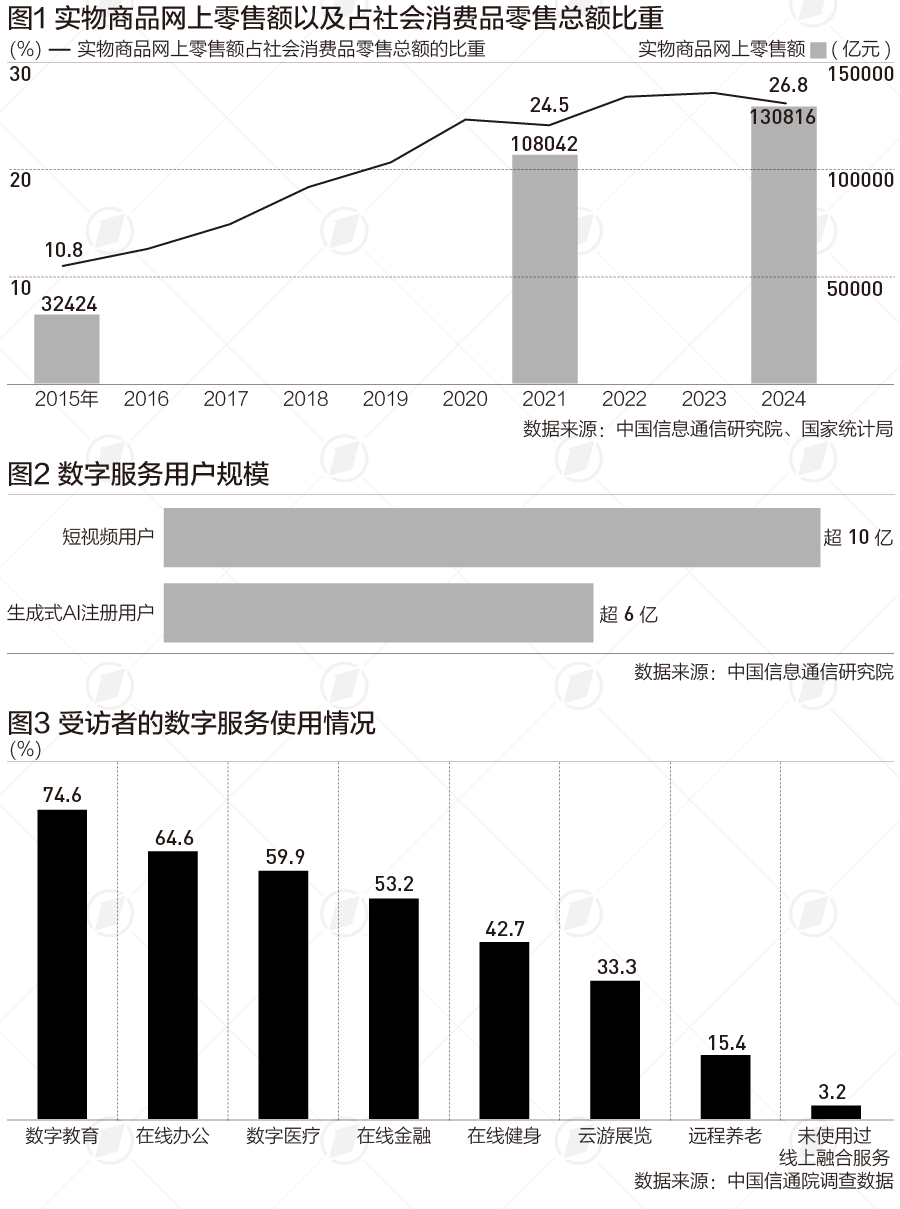
Economic Overview - In 2025, China's GDP reached 140.19 trillion yuan, achieving a year-on-year growth of 5.0%, successfully meeting annual expectations [3] - The growth occurred amidst global economic challenges, with major economies like the US, Eurozone, and Japan experiencing lower growth rates [3] - China's service sector contributed 61.4% to economic growth, highlighting the ongoing optimization of the industrial structure [3] Structural Optimization - New productive forces are becoming the core driver of China's economic growth, with significant increases in value-added from equipment manufacturing (9.2%) and high-tech manufacturing (9.4%) [4] - The digital economy is thriving, with online retail sales of physical goods growing by 5.2%, accounting for 26.1% of total retail sales [4] - High-tech product exports increased by 13.2%, indicating a successful transition from "Made in China" to "Created in China" [4] Policy Coordination - The Chinese government has implemented proactive macroeconomic policies to stimulate market vitality, including a moderately loose monetary policy [5][6] - Despite a 3.8% decline in fixed asset investment, investment in high-tech industries and livelihood sectors remained stable [5] Living Standards - In 2025, the per capita disposable income reached 43,377 yuan, reflecting a nominal growth of 5.0%, which aligns with economic growth [7] - The average urban unemployment rate was 5.2%, indicating stable employment conditions [7] - The Engel coefficient decreased to 29.3%, suggesting an improvement in living standards [7] Domestic and External Demand - Retail sales of consumer goods reached 50.12 trillion yuan, growing by 3.7%, with service retail showing robust growth [8] - Total import and export volume was 45.47 trillion yuan, with exports growing by 6.1% and imports by 0.5% [8] - Private enterprises accounted for 57.3% of total trade, reflecting a diversification in trade [8] Global Positioning - China's economic performance in 2025 is significant amid global economic disparities, providing a stabilizing force in international trade [10] - The country is committed to high-level opening up and reform, enhancing its competitive edge and creating new growth opportunities for global enterprises [10] Future Outlook - Despite external shocks and internal challenges, China's economic fundamentals remain strong, with ongoing technological innovation driving industrial upgrades [11] - The manufacturing PMI rose to 50.1, indicating a return to expansion, suggesting a buildup of internal economic momentum [11] - China's economy is positioned as a reliable stabilizer in the global landscape, contributing to global growth amidst uncertainties [11]

数字消费规模超23.8万亿,意味着什么?
Zhong Guo Jing Ji Wang· 2026-01-20 12:26
Group 1 - The core viewpoint is that digital consumption is becoming a significant engine for economic growth in China, with the overall scale exceeding 23.8 trillion yuan since the start of the 14th Five-Year Plan, maintaining its position as the world's largest online retail market for 13 consecutive years [1] - The integration of new technologies such as artificial intelligence, cloud computing, and the Internet of Things with consumer scenarios is driving the rapid growth of new consumption dynamics [1] - The demand for digital consumption is accelerating, leading to the emergence of numerous new products and services, enriching digital life scenarios and experiences [1] Group 2 - Digital consumption is significantly contributing to expanding domestic demand and optimizing the supply chain, while also driving multiple transformations in economic development, providing sustained momentum for high-quality development [2] - By 2025, the added value of the digital product manufacturing industry is expected to grow by 9.3%, and the information transmission, software, and information technology service industry is projected to grow by 11.1% [2] - There is a strong demand for convenient digital living in rural areas, with 249 million rural digital consumption users, indicating a need to enhance digital consumption infrastructure in these regions [2] Group 3 - The trend of consumption upgrading is irreversible, highlighting the need to leverage China's vast domestic market and population to stimulate digital consumption potential [3] - Continuous improvement of the digital consumption development environment is essential, relying on technological innovation and enhanced policy support [3] - The focus should be on strengthening service consumption to better meet domestic consumption upgrade demands and the growing needs of the population for a better life [2][3]
国务院总理李强主持召开国务院常务会议:制定和实施好城乡居民增收计划
Mei Ri Jing Ji Xin Wen· 2026-01-18 12:58
Group 1: Core Insights - The State Council emphasizes the need to implement consumption-boosting actions to enhance residents' consumption power and drive economic growth [1][2] - The meeting highlights the importance of developing new growth points in service consumption, focusing on quality service supply and addressing issues related to credit, standards, and safety management [2][3] - The government plans to establish a long-term mechanism for promoting consumption, including the formulation of the "14th Five-Year" plan for expanding consumption and increasing urban and rural residents' income [3] Group 2: Specific Measures - The government aims to accelerate the development of digital consumption and quality e-commerce, promoting new technologies such as artificial intelligence and autonomous driving to create high-growth consumption sectors [3] - There is a strong focus on cleaning up overdue enterprise payments and ensuring the payment of migrant workers' wages, which are crucial for protecting corporate rights and public interests [4] - The meeting also discusses the need to revise and abolish certain administrative regulations to enhance the quality and effectiveness of government legislation [4] Group 3: Economic Context - The transition towards carbon emission control is highlighted as a significant future challenge, with the carbon market expansion expected to drive energy-saving and carbon-reduction transformations in key industries [5]
沈建光:“十五五”中国数字消费发展的五大趋势
Di Yi Cai Jing· 2026-01-11 12:46
Core Insights - The Chinese digital consumption market is experiencing significant growth, with e-commerce transactions expected to reach 46.4 trillion yuan in 2024, maintaining its position as the world's largest online retail market for 12 consecutive years [1] - The market is shifting from user scale expansion to value extraction, focusing on existing users rather than acquiring new ones [2][3] - The integration of online and offline sales channels is becoming more pronounced, with instant retail emerging as a key driver of this trend [5][6] - Artificial intelligence is playing a crucial role in reshaping the consumer experience, enhancing personalization and operational efficiency [8][9] - Rural areas are becoming vital for digital consumption growth, with increasing internet penetration and a rising number of online consumers [10][11] - The focus is shifting from product consumption to service-oriented and green consumption, reflecting changing consumer preferences and environmental awareness [12][13][14] Group 1: Market Overview - In 2024, China's e-commerce retail sales are projected to account for 47% of total retail sales, significantly higher than in developed countries [2] - The digital consumption user base is expected to exceed 958 million by mid-2025, representing 85.3% of internet users [2] Group 2: Trends in Digital Consumption - The development model is transitioning from user scale expansion to deep value extraction from existing users, with live commerce and content commerce leading this change [3] - Instant retail is blurring the lines between online and offline shopping, with a projected market size of 781 billion yuan in 2024 [5][6] Group 3: Technological Advancements - AI technology is rapidly advancing in China, with significant improvements in model performance and application across various sectors [8] - AI is transforming the consumer journey, enabling personalized recommendations and automating service processes [9] Group 4: Rural Market Dynamics - Rural internet users are growing, with 322 million rural internet users by mid-2025, representing 28.7% of total internet users [10] - The rural market is becoming a new growth source for online consumption, with a significant increase in express delivery services to rural areas [11] Group 5: Consumption Shifts - Digital service consumption is on the rise, with online education and internet healthcare seeing substantial user growth [13] - Green consumption is gaining traction, with a notable increase in second-hand e-commerce transactions and a shift towards sustainable purchasing behaviors [14]
数字消费贡献持续攀升 “Z世代”、银发族用户占比近四成
Di Yi Cai Jing· 2026-01-08 12:59
Core Insights - Digital consumption is increasingly contributing to overall consumption growth in China, driven by technological advancements, innovative product models, and changing consumer demands [1][2][4] Group 1: Digital Consumption Trends - The proportion of online retail sales of physical goods has risen from 10.8% a decade ago to an expected 26.8% in 2024 [1] - The digital consumer base is expanding across age, gender, and regional boundaries, with significant participation from the "Z generation" and the elderly [1][5] - By mid-2025, the digital consumption amount in China is projected to reach 9.37 trillion yuan, accounting for 46.5% of total household consumption expenditure [4] Group 2: User Demographics and Behavior - As of June 2025, the number of digital consumption users has surpassed 958 million, with the "Z generation" accounting for 27.2% of this group [5] - The "Z generation" shows a high engagement with digital services, with 71.4% using generative AI, significantly higher than the overall internet user rate [5] - The elderly demographic is also becoming a significant force in digital consumption, with 71.7% willing to pay for convenient online products and services [6] Group 3: Market Growth and Innovations - The digital economy's core industry value added reached 14.08 trillion yuan in 2024, growing by over 10% year-on-year [7] - The integration of AI in consumer products is expected to enhance market penetration, with AI smartphones and PCs projected to exceed 50% and 80% penetration rates, respectively, in the next three years [7] - The growth of digital services is evident in sectors like healthcare, with internet hospitals increasing from about 1,600 in 2021 to 3,340 by the end of 2024 [7] Group 4: Future Outlook - The digital consumption landscape is evolving with new consumption patterns, including online-offline integration and immersive experiences [1][2] - Emerging consumption trends such as digital and green consumption are expected to further stimulate overall consumption growth [8]