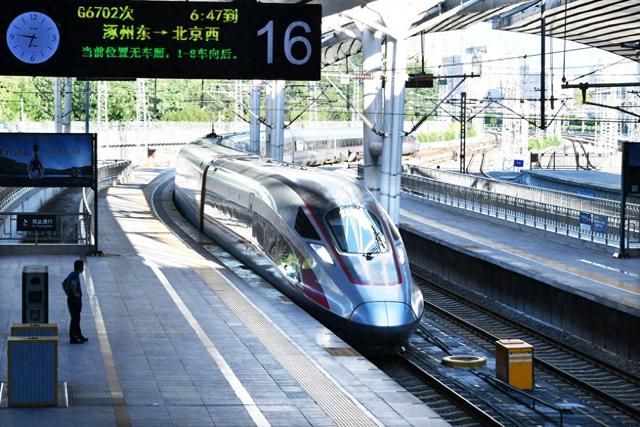
津兴城际

Search documents
协同发展十二载:京津冀交通跑出加速度
Bei Jing Shang Bao· 2026-02-26 15:29
Core Viewpoint - The transportation integration in the Beijing-Tianjin-Hebei region has significantly advanced, with major improvements in rail and road infrastructure, enhancing connectivity and reducing commuting times for residents [1][2][3]. Transportation Infrastructure Development - By the end of 2025, the operational railway mileage in the Beijing-Tianjin-Hebei region is expected to exceed 11,000 kilometers, marking a nearly 40% increase since 2014, while the total length of highways will reach 11,000 kilometers, a growth of 41.7% [1]. - Major railway projects such as the Beijing-Tangshan Intercity and Tianjin-Xing Intercity have been completed, allowing for travel times between major cities to be reduced to 1.5 to 2 hours [1][2]. Commuting Enhancements - The opening of the Beijing-Tongzhou Station and the completion of the Beijing-Tangshan Intercity Railway have enabled direct travel from Tongzhou to Tangshan in as little as 55 minutes, improving the commuting experience for many [2]. - The average commuting time has been reduced by 30 to 40 minutes due to the introduction of 41 cross-province bus routes and customized commuting services [4]. High-Speed Rail Expansion - The total high-speed rail mileage in the region has increased from 1,284 kilometers at the end of 2013 to 2,675 kilometers by the end of 2025, achieving full coverage of all cities at the prefecture level and above [3]. - The introduction of the G8859 circular high-speed train has connected key nodes in the region, enhancing the vitality of the rail network [2][3]. Future Plans and Innovations - In 2026, the Beijing transportation department aims to have the Pinggu Line operational and will accelerate the construction of several highway projects, including the second phase of the Jingxiong Expressway [6]. - The integration of smart technologies in transportation, such as 5G coverage on highways and automated driving trials, is being prioritized to enhance efficiency and safety [5][6].
加快建设28个重大项目 增加津兴城际进京车次
Xin Lang Cai Jing· 2026-01-23 20:58
Core Viewpoint - The city aims to enhance its transportation system by focusing on development, public welfare, and safety, targeting a qualitative improvement and reasonable quantitative growth in transportation services [1]. Group 1: Infrastructure Development - The city plans to accelerate the construction of 28 major projects, including the Tianjin-Weifang High-speed Railway and the expansion of the Tianjin Port's 10,000-ton channel, to promote steady growth in road and waterway transportation [1]. - The integration of transportation in the Beijing-Tianjin-Hebei region will be emphasized, with initiatives to enhance commuting convenience and adjust transportation capacity based on demand [1]. Group 2: Port and Industry Integration - The strategy includes promoting the integration of ports, logistics, trade, and industry to establish a significant strategic support point for domestic and international dual circulation in northern China [1]. - The focus will be on enhancing port capabilities, implementing a "Port+" strategy, and fostering the development of industries near the port [1]. Group 3: Service Quality Improvement - The city will work on completing the construction of the Metro Line 8 and the Z4 Line's first phase to optimize public transportation supply and enhance service quality [2]. - Efforts will be made to reduce costs and improve efficiency in transportation logistics while deepening the integration of transportation and tourism [2].
“轨道上的京津冀”越织越密
Xin Lang Cai Jing· 2026-01-03 22:19
Core Insights - The China Railway Beijing Bureau Group Co., Ltd. has focused on serving national strategies and regional economic development since the start of the 14th Five-Year Plan, achieving significant results in expanding the railway network and improving transportation quality [1][2]. Group 1: Railway Network Expansion - During the 14th Five-Year Plan, the railway network layout has been continuously optimized, with an addition of 710 kilometers of operational railway, bringing the total operational mileage to 10,394.9 kilometers by the end of the plan, including 2,795.6 kilometers of high-speed rail and an electrification rate of 85.4% [1]. - Key high-speed rail projects, such as the Xiong'an-Shijiazhuang and Tianjin-Weifang lines, are under construction, further enhancing the regional high-speed rail backbone [1]. Group 2: Intercity Railway Development - The intercity railway network in the Beijing-Tianjin-Hebei region has been continuously optimized, with several lines like the Jing-Tang and Jing-Bin (Baodi to Beichen) now operational, creating a "four axes and eight radiations" railway layout [2]. - The region's major cities now have full coverage of high-speed and intercity rail services, establishing a 0.5-1 hour transportation circle between Beijing, Xiong'an, and Tianjin [2]. Group 3: Passenger Services Enhancement - By the end of the 14th Five-Year Plan, the scheduled passenger trains operated by the bureau reached 1,035 pairs, a 22.7% increase from the beginning of the period, with high-speed trains seeing a 68.8% increase [3]. - The coverage of train services in the Beijing-Tianjin-Hebei region now extends to 32 provincial-level administrative regions and 266 cities, significantly improving connectivity within the urban agglomeration [3].

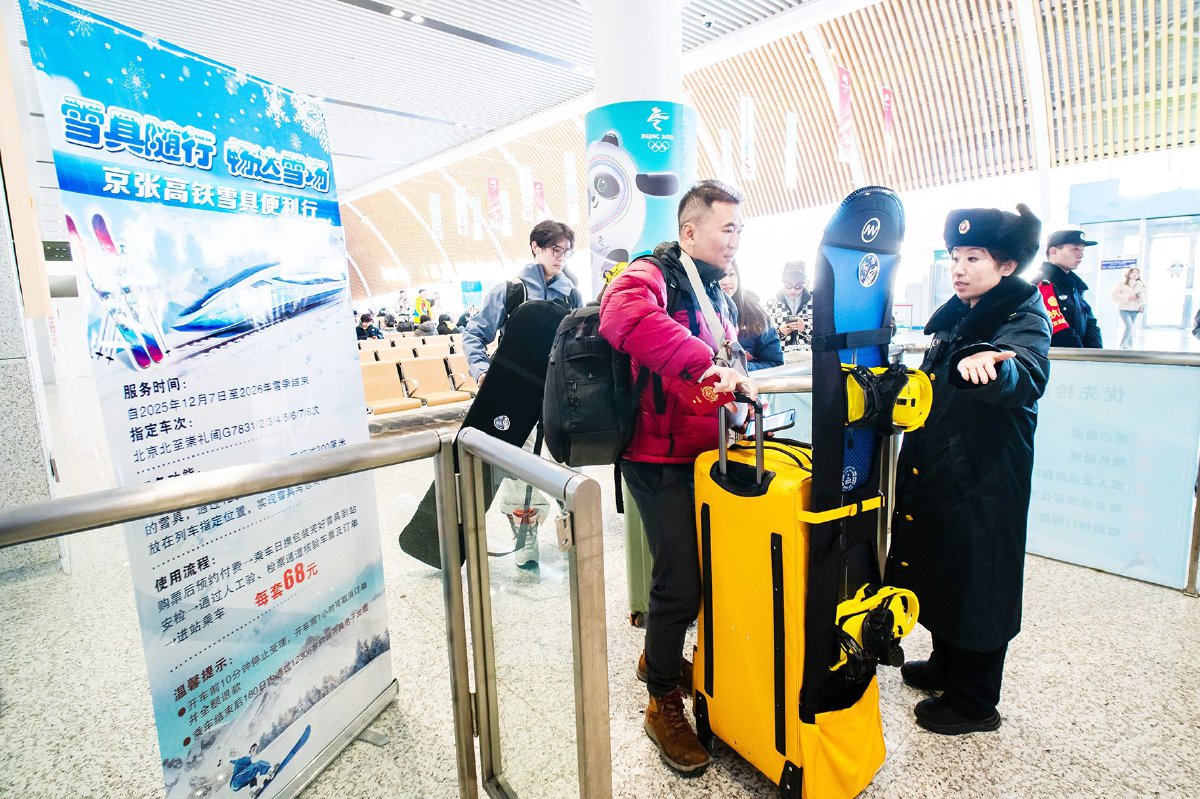
“轨道上的京津冀”主骨架基本成型
Bei Jing Ri Bao Ke Hu Duan· 2025-08-29 05:36
Core Viewpoint - The Beijing Railway Bureau is actively integrating into the coordinated development strategy of the Beijing-Tianjin-Hebei region during the 14th Five-Year Plan period by expanding high-speed rail and improving station services, with a focus on enhancing connectivity and operational efficiency in the region [1][4]. Group 1: Railway Infrastructure Development - The operational railway mileage in the Beijing-Tianjin-Hebei region is 10,386.92 kilometers, including 2,787.64 kilometers of high-speed rail, establishing a foundational framework for "Railway on the Beijing-Tianjin-Hebei" [1][5]. - Ongoing projects include the Xiongxin, Xiongshang, and Tianwei high-speed rail lines, which will further enhance accessibility in the region upon completion [1][4]. - The Beijing-Tangshan intercity railway segment from the urban sub-center to Yanjiao is expected to commence operations by the end of the year, adding approximately 8 kilometers to the operational mileage [5]. Group 2: Service Enhancements at Beijing South Station - During the summer transportation period, the Beijing South Station has implemented a permanent opening of four rapid boarding halls, significantly reducing boarding time by 10 minutes for passengers with less than 20 minutes until departure [3][4]. - Since the start of the summer transportation season, over 3 million passengers have been sent via the Beijing South Station for the Beijing-Tianjin intercity service [3]. Group 3: Future Projections and Growth - By June 2025, the total railway operating mileage managed by the Beijing Railway Bureau is projected to reach 10,386.92 kilometers, reflecting a growth of 702.55 kilometers or 7.3% compared to the end of the 13th Five-Year Plan [5]. - The high-speed railway segment is expected to grow by 499.02 kilometers or 21.8%, reaching a total of 2,787.64 kilometers by the same date [5].