人工智能服务器芯片

Search documents
事关苹果芯片,分析人士:绝无可能
半导体行业观察· 2026-02-02 01:33
Core Viewpoint - Recent rumors suggest that Intel may supply chips for Apple's M series and non-Pro iPhone models, but industry insiders largely dismiss the likelihood of this happening due to technical concerns [2][3]. Group 1: Intel's Potential Role with Apple - Reports from GF Securities and DigiTimes indicate that Apple is evaluating Intel's 18A-P process for its entry-level M series chips expected to ship in 2027 and non-Pro iPhone chips in 2028 [2]. - Apple has signed a confidentiality agreement with Intel and received samples of the 18A-P process design kit (PDK) for evaluation [2]. - There are indications that Apple's custom ASIC, in collaboration with Broadcom, will utilize Intel's EMIB packaging technology in 2028 [2]. Group 2: Technical Concerns Regarding Intel's Manufacturing - Some industry experts express skepticism about Intel's ability to manufacture iPhone chips, citing the company's decision to fully adopt backside power delivery (BSPD) technology in its 18A and 14A nodes, unlike TSMC, which offers both BSPD and non-BSPD options [3][4]. - While BSPD can enhance performance by reducing voltage drop and allowing higher frequencies, its benefits for mobile chips are limited and may lead to significant thermal issues [5]. - The need for additional cooling solutions due to self-heating effects raises doubts about Intel's capability to produce stable iPhone chips in the near term, although M series processors might still be a possibility [5].


为破解电力短缺困局,英伟达将举办闭门峰会
Jin Rong Jie· 2025-12-15 01:37
Core Insights - Nvidia is hosting a closed-door summit in Santa Clara, California, to address the "data center power shortage" that may hinder AI development [1] - The summit will include executives from startups focused on power and electrical engineering, including companies that have received equity investments from Nvidia [1] - The power supply issue has led to a significant rise in the power grid equipment sector, highlighting the critical role of energy resources in AI development [1] Industry Analysis - The energy shortage is impacting companies utilizing Nvidia chips to build AI facilities, as their data centers are filled with Nvidia's power-hungry AI server chips [1] - Morgan Stanley has revised the projected cumulative power shortfall for U.S. data centers from 44 gigawatts to 47 gigawatts for 2025-2028, equivalent to the electricity consumption of 9 Miami or 15 Philadelphia [1] - Goldman Sachs noted that the power consumption of AI server clusters is outpacing the expansion of the power grid, suggesting that power supply may become the biggest bottleneck in the AI era [1] - The key factor determining who can build the next wave of data centers is not faster chips, but rather more innovative power financing solutions [1]

电网设备股迎利好!英伟达下周将举办数据中心电力短缺峰
Hua Er Jie Jian Wen· 2025-12-12 03:29
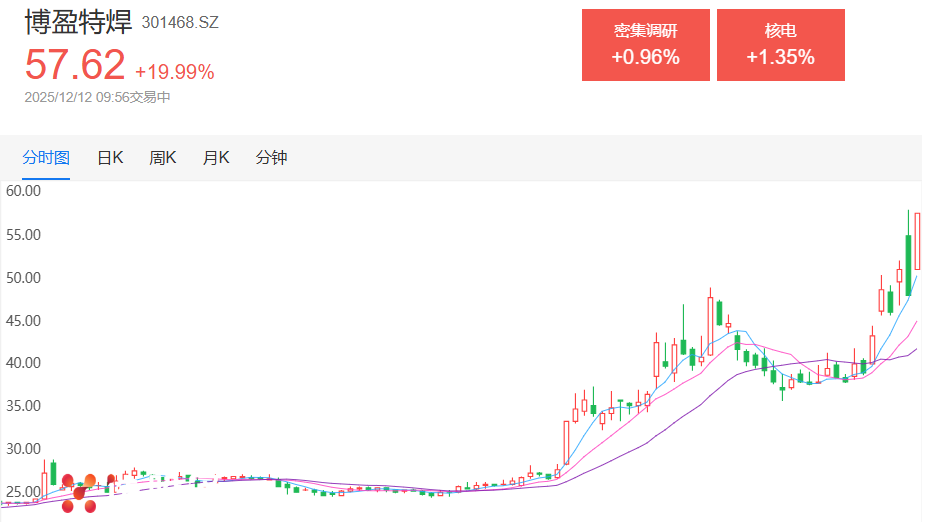
Core Insights - The article highlights a significant surge in the stock prices of power equipment companies, driven by concerns over electricity shortages impacting AI development, particularly for companies utilizing NVIDIA's power-hungry AI server chips [1][2]. Group 1: Stock Market Reaction - On December 12, shares of power equipment companies experienced notable increases, with China XD Electric hitting the daily limit, and New Special Electric rising over 10% [1]. - Other companies such as Moen Electric, Shuangjie Electric, Baobian Electric, and TBEA also saw their stock prices rise in response to the news [1]. Group 2: NVIDIA's Initiative - NVIDIA is planning a closed-door summit at its headquarters in Santa Clara, California, to address the "data center power shortage" that could hinder AI development [1][2]. - The summit will gather executives from startups focused on power and electrical engineering, indicating NVIDIA's strategy extends beyond technology discussions to include capital investments [1]. - The startups involved provide a range of products from software to physical power equipment technology, suggesting NVIDIA is seeking a comprehensive solution that integrates both hardware and software to tackle power challenges [1]. Group 3: Industry Implications - The summit serves as a strong signal that energy shortages are significantly affecting companies building AI infrastructures with NVIDIA chips, as these data centers are filled with energy-intensive AI server chips [2]. - The limitations in power supply may pose a real threat to the advancement of artificial intelligence technologies [2].

【大涨解读】数据中心、智能电网:海外燃机公司大涨,英伟达被爆应对电力短缺也有大动作,机构称这一方案或是最优解
Xuan Gu Bao· 2025-12-12 02:46
Group 1 - The core issue discussed is the "data center power shortage" affecting AI development, prompting NVIDIA to hold a closed-door summit to address this challenge [3] - GE Vernova's stock surged by 15.62%, reaching a historical high, after updating its financial forecast to project $52 billion in revenue and a 20% adjusted EBITDA margin by 2028, up from previous estimates of $45 billion and 14% [3] - GE Vernova's CEO highlighted a significant value creation opportunity, with all of its gas turbine capacity sold out until 2028 and expected contracts for 80 billion watts of combined cycle gas turbines by year-end [3] Group 2 - Tianfeng Securities suggests that building self-generating power units is the optimal solution for addressing the power shortage in AI data centers, with gas turbines offering advantages such as rapid deployment and stable power supply [4] - Major tech companies like Amazon and Google are increasingly using gas turbines as primary or backup power sources for new data centers to ensure continuous power for AI services [4] - The gas turbine industry is expected to benefit from the tight supply-demand situation due to overseas AI data center construction, with a projected global supply of 87 GW by 2027, indicating a continued need for expansion [4][5]
芯片散热陷阱,何解?
半导体行业观察· 2025-11-22 03:09
Core Insights - The article discusses the thermal challenges posed by dielectric films in advanced semiconductor chips, particularly in the context of artificial intelligence data centers, where the physical size of chips is shrinking, leading to increased heat generation and cooling demands [2][3][4]. Group 1: Thermal Management Challenges - Dielectric films, essential for signal isolation and insulation, are becoming thermal traps that limit data processing speeds and increase power consumption for cooling [2][4]. - Historically, dielectric materials were optimized for electrical performance, neglecting thermal conductivity, which is now critical due to the high power densities in AI server chips [2][4][5]. - The transition to vertical stacking in logic circuits and memory introduces new thermal bottlenecks at each bonding interface or insulation layer, exacerbating heat dissipation issues [3][4]. Group 2: Material Properties and Thermal Conductivity - Low-k and ultralow-k dielectric materials, while effective in reducing capacitance, significantly hinder thermal transfer, with thermal conductivities often an order of magnitude lower than required for efficient heat dissipation [4][5]. - The presence of defects such as voids or weak interfaces in these materials can create hotspots, further complicating thermal management [4][6]. Group 3: Interface and Boundary Resistance - Thermal boundary resistance (TBR) at material interfaces is a major contributor to overall thermal resistance in advanced logic circuits, affecting heat transfer efficiency [5][11]. - Even thin diffusion barrier and liner layers can introduce measurable thermal resistance, complicating heat dissipation in high-aspect-ratio structures [6][11]. Group 4: Modeling and Simulation - Accurate thermal modeling must account for the dynamic nature of heat generation and transfer in advanced devices, as traditional steady-state models underestimate the complexity of thermal behavior [14][15]. - Multiphysics modeling that integrates electrical, mechanical, and thermal interactions is essential for predicting device reliability and performance [8][14]. Group 5: Implications for Future Materials - The understanding of dielectric materials is evolving; they are now seen as active components in thermal management rather than passive insulators [18][19]. - Future semiconductor manufacturing will require new materials that balance electrical insulation with thermal conductivity, addressing the challenges posed by increasing power densities and stacking heights [19].