
停车设施

Search documents
“大交通”下好交通综治“一盘棋” 首都交通高质量发展开创新局面
Xin Lang Cai Jing· 2026-01-26 00:26
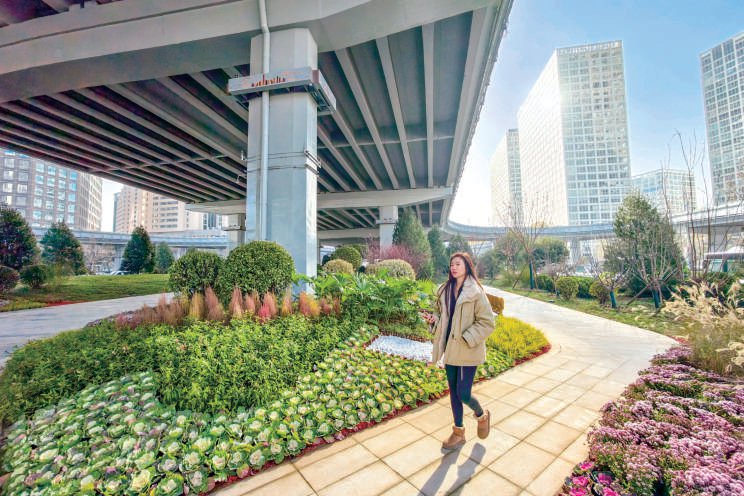
Core Viewpoint - Beijing is advancing its transportation infrastructure through comprehensive governance, aiming for a high-quality development of its transportation system by 2025, with a focus on integration, efficiency, and addressing public needs. Group 1: Transportation Network Expansion - By 2025, the total operational mileage of urban rail transit in Beijing will reach 909 kilometers, with 91% of rail stations allowing bus transfers within 50 meters [1][18] - The opening of new subway lines, including the 8th line's Dahuamen Station and the 17th line's Panjiayuan West Station, will enhance connectivity and increase the number of transfer stations to 106 [1][17] Group 2: Addressing Public Needs - The city plans to open 53 "dead-end roads" and implement 30 major traffic improvement projects by 2025, significantly reducing congestion and improving access [1][26] - Over 50,000 new parking spaces will be created to alleviate parking difficulties in central urban areas [1][26] Group 3: Systematic Governance and Collaboration - A collaborative governance model is being established, involving city, district, and community levels to enhance transportation management and address complex urban mobility challenges [1][27][28] - The city is implementing a "one street, one policy" approach to traffic governance, promoting tailored solutions for local issues [1][28][29] Group 4: Infrastructure and Space Utilization - The city is transforming underutilized bridge spaces into public areas, with 251 bridges set for renovation by 2025, enhancing urban aesthetics and functionality [1][20][21] - The renovation of bridges like Guomao Bridge and Yansha Bridge aims to improve urban vitality and connectivity [1][22] Group 5: Future Outlook - The "14th Five-Year Plan" has seen the addition of 118 kilometers of highways and 182 kilometers of new subway lines, with a focus on sustainable and efficient transportation solutions [1][32] - The upcoming "15th Five-Year Plan" will continue to prioritize convenience, smoothness, and green initiatives in the transportation sector [1][32]

杭州发布停车设施专项规划
Mei Ri Shang Bao· 2026-01-05 22:22
Core Insights - The Hangzhou Municipal Parking Facilities Special Plan (2023-2035) has been officially approved by the city government, providing guidance for urban land use planning and supporting the high-quality development of parking facilities and static traffic management in Hangzhou [1] Group 1: Planning Objectives - The overall goal of the plan is to enhance urban traffic efficiency and promote sustainable urban transport by establishing a balanced, reasonable, and orderly static traffic system through differentiated zoning supply and intelligent parking management [1] - The plan aims to maintain a parking space ratio of 1.0 per vehicle by 2030 and increase it to 1.1 per vehicle by 2035 [1] Group 2: Parking Management Zones - Hangzhou's parking management zones are categorized into four types based on town (street) units, with differentiated development strategies tailored to each zone's characteristics [1] - The first category is a special control zone, where parking facilities in the core area of the West Lake Scenic Area will largely remain unchanged, while supplementary parking facilities will be added near the scenic area to accommodate visitor transfer needs [1] Group 3: Supply Strategy - The city adheres to a classified supply strategy for parking facilities, with a system primarily focused on constructed parking spaces, supplemented by public parking spaces and on-street parking [2] - At least 90% of the total parking supply for small passenger vehicles will come from constructed parking spaces, with public parking spaces accounting for 6% to 8% and on-street parking not exceeding 2% [2] Group 4: Public Parking Development - The plan emphasizes the strategic layout of public parking lots in areas with a shortage of basic parking spaces, around peripheral transit stations, and near the West Lake Scenic Area and parks [2] - By 2030, the city plans to construct no fewer than 47,000 public parking spaces, with a projected total of approximately 421,000 public parking spaces by 2035 [2]
精准发力,德州城市更新重点聚焦3大核心领域
Qi Lu Wan Bao· 2025-12-19 14:26
Core Viewpoint - Dezhou City has issued the "Implementation Measures for Promoting Urban Renewal Action," focusing on three core areas to ensure effective urban renewal efforts [1][2]. Group 1: Comprehensive Area Renovation - The primary focus is on comprehensive area renovation, targeting old neighborhoods, factories, and urban villages through a combination of "retain, renovate, and demolish" strategies. This includes accelerating projects in urban villages with strong community support, improving old residential areas, and enhancing facilities like elevators and parking [1]. - The initiative also aims to revitalize underutilized land through market-oriented renovations, while promoting energy-efficient upgrades and addressing unsafe housing conditions to build high-quality residential spaces [1]. Group 2: Infrastructure Quality Improvement - The second focus area is on enhancing infrastructure quality, emphasizing safety and convenience. This involves ongoing inspections and remediation of risks related to water, gas, heating, electricity, and communication, as well as promoting the construction of integrated utility tunnels [1]. - The plan includes improving the urban transportation network, developing green transportation options, accelerating the construction of parking facilities, and facilitating coordinated renovations around train stations to promote a balance between living and working spaces [1]. Group 3: Addressing Public Service Shortcomings - The third focus area is on addressing public service deficiencies by prioritizing the use of idle properties and underutilized land to enhance facilities for the elderly, children, healthcare, sports, and cultural services [2]. - The initiative aims to establish a multi-tiered public service network, promote the development of complete communities, and create embedded service facilities to form a convenient living circle for residents, while also steadily constructing dual-purpose public facilities and emergency shelters for enhanced community safety [2].
山西晋城出台方案增车位、优管理、畅出行
Zhong Guo Xin Wen Wang· 2025-11-19 09:45
Core Viewpoint - The city of Jincheng in Shanxi has officially launched a three-year action plan (2025-2027) to address parking difficulties through a comprehensive approach focusing on increasing parking spaces, optimizing management, and facilitating transportation [1][2]. Group 1: Increasing Parking Supply - Jincheng aims to systematically increase parking supply by utilizing various land resources, including vacant land from demolition, corner lots, and public facilities such as squares, schools, parks, and transportation hubs for temporary parking lots [1]. - The plan includes the renovation and optimization of parking resources in old residential areas, affordable housing, and urban village resettlement housing [1]. Group 2: Resource Optimization - The city will enhance the regulation of parking space allocation in real estate development projects, ensuring that 100% of idle parking spaces in residential communities are made available for use [1]. - Community shared parking demonstration points will be established, and a mechanism for shared management of community parking will be developed to improve parking space utilization efficiency [1]. Group 3: Smart Management System - A smart management system will be constructed, incorporating all new, renovated, and adjusted parking facilities into a citywide parking resource database, aiming for features like parking guidance, unified payment, and data analysis [2]. - The city will implement differentiated parking fee policies based on regions, road segments, and vehicle types to manage parking demand effectively and encourage investment in parking facilities [2]. Group 4: Enforcement and Governance - The plan includes the use of technology such as drones and smart capture systems to monitor and address illegal parking behaviors [2]. - Specific governance strategies will be developed for areas with significant parking conflicts, such as hospitals, schools, and commercial districts, including tailored solutions for traffic congestion around schools [2][3]. Group 5: Organizational Structure - A dedicated task force has been established to oversee the planning, construction, and daily management of parking facilities, ensuring effective implementation of the action plan [3].
中办、国办:加强城市基础设施建设改造 推进新型城市基础设施建设
news flash· 2025-05-15 09:19
Core Viewpoint - The document outlines the Chinese government's initiative to strengthen urban infrastructure construction and renovation, emphasizing the need for comprehensive risk assessment and the development of new urban infrastructure models [1] Group 1: Urban Infrastructure Development - The government aims to enhance urban infrastructure by conducting thorough risk assessments of existing facilities [1] - There is a focus on the integrated development and utilization of underground space, including the construction and renovation of underground pipelines and comprehensive utility tunnels [1] - The initiative includes upgrading urban water supply facilities and improving the collection, treatment, and recycling of urban wastewater [1] Group 2: Flood Control and Emergency Response - The plan emphasizes the need for a robust urban flood control and drainage system, including the establishment of a coordinated management model for urban water systems and surrounding water bodies [1] - It aims to accelerate the construction and renovation of drainage and flood prevention facilities to enhance emergency response capabilities [1] Group 3: Waste Management and Fire Safety - The government is pushing for the upgrade of municipal solid waste treatment facilities and the enhancement of public fire safety infrastructure [1] - There is a call for proactive construction of disaster prevention projects to ensure urban safety [1] Group 4: Transportation Infrastructure - The initiative includes improving urban transportation infrastructure by developing rapid transit lines, community transport systems, and green transportation options [1] - It also focuses on optimizing urban freight network planning and establishing a tiered distribution facility system [1] Group 5: Technological Integration - The plan promotes the application of Building Information Modeling (BIM) technology in urban infrastructure projects [1] - It includes the implementation of safety engineering for urban infrastructure lifelines [1]