
儿童钙

Search documents
汤臣倍健:2025年报点评-20260323
Huachuang Securities· 2026-03-23 08:35
Investment Rating - The investment rating for the company is Neutral (Maintain) with a target price of 12.5 CNY [2]. Core Views - The company reported a total revenue of 6.265 billion CNY for 2025, a year-on-year decrease of 8.38%, while the net profit attributable to shareholders was 782 million CNY, an increase of 19.81% year-on-year [2]. - The fourth quarter of 2025 saw a revenue of 1.35 billion CNY, representing a year-on-year increase of 22.20%, and a net profit of -125 million CNY, which is an improvement from -216 million CNY in the same period last year [2]. - The company is focusing on channel adjustments and new product launches to drive growth, with a target of double-digit revenue growth for 2026 [2][6]. Financial Summary - **Revenue and Profit Forecasts**: - 2025A: Revenue 6,265 million CNY, Net Profit 783 million CNY - 2026E: Revenue 6,959 million CNY, Net Profit 862 million CNY - 2027E: Revenue 7,671 million CNY, Net Profit 972 million CNY - 2028E: Revenue 8,449 million CNY, Net Profit 1,099 million CNY [2][12]. - **Key Financial Ratios**: - Earnings per Share (EPS) for 2025 is projected at 0.46 CNY, with a Price-to-Earnings (P/E) ratio of 25 [2]. - The company’s asset-liability ratio stands at 19.95% [3]. Market Performance - The company’s stock price as of March 20, 2026, is 11.37 CNY, with a market capitalization of 19.234 billion CNY [3]. - The stock has shown a performance of -12% over the past year compared to the CSI 300 index [5]. Strategic Initiatives - The company plans to enhance its online sales through interest e-commerce and cross-border e-commerce, while also optimizing offline channels [6]. - New product launches are expected to contribute significantly to revenue, with nearly 20% of total sales coming from new products in 2025 [6]. Conclusion - The company is undergoing significant adjustments to improve its operational margins and is expected to benefit from new product launches and channel optimizations in the coming years [6].

汤臣倍健(300146):经营边际修复,关注调整进展:汤臣倍健(300146):2025年报点评
Huachuang Securities· 2026-03-23 05:51
Investment Rating - The investment rating for the company is Neutral (Maintain) with a target price of 12.5 Yuan [2] Core Views - The company reported a total revenue of 6.265 billion Yuan for 2025, a year-on-year decrease of 8.38%, while the net profit attributable to shareholders was 782 million Yuan, an increase of 19.81% year-on-year [2] - The fourth quarter of 2025 saw a revenue of 1.35 billion Yuan, representing a year-on-year increase of 22.20%, and a net profit of -125 million Yuan, which is an improvement from -216 million Yuan in the same period last year [2] - The company is focusing on channel adjustments and new product launches to drive growth, with a target of double-digit revenue growth for 2026 [2][6] Financial Summary - **Revenue and Profit Forecasts**: - 2025A: Revenue 6,265 million Yuan, Net Profit 783 million Yuan - 2026E: Revenue 6,959 million Yuan, Net Profit 862 million Yuan - 2027E: Revenue 7,671 million Yuan, Net Profit 972 million Yuan - 2028E: Revenue 8,449 million Yuan, Net Profit 1,099 million Yuan [2][12] - **Growth Rates**: - Revenue growth rate for 2025 is -8.4%, with expected growth rates of 11.1%, 10.2%, and 10.2% for 2026, 2027, and 2028 respectively [2][12] - Net profit growth rates are projected at 19.8% for 2025, and 10.2%, 12.7%, and 13.1% for the following years [2][12] - **Earnings Per Share (EPS)**: - 2025A: 0.46 Yuan - 2026E: 0.51 Yuan - 2027E: 0.57 Yuan - 2028E: 0.65 Yuan [2][12] - **Valuation Ratios**: - Price-to-Earnings (P/E) ratios are projected at 25, 22, 20, and 18 for the years 2025A to 2028E respectively [2][12] - Price-to-Book (P/B) ratios are expected to be 1.7, 1.8, 1.8, and 1.7 for the same period [2][12] Market Performance - The company’s stock price as of March 20, 2026, is 11.37 Yuan, with a market capitalization of 19.234 billion Yuan [3] - The company has a total share capital of approximately 169.17 million shares, with 112.07 million shares in circulation [3]
汤臣倍健20260320
2026-03-22 14:35
Company and Industry Summary Company Overview - **Company**:汤臣倍健 (Tongrentang) - **Industry**: Health Supplements Key Points Business Goals and Growth Strategy - The company aims for double-digit growth across all channels by 2026, with online growth expected to outpace overall growth. Key growth engines include interest e-commerce and cross-border e-commerce [2][3] - In Q1 2026, the company anticipates significant operational pressure due to high baseline effects from 2025, a shift towards online channels, and upfront costs for new product promotions [2][4] - The company plans to increase its focus on the JD channel, which saw a nearly 35% growth in 2025, to offset profit pressures from Douyin channels [2][4] Financial Performance and Projections - Gross margin is expected to recover from a low of 66.7% in 2024 to 67.9% in 2025, with further improvements anticipated in 2026 as the proportion of high-margin online new products increases [2][5] - Sales expense ratio is projected to rise by several percentage points in 2026 as the company adopts aggressive strategies in Douyin and cross-border sectors to capture market share [2][5][9] - The company maintains a clear dividend policy, aiming for a long-term annualized dividend rate of around 70% to ensure stable returns for investors [2] Channel Performance and Strategy - Offline channels account for approximately 46% of sales, with pharmacies being the dominant segment (70-80% share). The focus for 2026 will shift towards refined operations in supermarket channels, including exclusive products for Sam's Club [2][3][10] - The company recognizes the need for rapid growth in all e-commerce channels, including cross-border and traditional e-commerce, with a specific focus on interest e-commerce [3][4] Market Challenges and Regulatory Environment - The company faces challenges in achieving significant breakthroughs in cross-border e-commerce and Douyin channels, with ongoing adjustments needed in team building and product launches [4][6] - Recent tightening of regulations on online platforms like Douyin may impact market share, requiring brands to adapt their content strategies and flow rules [6][8] Product Development and Innovation - The company plans to launch new products in 2026, focusing on high-growth categories such as fish oil and children's calcium, while also expanding the Life-Space brand into new segments like anti-aging and coenzyme Q10 [7][16] - The company is actively pursuing innovation in product formulations and delivery methods, including the use of AI in live streaming and content generation to enhance operational efficiency [13][16] Financial Metrics and Future Outlook - In 2025, online sales accounted for approximately 54% of total revenue, with offline sales at 45-46%. Pharmacies remain the primary offline channel, while e-commerce platforms like Tmall and JD are crucial for online sales [15][16] - The company anticipates that the overall gross margin will continue to improve as the e-commerce business grows, despite potential pressures from increased sales expenses and regulatory changes [11][12] Conclusion - The company is strategically positioned to leverage growth in e-commerce and refine its product offerings across various channels. However, it must navigate regulatory challenges and market dynamics to achieve its ambitious growth targets for 2026 and beyond [2][6][10]
网传多类儿童用品有毒害?起底“造谣式起号”带货“生意经”
Yang Shi Xin Wen· 2025-11-21 01:58
Core Viewpoint - Recent rumors regarding children's health products, particularly vitamin D3, have created significant anxiety among parents, driven by misleading information and exaggerated claims on social media platforms [1][4][6] Summary by Sections Rumors and Claims - Claims about children's vitamin D3 being harmful have been circulating since February, with various versions of the narrative suggesting that a high percentage of households are affected and that harmful substances are present in excessive amounts [4][5] - Specific alarming statements include that "toxic vitamin D3 covers 90% of families" and that harmful substances exceed safety limits by factors ranging from 10 to 80 times [1][5] Tactics Used - The misinformation often follows a template, with similar phrasing and claims across different accounts, indicating a coordinated effort to spread fear [3][6] - Videos claiming that most vitamin supplements are fake and harmful lack credible sources and often use distorted visuals, suggesting a reliance on sensationalism rather than factual reporting [3] Motivations Behind Misinformation - The primary goal of these rumors appears to be generating anxiety to drive traffic and sales of alternative products, with many videos promoting supposedly "qualified" products after spreading fear [6][8] - Experts note that these tactics exploit parental concerns for profit, indicating a calculated approach to manipulate emotions for commercial gain [11][12] Regulatory Response - Experts emphasize the need for targeted regulatory measures to combat this type of misinformation, particularly those that exploit children's health topics [12] - Recent initiatives by regulatory bodies aim to address the spread of negative emotions and misinformation on social media platforms, highlighting the importance of collaborative efforts in monitoring and controlling such content [13]

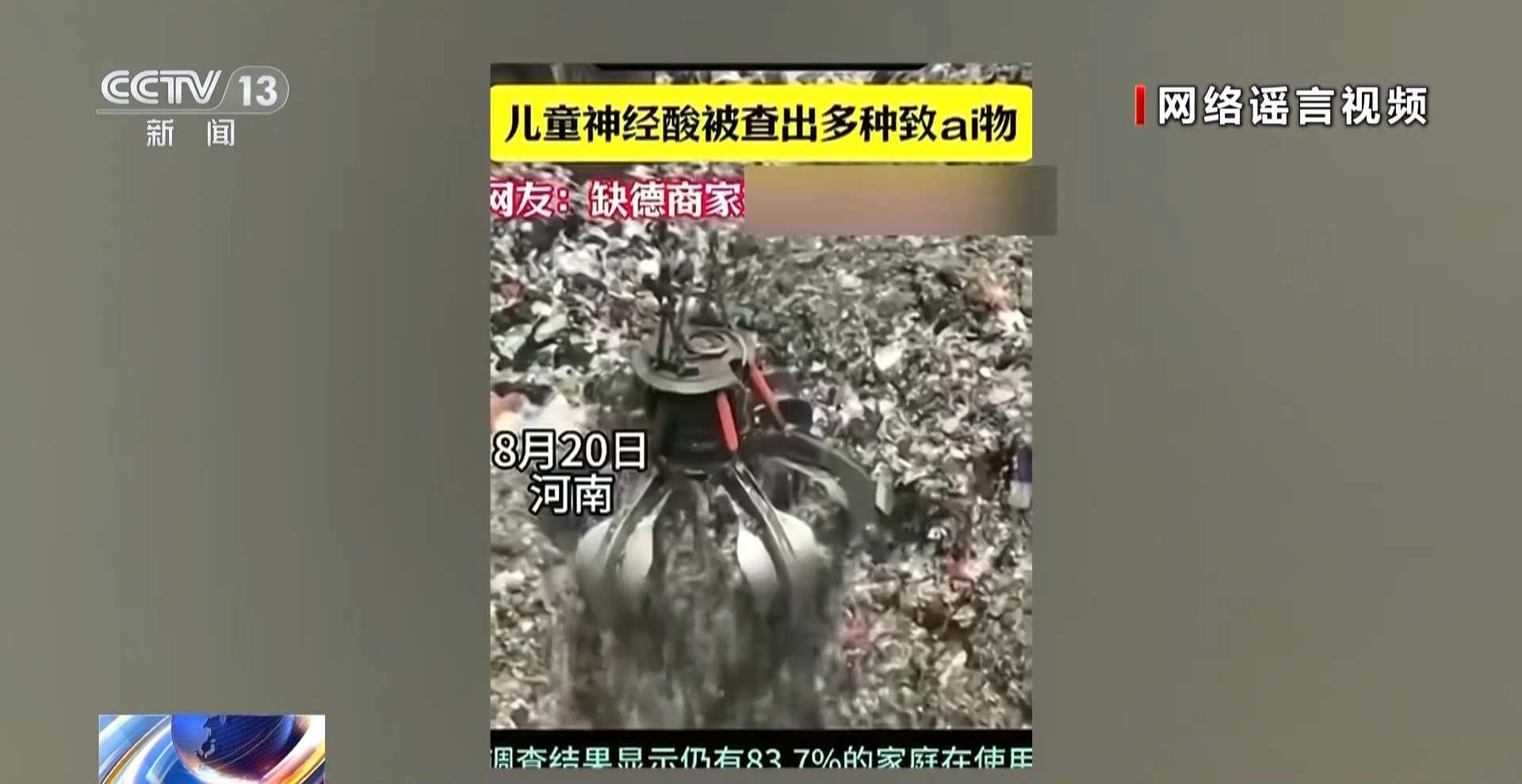
工业垃圾摇身一变成为儿童维生素和儿童面霜?起底“造谣式起号营销”套路
Yang Guang Wang· 2025-11-21 00:38
Core Viewpoint - The article highlights the alarming trend of "rumor-based marketing" targeting children's health products, where false information is spread to create fear and anxiety among parents, ultimately leading to the promotion of certain products [1][12][14] Group 1: Nature of Rumors - Various alarming claims about children's health products, such as "toxic vitamin D3" and "industrial waste in children's creams," are being circulated on social media platforms [1][12] - The content often lacks credible sources, with conflicting statistics about the prevalence of "toxic vitamin D3" in households, ranging from 67.8% to 92% [4][10] - The same accounts frequently post contradictory information, indicating a systematic approach to spreading these rumors [7][10] Group 2: Impact on Public Perception - The spread of these rumors creates significant anxiety among parents, as evidenced by the overwhelming concern expressed in comment sections of related videos [3][12] - The misinformation disrupts the normal flow of information, leading to a decline in public trust and increasing societal anxiety [12][14] Group 3: Marketing Tactics - The accounts responsible for spreading these rumors often recommend "safe products" after instilling fear, effectively monetizing the anxiety they create [12][14] - These accounts utilize fabricated authority by misrepresenting credible sources to lend legitimacy to their claims, further misleading parents [14][15] Group 4: Regulatory Response - The article discusses the need for regulatory measures to combat the spread of such harmful misinformation, including establishing rapid verification channels and increasing penalties for rumor-spreading accounts [15] - It emphasizes the importance of a multi-faceted approach to ensure the protection of children in the digital space [15]
