
公共文化服务

Search documents
发展蓝图绘就 新的征程开启
Bei Jing Wan Bao· 2026-01-27 07:11
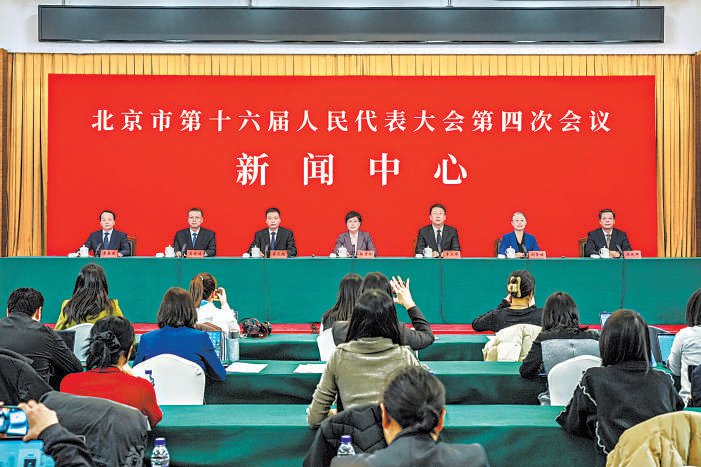
Group 1: Core Development Goals - The "14th Five-Year" period has seen significant progress in cultural initiatives, enhancing public cultural services for citizens [3] - The "15th Five-Year" plan aims to establish Beijing as a historical and cultural city, focusing on the protection and management of cultural heritage [4][5] - The plan emphasizes the integration of culture, commerce, tourism, and sports to create a comprehensive consumption experience [3] Group 2: Economic and Infrastructure Development - The fixed asset investment target for this year is set to exceed 1 trillion yuan, with a focus on strategic projects and infrastructure improvements [6][7] - Major projects include the implementation of significant industrial and infrastructure initiatives to enhance modern capabilities and public services [7] - The plan includes the establishment of a talent allocation mechanism to support core technology development and innovation [8][9] Group 3: Environmental and Health Initiatives - The "15th Five-Year" period will focus on achieving advanced carbon efficiency levels and improving ecological environments [10][11] - Measures will be taken to enhance the healthcare system, including the establishment of a tiered medical service system and improved access to healthcare resources [13] - The plan aims to promote green and low-carbon transitions in economic and social development [11] Group 4: Housing and Urban Development - The plan includes initiatives for urban renewal, such as the renovation of old elevators and the construction of accessible community spaces [12] - Housing policies will be improved to ensure better living conditions for new citizens and young people, with a focus on rental housing [12] - The goal is to transition from "housing for all" to "housing for livability," enhancing urban living quality [12]

四川公共文化服务“导购指南”上新,买方卖方都扩容 钱花得值不值,群众来“点评”
Si Chuan Ri Bao· 2026-01-26 13:50
Core Viewpoint - The Sichuan Provincial Government has issued implementation opinions on government purchasing public cultural services, aiming to enhance the quality of public cultural services available to the public through a systematic update of policies and guidelines [4][5]. Group 1: Policy Expansion - The purchasing and contracting entities for public cultural services have been expanded, including not only government agencies but also party organizations, political consultative bodies, and grassroots organizations, thereby increasing the variety of available services [3][5]. - New contracting entities such as rural collective economic organizations and grassroots autonomous organizations have been added, enriching the range of services offered [5]. Group 2: Cultural Resource Utilization - Local cultural resources, including red culture, minority cultural products, and intangible cultural heritage, are now included in the purchasing directory, promoting the transformation of local cultural resources into public cultural products and services [4][8]. - The policy encourages the integration of local cultural resources with modern design, fashion trends, and technology to develop innovative cultural products and experiences [7][8]. Group 3: Quality and Satisfaction Metrics - The updated policy emphasizes public satisfaction as a key metric for evaluating the effectiveness of cultural services, requiring public participation in the assessment process [6][7]. - A hierarchical management system for purchasing content has been established, combining a provincial-level guiding directory with local-specific directories that can be dynamically adjusted based on regional needs [7].
广东“十四五”公共文化服务成绩单出炉!
Nan Fang Nong Cun Bao· 2025-12-31 11:32
Core Viewpoint - Guangdong's public cultural service system has made significant progress during the "14th Five-Year Plan" period, laying a solid foundation for the upcoming "15th Five-Year Plan" development [3][4]. Group 1: Achievements in Public Cultural Services - The construction of a modern public cultural service system in Guangdong has resulted in a well-established network of public cultural facilities, with over 150 county-level public libraries, 144 cultural centers, 416 museums, 139 art galleries, and 26,000 community cultural service centers, achieving full coverage at the provincial, municipal, county, town, and village levels [16][18]. - Guangdong has developed a three-tier standard system for public cultural services, including the revision of the "Guangdong Province Public Cultural Service Promotion Regulations" and the issuance of implementation opinions and standards for public cultural services from 2021 to 2025 [7][9]. Group 2: Innovative Service Models - Guangdong has pioneered several innovative service models, including the establishment of a public cultural service community concept and the launch of 25 pilot projects, as well as the first provincial-level guidelines to promote social participation in cultural services [26][27]. - The province has implemented a three-year plan for public digital cultural construction, resulting in the establishment of a total library system across 122 counties, with a coverage rate of 96.92% in towns [30][32]. Group 3: Cultural Benefits and Community Engagement - The province has successfully engaged over 10 million people through various cultural activities, including the Guangdong Provincial Art Flower Festival and the annual selection of outstanding cultural works, producing over 500 excellent pieces each year [38][41]. - Guangdong has built a robust volunteer service framework with over 200,000 volunteers and more than 20,000 volunteer teams, contributing to the cultural and tourism sectors [45][46]. Group 4: Future Directions - Moving into the "15th Five-Year Plan" period, Guangdong aims to focus on five key areas: organizational, systematic, social, professional, and digital development, while ensuring a combination of government leadership and social participation [48][50].

广东发布“十五五”公共文化服务“征集令”!
Nan Fang Nong Cun Bao· 2025-12-31 10:33
Core Viewpoint - Guangdong Province has launched a "Fifteen Five" public cultural service solicitation to gather excellent cases and quality entities for public cultural services, aiming to enhance the quality and accessibility of cultural offerings across the region [4][6][33] Group 1: Solicitation Details - The solicitation is divided into two main parts: collecting 300 excellent public cultural service cases and identifying quality social entities that can provide public cultural services [15][16][18] - The initiative aims to create a repository of exemplary cases and a list of quality entities to promote structural reforms in the supply side of public cultural services [19][20] Group 2: Objectives and Highlights - The solicitation seeks to establish a modern public cultural service system that connects urban and rural areas, fostering collaboration and shared cultural experiences [8][9] - Three key highlights of the solicitation include: 1. Comprehensive coverage targeting various social entities, including government agencies, organizations, and individuals [25][26] 2. Focus on key areas such as cultural activity organization, digital cultural services, and rural cultural revitalization, with plans to collect 300 outstanding cases [27][29] 3. Clear requirements for submissions, emphasizing practices that have shown significant results during the "Fourteen Five" period and align with socialist core values [30][31] Group 3: Future Directions - Moving into the "Fifteen Five" period, Guangdong will focus on organizational, systematic, social, professional, and digital approaches to enhance public cultural services [20][21] - The initiative is seen as a critical step towards achieving higher quality, efficiency, equity, and sustainability in public cultural services [33]
1.97万亿元、370亿元…… 数说“十四五”期间我国文化事业投入力度空前
Yang Shi Wang· 2025-11-29 12:27
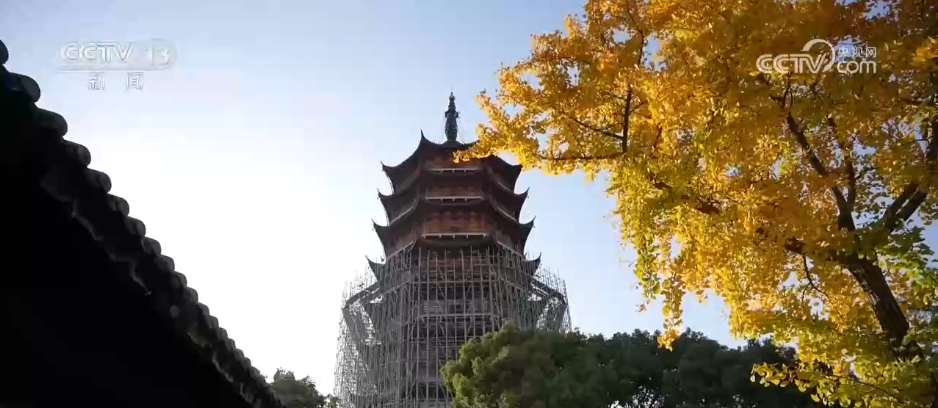
Group 1 - During the "14th Five-Year Plan" period, the national fiscal general public budget for cultural tourism, sports, and media expenditures reached a cumulative total of 1.97 trillion yuan, averaging over 390 billion yuan annually from 2021 to 2025, significantly supporting the development of cultural undertakings and industries in China [1] - Central fiscal funding for cultural heritage protection exceeded 37 billion yuan over the past five years, leading to comprehensive improvements in the protection of cultural relics and more vibrant utilization and inheritance [1] Group 2 - In Jiangsu, the North Temple Tower, a landmark with a history of over a thousand years, is undergoing a new round of restoration after 20 years, with workers currently dismantling scaffolding around the tower [3] - The restoration of cultural relics requires meticulous sourcing and verification by experts, which incurs significant costs, prompting the North Temple Tower to apply for national-level cultural heritage protection special subsidy funds [5] Group 3 - A multi-source funding guarantee system has been established for the protection of the North Temple Tower, combining national subsidies, local matching funds, and social donations, allowing the protection efforts to extend beyond just the tower to rejuvenate the entire ancient city [7] - The central government has established a systematic protection mechanism for cultural heritage, with a cumulative allocation of 37.334 billion yuan during the "14th Five-Year Plan" to support the protection and restoration of key cultural relics and archaeological projects [9] Group 4 - The central government actively implements national basic public service standards, supporting the construction of local public cultural service systems through various funding channels, ensuring quality cultural resources reach grassroots levels [9] - In Mianyang, Sichuan, local fiscal investment exceeded 41.77 million yuan over five years for public cultural facility construction and free activities, resulting in the establishment of 21 community reading spaces and a "15-minute reading circle" [11] Group 5 - Nationwide, during the "14th Five-Year Plan," the central government allocated 122.19 billion yuan to support local implementation of national basic public cultural service standards, enabling nearly 50,000 public cultural facilities to offer free services to the public [13] - The initiative also supports the opening of over 3,000 public sports venues and fitness centers to the public for free or at low cost, promoting cultural and sports accessibility [13]
财政部:积极培育新兴产业和未来产业 持续推动制造业转型升级
智通财经网· 2025-11-07 10:56
Core Viewpoint - The report emphasizes the acceleration of new growth momentum in China's economy through enhanced fiscal policies, support for innovation, and investment in key industries, while ensuring the stability of employment and market expectations [1][3]. Group 1: Fiscal Policy and Economic Growth - The fiscal policy is increasingly proactive, focusing on stabilizing employment, businesses, and market expectations, while promoting economic recovery [3][4]. - A total of 300 billion yuan in special bonds is allocated to support the replacement of consumer goods, which is expected to stimulate significant retail sales [4][15]. - The central government plans to increase its technology funding to 398.12 billion yuan in 2025, a 10% increase from the previous year, focusing on core technology and strategic industries [5][21]. Group 2: Investment and Consumption - The government aims to enhance domestic demand by boosting consumption and effective investment, with a focus on key sectors and weak links [13][16]. - The issuance of special bonds has accelerated, with 5.55 billion yuan issued in the first half of the year, completing 42.7% of the annual target [16]. - The manufacturing sector is expected to see a 10.3% increase in industrial investment, driven by government support for technological upgrades [17]. Group 3: Employment and Social Welfare - The central government allocated 667.4 billion yuan for employment support, with 6.95 million new urban jobs created in the first half of the year [27][28]. - Education spending increased by 5.9% to 2.15 trillion yuan, with a focus on improving quality and access to education [29][30]. - Basic public health service funding reached 804.35 billion yuan, enhancing health management and disease prevention efforts [32][33]. Group 4: Risk Management and Financial Stability - The government is implementing measures to mitigate financial risks, including the management of local government debt and the promotion of real estate market stability [7][9]. - A comprehensive approach to fiscal management is being adopted, including reforms in tax systems and budget execution to ensure effective use of resources [7][12]. Group 5: Innovation and Technology - The report highlights the importance of integrating technological innovation with industrial development, with a focus on enhancing research capabilities and supporting key technology projects [20][21]. - Funding for basic research is set to increase by 12.1%, emphasizing the need for original innovation and support for research institutions [21][22]. Group 6: Environmental and Social Development - The government is committed to ecological protection and sustainable development, with significant funding allocated for pollution control and ecosystem restoration [38][39]. - Social welfare programs are being expanded, with increased support for vulnerable populations and efforts to improve living standards [34][35].
新华社权威速览丨“数”看“十四五”文化和旅游高质量发展成绩单
Xin Hua She· 2025-09-29 14:43
Core Insights - The article discusses the achievements and developments in the cultural and tourism sectors during the "14th Five-Year Plan" period in China, highlighting significant growth in public services, cultural heritage protection, and tourism recovery. Group 1: Public Cultural Services - By the end of 2024, there will be 3,248 public libraries and nearly 44,000 community cultural institutions across the country, with over 40,000 new public cultural spaces [5] - The number of visitors to public libraries is expected to increase by 440 million, a growth of 49% compared to 2019 [5] - More than 95% of cities and districts have established a system of cultural centers and libraries to enhance the coverage and effectiveness of public cultural services [5] Group 2: Cultural Heritage Protection - The fifth batch of national intangible cultural heritage representative projects includes 325 items and 942 inheritors [8] - 31 provinces and regions have enacted local laws for the protection of intangible cultural heritage, fostering a stronger protective environment [10] - Over 12,900 intangible cultural heritage workshops have been established, creating job opportunities for more than 1.2 million people [12] Group 3: Cultural Industry Growth - The cultural industry is projected to achieve a revenue of 19.14 trillion yuan in 2024, a 37.7% increase from 2020 [12] - The number of large-scale cultural enterprises has risen to 78,000, an increase of 1,300 since 2020 [12] - Domestic tourism is recovering rapidly post-pandemic, with 3.285 billion trips and total spending reaching 3.15 trillion yuan in the first half of 2025, setting new records [12] Group 4: International Cooperation - China has expanded its international cultural cooperation, establishing 73 overseas cultural centers and tourism offices [14] - Agreements for cultural cooperation have been signed with over 150 countries, and tourism agreements with more than 140 countries and regions [14]

赵一德在调研文化建设工作时强调坚持守正创新 狠抓工作落实 奋力推动文化强省建设迈上新台阶
Shan Xi Ri Bao· 2025-08-19 00:40
Group 1: Cultural Development - The provincial government emphasizes the importance of deeply studying and implementing Xi Jinping's cultural thoughts and directives to promote cultural development in Shaanxi [1] - The Long'an Academy, a public cultural space, integrates library, art gallery, and cultural center functions, showcasing innovative "Reading+" service models [1] - The government aims to optimize cultural infrastructure by creating more "urban and rural reading rooms" and "cultural living rooms" to provide diverse and high-quality public cultural services [1] Group 2: Industrial Heritage and Economic Development - The old steel plant design creative industry park is being developed on the site of a former steel factory, focusing on the integration of industrial heritage with urban renewal [2] - The government encourages the commercialization and digital expression of industrial heritage while maintaining its original structure and characteristics [2] - There is a push to stimulate consumption through targeted actions and policies, leveraging rich cultural and tourism resources to create unique consumer experiences [2] Group 3: Tourism and Cultural Integration - The provincial cultural and tourism system is urged to enhance responsibility and mission awareness, ensuring effective implementation of cultural development goals [3] - The government plans to strengthen the integration of culture and tourism, focusing on the development layout and nurturing both large and small tourism enterprises [3] - There is an emphasis on improving service quality and safety in the tourism industry, aiming to build a trillion-level cultural tourism industry cluster [3]