具身天工2.0

Search documents
观众报名|早鸟票限时开抢,4 月北京,第三届中国具身智能与人形机器人产业大会,洞察前沿、抢抓机遇
机器人大讲堂· 2026-03-23 10:48
Core Viewpoint - The article emphasizes that embodied intelligence and humanoid robots are not a distant future but are currently evolving, with significant advancements and investments in the industry [2][3]. Investment and Industry Trends - In the first two months of 2026, there were 18 financing events with over 13 billion yuan invested, indicating a rising interest and heat in the industry [4]. - The upcoming Third China Embodied Intelligence and Humanoid Robot Industry Conference is set to take place on April 28-29, 2026, in Beijing, focusing on the theme of competing in the trillion-yuan market and reshaping the future industrial era [6]. Conference Highlights - The conference will feature six core highlights, including forums, exhibitions, reports, awards, resource matching, and talent recruitment, serving as a platform for showcasing products and facilitating communication among industry leaders and innovators [7]. - A main forum will gather over 30 top experts and executives from leading companies to discuss the latest industry dynamics, technology trends, and core strategies [8]. - The event aims to address common pain points faced by industry players, including technology benchmarking, resource matching, and market entry challenges [9]. Comprehensive Agenda - The agenda is designed to connect all levels of the industry, from top-level assessments to precise resource matching, ensuring a holistic approach to industry development [12]. - An immersive exhibition will showcase the latest research and development achievements in embodied intelligence and humanoid robots, covering everything from core components to integrated solutions [12]. - Authoritative research reports will be released, providing in-depth analysis of industry trends and opportunities, aiding companies in decision-making [13]. Recognition and Awards - The conference will unveil the "LeadeRobot" authoritative rankings, recognizing benchmark companies and innovative products across various dimensions, helping identify quality collaboration and development opportunities [14][28]. Networking and Recruitment - The event will include specialized sessions for supply-demand matching and talent recruitment, facilitating deep exchanges and connections between industry needs and technological innovations [17].

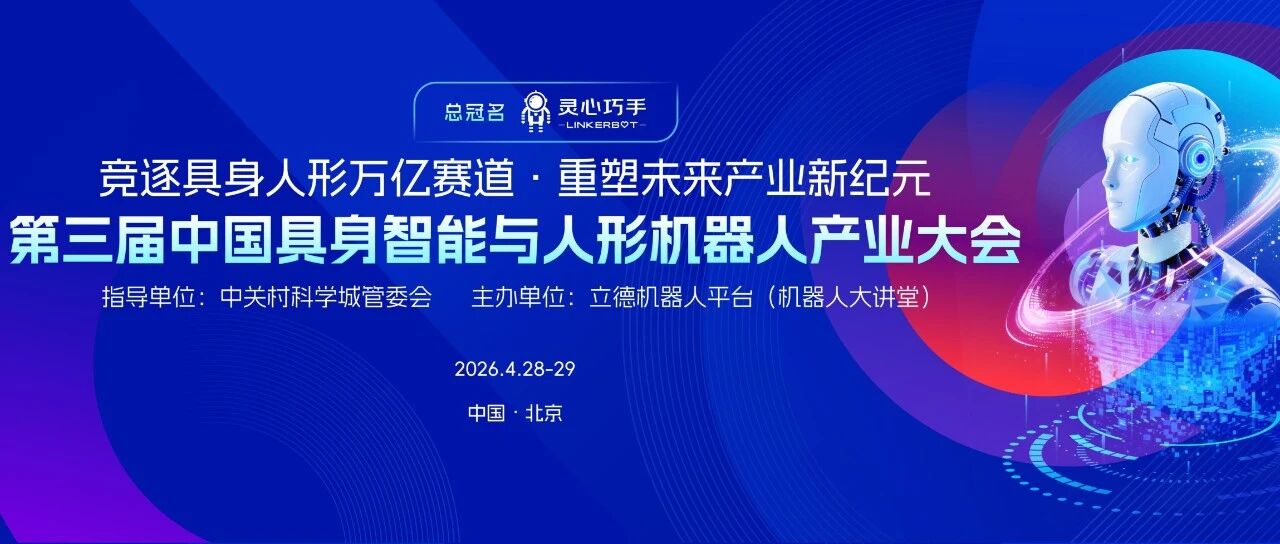
观众报名启动!4月北京,第三届中国具身智能与人形机器人产业大会,一站式参与论坛、展会、供需对接、人才招聘
机器人大讲堂· 2026-03-18 00:00
Core Insights - The article emphasizes that embodied intelligence and humanoid robots are not distant future concepts but are currently unfolding in the present moment [2][3] - The industry is experiencing rapid growth, with 18 financing events and over 13 billion yuan invested in just the first two months of 2026 [4] Event Overview - The Third China Embodied Intelligence and Humanoid Robot Industry Conference will take place on April 28-29, 2026, in Haidian, Beijing, focusing on the theme "Competing for the Trillion-Yuan Track of Embodied Humanoids: Reshaping the New Era of Future Industries" [6] - The conference aims to gather key players from the entire industry chain, including researchers, entrepreneurs, industry practitioners, and job seekers, to explore opportunities [6] Key Highlights - The conference will feature six core highlights: trend insights, comprehensive agenda, real-world demonstrations, authoritative reports, recognition of industry leaders, and talent recruitment [7] - A main forum will host over 30 top experts and executives from leading companies to discuss the latest industry dynamics, technology trends, and core strategies [8] - The event will provide a platform for addressing common challenges faced by industry chain enterprises, investment research groups, entrepreneurs, and industry observers [9] Comprehensive Agenda - The agenda is designed to connect top-level insights with precise resource matching, covering everything from industry trends to practical applications [12] - An exhibition will showcase the latest research and development achievements in embodied intelligence and humanoid robots, allowing attendees to interact with cutting-edge products and teams [12] - Authoritative research reports will be released to analyze industry trends and opportunities, aiding companies in decision-making [13] Recognition and Awards - The conference will unveil the "LeadeRobot" authoritative rankings, recognizing benchmark companies and innovative products in the industry [14][25] - The event aims to highlight industry innovation and provide a reference for high-quality development [25] Networking and Recruitment - The conference will facilitate high-level exchanges to connect supply and demand in the industry, promoting collaboration [17] - A dedicated talent recruitment session will create a platform for matching talent with core positions across the industry chain [17] Participation and Registration - Early bird tickets are available, offering access to the conference, meals, and a printed copy of the 2026 industry report [27][28] - The event encourages participation from various stakeholders to foster collaboration and resource sharing in the embodied intelligence sector [30]
能干活、接地气,中国机器人领跑全球
Xin Lang Cai Jing· 2026-01-11 17:16
Core Insights - The CES 2026 showcased a significant "Chinese moment" in the robotics sector, highlighting the transition of humanoid robots from experimental stages to market-ready products, emphasizing their practicality and readiness for household integration [2][5] Industry Overview - Among the 598 exhibitors in the robotics sector, 149 were Chinese companies, accounting for nearly a quarter of the total. In the humanoid robot segment, 21 out of 38 exhibitors were from China, representing over half [3] - The event featured a diverse range of products from industrial to consumer-grade robots, with notable participation from both established companies and new entrants [3][4] Product Innovations - Zhiyuan Robotics, leading in humanoid robot shipments, showcased a full range of products, including the portable Q1 robot, which redefines humanoid robot design [3][4] - The introduction of the fully autonomous humanoid nanny robot by "Chinese Figure" Wan'an targets the vast household service market, capable of performing laundry tasks autonomously [5] - The Jupiter robot, equipped with a specialized training environment, can navigate complex home settings, while the W1 robot integrates emotional interaction capabilities [6] Market Trends - The trend towards consumer-grade humanoid robots is accelerating, with significant price reductions making them more accessible. The price of humanoid robots is expected to drop by over 25% compared to 2024 due to increased domestic production of key components [6][7] - Companies like Yushutech and Songyan Power are breaking the traditional high-price barrier, with products priced below 30,000 yuan and even under 10,000 yuan [6][7] Sales and Delivery Projections - The humanoid robot shipment volume in China is projected to reach 18,000 units in 2025, a more than 650% increase from 2024, with expectations of further growth to 62,500 units in 2026 [7][8] - Leading companies are already achieving significant delivery volumes, with estimates of over 5,100 units for Zhiyuan Robotics in 2025 and plans to increase to tens of thousands in 2026 [8] Global Competitive Landscape - The competition in the global humanoid robot market is shifting towards engineering, commercialization, and ecosystem development, with Chinese companies gaining more influence in this trillion-dollar sector [8]

能跑跳、能干活、能签单,中国人形机器人站上C位
Xin Jing Bao· 2026-01-09 09:35
Core Insights - The CES 2026 showcased a significant dominance of Chinese companies in the robotics sector, with 149 out of 598 exhibitors being Chinese, accounting for nearly one-quarter of the total [1] - In the humanoid robot segment, 21 out of 38 exhibitors were from China, representing over half of the participants [1] - Chinese humanoid robot manufacturers are noted for their advantages in product variety, supply chain efficiency, and cost-effectiveness, with expectations for industry growth by 2026 [1] Group 1: Technology and Applications - Chinese humanoid robot companies demonstrated capabilities in motion control and practical applications across various scenarios, including industrial manufacturing, family companionship, and commercial services [2] - Notable companies like Yushu Technology and Zhongqing showcased advanced technologies in high-precision torque control and dynamic balance through performances with their robots [2] - AI integration was highlighted, with companies like Zhiyuan showcasing robots capable of language interaction and service applications, emphasizing the fusion of "brain" and "body" in real-world scenarios [2] Group 2: Market Expansion and Sales - The CES 2026 served as a crucial platform for Chinese robot companies to expand into global markets, with several companies reporting immediate sales during the event [3] - Companies like Songyan Power are shifting focus from product display to commercial implementation, targeting key regions such as North America, the Middle East, Europe, and Southeast Asia for market expansion [3] Group 3: Supply Chain and Component Innovation - The exhibition featured a concentration of Chinese companies from various segments of the robotics supply chain, indicating a move towards specialization and maturity within the industry [5] - Innovations in dexterous hands were showcased, with companies like Lingxin demonstrating mass-produced high-dexterity products at competitive prices, making advanced components more accessible [5] - Breakthroughs in tactile technology were presented, with companies like Pashini demonstrating advanced sensors that enable new application scenarios [5] Group 4: Software and Remote Operations - Companies like Jijia Vision are focusing on cutting-edge software developments, particularly in world models, which are becoming more mature as data engines in the field of embodied intelligence [6] - Remote operation capabilities were highlighted by companies like Rui Erman, showcasing real-time remote control of robots from Beijing to Las Vegas, demonstrating the potential for global operational networks [6] - The collective presence of Chinese humanoid robot and supply chain companies at CES 2026 indicates a competitive landscape where technological prowess is matched by engineering, commercialization, and ecosystem development capabilities [6]
CES观察|能跑跳、能干活、能签单,中国人形机器人站上C位
Bei Ke Cai Jing· 2026-01-09 09:35
Core Insights - The CES 2026 showcased a significant dominance of Chinese companies in the robotics sector, with 149 out of 598 exhibitors being Chinese, accounting for nearly one-quarter of the total [1] - In the humanoid robot segment, 21 out of 38 exhibitors were from China, representing over half of the participants [1] - The event highlighted advancements in various applications of humanoid robots, including industrial, commercial, and home companionship [2][8] Group 1: Company Highlights - Companies like Yushu Technology and Zhiyuan Robotics demonstrated their capabilities in motion control and application scenarios, showcasing robots capable of dance and combat [4] - The Beijing Humanoid Robot Innovation Center made its debut, emphasizing the importance of showcasing the practical capabilities of humanoid robots to enhance international influence [8] - The company Lingqiao Intelligent presented its high-performance dexterous hand, significantly reducing costs to make it more accessible for research institutions and startups [10] Group 2: Technological Advancements - The event featured robots that integrated advanced AI capabilities, such as language interaction and autonomous sorting, demonstrating their practical applications in real-world scenarios [6][7] - Breakthroughs in tactile technology were showcased, with companies like Pasini Sensory Technology presenting advanced multi-dimensional tactile sensors [11] - The development of world models as data engines in embodied intelligence was highlighted, indicating a shift towards more sophisticated evaluation and reinforcement learning environments [11] Group 3: Market Expansion and Sales - The CES 2026 served as a critical platform for Chinese robotics companies to expand their global market presence, with several companies reporting immediate sales during the event [8] - Companies like Songyan Power are shifting their focus from product display to commercial implementation, targeting key regions for market expansion [8] - The event underscored the importance of a well-defined and efficient industrial ecosystem, indicating a maturation of the robotics industry [9][12]
智元第一,宇树第二!中国人形机器人企业领跑全球
Zhong Guo Zheng Quan Bao· 2026-01-09 08:30
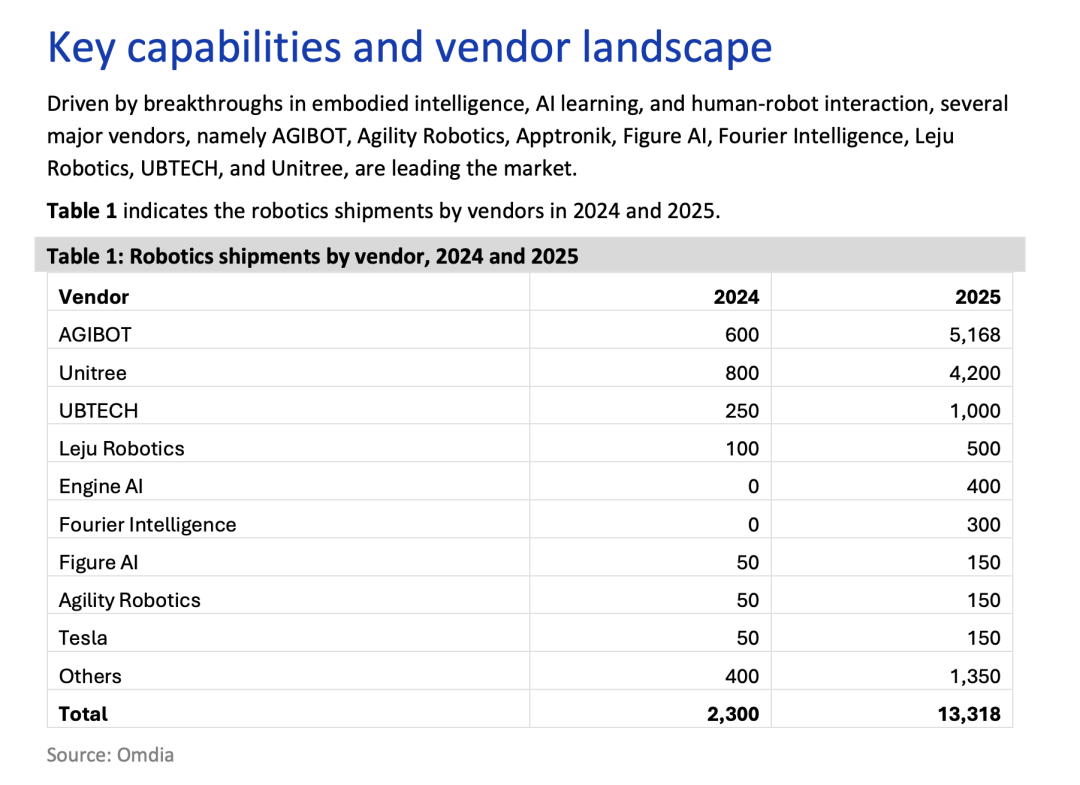
Core Insights - The report by Omdia highlights the dominance of Chinese manufacturers in the humanoid robot market, with Zhiyuan leading with over 5,100 units shipped, capturing 39% of the global market share [1] - By 2025, the top six humanoid robot manufacturers will all be Chinese, collectively accounting for 86.9% of global shipments [1] Group 1: Market Performance - In 2024, total shipments of humanoid robots are projected to be 2,300 units, increasing to 13,318 units in 2025 [2] - The report indicates that the humanoid robot index rose by 1.66%, with significant stock price increases for companies like Jizhi Co. and Hongxun Technology [3] Group 2: Industry Developments - At CES 2023, several Chinese humanoid robot companies showcased their products, including Zhiyuan's launch of the Genie Sim 3.0 platform, which enhances model training and application [4] - Other companies like Unitree and Fourier Intelligence also presented their latest humanoid robots and solutions, indicating a strong presence in the market [4][5] Group 3: Future Projections - Omdia predicts exponential growth in the humanoid robot market, with global shipments expected to reach 2.6 million units by 2035 [6] - Companies like Zhiyuan and Tesla are positioned as leaders in the industry, driving rapid development and innovation [6] Group 4: Strategic Investments - Companies are actively investing in humanoid robotics, with Hongrun Construction and Guoji Precision Engineering announcing partnerships and new product lines aimed at enhancing their market positions [7] - The domestic humanoid robot shipment is expected to rise to 62,500 units by 2026, marking a significant milestone for the industry [7]

中国人形机器人集体闪耀CES 剑指全球市场拓展
Zhong Guo Jing Ying Bao· 2026-01-08 15:24
Core Insights - The 2026 CES in Las Vegas will feature over 1,000 Chinese companies, making them the largest overseas exhibitor group, with a significant focus on humanoid robotics [1] - Chinese humanoid robot companies are showcasing their flagship products and demonstrating practical applications, indicating a strong presence in the global humanoid robotics industry [1][4] Group 1: Company Participation and Innovations - Accelerated Evolution showcased its Booster K1 robots, which performed interactive dances and achieved sales of several units on the first day of CES [2] - Zhiyuan Robotics presented a full range of robot products, including the Lingxi X2 and the newly launched Q1, emphasizing their commitment to building an embodied intelligence ecosystem [3] - Star Motion Epoch displayed multiple products and has established partnerships with nine of the top ten global tech companies, delivering over 600 units, including a significant order in logistics worth nearly 50 million yuan [3][6] Group 2: Market Expansion and Global Strategy - The participation of Chinese humanoid robots at CES reflects their ambition to expand into overseas markets and achieve commercial growth [5] - Star Motion Epoch reported that half of its 500 million yuan in orders come from overseas markets, highlighting its global outreach strategy [6] - Songyan Power aims to establish a presence in key markets such as North America and Europe, planning to achieve significant market expansion by the second quarter of 2026 [7] Group 3: Industry Trends and Competitive Advantages - The humanoid robot industry in China is experiencing a surge, with a projected exponential growth in global production in 2026 [8] - Chinese companies have achieved a localization rate of 50%-70% for core components, with manufacturing costs significantly lower than their Western counterparts, enhancing their competitive edge in the international market [8]
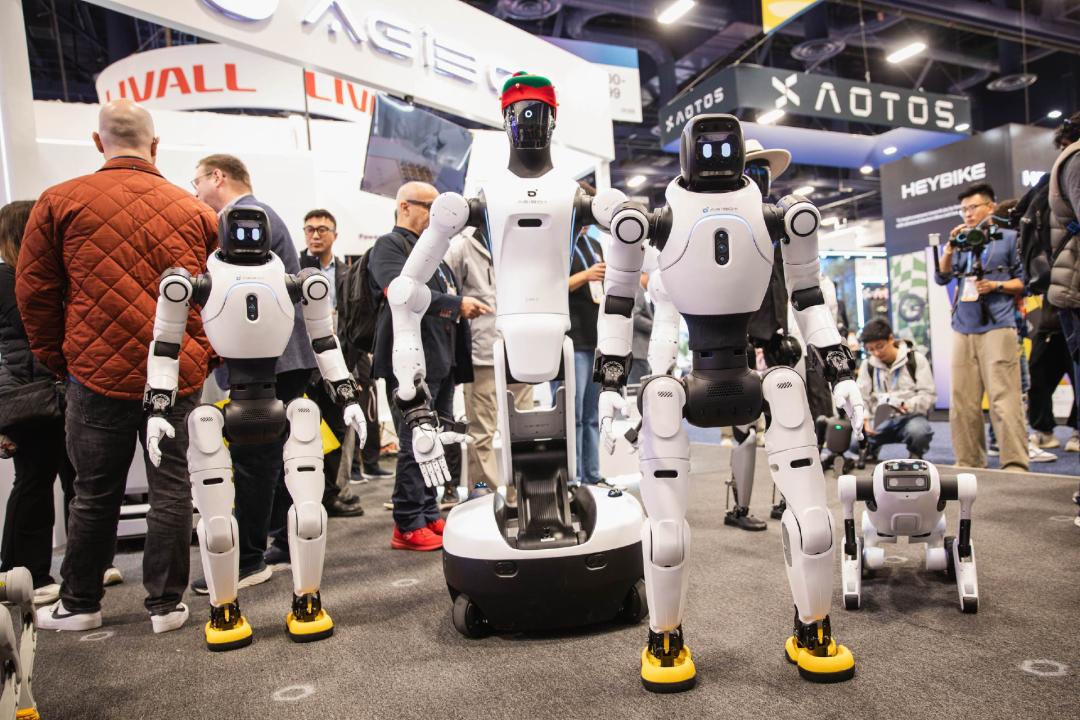
天工机器人亮相CES2026
Xin Lang Cai Jing· 2026-01-07 12:52
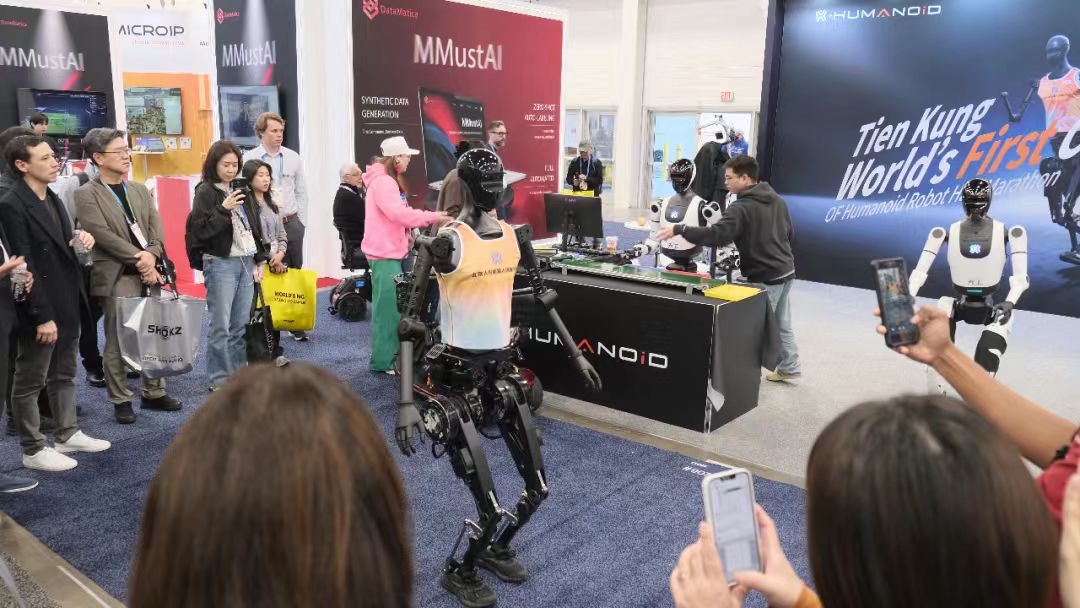
Core Insights - The Beijing Humanoid Robot Innovation Center showcased multiple robots, including "Embodied Tian Gong 2.0" and "Embodied Tian Gong Ultra," at CES 2026 [1] Group 1 - The event highlights the advancements in humanoid robotics technology [1] - The showcased robots represent significant innovations in the field of robotics [1]
“能干活、会干活”天工机器人亮相CES2026
Xin Lang Cai Jing· 2026-01-07 12:49
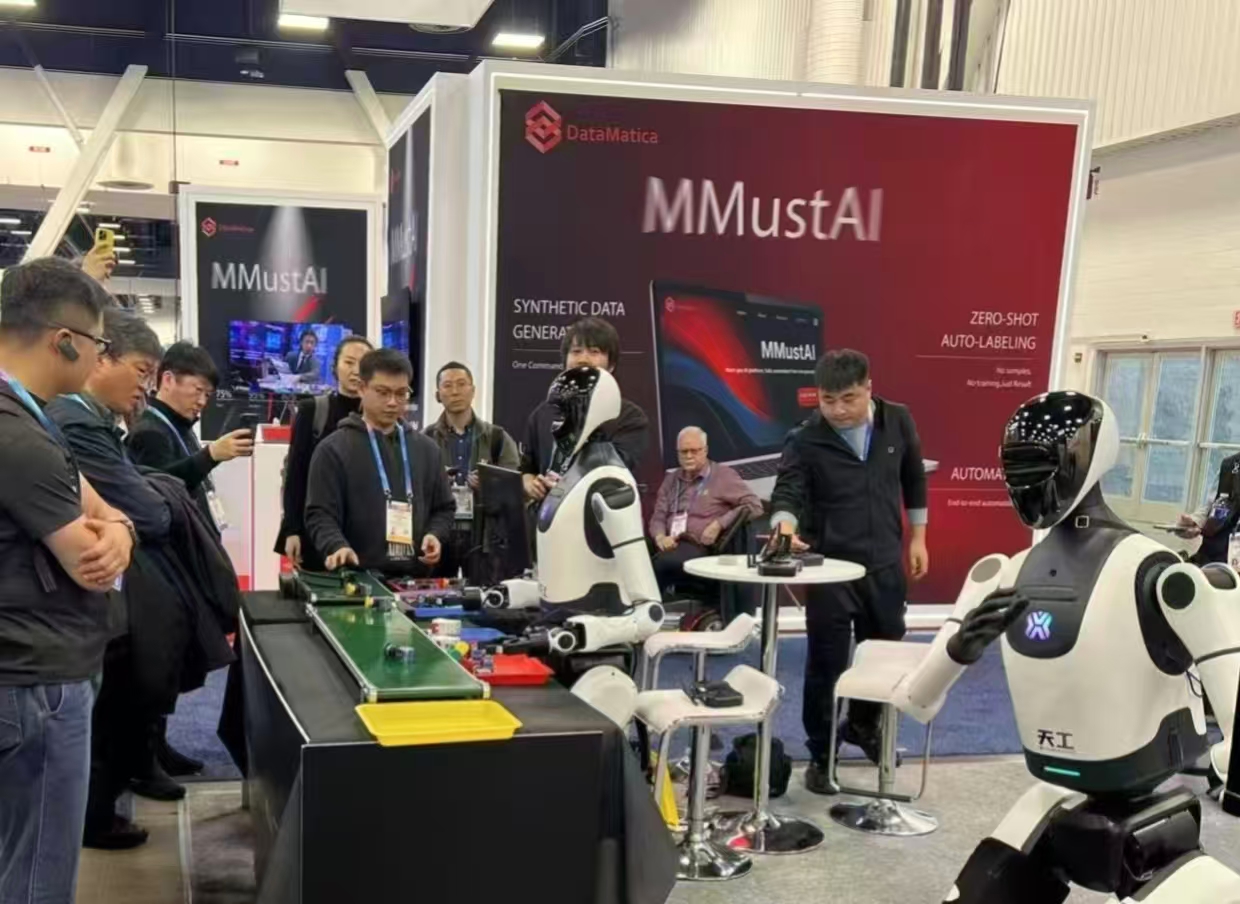
Core Insights - Beijing Humanoid Robot Innovation Center showcased multiple robots including "Embodied Tiangong 2.0" and "Embodied Tiangong Ultra" at CES 2026, highlighting advancements in autonomous sorting and interaction capabilities [2][6] Group 1: Technology and Features - "Embodied Tiangong 2.0" demonstrated full autonomy in sorting components and engaging with the audience, providing an immersive experience of embodied intelligence characterized by speed, accuracy, and reliability [2][6] - The robot utilizes the UVMC (Unified Visual-Motion Representation of Multimodal Data) technology, which bridges visual perception and physical response, allowing for rapid and instinctive reactions similar to human reflexes [2][6] - It features a high-frequency control capability exceeding 60 Hz, enabling real-time conversion of visual information into smooth and precise action commands, thus breaking the barrier between "seeing" and "doing" [2][6] - The robot exhibits excellent dual-arm collaboration, ensuring continuity and reliability in sorting tasks even when one arm misses a target [2][6] Group 2: Industry Applications - Beijing Humanoid has partnered with various industries to implement its robots in high-risk, high-intensity, and repetitive labor scenarios, such as in the Foton Cummins engine factory where the robots autonomously handle material box placement and transportation [3][7] - The "Embodied Tiangong 2.0" has also showcased its interaction capabilities by serving as a host at the 2025 World Robot Conference and implementing the first fully autonomous unmanned exhibition hall tour solution in China [3][7]
中国机器人军团,“围剿”波士顿动力
3 6 Ke· 2026-01-07 11:10
Core Insights - The CES 2026 showcased a significant presence of Chinese robotics companies, accounting for 58.8% of the total exhibitors, with 21 out of 38 companies being Chinese, highlighting the growing influence of China in the robotics sector [1][4] - AI has transitioned from conceptual to practical applications, with products demonstrating real-world utility, particularly in robotics, marking a shift towards functional integration of AI and hardware [2][14] - Boston Dynamics unveiled the second-generation Atlas robot, which features advanced capabilities such as 360-degree joint rotation and high adaptability for complex tasks, emphasizing the competitive landscape in robotics [3][4] Group 1: Chinese Robotics Companies - Notable Chinese exhibitors included Yushu Technology with its combat robot G1, Zhiyuan Robotics showcasing its interactive robots, and Fourier Intelligence presenting the GR-3 humanoid robot [5][7][8] - The event featured a variety of robots, including the Vbot from Vitan Power, which is designed for home use and can operate autonomously without remote control [9][17] - Companies like Robotin introduced the R2 Pro, a modular home robot capable of comprehensive cleaning tasks, while other firms showcased robots for outdoor companionship and AI-driven interactions for children [19][22] Group 2: Technological Advancements - The advancements in AI and robotics were evident, with products like the Booster series robots designed for specific applications in research and events, demonstrating high usage rates [14] - The integration of AI capabilities into various sectors was highlighted, with companies like Chasing Technology showcasing a range of smart cleaning robots and electric vehicles [16] - The CES 2026 marked a turning point for AI hardware, with a focus on practical applications rather than mere concepts, indicating a maturation of the market [30][31]