
农房保险

Search documents
国元保险河南分公司2025年为“三农”及小微主体提供风险保障超550亿元
Zhong Guo Jin Rong Xin Xi Wang· 2026-02-04 11:25
Core Insights - The company aims to enhance product service innovation in five key areas: technology finance, green finance, inclusive finance, pension finance, and digital finance to support high-quality development of the real economy in Henan [1] Group 1: Inclusive Finance - The company focused on "three rural issues" and small micro-entities, providing risk protection of 24.03 billion yuan for 274,100 farming households for grain crops, 468 million yuan for livestock farmers, and over 521.62 billion yuan for small enterprises and individual businesses [1] - New products developed include accident insurance for farmers, housing insurance, and wage guarantee insurance for migrant workers, creating a comprehensive risk protection system for agricultural production [1] Group 2: Green Finance - In the green finance sector, the company provided risk protection of 10.637 billion yuan for green industries in Henan [1] Group 3: Technology Finance - The company utilized satellite remote sensing technology to insure 2.2286 million acres of farmland, offering risk protection of 1.464 billion yuan, and employed various technological methods such as drone inspections and facial recognition for livestock, achieving over 99% accuracy in facial recognition [1] Group 4: Digital Finance - The company is enhancing its agricultural insurance big data center, having completed manual verification for over 2.65 million plots and an area of 25.09 million acres in Henan [1] Group 5: Pension Finance - The company provided risk protection services covering non-vehicle insurance, motor vehicle insurance, and agricultural insurance to over 51,000 elderly individuals throughout the year [1] Future Plans - The company will continue to deepen product innovation and strengthen technological empowerment, focusing on "three rural issues" and small micro-entities to support the high-quality development of the real economy in Henan [2]
人保财险打造住房安全“宁波样板” 守护千万家庭安居梦
Jin Rong Jie Zi Xun· 2025-12-30 06:00
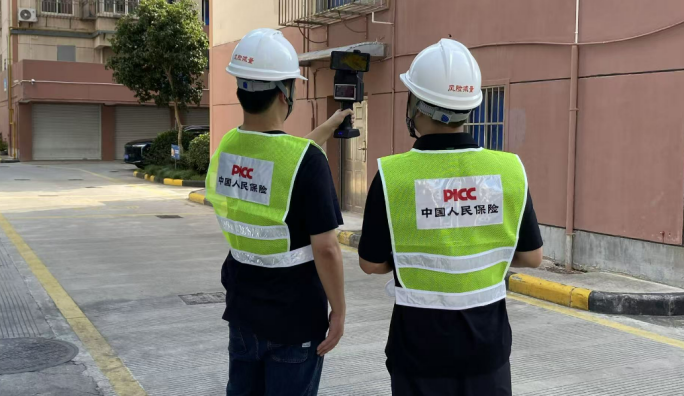
Core Insights - The article highlights the innovative approach of the Ningbo branch of PICC Property and Casualty in integrating technology and insurance to enhance housing safety, marking a shift from reactive to proactive risk management [1][2][7] Group 1: Technological Integration - The company has developed a comprehensive risk management system that includes monitoring, early warning, and remediation, utilizing advanced technologies such as high-precision sensors and smart inspection tools [4][6] - As of the first three quarters of 2025, the company successfully prevented the collapse risk of 234 masonry structures through its technological interventions, demonstrating the effectiveness of its proactive measures [4] Group 2: Government and Enterprise Collaboration - The Ningbo branch has established a governance framework that integrates government and enterprise efforts, creating a collaborative network for housing safety management [5][6] - The insurance mechanism is embedded within the government governance chain, facilitating a coordinated approach to urban housing safety [5] Group 3: Coverage and Impact - The "City Housing Insurance" program has expanded to cover all 10 districts in Ningbo, insuring 28,800 buildings and providing risk coverage of approximately 119.1 billion yuan, benefiting over 482,500 urban households [6] - The initiative also includes rural housing insurance, ensuring protection for 1.2173 million rural households, thereby establishing a comprehensive housing safety net [6] Group 4: Future Directions - Looking ahead, the company aims to leverage advancements in AI, InSAR, and big data to enhance risk perception accuracy and expand its insurance offerings [7] - The integration of insurance with health checks and pension systems is planned to create a more sustainable and inclusive housing safety ecosystem [7]

守护网无需再隐形(暖闻热评)
Ren Min Ri Bao· 2025-12-16 22:30
Core Viewpoint - The article highlights the selfless dedication of Zhang Shuyun, a village party secretary, who has been using her retirement funds to purchase housing insurance for villagers, demonstrating a strong commitment to community welfare and risk management during natural disasters [1][2]. Group 1: Community Support and Initiatives - Zhang Shuyun has been quietly purchasing housing insurance for 275 households in her village for eight years, which became crucial during a recent flood that affected 70% of the villagers, resulting in nearly one million yuan in insurance payouts [1]. - Her proactive approach included mobilizing villagers for road repairs and establishing facilities for left-behind children, showcasing her commitment to improving local infrastructure and community well-being [2]. Group 2: Policy Implementation and Collective Action - The article emphasizes the need for grassroots governance to effectively implement policies like housing insurance, which often face challenges in community acceptance and participation [3]. - Following the flood, the village established a collective livelihood protection fund, which not only continued the housing insurance but also introduced small medical subsidies, reflecting a shift from individual responsibility to collective governance [3].
怀柔获赔超2300万!看农房保险如何加速惠及千万农户
Bei Jing Shang Bao· 2025-11-25 03:35
Core Viewpoint - The integration of policy benefits and market mechanisms is driving the large-scale popularization of rural housing insurance in China, with significant growth in participation and claims processing [1][2]. Group 1: Policy and Market Integration - The recent flood in the Haihe "25·7" area led to the completion of claims for 3,039 reported cases, with total compensation exceeding 23.26 million yuan [1]. - The number of insured households in Huairou District reached 44,089, reflecting a year-on-year growth of 0.4% [1]. - Rural housing insurance is primarily a policy-driven initiative aimed at addressing housing safety issues for rural residents, providing coverage against various risks such as fire, floods, and other disasters [1]. Group 2: Insurance Design and Affordability - The insurance premium structure is designed to be affordable, with government subsidies covering the majority of costs, allowing farmers to pay as little as 1 yuan annually for coverage of 110,000 yuan [2]. - This model creates a risk-sharing mechanism involving the government, market, and farmers, enhancing the efficiency of fiscal resources and ensuring better protection for affected households [2]. Group 3: Increasing Demand and Future Directions - The rising frequency of natural disasters has led to an increased demand for rural housing insurance, prompting government initiatives to explore and establish insurance systems in disaster-prone areas [3]. - The Ministry of Housing and Urban-Rural Development has encouraged local governments and financial institutions to actively pilot rural housing insurance, particularly in areas vulnerable to earthquakes and floods [3]. Group 4: Challenges and Recommendations - Despite policy support, the national participation rate in rural housing insurance remains low, indicating a need for improved awareness and understanding among farmers [4]. - Recommendations include enhancing government-led promotional efforts, simplifying claims processes, and improving service quality from insurance providers to build trust and increase participation [4].
怀柔获赔超2300万!看农房保险如何加速惠及千万农户
Bei Jing Shang Bao· 2025-11-24 13:08
Core Insights - The continuous release of policy dividends and deep integration with market mechanisms are driving the large-scale popularization of rural housing insurance in China [1][3] - The recent completion of claims for the Haihe "25·7" regional flood has seen 3,039 claims settled with total compensation exceeding 23.26 million yuan [1] - The number of insured households in the 2025-2026 policy year reached 44,089, reflecting a year-on-year growth of 0.4% [1] Group 1: Policy and Market Mechanism - Rural housing insurance is primarily a policy-driven product aimed at addressing housing safety issues for rural residents, providing risk coverage for damages caused by various disasters [3][4] - The insurance premium structure is designed to be affordable, with government subsidies covering the majority of costs, significantly reducing the financial burden on farmers [3][4] - For example, in Guangdong Province, the annual insurance amount per household is 110,000 yuan, with premiums in the Pearl River Delta region capped at 5.44 yuan, where farmers only need to pay about 1 yuan annually [3] Group 2: Risk Sharing Mechanism - The insurance model creates a risk-sharing mechanism involving the government, market, and farmers, enhancing the efficiency of fiscal fund usage and better protecting the rights of affected farmers [4] - The increasing frequency of natural disasters has heightened the demand for insurance among farmers, prompting government initiatives to explore and establish rural housing insurance systems [4][5] Group 3: Awareness and Education - There is a need for improved awareness and understanding of insurance among farmers, as many lack knowledge about coverage responsibilities [5] - Government and insurance providers are encouraged to collaborate on outreach efforts, utilizing various media channels to educate farmers about rural housing insurance [5] - Local organizations, such as village committees, should act as intermediaries to facilitate education and promote the benefits of insurance to farmers [5]

2025金融街论坛|周亮:“车险好投保”平台已为110多万车主提供投保便利
Bei Jing Shang Bao· 2025-10-28 07:08
Core Viewpoint - The insurance industry should prioritize the well-being of the people and leverage technology to enhance service quality and efficiency while expanding service offerings [1] Group 1: Technology in Insurance - The insurance sector is encouraged to utilize technology to improve service quality and efficiency in areas such as agricultural insurance, housing insurance, and catastrophe insurance by employing satellites, drones, and risk models [1] - In health and pension insurance, there is a push to integrate wearable devices and large models to provide proactive health management suggestions to policyholders using artificial intelligence and big data [1] Group 2: Expanding Insurance Services - The insurance industry is urged to connect with related industries through technology to offer more convenient services to consumers [1] - An example provided is the "Car Insurance Easy to Insure" platform, which has established information service channels through technology, assisting over 1.1 million car owners in overcoming insurance difficulties [1]

金融监管总局副局长周亮:保险业要通过科技 提升保险服务质效、拓展保险服务外延
Shang Hai Zheng Quan Bao· 2025-10-28 03:27
Core Insights - The insurance industry should prioritize the well-being of the people, focusing on enhancing their quality of life through technological advancements [1] Group 1: Technological Integration in Insurance - The insurance sector is encouraged to leverage technology to improve service quality and efficiency, particularly in areas like agricultural insurance, housing insurance, and disaster insurance [1] - Technologies such as satellites, drones, and risk models will be utilized to enhance underwriting, surveying, and claims processing, thereby reducing disaster risk losses for the public [1] - In health and pension insurance, the industry aims to utilize third-party services and technologies like wearable devices and AI to provide proactive health management advice to policyholders [1] Group 2: Expanding Insurance Services - The insurance industry is urged to expand its service offerings through technology, linking with related industries to provide more convenient services to consumers [1] - An example includes the collaboration with the business sector to create a second-hand car information service platform, addressing information asymmetry in second-hand car transactions to better protect consumer rights [1] Group 3: Accessibility Initiatives - The "Car Insurance Easy to Insure" platform has been established to create information service channels, assisting over 1.1 million vehicle owners in overcoming insurance difficulties [2] - The platform aims to include more operational vehicles, thereby providing additional convenience to the public [2]
撑起农业“保护伞” 托起农牧民“致富梦”——人保财险西藏分公司服务“三农”侧记
Zheng Quan Ri Bao Zhi Sheng· 2025-10-11 13:36
Core Viewpoint - The China People's Property Insurance Company Tibet Branch is actively integrating into national regional development strategies by focusing on rural revitalization, improving livelihoods, and promoting green development, thereby enhancing its role as an economic stabilizer and social stabilizer [1] Group 1: Risk Protection for Agriculture and Livestock - The company has implemented agricultural insurance in Nagqu County, providing risk protection for key livestock such as yaks, which are vital for local income [1][2] - In 2025, the company insured 304,000 yaks, 124,000 sheep, and 11,000 acres of barley, offering a total risk coverage of approximately 1.67 billion yuan [2] - The insurance coverage for Tibetan cattle is 5,000 yuan per head, and for Tibetan sheep, it is 500 yuan per head, with total agricultural insurance payouts increasing from 2.14 million yuan in 2006 to 1.39 billion yuan in 2024 [3] Group 2: Service Network and Community Engagement - The company has established a broad service network in Jiangzi County, covering 19 towns and 155 administrative villages, focusing on agricultural insurance and housing insurance [5] - A "Red Station" initiative has been launched to provide convenience services and financial consultations to the community, enhancing public awareness of insurance [5][6] - The company has implemented a "Police-Insurance Link" model to streamline insurance processes and improve safety measures in high-risk areas [6][7] Group 3: Innovation and Technology in Insurance Services - The company is utilizing a digital agricultural insurance service platform called "Yunzhibao" to enhance service efficiency and accuracy [7] - From 2022 to the present, the company has provided risk coverage of 201.3 billion yuan through its agricultural insurance, benefiting 3.24 million households [7]
农房保险:让农户安居更安心
Jin Rong Shi Bao· 2025-09-24 04:39
Core Insights - The recent earthquake in Tibet's Shigatse City has led to significant property damage, with 27,248 households affected and 3,612 houses collapsed, prompting immediate insurance claims processing by companies like People's Insurance Company of China (PICC) [1] - The implementation of rural housing insurance has been crucial in aiding disaster-stricken farmers to rebuild their homes, supported by government subsidies and policies aimed at expanding coverage [2] - Various local government initiatives are enhancing the scope of rural housing insurance, with specific plans detailing coverage for natural disasters, including earthquakes, and providing financial relief to affected households [3][4] Group 1 - The earthquake in Shigatse resulted in nearly 100 million yuan in insurance payouts for damaged rural homes by PICC [1] - The rural housing insurance system is designed to alleviate the financial burden on farmers, with government subsidies playing a significant role in making insurance affordable [3] - The insurance coverage includes natural disasters and accidents, with specific payout limits for property damage and personal belongings [3] Group 2 - Recent government guidelines encourage the establishment of rural housing insurance systems, particularly in disaster-prone areas, to enhance risk management for farmers [4] - Local governments are exploring various insurance models, including government-backed basic insurance and supplementary commercial insurance options for farmers [4] - The development of a multi-layered and sustainable rural housing risk protection system is underway, aimed at providing robust support for farmers' livelihoods [4]

防灾减损,农户能用这些保险(信息服务台)
Ren Min Ri Bao· 2025-08-14 22:10
Core Insights - Recent heavy rainfall has led to significant agricultural damage, prompting discussions on the role of insurance in providing support to affected farmers [1] - The insurance industry is actively optimizing claims processes and utilizing technology for efficient damage assessment [2][3] Group 1: Current Compensation Situation - Financial regulatory authorities are guiding insurance companies to expedite damage assessments and claims processes during the critical flood prevention period [2] - In Inner Mongolia, insurance coverage for major crops has increased, with compensation amounts rising from 300-600 yuan per mu to 900-1200 yuan per mu, resulting in 389 million yuan paid to 147,300 farmers [2] - In Beijing, agricultural insurance claims have been significant, with 7085 reports filed and 191 claims paid as of August 11 [2] Group 2: Types of Insurance for Farmers - The implementation of the "Implementation Plan for High-Quality Development of Inclusive Finance in Banking and Insurance" encourages the development of various agricultural insurance products, including crop, housing, and machinery insurance [4] - Central government continues to subsidize insurance premiums for major agricultural products, while local governments are introducing region-specific insurance products [4] - New insurance products are being developed, such as agricultural machinery insurance and specialized coverage for farm-related liabilities [5] Group 3: Challenges and Recommendations - Despite the positive impact of agricultural insurance, issues like delayed payments and average compensation practices persist [6] - The application of new technologies like remote sensing and big data is being encouraged to improve efficiency and service levels in agricultural insurance [6][7] - Recommendations include establishing data-sharing mechanisms and clarifying the roles of government and insurance companies to ensure fair and precise claims processes [7]