冰雪皇后(Dairy Queen)

Search documents
多家国际企业拟赴港上市,东南亚地区企业成主力军
Sou Hu Cai Jing· 2026-02-25 23:57
Group 1 - The Hong Kong capital market is gaining international attention due to the strong return of IPOs, with 24 new listings since 2026 raising over HKD 87 billion [1] - In 2025, the Hong Kong IPO market raised HKD 286.7 billion, marking a significant year-on-year increase of 225.9%, reclaiming the top position globally for fundraising [1] - Multiple factors, including policy benefits, financing needs, and global expansion, are driving the sustained activity in the Hong Kong IPO market [1] Group 2 - There are currently 488 companies in line to list on the Hong Kong Stock Exchange, indicating unprecedented market activity [2] - Deloitte predicts that around 160 new stocks will be listed in 2026, raising no less than HKD 300 billion, with 7 stocks expected to raise at least HKD 10 billion each [2] - PwC estimates that approximately 150 new stocks will be listed in 2026, with total fundraising expected to be between HKD 320 billion and HKD 350 billion, potentially placing Hong Kong among the top three globally [2] Group 3 - International companies, including those from Southeast Asia, are increasingly queuing to list on the Hong Kong Stock Exchange, enhancing the diversity of investment options [2] - Notable international firms planning to list include South Korea's Kolon, the US's AIWB, and Thailand's Minor Food, among others [3] - The active IPO market in Hong Kong is attracting Southeast Asian companies due to its liquidity and potential for increased visibility in the Chinese market [4] Group 4 - The Hong Kong Stock Exchange is actively working to attract international companies to solidify its status as a global financial hub [4] - The demand from international investors extends beyond stocks to include bonds, currencies, and commodities, indicating a broader interest in asset diversification [4] - The Hong Kong Stock Exchange aims to develop a comprehensive ecosystem for fixed income, currency, and commodities, similar to its stock market, to enhance market scale and growth potential [4]
资本局与双面牌:方源资本欲售CFB集团 DQ与棒约翰的中国命运十字路口
Xin Lang Cai Jing· 2026-02-25 10:51
Core Viewpoint - The potential sale of CFB Group by FountainVest Partners reflects a significant shift in the Chinese private equity market, highlighting the need for international brands to adapt their survival strategies in a competitive landscape where growth opportunities are diminishing [1][10]. Group 1: Transaction Overview - FountainVest Partners is considering selling its stake in CFB Group, which operates over 1,800 stores in Greater China and holds franchises for Dairy Queen and Papa John's, with an estimated valuation of $500 million (approximately 3.45 billion RMB) [1][10]. - FountainVest acquired CFB Group from EQT AB in 2022 for about $160 million (approximately 1.022 billion RMB), and a successful exit at $500 million would yield significant returns, exceeding 2.5 billion RMB [2][11]. - The timing of the potential sale is strategic, as the Chinese restaurant capital market has shown a dichotomy since 2025, with financing challenges on one side and a scarcity of quality assets on the other [3][12]. Group 2: CFB Group's Performance - Under FountainVest's management, CFB Group has transitioned from scale expansion to high-quality operations, establishing a solid performance foundation that enhances its market value [3][12]. - Dairy Queen has become a leading player in the Chinese ice cream market, with over 1,800 stores and a significant contribution from new product launches, which accounted for over 60% of annual sales in 2025 [5][14]. - The brand's innovative approach, including the introduction of over 150 new products in 2025, has significantly increased its appeal among younger consumers, with the demographic share rising from 42% in early 2020 to 68% in early 2025 [5][14]. Group 3: Challenges and Strategies - CFB Group faces a duality in its operations, with Dairy Queen thriving while Papa John's struggles in the competitive landscape, where it has only about 300 stores compared to its competitors [6][16]. - Papa John's has adopted a pragmatic survival strategy, shifting to a delivery-focused model and raising prices to improve product quality, which has stabilized customer traffic and sales [7][16]. - The valuation of CFB Group is complex, as potential buyers will assess Dairy Queen and Papa John's differently, with Dairy Queen seen as a cash cow and Papa John's as needing a more profound business model transformation [8][17]. Group 4: Market Implications - The rumored sale of CFB Group signifies a new normal in the Chinese restaurant industry, where brands must continuously evolve to survive, indicating that ownership is not permanent but rather a phase in the ongoing market dynamics [8][17]. - For FountainVest, a successful exit at $500 million would mark a significant achievement in its investment career, while CFB Group's future will depend on maintaining innovation and quality in its offerings [8][17].
巴菲特谢幕信:我纯属运气好
虎嗅APP· 2025-11-11 15:17
Core Insights - Warren Buffett announces his retirement as CEO of Berkshire Hathaway, marking the end of a 60-year investment career and a significant transition for the company [2][3] - Buffett emphasizes the importance of long-termism and criticizes the greed prevalent among corporate executives, particularly regarding excessive compensation [4][5] - He pledges an additional $1.3 billion in charitable donations, continuing his commitment to philanthropy [7] Group 1: Transition of Leadership - Buffett confirms that the next annual letter to shareholders will be written by someone else, but he will continue to communicate about his charitable efforts through annual Thanksgiving letters [3] - Since Buffett's announcement of his retirement plan in May, Berkshire's Class A shares have dropped approximately 8% [3] - Buffett will retain a significant portion of Berkshire Class A shares to ensure a smooth transition for his successor, Greg Abel [3][24] Group 2: Critique of Corporate Greed - Buffett warns against the negative effects of executive compensation disclosure requirements, which have led to unhealthy competition among CEOs for higher pay [4][27] - He highlights that jealousy and greed often accompany the wealth of very rich CEOs, urging Berkshire to avoid hiring those who seek to become "look-at-me-rich" [4][27] Group 3: Long-term Investment Philosophy - Buffett's investment philosophy stands in stark contrast to the rise of speculative assets like cryptocurrencies and the trend of high-frequency trading [6] - He asserts that Berkshire's operational approach will ensure it remains a valuable asset in America, avoiding activities that could lead to its decline [6][28] Group 4: Commitment to Philanthropy - Buffett announces a donation of 2.7 million shares of Berkshire Class B stock, valued at approximately $1.3 billion, to four family foundations managed by his children [7] - He has committed to donating all his Berkshire stock to charity, having initiated the "Giving Pledge" alongside Bill and Melinda Gates [7]

巴菲特退休内幕
阿尔法工场研究院· 2025-05-15 12:11
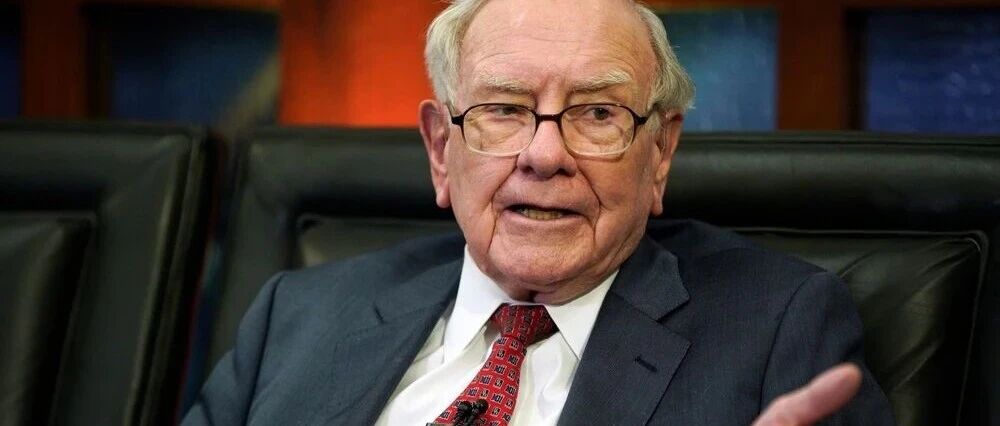
Core Insights - Warren Buffett announced his decision to step down as CEO of Berkshire Hathaway, effective December, with Greg Abel set to take over the role [2] - Buffett will remain as chairman of the board but has not specified a timeline for this position [3] - The transition reflects a significant change in leadership as Berkshire Hathaway has evolved into a large conglomerate with nearly 400,000 employees [4] Group 1: Leadership Transition - Buffett's age and declining energy levels have influenced his decision to pass the leadership to Abel, who has shown remarkable efficiency and capability in managing the company [5] - Abel, who joined Berkshire Hathaway in 1999, has been recognized for his success in expanding the company's energy business and was appointed vice chairman in 2018 [3][4] - Buffett emphasized the rarity of exceptional talent in business and capital allocation, highlighting Abel's impressive abilities [3] Group 2: Future of Berkshire Hathaway - The company operates a diverse range of businesses, including insurance, utilities, and railroads, along with significant investments in major brands like Apple and American Express [4] - Despite stepping down, Buffett plans to continue working at the office daily, indicating his ongoing commitment to the company [7][8] - Buffett retains confidence in his investment decision-making abilities, particularly in times of market panic, and believes Abel shares this capability [6]
巴菲特年底将退休,接班人阿贝尔是谁?
Sou Hu Cai Jing· 2025-05-04 02:51
Core Points - Warren Buffett announced his plan to retire as CEO of Berkshire Hathaway by the end of the year and will recommend Greg Abel as his successor [1][3] - The board of directors will vote on the appointment, which Buffett expects to be unanimously approved [3] - Abel, currently 62 years old, has been with Berkshire Hathaway for many years and has extensive experience in managing non-insurance businesses [3][4] Group 1: Leadership Transition - Buffett will continue to make occasional appearances but decision-making will be handed over to Abel [1] - Abel is expected to share responsibilities with two other vice-chairmen after Buffett's departure [3] - Abel has a strong background in finance and has been instrumental in transforming Berkshire Hathaway Energy into the largest wind energy producer in the U.S. [4][5] Group 2: Abel's Background and Management Style - Abel was appointed as vice-chairman of Berkshire Hathaway in 2018 and has overseen various subsidiaries, including BNSF Railway and See's Candies [5][6] - Buffett has expressed confidence in Abel's capabilities and integrity, noting that he possesses many of the essential qualities of a successful leader [6][8] - Unlike Buffett, Abel is expected to adopt a more cautious and hands-on management approach, contrasting with Buffett's more decentralized style [8][9] Group 3: Company Culture - Abel will focus on maintaining Berkshire's decentralized culture, which is built on independence, integrity, and trust [9] - Abel does not hold a significant portion of Berkshire's stock, which may limit his decision-making freedom compared to Buffett [9]