
凝乳

Search documents
乳业股逆势上扬,花旗料乳制品反补贴措施将有助于缓解国内原奶供应过剩
Zhi Tong Cai Jing· 2025-12-31 03:32
Core Viewpoint - Dairy stocks are rising against the trend, with Modern Dairy (01117) up 3.8% to HKD 1.64 and Yuanrong Dairy (09858) up 3.44% to HKD 5.11 [1] Group 1: Market Impact - The Ministry of Commerce announced temporary subsidies on specific dairy imports from the EU, imposing tariffs between 21.9% and 42.7% starting December 23 [1] - Citigroup estimates that the EU accounts for 20.7% of the import volume for the affected products, and domestic production costs are lower than imports, suggesting a shift towards domestic solid dairy processing to alleviate surplus raw milk supply [1] Group 2: Company Implications - Citigroup believes that domestic solid dairy companies, particularly Yili, will benefit from increased demand for raw milk due to these measures, which are expected to enhance the market for high-end and specialty dairy products [1] - Huachuang Securities noted that the subsidy rate of nearly 30% significantly raises the cost of related EU imported products, and the immediate execution of the policy reflects the government's commitment to stabilizing the market [1]
港股异动 乳业股逆势上扬 花旗料乳制品反补贴措施将有助于缓解国内原奶供应过剩
Jin Rong Jie· 2025-12-31 03:09
Core Viewpoint - Dairy stocks are rising against the trend, with Modern Dairy (01117) up 3.8% to HKD 1.64 and Yurun Dairy (09858) up 3.44% to HKD 5.11, following the announcement of temporary anti-subsidy measures on certain dairy imports from the EU [1] Group 1: Market Impact - The Ministry of Commerce announced temporary tariffs ranging from 21.9% to 42.7% on specific dairy products imported from the EU, effective from December 23 [1] - Citigroup estimates that the EU accounts for 20.7% of the import volume for the affected products, and domestic production costs are lower than imports, suggesting a potential shift towards domestic solid dairy processing businesses [1] Group 2: Demand and Supply Dynamics - The measures are expected to boost domestic raw milk demand, particularly benefiting domestic solid dairy companies like Yurun Dairy, which primarily serves clients such as Yili [1] - Huachuang Securities noted that the nearly 30% subsidy rate significantly increases the cost of related EU imported products, indicating a strong commitment from authorities to stabilize the market [1]
乳业股逆势上扬 花旗料乳制品反补贴措施将有助于缓解国内原奶供应过剩
Zhi Tong Cai Jing· 2025-12-31 01:56
Core Viewpoint - Dairy stocks are rising against the trend, with Modern Dairy (01117) up 3.8% and Yuanrong Dairy (09858) up 3.44% following the announcement of temporary import tariffs on specific dairy products from the EU [1] Group 1: Market Impact - The Ministry of Commerce announced temporary tariffs ranging from 21.9% to 42.7% on certain EU dairy imports, effective from December 23 [1] - Citigroup estimates that the EU accounts for 20.7% of the import volume for the affected products, which include fresh cheese, curd, and cream [1] - The lower domestic production costs are expected to replace the EU's market share in these products, helping to alleviate the surplus of raw milk in the domestic market [1] Group 2: Company Implications - Citigroup believes that domestic solid dairy product companies, particularly Yili, which is a major client of Yuanrong Dairy, will benefit from the increased demand for raw milk due to these measures [1] - The high-end and specialty dairy products from Yuanrong Dairy are expected to better meet the upgraded consumption demands of downstream consumers [1] Group 3: Policy Execution - Huachuang Securities noted that the nearly 30% subsidy rate significantly increases the cost of related EU imported products [1] - The policy is set to take effect immediately after its announcement, demonstrating the authorities' commitment to stabilizing the market, with expected rapid transmission of effects to the market [1]
港股异动 | 乳业股逆势上扬 花旗料乳制品反补贴措施将有助于缓解国内原奶供应过剩
智通财经网· 2025-12-31 01:49
Core Viewpoint - Dairy stocks are rising against the trend, with Modern Dairy (01117) up 3.8% to HKD 1.64 and Yurun Dairy (09858) up 3.44% to HKD 5.11, following the announcement of temporary anti-subsidy measures on certain dairy imports from the EU [1] Group 1: Government Policy Impact - The Ministry of Commerce announced temporary anti-subsidy measures effective from December 23, imposing tariffs between 21.9% and 42.7% on specific dairy products imported from the EU, including fresh cheese, curd, and cream [1] - Citigroup estimates that the EU accounts for 20.7% of the import volume for the affected products, and domestic production costs are lower than imports, suggesting a potential shift towards domestic solid dairy processing businesses [1] Group 2: Market Dynamics - The measures are expected to boost domestic raw milk demand, particularly benefiting domestic solid dairy companies like Yurun Dairy, which is a major client of Yili [1] - Huachuang Securities noted that the subsidy rate of nearly 30% significantly increases the cost of related EU imported products, and the immediate execution of the policy reflects the government's commitment to stabilizing the market [1]
24小时一到,中方准时开收,卢拉赶紧提醒欧盟:再拖就真来不及了
Sou Hu Cai Jing· 2025-12-30 02:06
Core Viewpoint - The EU is facing significant challenges in its trade relations, highlighted by China's imposition of temporary anti-subsidy taxes on EU dairy products and Brazil's threat to withdraw from the EU-Mercosur trade agreement, exposing the EU's internal divisions and external trade policy contradictions [1][27]. Group 1: China's Anti-Subsidy Measures - On December 23, 2025, China began collecting temporary anti-subsidy tax deposits on EU dairy products, with rates ranging from 21.9% to 42.7% [2][12]. - This action followed a year-long anti-subsidy investigation initiated by Chinese dairy associations, targeting the EU's Common Agricultural Policy (CAP) for exceeding WTO limits and distorting global market prices [5][11]. - The investigation was conducted transparently, with a clear evidence chain leading to the conclusion that EU subsidies caused substantial harm to China's domestic dairy industry [10][11][39]. - The tax rates were determined based on the level of subsidies received by the sampled companies, with non-cooperative firms facing the highest rate of 42.7% [13][12]. Group 2: Brazil's Trade Negotiation Stalemate - Brazilian President Lula expressed frustration over the EU's delay in signing the long-negotiated EU-Mercosur trade agreement, threatening to withdraw from negotiations if no progress is made [17][22]. - The agreement, which would open a market of 770 million people, has faced internal opposition from EU member states like France and Italy, concerned about agricultural impacts [19][28]. - Brazil views the agreement as crucial for its agricultural exports, and the EU's insistence on monitoring mechanisms is perceived as a restriction on actual export volumes [22][24]. Group 3: EU's Internal and External Trade Policy Conflicts - The simultaneous crises with China and Brazil reveal fundamental contradictions in the EU's trade strategy, where internal divisions hinder unified external negotiations [27][28]. - The EU's frequent use of trade remedies against China, including 36 cases in 2025 alone, contrasts with its claims of supporting multilateralism [30][32]. - The EU's reliance on outdated protectionist policies, such as the CAP, is increasingly at odds with the realities of global supply chains, leading to potential retaliatory measures from trading partners [32][41]. Group 4: Future Implications for EU Trade Strategy - The ongoing tensions may force the EU to make structural adjustments, either by reforming its agricultural policies or by offering greater concessions in industrial exports [41][43]. - The current situation underscores the need for the EU to rebuild trust with its trading partners, as unilateral rule-setting is becoming less viable in a multipolar trade environment [43]. - The outcomes of these trade disputes could set precedents for future negotiations in various sectors, including digital taxes and carbon border adjustment mechanisms, where both China and Brazil have shown willingness to respond [43].

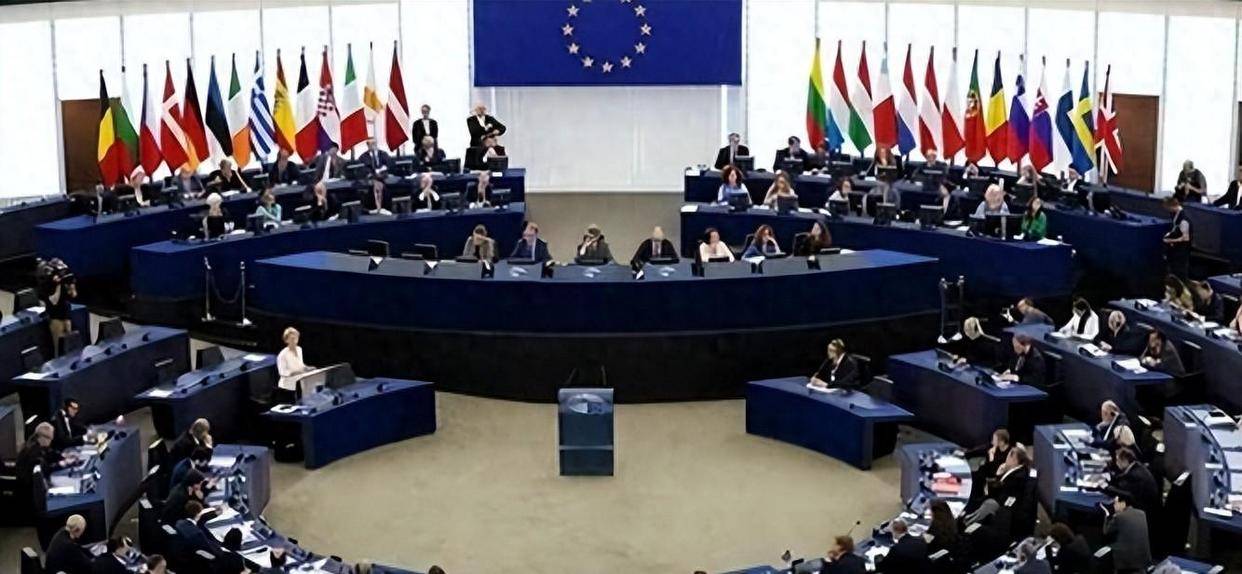
中国对欧盟精准征税,荷兰头大了。欧盟不服,法国想拉27国打反击
Sou Hu Cai Jing· 2025-12-29 20:37
Group 1 - China has implemented temporary anti-subsidy taxes on dairy products imported from the EU, including cheese, curd, and butter in containers under 200 liters, marking a response to the EU's previous actions in the electric vehicle sector [1][3] - The investigation that led to this decision began in August 2024, with preliminary findings indicating that the relevant products received subsidies that caused substantial harm to the domestic industry in China [1][3] - This measure directly impacts major EU dairy-producing countries such as France, the Netherlands, and Italy, as the Chinese market is a significant destination for high-end European agricultural products, particularly cheese and cream [3][5] Group 2 - The EU Commission expressed disappointment over China's decision, stating it is detrimental to the stable development of bilateral relations, and France has urged the EU to coordinate a response [5][7] - China's announcement emphasized that the investigation adhered to Chinese laws and World Trade Organization rules, ensuring the rights of all stakeholders were protected, and the measures aim to maintain fair trade practices [5][7] - This trade dynamic is part of a broader context of recent China-EU economic relations, where the EU has imposed tariffs on Chinese electric vehicles, prompting China to initiate investigations into EU products, including pork [7][9] Group 3 - The temporary tariff measures are now in effect, and the market is assessing their specific impact on the industry, with ongoing attention to the situation's developments [9] - Experts comment that there are no winners in international trade friction, highlighting the deep interconnection of supply chains between China and the EU, and the need for both parties to seek consensus on trade issues [9]
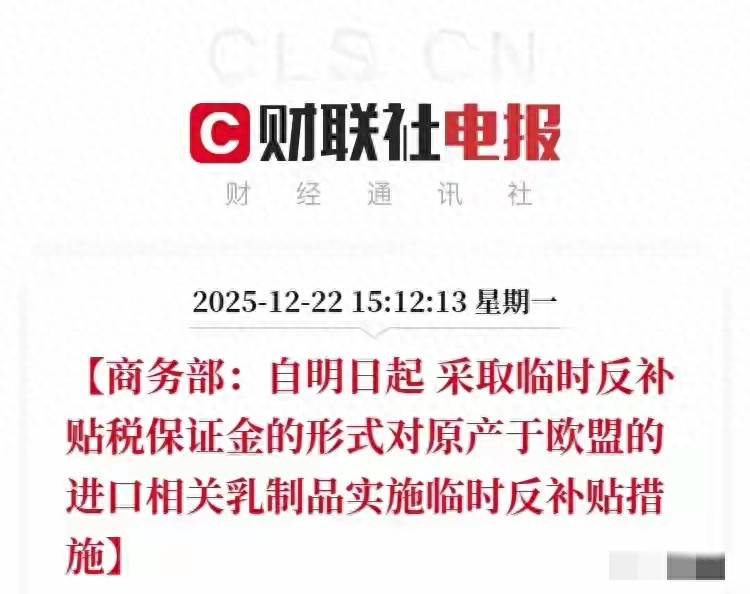
大行评级|花旗:商务部对原产欧盟进口乳制品实施临时反补贴措施 料优然牧业可受惠
Ge Long Hui· 2025-12-29 05:21
Core Viewpoint - The report from Citigroup indicates that the Ministry of Commerce has implemented temporary anti-subsidy measures on specific dairy products imported from the EU, imposing tariffs ranging from 21.9% to 42.7% [1] Group 1: Industry Impact - The temporary tariffs primarily affect fresh cheese, curd, and cream products [1] - Citigroup estimates that the EU accounts for 20.7% of the import volume for these products, suggesting a significant market share [1] - The lower domestic production costs are expected to lead to a replacement of EU products by domestic solid dairy processing businesses, which may help alleviate the surplus of domestic raw milk supply [1] Group 2: Company Implications - The domestic solid dairy processing companies, particularly Yili, which is a major customer of Youran Dairy, are expected to benefit from this measure [1] - The initiative is anticipated to boost domestic raw milk demand, positively impacting Youran Dairy [1] - Citigroup has given a "buy" rating for Youran Dairy, projecting that its high-end and specialty dairy products will better meet the upgrading consumption needs of the downstream market, with a target price of HKD 5.4 [1]