
创业板人工智能ETF(159388)

Search documents
英伟达财报超预期,关注通信ETF(515880)、创业板人工智能ETF(159388)
Sou Hu Cai Jing· 2026-02-27 01:26
Core Viewpoint - Nvidia's FY26Q4 earnings report exceeded market expectations, showcasing strong revenue growth and profitability, indicating robust demand in the data center segment and setting a positive outlook for FY27Q1 [3]. Group 1: Nvidia Financial Performance - Nvidia reported total revenue of $68.13 billion for FY26Q4, a quarter-over-quarter increase of 20% and a year-over-year increase of 73%, surpassing market expectations of $65.684 billion [3]. - Data center revenue reached $62.3 billion, reflecting a quarter-over-quarter growth of 22% and a year-over-year growth of 75%, also exceeding market expectations of $60.62 billion [3]. - Gross margin stood at 75%, with a quarter-over-quarter increase of 1.6% and a year-over-year increase of 2% [3]. - Net profit rose from $22.1 billion in the same quarter last year to $43 billion, translating to earnings per share of $1.76 [3]. Group 2: Future Guidance and Market Expectations - For FY27Q1, Nvidia provided guidance of approximately $78 billion in revenue (excluding revenue from China), which is above market expectations of $72.6 billion [3]. - The gross margin is expected to remain high, projected between 74.5% and 75.5% [3]. Group 3: Industry Trends and Developments - The North American tech giants (Microsoft, Amazon, Meta, Google) reported a combined capital expenditure growth of 66.64% year-over-year, totaling $117.6 billion for Q4 2025 [7]. - For 2026, Meta's capital expenditure guidance is between $115 billion and $135 billion, representing a year-over-year growth of 59% to 87%, while Google's guidance is between $175 billion and $185 billion, nearly doubling year-over-year [7]. - The total capital expenditure guidance for the four major cloud providers in North America for 2026 exceeds $660 billion, with a growth rate of over 60% [7]. Group 4: Upcoming Events - Nvidia's GTC conference is scheduled to take place on March 16, where significant product updates or launches are anticipated, including LPU, CPO, and VR200 Superpod [5]. Group 5: Investment Opportunities - Investors are encouraged to monitor the performance of communication ETFs and the entrepreneurial AI ETF, as the AI sector continues to gain momentum with advancements in models and applications [9].


Capex超预期背景下的超跌修复——海外算力大涨点评
Mei Ri Jing Ji Xin Wen· 2026-02-09 05:15
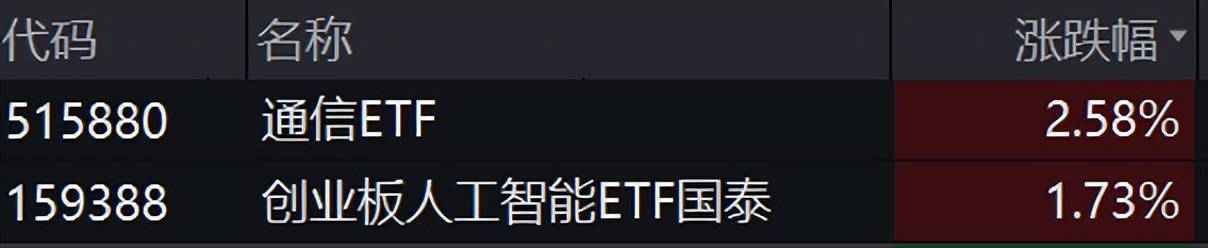
Market Performance - Overseas computing power recovery led to a rise of over 4% in the Communication ETF (515880) and the ChiNext AI ETF (159388) during trading today [1] Factors Driving the Increase - Recent US earnings reports indicate several key points: - Capital expenditures are accelerating, with Google projecting 2026 capital spending between $175 billion and $185 billion, nearly doubling year-on-year; Meta's full-year capital expenditure guidance is $115 billion to $135 billion, a 73% year-on-year increase; Amazon's guidance is $200 billion, a 53% increase year-on-year [2] - Microsoft did not provide full-year guidance but noted a seasonal quarter-on-quarter decline, likely due to factors like financing leases. The market previously expected a 42% growth in North American CSP capital expenditures for 2026, but recent earnings reports show capital expenditure growth significantly exceeding expectations [2] CPO Penetration and Market Sentiment - CPO penetration is exceeding expectations, but attention is needed on scale-up and scale-out dynamics. The consensus is that scale-up will dominate CPO, while scale-out remains led by pluggable optical modules. The domestic optical module leaders may secure some orders in the scale-up segment, indicating that CPO penetration in scale-up represents incremental growth rather than a replacement [3] - Market sentiment has rebounded from previous lows, with US markets recovering last Friday, influencing A-shares today. Both markets have faced issues related to funding and sentiment, with A-shares experiencing declining trading volumes since late January [3] Future Outlook - US earnings reports reaffirm the certainty of AI, with ongoing shortages in computing power. Google reported that Gemini 3.0 is the fastest model in its history, with over 750 million monthly active users for Gemini applications. Google also announced a partnership with Apple to develop the next-generation Apple foundational model. The management indicated that investments in AI infrastructure will gradually increase throughout the year, with a continued tight supply of computing power expected [4] - The focus remains on core segments like optical modules and servers, which are positioned at the heart of the global AI industry chain. With capital expenditures for 2026 significantly exceeding expectations, the outlook for optical modules and servers is strengthening, making Communication ETF (515880) and ChiNext AI ETF (159388) attractive for interested investors [4]





算力回调,情绪面导致下跌,或可重视算力低位布局机会
Mei Ri Jing Ji Xin Wen· 2026-02-04 03:42
Market Overview - The computing power sector experienced a significant pullback, with communication ETFs and AI ETFs on the ChiNext index dropping around 4% [1]. Factors Behind the Decline - The recent concerns regarding CPO (Chiplet-based Optical) technology have intensified, particularly due to pressure from Google's OCS, leading Nvidia to promote CPO advancements. There are mixed opinions on production schedules and shipment volumes, but overall market sentiment remains wary of CPO's negative impact on pluggable optical modules [1]. - The U.S. stock market faced a sharp decline, with the Nasdaq opening high but closing lower, reflecting weak performance in tech stocks. Investors are worried about Anthropic's new legal plugin potentially replacing traditional software companies, which caused a significant drop in the software sector, further spreading panic in market sentiment [1]. Future Outlook - Despite the lack of significant negative fundamentals, the current pullback is primarily driven by emotional concerns related to CPO, presenting potential opportunities for low-position investments [1]. - The technology industry's progress and iteration are normal, and leading companies in optical modules have accumulated CPO technology, positioning them to benefit from industry chain advantages. Major domestic pluggable optical module manufacturers have established strong customer loyalty, which is expected to help them secure a majority of orders as CPO penetration increases, potentially improving gross margins due to higher integration levels [1]. - The optical module market is projected to face a supply shortage by 2026, with expectations for continued high growth into 2027. The rapid penetration of 1.6T optical modules and chip shipments could lead to significant market expansion, marking a golden period for profit growth for leading optical module manufacturers. Upcoming quarterly reports and the GTC conference are expected to serve as strong catalysts, reinforcing a robust fundamental outlook [2]. - The implementation and penetration of CPO will be a lengthy process, and domestic manufacturers possess relevant technical capabilities, suggesting limited impact from CPO. The high demand for 1.6T optical modules in 2026-2027 is anticipated to provide numerous catalysts for growth. Overall, the recent decline in computing power is mainly sentiment-driven and does not alter the high growth trend in the optical module industry, offering a favorable time for investment in communication ETFs and ChiNext AI ETFs [2].
谷歌全栈AI生态持续发酵,关注创业板人工智能ETF(159388)、通信ETF(515880)
Sou Hu Cai Jing· 2025-12-09 01:36
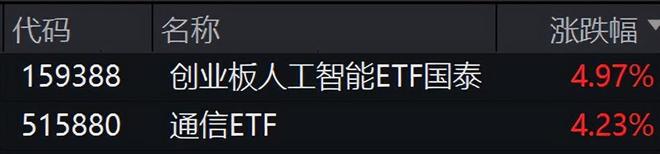
Group 1 - The core viewpoint of the news highlights the strong performance of the computing power sector, with the ChiNext AI ETF (159388) rising by 5.51% and the communication ETF (515880) increasing by 5.49% [1] - Google's full-stack AI ecosystem is rapidly evolving, with an upward adjustment in the expected shipment volume of Google's TPU, indicating significant growth in both hardware and applications within the industry [3] - The ongoing AI arms race among major players is expected to further drive the demand for computing power, benefiting companies in the chip sector regardless of which company prevails in competition [3] Group 2 - Demand for optical modules is projected to face shortages in 2026, with expectations for shipments of 1.6T optical modules reaching 20-30 million units, indicating a severe capacity crunch among related companies [3] - By 2030, spending on AI infrastructure is anticipated to reach between $3 trillion and $4 trillion, suggesting substantial growth potential in the AI industry [3] - The communication ETF (515880) has over 54% exposure to optical modules and more than 19% to servers, reflecting the fundamental aspects of the overseas computing power supply chain [3]

AI基础设施资本开支强劲推动,关注通信ETF(515880)
Mei Ri Jing Ji Xin Wen· 2025-12-02 02:10
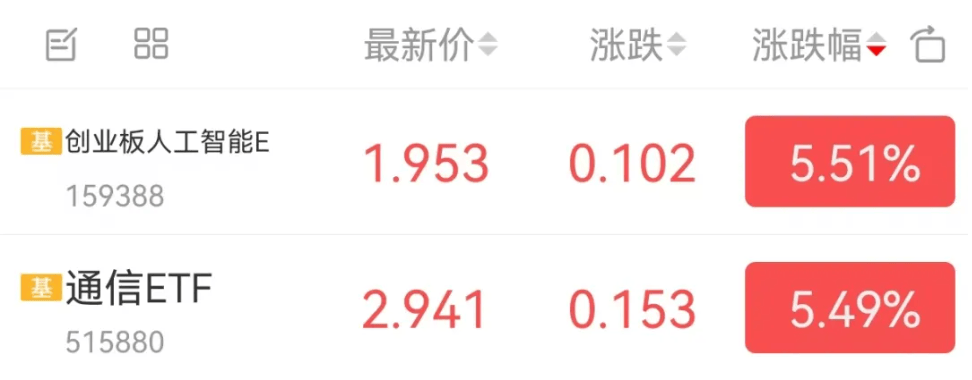
Core Viewpoint - The AI infrastructure capital expenditure is expected to drive significant growth in the sector, with major cloud providers projected to increase their capital spending substantially in the coming years [1][2]. Group 1: Market Performance - The computing sector continued its upward trend on December 1, with the Communication ETF (515880) rising by 2.84% and the ChiNext AI ETF (159388) increasing by 2.45% [1]. - The anticipated capital expenditure for the four major U.S. cloud providers (Google, Microsoft, Meta, Amazon) is projected to reach $367 billion in 2025, representing a year-on-year growth of 59%, with a further increase to $495 billion in 2026, reflecting a 35% growth [1]. Group 2: Demand Drivers - AI infrastructure capital expenditure remains a strong driving force for demand, with the ongoing advancements in AI models and hardware, such as Gemini3 and TPU7, contributing to increased computational needs [1]. - The competition among major players in the AI space is expected to further boost overall demand for computing power, benefiting various sectors including optical modules and servers in the A-share market [1]. Group 3: Investment Strategy - The market outlook for artificial intelligence remains positive, with suggestions for investors to consider low-position opportunities in the Communication ETF (515880) and ChiNext AI ETF (159388) through methods like dollar-cost averaging [2].
谷歌争霸,算力回归?——通信ETF(515880)点评
Sou Hu Cai Jing· 2025-11-26 05:35
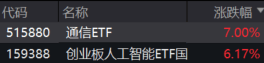
Market Overview - The computing sector experienced a significant rise, with the Communication ETF (515880) increasing by 7% and the ChiNext AI ETF (159388) rising over 6% [1][2]. Factors Driving the Market - Increased expectations for interest rate cuts have emerged, as several Federal Reserve officials, including allies of Powell, expressed support for a potential 25 basis point cut in December, raising the likelihood from approximately 40% to 80% [2]. - Google's recent release of the Gemini 3 model, which has outperformed its predecessors in various benchmarks, has contributed to positive market sentiment [2][4]. AI Model Performance - The Gemini 3 Pro model has shown superior performance across multiple benchmarks, including achieving 95% in mathematics and 91.9% in scientific knowledge assessments, indicating its advanced capabilities compared to competitors [3]. Hardware Developments - Google's TPU v7 (Ironwood) has exceeded expectations in terms of memory capacity and energy efficiency, posing a competitive challenge to NVIDIA's offerings. Google anticipates a doubling of computing power every six months to meet rising AI service demands [5]. Market Outlook - There is a gradual improvement in risk appetite as pessimistic expectations are being absorbed by the market, with strong support levels in the A-share market despite rapid style shifts [6]. - While the competitive landscape for computing chips may evolve, NVIDIA is expected to maintain revenue growth due to its existing market share and new demands from sovereign AI projects [6]. - The AI industry is progressing rapidly, with significant investments expected to sustain growth, although short-term volatility should be monitored [7].
流光溢彩,智算成城——从三季报看通信如何布局?
Mei Ri Jing Ji Xin Wen· 2025-11-04 09:13
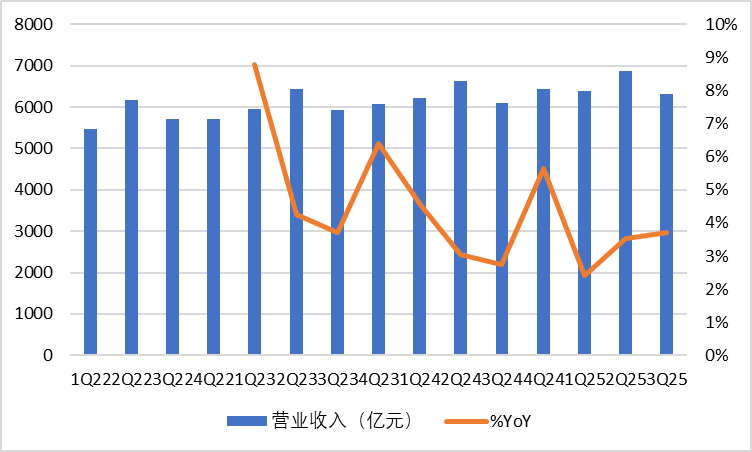
Core Viewpoint - The communication industry is experiencing an upward trend driven by the powerful engine derived from the AI wave, with significant performance differentiation across various segments [1]. Communication Industry Summary - In Q3 2025, the total revenue reached 632.1 billion yuan, representing a year-over-year increase of 3.7% [2]. - The net profit for the same quarter was 60.305 billion yuan, showing a year-over-year growth of 12.3% [2]. - Profitability metrics for Q3 2025 indicated a gross margin of 27.97% and a net margin of 9.54%, with a gross margin decrease of 0.40 percentage points and a net margin increase of 0.73 percentage points year-over-year [2]. Optical Module Industry Summary - The Wind Optical Module Concept Index reported a revenue of 29.590 billion yuan in Q3 2025, reflecting a year-over-year increase of 56.0% [5]. - The net profit for the optical module sector in Q3 2025 was 7.336 billion yuan, which is a remarkable year-over-year increase of 118.8% [6]. - Profitability for the optical module sector showed a gross margin of 39.07% and a net margin of 24.79%, with increases of 5.59 percentage points and 7.12 percentage points year-over-year, respectively [7]. Inventory Insights - As of the end of Q3 2025, the inventory balance stood at 33.212 billion yuan, marking a year-over-year increase of 47.6% and a quarter-over-quarter increase of 7.44% [8]. Investment Opportunities - Investors are encouraged to consider the communication ETF (515880) and the ChiNext AI ETF (159388) as potential investment vehicles in light of the strong performance in the optical module sector [1].
20cm速递丨创业板人工智能ETF(159388)盘中净流入超2000万份,盘中回调超5%,资金积极把握回调布局机会,连续5日迎资金净流入
Mei Ri Jing Ji Xin Wen· 2025-09-02 22:32
Core Insights - The rapid demand for high-quality and convenient AI tools is reflected in the popularity of applications like Nano Banana, which significantly boosts the demand for GPU and accelerated hardware computing power [1] - The implementation of the "Artificial Intelligence +" action plan emphasizes strengthening foundational support capabilities and continuously activating the demand for AI infrastructure, solidifying the technological base for industry development [1] - With accelerated global AI investments and domestic replacements, the industry is transitioning from performance recovery to a valuation recovery phase in a bull market, indicating a clear long-term growth logic [1] Industry Overview - The ChiNext AI ETF (159388) has seen a net inflow of 22 million units, indicating strong capital interest in AI assets [1] - The ChiNext AI Index (970070), which the ETF tracks, has a 20% fluctuation and includes listed companies involved in software development, intelligent hardware manufacturing, and big data processing, reflecting the overall performance of AI-related companies in the ChiNext market [2] - Major companies like Alibaba are making significant investments in AI and cloud infrastructure, creating a closed-loop logic of "AI investment - cloud growth - commercialization," marking a critical development window for domestic computing power [1]
20cm速递丨创业板人工智能ETF(159388)盘中迎净流入,盘中涨超7%,连续5日迎资金净流入
Mei Ri Jing Ji Xin Wen· 2025-09-01 06:25
Core Insights - The article highlights a significant inflow of 7 million units into the ChiNext AI ETF (159388), indicating strong investor interest in AI assets [1] - The ChiNext AI ETF tracks the ChiNext AI Index (970070), which has experienced a 20% fluctuation, reflecting the performance of listed companies involved in software development, smart hardware manufacturing, and big data processing related to AI technologies [1] - The index focuses on the innovation capabilities and growth potential of China's emerging technology industry, encompassing representative enterprises in the AI sector [1]
海内外资本开支提振AI需求,关注通信ETF(515880)、创业板人工智能ETF(159388)
Mei Ri Jing Ji Xin Wen· 2025-09-01 03:50
Group 1 - The core viewpoint emphasizes the sustained optimism in the technology sectors such as communications and semiconductors in the Chinese market, driven by favorable policies and increasing domestic capabilities in AI infrastructure [1][2] - The policy document outlines ambitious targets for AI application penetration rates, aiming for over 70% by 2027 and 90% by 2030, which is expected to catalyze domestic computing power [1] - TrendForce predicts a significant shift in the Chinese AI server market, with the proportion of foreign-sourced chips decreasing from 63% in 2024 to 42% by 2025, while local chip suppliers are expected to capture 40% of the market, indicating a strong trend towards domestic substitution [1] Group 2 - The current A-share market benefits from ongoing liquidity and strong performance, with clear advantages in the AI industry chain, including established business models and significant market size [2] - The AI industry chain is experiencing positive marginal changes, with accelerated domestic computing power development, making it a primary focus for asset revaluation in the A-share market [2] Group 3 - In terms of product allocation, it is recommended to balance investments between North American and domestic computing power, utilizing strategies such as grid trading and regular investment [3] - The North American computing power segment is represented by a communication ETF (515880), where over 75% is allocated to "optical modules, servers, copper connections, and optical fibers," indicating a solid fundamental basis for computing hardware [3] - For domestic computing power, the recommended ETF is the Guotai Sci-Tech Chip ETF (589100) for those considering elasticity, while the Chip ETF (512760) is suggested for balanced holdings [3]