功效护肤品

Search documents
《中国化妆品质量安全发展研究报告(2025)》在京发布
Jing Ji Wang· 2026-02-05 09:05
Core Insights - The report highlights the transition of China's cosmetics industry from "scale expansion" to "quality leadership," indicating a new phase of high-quality development [1] Group 1: Market Overview - By 2025, China's cosmetics market is projected to reach a record high, with total transaction value exceeding 1.1 trillion yuan, reflecting a year-on-year growth of 2.83% [2] - Domestic brands have shown remarkable performance, increasing their market share to 57.37%, surpassing international brands for two consecutive years [2] Group 2: Quality and Safety - The overall quality and safety of cosmetics are improving, with product inspection pass rates remaining high, laying a solid foundation for healthy industry development [2] - The core concept of quality competitiveness has shifted from regulatory compliance to market value creation, making quality a core asset and strategic pivot for brands [2] Group 3: Regulatory Trends - The rise of e-commerce and live streaming has led to new regulatory challenges, with risks shifting from traditional issues like "illegal additives" to more complex factors such as microbial control failures and misleading claims [3] - The National Medical Products Administration's recent pilot program for electronic labels marks a new phase in industry regulation, emphasizing a shift from "control" to "empowerment" in regulatory thinking [4] Group 4: Domestic Brand Leadership - Domestic brands are establishing a new ecosystem centered on quality as their core competitive advantage, with companies like Ximuyuan and HBN leading the way through technological innovation and rigorous product validation systems [5][6] - HBN has set up a comprehensive research and development center and established a third-party efficacy testing system, becoming a benchmark for efficacy skincare brands in China [6] - C Coffee focuses on precision skincare for oily skin, integrating scientific research into product development to enhance quality and efficacy [6] Group 5: Industry Challenges - The cosmetics industry still faces challenges such as insufficient innovation in raw materials, weak quality management systems in some companies, and slow progress in brand premiumization [3] - Continuous efforts are needed in lifecycle management to address these challenges and enhance overall industry standards [3]
机构:关注“情绪消费”下的美妆投资机遇
Zheng Quan Shi Bao Wang· 2025-11-18 00:30
Core Viewpoint - The National Medical Products Administration has issued opinions to deepen cosmetic regulation reform and promote high-quality industry development, emphasizing increased support for the industry and fostering a favorable innovation environment [1] Industry Summary - The cosmetic industry is expected to face intensified competition starting in 2025, with challenges such as weak overall demand, diminishing traffic dividends, and high costs. However, some companies and brands are achieving high growth by leveraging their differentiated advantages [1] - The rise of the "beauty economy" and self-care trends has led consumers to purchase functional skincare products, domestic trendy cosmetics, and home fragrances for emotional healing, indicating investment opportunities in the beauty sector driven by "emotional consumption" [1] Company Summary - Companies focusing on high-growth segments within the beauty industry, particularly those that continuously iterate their capabilities, are recommended for investment as domestic brands gain momentum [1] - The high-end beauty market is becoming increasingly scarce, with the potential for domestic high-end beauty brands to rise [1] - The personal care and household cleaning sectors are flourishing, driven by both rigid demand and upgraded experiences [1]
美妆健康产业如何抓住市场机遇?上海静安这场对话探讨了升级路径
Xin Lang Cai Jing· 2025-10-31 02:00
Core Insights - The roundtable discussion at the "Beauty Empowerment: Business Environment Promotion in Jing'an" event highlighted the ambitions and anxieties of China's beauty industry at the intersection of consumer upgrades and technological revolutions [1] - The beauty health industry is experiencing a shift in investment logic, with a focus on innovation and long-term growth potential [2] - The Chinese beauty market is still in its early stages of globalization, with significant growth opportunities ahead for local brands [4] Group 1: Industry Trends - The beauty industry is transitioning from "traffic-driven" to "research-driven" and from "local competition" to "global collaboration" [1] - There are three emerging demands in the beauty sector: post-medical beauty applications, food-sourced products, and precise efficacy mechanism validation [1] - The industry is moving from "single-point breakthroughs" to "comprehensive capability competition," with over 150 innovative raw material companies in China [3] Group 2: Investment Strategies - Investment firms are becoming more cautious in the beauty sector, but some, like KKR, continue to invest in innovative and high-potential startups [2] - KKR's investment strategy emphasizes the importance of market insight, consumer understanding, and a product-centric approach [2] - AI and biotechnology are identified as critical variables in the industry, with potential for significant technological breakthroughs and product innovations [2] Group 3: Brand Development - Brands must focus on technological barriers and scenario innovation to stand out in the competitive landscape [3] - MISTINE, a Thai brand, emphasizes the importance of scientific research in product development, particularly in sunscreen technology [3] - Leading companies are expanding their product matrices across various categories and price segments to enhance competitiveness [3]
政策聚焦内需,茅台动销好转!消费ETF(159928)探底回升翻红,盘中再获5400万份净申购!港股通消费50ETF(159268)涨超1%!
Xin Lang Cai Jing· 2025-09-19 08:21
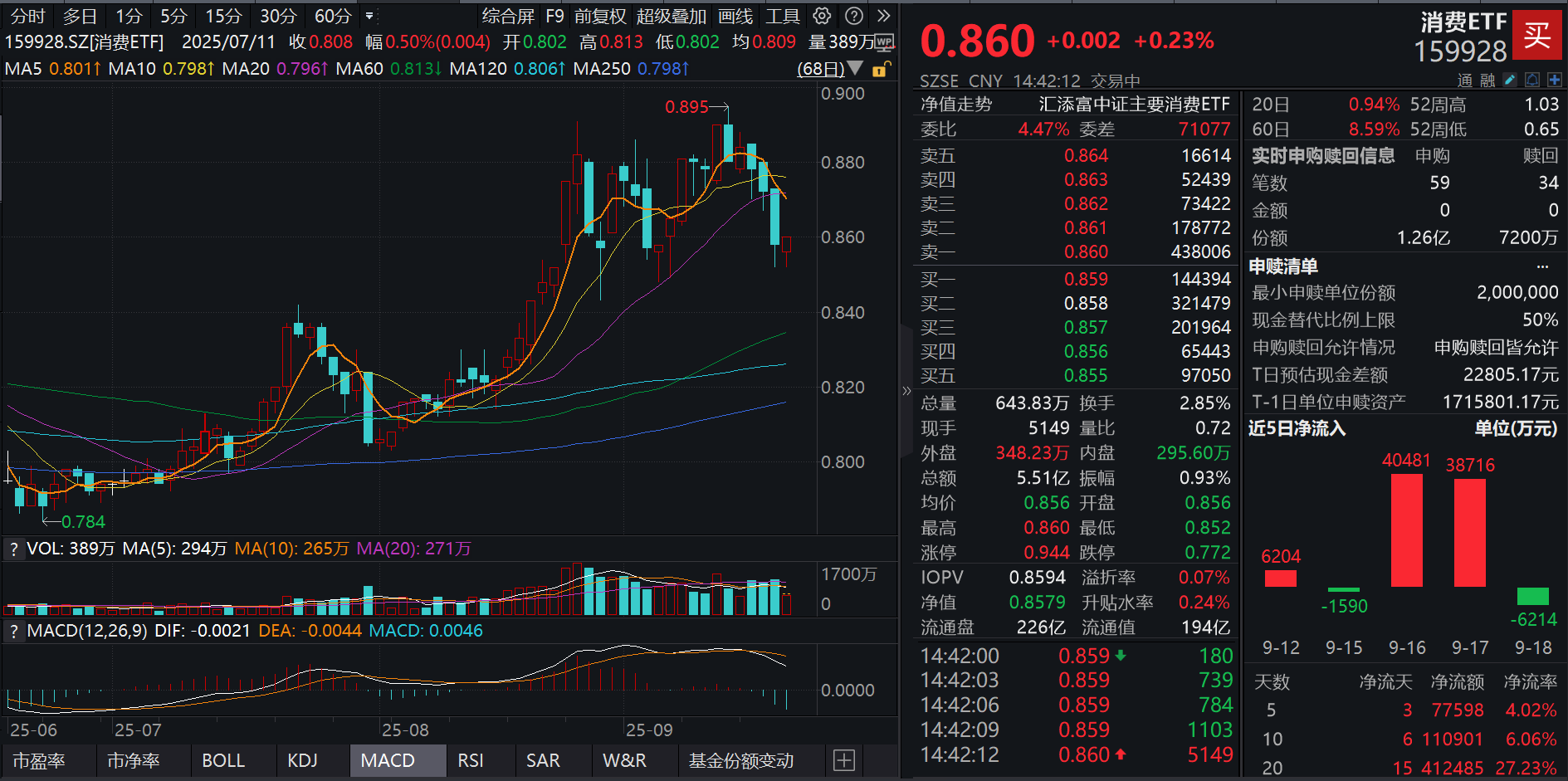
Group 1 - The consumer sector is showing signs of recovery, with the Consumption ETF (159928) gaining 0.23% and achieving a trading volume exceeding 560 million yuan, alongside a net subscription of 54 million units [1] - The Consumption ETF (159928) has reached a scale of over 19.7 billion yuan, leading its peers significantly [1] - The Hong Kong Stock Market's Consumption 50 ETF (159268) rose over 1%, with a trading volume exceeding 30 million yuan, and has seen net inflows for three out of the last five days, accumulating over 2.9 million yuan [3] Group 2 - High-level policies are focusing on boosting domestic demand, with measures implemented from 2023 to 2025 effectively stimulating consumption potential, leading to a steady increase in retail sales [5] - The pet food market is projected to reach 166.8 billion yuan in 2024, growing by 7.54% year-on-year, with cat food dominating the segment [5] - The beauty and skincare market is expected to surpass 430 billion yuan in retail sales by 2024, driven by consumer upgrades and a focus on product efficacy [5] Group 3 - The new-style tea beverage market in China is projected to exceed 400 billion yuan by 2028, with strong consumer demand driving the upstream industry [6] - The secondary dimension derivative market is experiencing rapid growth, expected to reach 168.9 billion yuan in 2024, with a significant portion of users from Generation Z [6] Group 4 - The liquor sector is entering a peak season, with improved sales performance reported by Moutai, and companies are innovating products and seeking channel reforms [7] - The dairy product sector is showing marginal improvements, while the beverage sector is performing well with new product launches [8] - The Consumption ETF (159928) has a significant weight in top stocks, with over 68% of its top ten holdings, including major liquor brands and dairy companies [8]

新消费重估值?核心推荐观点
2025-05-20 15:24
Summary of Key Points from Conference Call Records Industry Overview Gold and Jewelry Industry - The gold and jewelry industry is undergoing a significant transformation from channel-driven to product-driven, influenced by increased information transparency and consumer sophistication. Brands are innovating in design and craftsmanship to cope with rising gold prices. Valuation varies, with weight-based products valued lower and fixed-price products valued higher, potentially leading to a reevaluation in the context of new consumer sentiment [1][4][7]. - In April 2025, the industry showed decent performance in retail sales data, primarily due to a low base and investment gold's strong influence. However, the beta for jewelry is not ideal, with companies like Changhong Jiahua and Mankalon showing resilience against budget and price pressures [3][4]. - The valuation of the gold and jewelry sector is at historical lows, with weight-based products valued below 15 times earnings and fixed-price products valued around 20 to 30 times. This sector is expected to gain more attention as new consumer sentiment rises [7]. Tea Beverage Industry - The tea beverage industry is shifting from price competition to product innovation, with new products contributing more to revenue and improving average transaction value and gross margins. Leading brands have high market concentration, limiting the survival space for new entrants. Notable performers include Cha Bai Dao and Gu Ming, which excel in product innovation and geographic expansion [1][11][12]. - In Q1 2025, Cha Bai Dao's new product contribution to revenue increased from 10% to 18%, indicating a positive trend in product innovation and pricing strategy [11][13]. - The market share of leading tea brands like Mi Xue Bing Cheng, Gu Ming, and others accounts for approximately 50% of the market, indicating high concentration and competitive dynamics [9][10]. Beauty Industry - The beauty industry is transitioning from channel-driven growth to a focus on comprehensive capabilities. International brands are recovering, and domestic brands are no longer engaging in aggressive price wars. Key areas of interest include collagen restructuring and functional skincare products, with Hong Kong-listed beauty brands valued between 25 to 35 times earnings and expected to grow at a compound annual growth rate of about 30% over the next three years [1][19][20]. - Companies like Shangmei and Mao Ge Ping are adjusting their product lines and expanding into new categories, such as fragrances and body care, to meet urban women's needs [23][24]. Key Companies and Their Strategies Shangmei Co. - Shangmei is leveraging data from Douyin and expanding its product line to seek growth. The brand is transitioning towards a broader market appeal and plans to launch collaborative products with popular IPs [23]. Mao Ge Ping - Mao Ge Ping is restructuring its skincare business and has launched a new fragrance line. The company aims to meet the demands of urban women and is expected to achieve around 30% growth over the next few years [24]. Ke Fu Mei - Ke Fu Mei holds a strong position in the collagen cosmetics sector, with expectations of maintaining approximately 30% growth over the next three years. The company is preparing for medical aesthetics commercialization [25]. Bu Lu Ke - Bu Lu Ke is projected to achieve significant revenue growth, with expectations of reaching 11 to 12 billion yuan in 2025. The company is diversifying its IP portfolio and expanding its market presence [35]. Market Trends and Future Outlook - The overall consumer market is expected to recover, with the beauty sector showing signs of growth despite previous pessimism. The beauty industry is transitioning from a focus on price to product quality and brand-driven growth, with many companies expected to maintain a compound growth rate of around 30% [21][29]. - The medical aesthetics industry is also transitioning from a saturated market to one with growth potential, particularly with upcoming shopping events and new product launches expected to drive performance [32]. Conclusion - The gold and jewelry, tea beverage, and beauty industries are all experiencing significant transformations driven by consumer behavior changes and market dynamics. Companies that adapt to these changes through innovation and strategic positioning are likely to see substantial growth opportunities in the coming years.
今天,A股分化,多只龙头股创历史新高
Zhong Zheng Wang· 2025-05-13 07:55
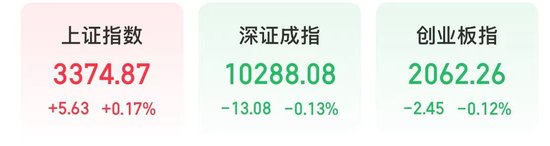
Market Overview - The A-share market showed mixed performance on May 13, with the Shanghai Composite Index rising by 0.17%, while the Shenzhen Component and ChiNext Index fell by 0.13% and 0.12% respectively [1] Active Sectors - The port and shipping sector, closely related to foreign trade, saw significant gains, with stocks like Ningbo Shipping and Ningbo Ocean reaching their daily limit [2] - The banking sector experienced a positive trend, with all bank stocks rising, including historical highs for Shanghai Pudong Development Bank, Shanghai Bank, Chengdu Bank, and Jiangsu Bank [2] - The photovoltaic industry chain, including photovoltaic equipment, BC batteries, and POE films, also saw an increase. Guojin Securities forecasts a sustained growth rate of 10% to 15% for new photovoltaic installations by 2025, with diverse regional distribution expected to drive demand [3] - The consumer sector, particularly in beauty and personal care, led the gains, with stocks like Jinbo Biological and Runben Co. reaching historical highs. Analysts noted the rise of the "beauty economy" and self-care trends driving consumer purchases in skincare and cosmetics [4] - The chemical sector, including epoxy propane and dyes, experienced an uptick, with popular stocks like Zhongyida and Hongqiang Co. hitting their daily limit [5] - The pharmaceutical sector, particularly in medical services and gene sequencing, also saw growth. OpenAI announced a new testing evaluation set for healthcare AI systems, which may enhance capabilities in the medical field [6]