劳工保险

Search documents
香港火灾警示录:内地家财险普及率低,不少老旧小区“裸奔”
Hua Xia Shi Bao· 2025-11-28 02:59
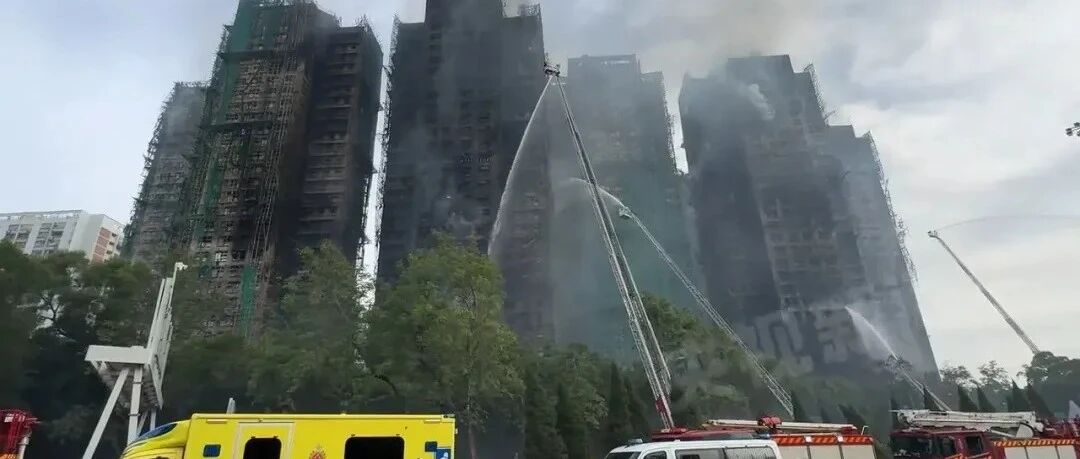
Core Insights - A severe fire broke out in Hong Kong's Tai Po district, resulting in 94 fatalities, highlighting deep-seated fire safety and emergency management issues in aging residential buildings [1][3] - The insurance industry played a crucial role in the aftermath, with multiple companies activating emergency response mechanisms and green claims channels to support affected families [1][2] Insurance Industry Response - Several insurance companies, including China Life Overseas, initiated emergency claims services, simplifying procedures and ensuring rapid disbursement of funds to victims [1][3] - Ping An Property & Casualty and Ping An Life quickly formed emergency response teams to assess client claims, demonstrating heightened corporate social responsibility [2][3] Insurance Coverage and Awareness - The residential buildings in Hong Kong are typically required to have comprehensive insurance, including fire and public liability insurance, which provides a financial safety net for disaster recovery [3][4] - In contrast, mainland China's residential insurance coverage is significantly lower, with many older communities lacking adequate fire insurance, leaving them vulnerable [5][6] Consumer Awareness and Market Gaps - There is a notable gap in risk awareness and insurance understanding among mainland residents, with many neglecting the importance of property insurance [7][8] - The lack of mandatory insurance requirements in mainland China contributes to low penetration rates of household property insurance, particularly in older urban areas [8][9] Recommendations for Improvement - Experts suggest enhancing product design and consumer education to improve the attractiveness and understanding of fire and household insurance [7][8] - Collaboration between insurance companies, government, and real estate developers is recommended to promote the adoption of insurance products and improve coverage [8][9]


香港大埔宏福苑火灾:小区保额逾20亿港元,保险机制亟需深度融入城市治理丨银行与保险
清华金融评论· 2025-11-27 09:18
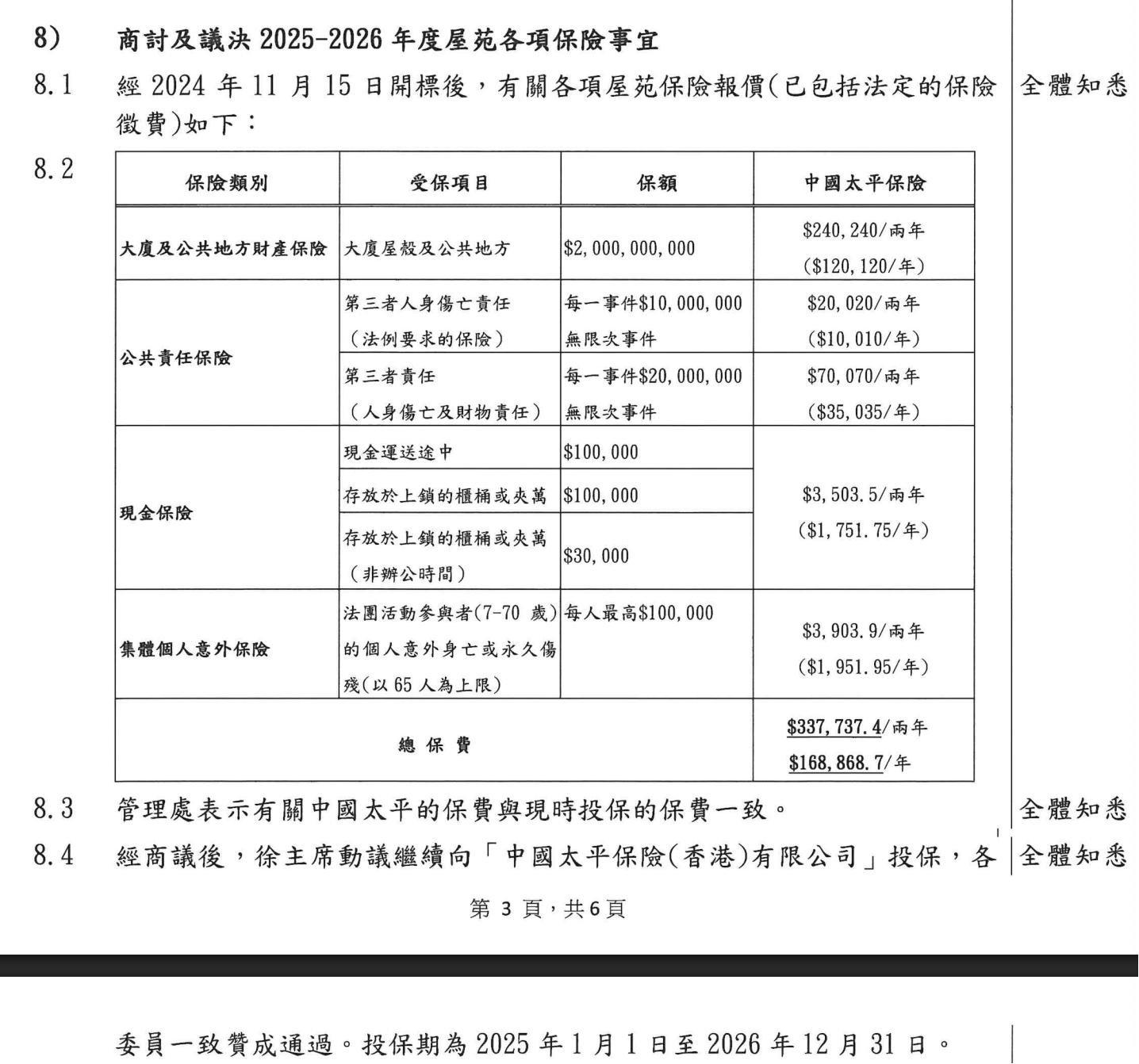
Core Viewpoint - The article discusses the response of various insurance companies to a severe fire incident in Hong Kong, highlighting the importance of insurance in disaster recovery and urban safety [2][5]. Insurance Coverage Details - China Taiping Insurance (Hong Kong) provided comprehensive property insurance for the affected estate, with a total compensation cap of 2 billion HKD [3][4]. - The insurance includes coverage for public areas and public liability insurance, with specific compensation limits: 10 million HKD for personal injury per incident and 20 million HKD for third-party liability [3][4]. Emergency Response by Insurance Companies - Multiple insurance companies, including China Life (Overseas) and Ping An Life, activated emergency claims procedures to ensure rapid support for affected families [5]. - Ping An announced the establishment of emergency response teams and initiated a green channel for customer service to facilitate claims [5]. Urban Safety and Insurance Role - The article emphasizes the need for enhanced urban safety and risk prevention measures, positioning insurance as a critical component in disaster recovery and urban resilience [5][6]. - It advocates for comprehensive insurance coverage for residential and commercial buildings, alongside improved claims processes to better support disaster recovery efforts [6]. Future Directions for Insurance in Urban Governance - The article calls for deeper integration of insurance mechanisms into urban governance and planning, encouraging innovation in insurance products and services to extend beyond post-disaster compensation to proactive risk management [6].





香港大埔住宅楼火灾,业主买了哪些保险、如何赔付
21世纪经济报道· 2025-11-27 09:14
Core Viewpoint - The article discusses the recent fire incident in Hong Kong's Tai Po district, highlighting the emergency response from insurance companies and the types of insurance coverage available for affected individuals [1][11]. Insurance Response - Multiple insurance companies have activated emergency claims services in response to the fire, including opening green channels for claims, providing rescue assistance, and simplifying claims procedures [1]. - As of the article's publication, no insurance company had disclosed information regarding claims made by policyholders [1]. Types of Insurance Coverage - The article outlines the types of insurance that may cover individuals affected by the fire, including medical insurance, accident disability, and death coverage, depending on the specific policies purchased by clients [1]. - China Taiping (Hong Kong) has a total insurance premium of approximately 337,737.4 HKD for two years, which breaks down to about 168,868.7 HKD per year [2][4]. Insurance Categories and Coverage - The insurance categories include: - Building and public area property insurance with a coverage amount of 2 billion HKD [2][4]. - Public liability insurance covering third-party personal injury with a limit of 10 million HKD per event and 20 million HKD for property damage [2][4]. - Cash insurance covering cash in transit and in safes, with coverage amounts of 100,000 HKD and 30,000 HKD respectively [2][4]. - Group personal accident insurance for participants in corporate activities, with a maximum coverage of 100,000 HKD per person [2][4]. Fire Insurance and Home Insurance - In Hong Kong, fire insurance, also known as building structure insurance, covers the structure of the building but not the contents within [5][6]. - Home insurance protects personal belongings within the property, covering losses due to incidents like fire, water damage, and theft [6][8]. - The two types of insurance complement each other, providing comprehensive coverage for both the building and its contents [6][8]. Regulatory Requirements - Banks typically require homeowners to purchase fire insurance as a condition for mortgage approval, although homeowners can choose their insurance provider [7][10]. - Tenants are not required to purchase fire insurance, and if a building management company has already secured collective fire insurance, individual homeowners do not need to buy additional coverage [7][10].
宏福苑大厦财险保额20亿港元!或因涉及大维修,多家保险公司此前无意报价
Xin Lang Cai Jing· 2025-11-27 07:31
Core Viewpoint - The Hong Kong residential complex, Hong Fuk Court, is undergoing insurance renewal following a recent fire incident, with the owners' corporation opting to continue coverage with China Taiping Insurance for the period from January 1, 2025, to December 31, 2026 [2][5]. Insurance Details - The property insurance coverage for the building and common areas is set at HKD 2 billion, while public liability insurance includes HKD 10 million per incident for personal injury and HKD 20 million per incident for third-party liability [2][3]. - The total premium for the insurance coverage is HKD 337,737, which is consistent with the current premium being paid [2][4]. Insurance Market Response - Nine insurance companies were approached for quotes, but many either declined to quote or did not respond, indicating a potential increase in underwriting risk due to ongoing major repairs [3][4]. - The only company that provided a quote was China Taiping Insurance, while others like New World Insurance and Ping An Insurance expressed no interest in quoting [4]. Risk Management and Claims Process - The insurance coverage is expected to include various aspects of risk management related to ongoing repairs, such as coverage for material loss, damage to construction equipment, and third-party liability during the repair process [5]. - The claims process involves several steps, including reporting the incident, submitting claims documentation, and undergoing loss assessment, but the exact scale of potential claims remains uncertain pending further evaluations [5][6].
理赔应急预案已启动,香港大埔宏福苑火灾事涉哪些险种与保险公司?
Xin Lang Cai Jing· 2025-11-27 06:03
Core Points - A severe fire occurred at Hong Kong's Tai Po Wah Fung Court, resulting in 44 fatalities and 45 injuries as reported by local authorities [1] - Several insurance companies, including China Life (Overseas), Prudential, Manulife, Ping An Life, and China Merchants Jinhe Life, activated emergency claims procedures in response to the incident [1] - The fire caused significant structural damage to multiple residential buildings, leading to substantial personal injuries and property losses for affected residents [1] Insurance Response - China Life (Overseas) initiated emergency claims services, simplifying procedures and proactively contacting policyholders to ensure timely support for affected families [1] - Ping An Life and Ping An Property & Casualty also activated emergency response plans, forming teams to address the incident, although no claims had been reported at that time [1] - The insurance coverage for the buildings includes structural fire insurance, which covers repair or reconstruction costs due to incidents like fire, lightning, or explosions [3] Insurance Coverage Details - China Taiping Insurance (Hong Kong) provides comprehensive property insurance for the affected buildings, with a total compensation cap of HKD 2 billion for property damage [3][4] - Public liability insurance covers personal injury claims up to HKD 10 million per incident, with unlimited occurrences, and property damage claims up to HKD 20 million per incident [4] - Homeowners with personal home insurance may receive compensation for internal property damage, depending on their policy terms [5] Market Dynamics - The incident highlights the increasing interest of mainland insurance companies in the Hong Kong market, driven by competitive pressures and policy support for overseas expansion [5] - Major players in the Hong Kong insurance market include China Life Overseas and Bank of China Life Hong Kong, both of which have shown significant growth in recent years [6] - China Life Overseas reported a 38.3% year-on-year increase in new individual standard premium income, reaching HKD 8.5 billion in the first half of 2025, securing a market share of 7.9% [6]

对于香港新界大埔住宅楼火灾,多家险企启动应急理赔服务
2 1 Shi Ji Jing Ji Bao Dao· 2025-11-27 06:03
Group 1 - A major fire occurred in multiple residential buildings at Wangfuk Court in Tai Po, New Territories, Hong Kong, resulting in significant casualties [1] - The Hong Kong SAR government and various sectors are actively engaged in firefighting, rescue operations, medical treatment for the injured, and post-incident support [1] - Several insurance companies have initiated emergency claims services, including China Life Overseas and Ping An Property & Casualty, which have simplified claims procedures and established emergency response teams [1][2] Group 2 - China Life Overseas has launched emergency claims services, proactively contacting policyholders to ensure prompt support for affected families [1] - Ping An Property & Casualty has activated its emergency response plan but reported no claims received as of the latest update [1] - China Taiping Insurance (Hong Kong) experienced a stock price drop of over 8% following the incident, reflecting market reactions to the fire [2] Group 3 - The incident highlights ongoing fire risks in Hong Kong despite improvements in building structures and fire safety measures, particularly during the dry autumn and winter months [2] - The Hong Kong Observatory noted that low humidity levels during these seasons increase the likelihood of fire incidents [2]
香港宏福苑发生五级火警 涉事工程承建商曾投保太平香港
Xin Lang Cai Jing· 2025-11-27 03:39
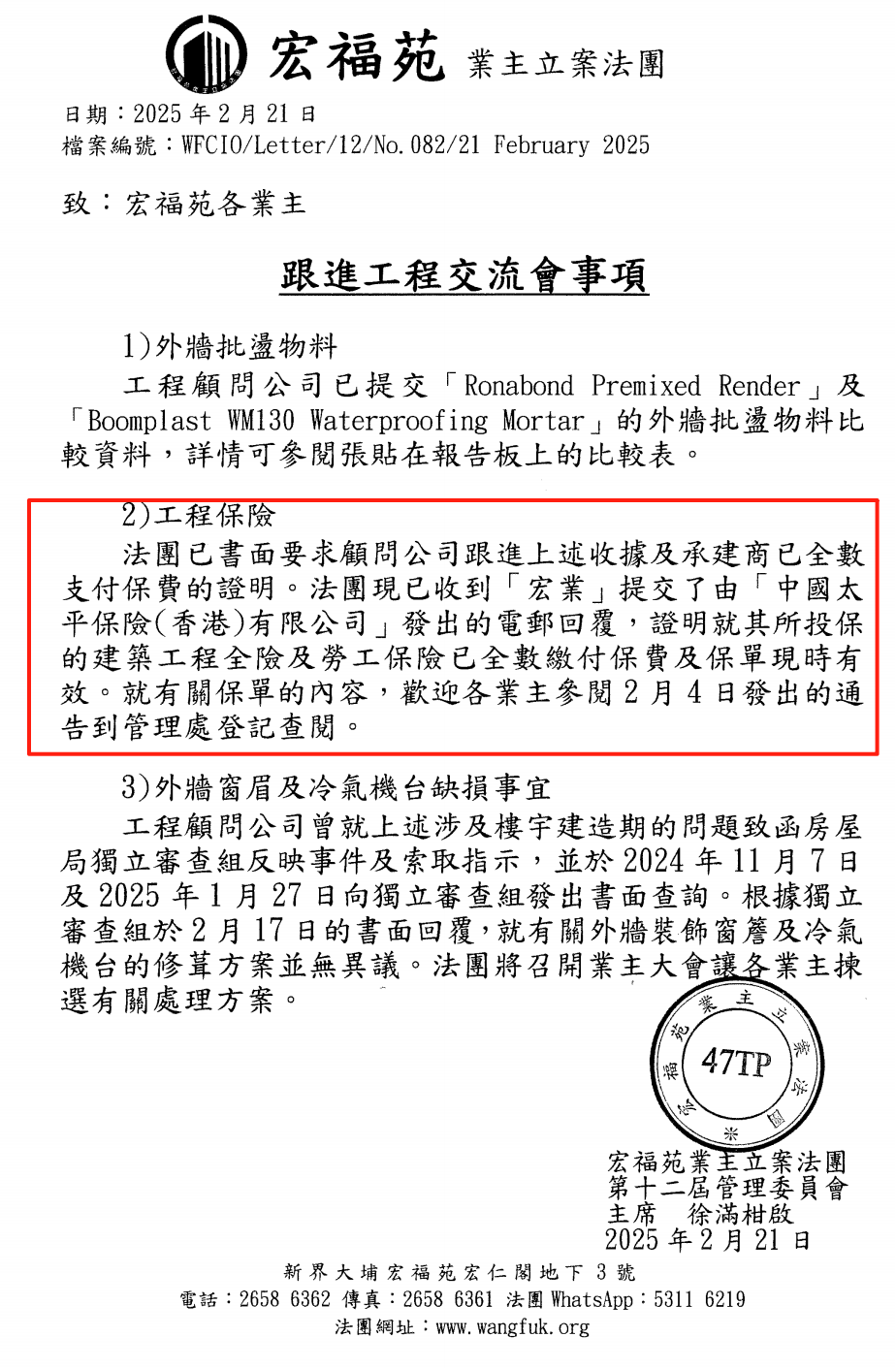
Core Viewpoint - A level 5 fire occurred at Wangfuk Court in Tai Po, Hong Kong, with the construction contractor, Hongye Construction Engineering Co., Ltd., having valid insurance coverage from China Taiping Insurance (Hong Kong) Co., Ltd. [1][6] Group 1: Incident Details - The fire incident took place on November 26 in Wangfuk Court, which is a completed Home Ownership Scheme project [1] - The construction was overseen by the owners' corporation, which hired the registered contractor Hongye Construction Engineering Co., Ltd. [1] Group 2: Insurance Information - The owners' corporation received confirmation from Hongye that all premiums for the construction all-risk insurance and labor insurance have been fully paid and the policies are currently valid [6][9] - The insurance details were communicated via an email from China Taiping Insurance (Hong Kong) Co., Ltd. [6] Group 3: Financial Aspects - The total engineering costs incurred so far have reached HKD 179 million [9]
深度丨中国台湾养老金都投些什么?——养老金融系列之八【陈兴团队•财通宏观】
陈兴宏观研究· 2025-08-17 16:04
Core Viewpoints - The pension system in Taiwan is characterized by significant occupational segmentation and treatment disparities, consisting of multiple pillars including a zero pillar for poverty alleviation and a third pillar primarily based on commercial insurance [2][6][11] Group 1: Structure of the Pension System - Taiwan's pension system is divided into four pillars: the first pillar includes social insurance pensions, the second pillar consists of occupational retirement funds, the zero pillar provides social allowances for low-income elderly, and the third pillar is based on commercial insurance [6][11] - The first pillar covers all eligible individuals, with contributions shared between individuals and the government, varying by occupation [8][11] - The second pillar does not cover unemployed individuals and includes various retirement funds for military, public education, private school teachers, and farmers [12][16] Group 2: Investment Allocation of Pensions - The first pillar's military insurance primarily invests in Taiwanese stocks and ETFs, with 39% allocated to stocks and 16% to bonds [25][30] - National pension funds prefer domestic stocks and beneficiary certificates, while labor insurance funds mainly invest in bonds and special stocks [30][34] - The second pillar's military and public education retirement funds allocate nearly half of their funds to bonds and stocks, with a significant portion managed by external institutions [38][44] Group 3: Characteristics of Pension Financial Products - Taiwan's long-term care service system has developed rapidly, with the Long-Term Care 2.0 plan expanding service targets and projects, integrating community resources [4][51] - The "small endowment insurance" product is designed for low-income elderly individuals, featuring low premiums and no medical examination requirements [4][58] - The long-term care plan includes various services for daily living assistance, professional training, and transportation for elderly individuals [55][56]