医药原料药

Search documents
国泰海通晨报-20260227
GUOTAI HAITONG SECURITIES· 2026-02-27 01:22
Group 1: China Ping An - The core strategy of China Ping An is "comprehensive finance + medical care and elderly care," which aims to create a new value growth pole through a "product + service" model, leading to long-term stable profit growth [3][4] - The report suggests that the current market valuation of China Ping An is low, with a PEV of 0.75, and recommends a target market value of 1.6 trillion yuan, corresponding to a target price of 88.53 yuan per share [3][4] - The aging population in China and the increasing importance of commercial health insurance in medical payments are expected to enhance the effectiveness of the "product + service" model, positioning it as a new growth driver for the company [3][4] Group 2: Steel Research High Temperature Alloy - Steel Research High Temperature Alloy is a leading company in the high-temperature alloy sector, benefiting from strong demand in the aerospace industry and the trend towards technological self-sufficiency [5][6] - The company is expected to achieve steady growth in net profit, with forecasts of 132 million yuan, 152 million yuan, and 172 million yuan for 2025 to 2027, respectively [5][6] - The report highlights the resilience of the high-temperature alloy industry, driven by increasing defense budgets and the upgrade of aerospace equipment, which supports long-term demand [6][7] Group 3: CSPC Pharmaceutical Group - CSPC Pharmaceutical Group is recognized for its strong innovation capabilities, with a focus on oncology and chronic disease treatment pipelines, and has established an international business development ecosystem [8][9] - The company has entered a strategic collaboration with AstraZeneca to develop innovative long-acting peptide drugs, which is expected to generate significant revenue potential [9][10] - The report predicts EPS growth of 48%, 36%, and -7% for 2025 to 2027, with a target price of 16.58 HKD per share [8][9] Group 4: Real Estate Market - The real estate market in China is currently in a deep adjustment phase, with only 19% of cities showing signs of bottoming out as of Q4 2025 [18][19] - New home prices are experiencing significant fluctuations, particularly in first-tier cities, while second-hand home prices are generally declining [19][20] - The report indicates that the inventory clearance cycle is extending, with first-tier cities reaching 19-28 months and some second-tier cities exceeding 38 months [20] Group 5: Robotics and Automation - The company is actively expanding into the humanoid robotics sector, with new product launches expected to drive growth [21][22] - The report forecasts EPS of 1.14, 1.47, and 1.83 yuan for 2025 to 2027, with a target price of 147.00 yuan per share [21][22] - The company is leveraging its expertise in micro-drive systems to enhance its competitive position in the robotics market [22][23] Group 6: Energy Storage Sector - The energy storage sector is anticipated to see significant growth, with the introduction of capacity pricing mechanisms in provinces like Qinghai [36][37] - The report suggests that the demand for energy storage systems and batteries will increase, recommending several key stocks in this sector [36][37] - The expected growth rate for energy storage demand in 2026 is projected to be around 50% [38]






海翔药业:与国科大杭州高等研究院签署共建先进合成技术产业研究院
Zheng Quan Ri Bao Wang· 2025-12-10 07:13
Group 1 - The core announcement is that Haixiang Pharmaceutical (002099) signed a cooperation agreement with the Hangzhou Advanced Research Institute of the University of Science and Technology of China to establish an Advanced Synthesis Technology Industry Research Institute [1] - The research institute will focus on the development and industrialization of pharmaceutical raw materials, intermediates, dyes, and new materials [1] - The total investment for this collaboration amounts to 50 million RMB [1]

海翔药业拟与杭高院共建先进合成技术产业研究院
Zhi Tong Cai Jing· 2025-12-09 08:28
Group 1 - The company, Haishang Pharmaceutical (002099.SZ), has signed a cooperation agreement with the Hangzhou Advanced Research Institute of the University of Science and Technology of China to establish a joint advanced synthetic technology industrial research institute [1] - The research focus of the industrial research institute will primarily be on the development and industrialization of pharmaceutical raw materials, intermediates, dyes, and new materials [1] - The total investment for this collaboration amounts to 50 million yuan [1]
海翔药业:拟与杭高院共建先进合成技术产业研究院
Zheng Quan Shi Bao Wang· 2025-12-09 08:24
Group 1 - The core viewpoint of the article is that Haishang Pharmaceutical (002099) has signed a cooperation agreement with the Hangzhou Advanced Research Institute of the University of Science and Technology of China to establish an Advanced Synthesis Technology Industry Research Institute, with a total investment of 50 million yuan [1] - The research focus of the new institute will be on the development and industrialization of pharmaceutical raw materials, intermediates, dyes, and new materials [1] - The research team led by Zhang Xiaoheng at the Hangzhou Institute has proposed a new method for the direct deamination of aromatic amines, which is safe and economical, potentially revolutionizing traditional high-risk processes in various fields such as pharmaceuticals, dyes, and materials manufacturing [1]
海翔药业(002099.SZ)拟与杭高院共建先进合成技术产业研究院
智通财经网· 2025-12-09 08:24
Group 1 - The core point of the article is that Haishang Pharmaceutical has signed a cooperation agreement with the Hangzhou Advanced Research Institute of the University of Science and Technology of China to establish a joint advanced synthesis technology industrial research institute [1] - The research focus of the industrial research institute will primarily be on the development and industrialization of pharmaceutical raw materials, intermediates, dyes, and new materials [1] - The total investment for this collaboration amounts to 50 million yuan [1]
《华尔街日报》:中国不只稀土,还有三把刀悬在美国脖子上
Sou Hu Cai Jing· 2025-12-08 09:54
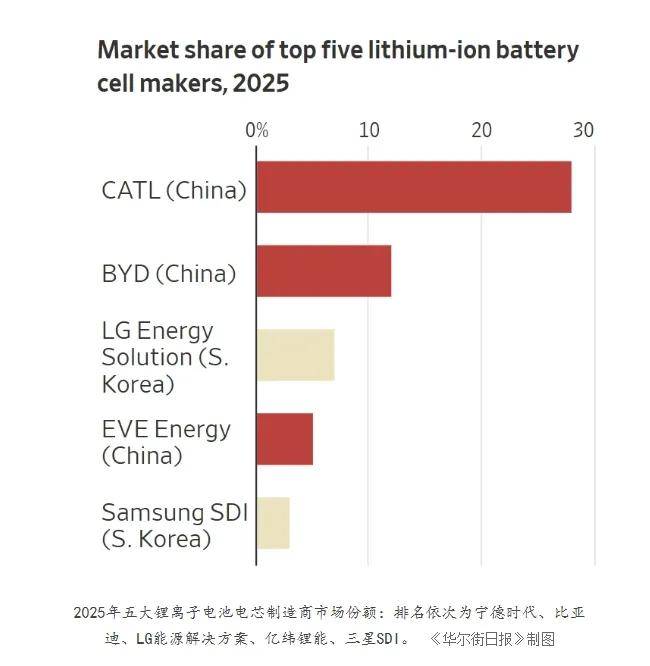
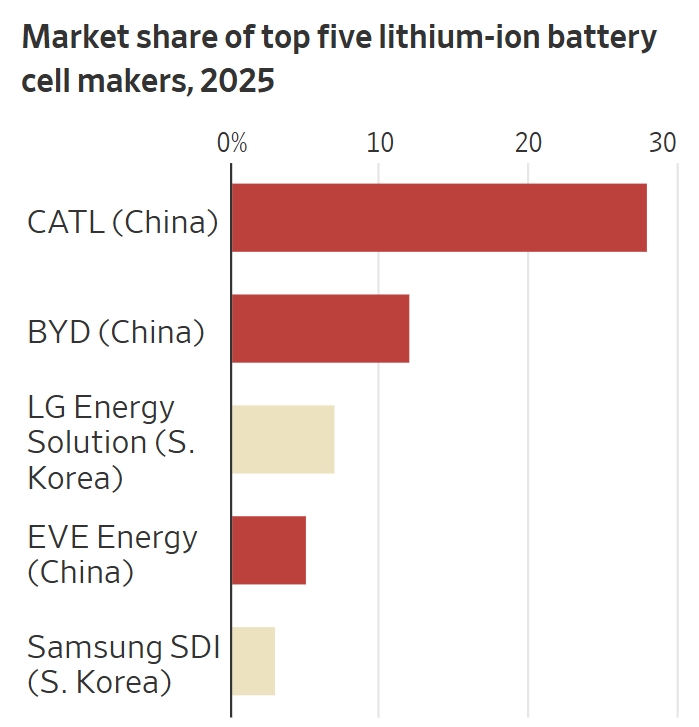
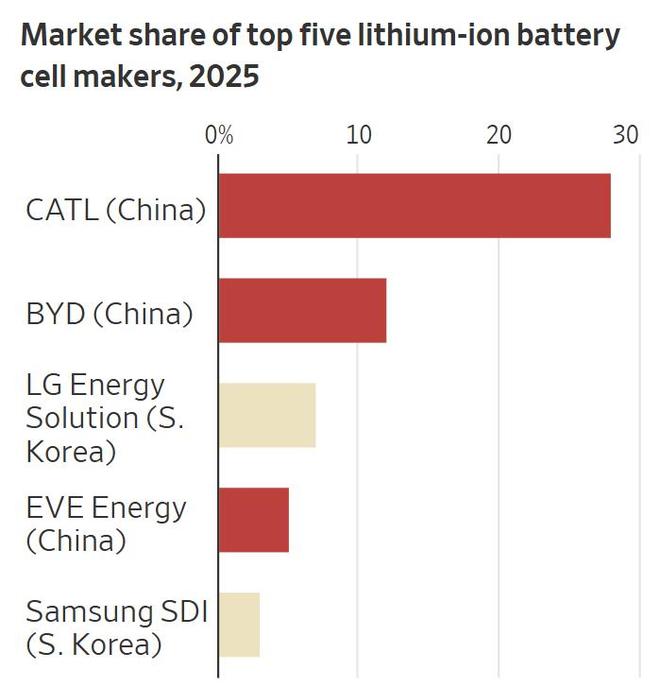
Group 1 - The core point of the article highlights that the U.S. has been focused on China's rare earths but has overlooked the greater threat posed by China's dominance in lithium batteries, mature process chips, and pharmaceutical raw materials [1] Group 2 - In the lithium battery sector, China has established a near monopoly over the entire supply chain, with major companies like CATL and BYD leading the market [2][5] - By 2025, three out of the top five battery manufacturers globally will be Chinese, with China producing 79% of cathode materials, 92% of anode materials, 98% of refined graphite, 80% of refined cobalt, and 63% of lithium chemical products [5] - This dominance is attributed to strategic government policies since 2015, including substantial subsidies and requirements for local automakers to use domestic batteries [6] Group 3 - In the mature chip sector, China controls about one-third of the global production capacity for chips above 28 nanometers, which are critical for automotive, home appliances, and defense equipment [7][8] - China also holds 99% of the global gallium supply and a significant portion of germanium, with recent export licensing requirements impacting U.S. companies [8] Group 4 - The pharmaceutical sector is heavily reliant on Chinese raw materials, with over 80% of active pharmaceutical ingredients in common medications like Tylenol and Advil imported from China [9] - This creates a hidden supply chain dependency between China, India, and the U.S., where American consumers are largely unaware of their reliance on Chinese pharmaceutical inputs [9][13]

广济药业股价涨5.22%,华夏基金旗下1只基金位居十大流通股东,持有228.14万股浮盈赚取111.79万元
Xin Lang Cai Jing· 2025-12-01 05:56
Group 1 - The core point of the news is that Guangji Pharmaceutical's stock price increased by 5.22% to 9.87 CNY per share, with a trading volume of 635 million CNY and a turnover rate of 20.39%, resulting in a total market capitalization of 3.422 billion CNY [1] - Guangji Pharmaceutical, established on May 28, 1993, and listed on November 12, 1999, is located in Wuxue City, Hubei Province. The company specializes in the production and sales of pharmaceutical raw materials, veterinary raw materials, feed additives, and fine chemical products [1] - The revenue composition of Guangji Pharmaceutical includes 74.56% from raw material products, 22.97% from formulation products, 1.45% from other products, and 1.02% from supplementary sources [1] Group 2 - Among the top ten circulating shareholders of Guangji Pharmaceutical, one fund from Huaxia Fund, the Huaxia CSI 500 Index Enhanced A (007994), has recently entered the list, holding 2.2814 million shares, which accounts for 0.66% of the circulating shares [2] - The Huaxia CSI 500 Index Enhanced A fund was established on March 25, 2020, with a latest scale of 3.308 billion CNY. It has achieved a year-to-date return of 24.47%, ranking 1946 out of 4207 in its category, and a one-year return of 24.63%, ranking 1851 out of 4009 [2] - The fund manager of Huaxia CSI 500 Index Enhanced A is Sun Meng, who has been in the position for 5 years and 261 days, managing a total fund size of 16.118 billion CNY. During his tenure, the best fund return was 131.64%, while the worst was 20.71% [3]

“不止稀土,中国还有三招能卡美国脖子”
Guan Cha Zhe Wang· 2025-11-06 02:11
Core Viewpoint - The article discusses China's strategic dominance in critical industries such as rare earths, lithium-ion batteries, semiconductors, and pharmaceuticals, emphasizing its ability to leverage this position against the U.S. amid ongoing tensions and trade disputes [1][13]. Industry Insights - **Rare Earths**: China has established a commanding position in the rare earth supply chain, which is viewed as a dual-use resource with military and civilian applications. The U.S. has attempted to portray this as a "weaponization" of supply, but China maintains that export controls are standard international practices [1]. - **Lithium-Ion Batteries**: China produces 79% of global battery cathode materials and 92% of anode materials. The two leading battery manufacturers, CATL and BYD, are Chinese companies, and a significant portion of battery components globally is sourced from China [2][5]. - **Semiconductors**: China holds about one-third of the global capacity for mature process semiconductors, which are essential for various industries, including automotive and consumer electronics. The country has invested heavily in semiconductor manufacturing to achieve self-sufficiency [5][8]. - **Pharmaceuticals**: A large portion of active pharmaceutical ingredients (APIs) used in U.S. medications is sourced from China. For instance, key ingredients for popular medications like acetaminophen and ibuprofen are predominantly produced in China [11][12]. Strategic Developments - **Policy Initiatives**: In 2015, China set ambitious goals for its electric vehicle industry, leading to significant growth in domestic manufacturers. Recent measures have been taken to further solidify its technological edge in lithium-ion battery production and semiconductor manufacturing [5][11]. - **Self-Sufficiency Goals**: Over the past two decades, China has focused on reducing its reliance on Western imports, achieving notable success in various sectors, including rare earths and pharmaceuticals. This strategy has made it increasingly difficult for the U.S. to exert pressure on China [13][15]. - **Global Supply Chain Impact**: The article highlights that the U.S. is more dependent on Chinese rare earths than China is on U.S. agricultural products, indicating a significant imbalance in the trade relationship. This dependency complicates U.S. efforts to retaliate against China [15][16].


“不止稀土,中国还有三招能掐住美国”
Guan Cha Zhe Wang· 2025-11-06 01:57
Core Viewpoint - The article discusses China's strategic dominance in critical industries such as rare earths, lithium-ion batteries, semiconductors, and pharmaceuticals, emphasizing its ability to leverage this position against the U.S. amid ongoing geopolitical tensions [1][14]. Group 1: Rare Earths and Supply Chain Control - China has established a leading position in the supply chain for rare earths, which are crucial for both military and civilian applications, and has implemented export controls as a common international practice [1]. - The U.S. media has suggested that China's control over rare earths has forced negotiations with former President Trump, highlighting the perceived "weaponization" of supply chains [1][14]. Group 2: Lithium-Ion Batteries - China produces 79% of the world's battery cathode materials and 92% of anode materials, controlling 63% of the market for refined lithium products, 80% of refined cobalt, and 98% of refined graphite [2]. - The two largest battery manufacturers globally are Chinese companies, CATL and BYD, which dominate the electric vehicle and energy storage markets [5]. Group 3: Semiconductor Industry - China accounts for approximately one-third of the global capacity for mature process semiconductors, which are essential for automotive, consumer electronics, and defense industries [5]. - The country has invested billions to enhance its semiconductor manufacturing capabilities, aiming for self-sufficiency [5]. Group 4: Pharmaceutical Sector - A significant portion of active pharmaceutical ingredients (APIs) used in U.S. medications is sourced from China, including key ingredients for widely used drugs like acetaminophen and ibuprofen [12]. - China has prioritized the development of its pharmaceutical and medical device industries, aiming to innovate and reduce reliance on foreign imports [12][14]. Group 5: Strategic Self-Sufficiency - Over the past two decades, China has systematically pursued economic self-sufficiency, reducing dependence on Western imports and establishing a robust industrial base [14][16]. - The Chinese government continues to strengthen its industrial capabilities, emphasizing the importance of a resilient supply chain and a modernized manufacturing system [14].
停牌!300111拟跨界半导体
Shang Hai Zheng Quan Bao· 2025-09-07 13:24
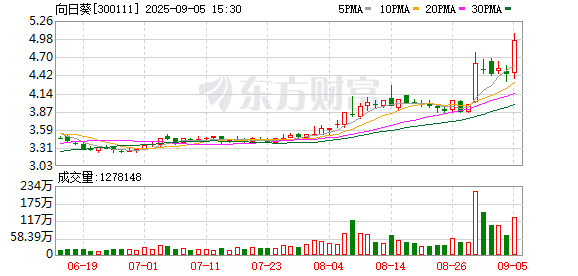
Core Viewpoint - Company is planning to acquire controlling stakes in two companies, aiming to diversify its business into the semiconductor sector while maintaining its core pharmaceutical operations [2][8]. Group 1: Acquisition Details - The company intends to acquire a controlling stake in Zhangzhou Xipu Materials Technology Co., Ltd., which specializes in electronic-grade materials for the semiconductor market, and 40% of Zhejiang Beid Pharmaceutical Co., Ltd., a core subsidiary [2][8]. - The acquisition is expected to constitute a significant asset restructuring, but will not change the actual control of the company [2][8]. - The company plans to raise supporting funds for this transaction [2]. Group 2: Financial Performance - On the last trading day before the announcement, the company's stock price rose by 11.96%, closing at 4.96 yuan per share [5]. - The company reported a revenue of 330 million yuan in 2024, a year-on-year decrease of 2.38%, and a net profit of 7.83 million yuan, down 64.01% [14]. - In the first half of 2025, the company generated 144 million yuan in revenue, a decline of 8.33%, with a net profit of 1.16 million yuan, down 35.68% [14]. Group 3: Strategic Intent - The company has a history of pursuing cross-industry expansions, with its current pharmaceutical business resulting from a previous acquisition in 2019 [11][12]. - The management has indicated a commitment to expanding market share and exploring external growth opportunities while ensuring the stability of existing operations [9].