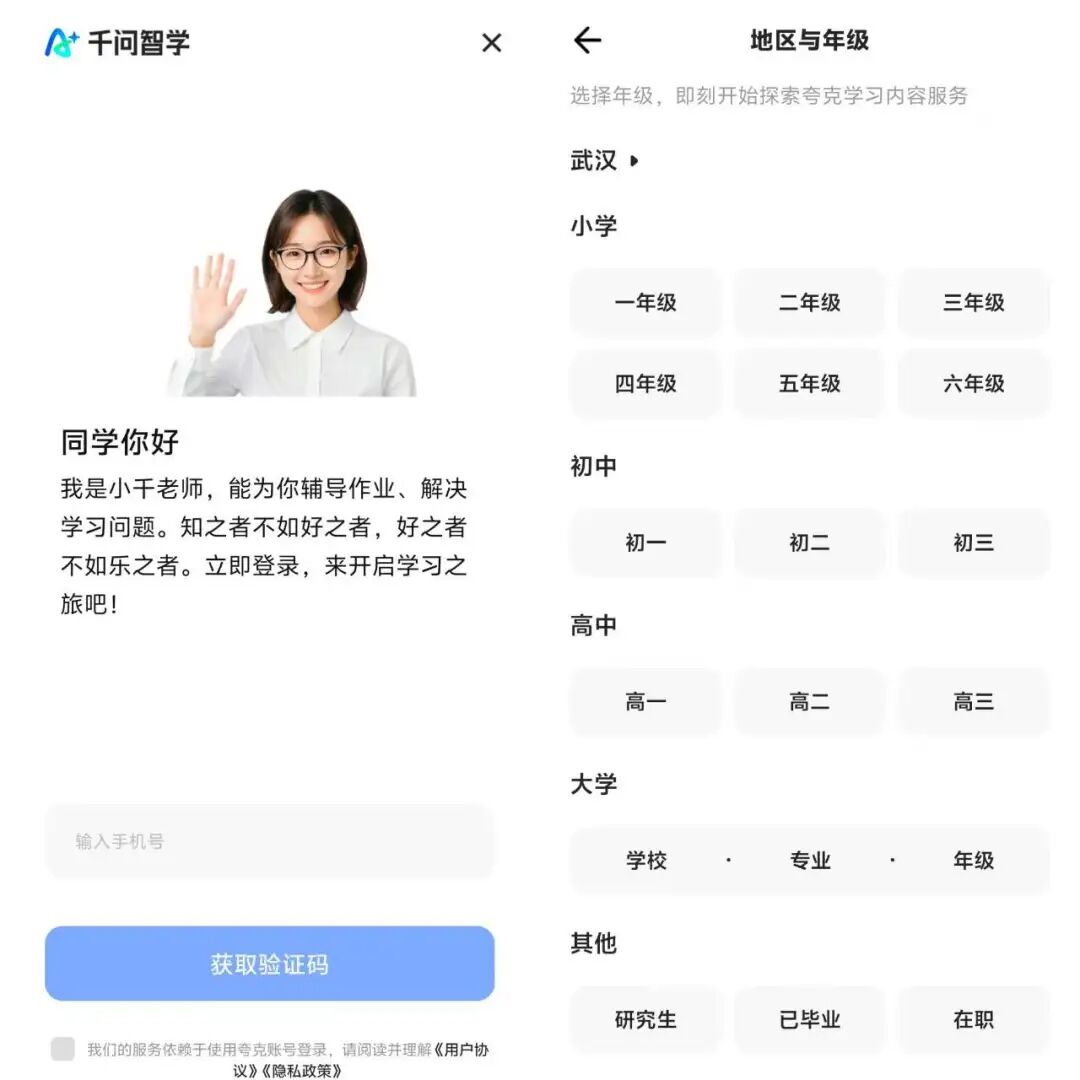
千问智学

Search documents
月活破1.2亿!AI教育频繁出错,学生被错误答案误导谁来负责?
Sou Hu Cai Jing· 2026-02-13 10:53
Core Insights - The education sector is experiencing renewed interest from major tech companies, with ByteDance and Alibaba launching AI-driven educational tools to capture market share [1][2] - The AI education market in China has seen significant growth, with monthly active users of AI education apps surpassing 120 million, a 340% year-on-year increase as of Q3 2025 [1] - The competition is primarily between tech giants leveraging their existing user bases and traditional education companies with established research capabilities [2] Group 1: Market Dynamics - The AI education landscape is dominated by three main players: tech giants like ByteDance and Alibaba focusing on rapid iteration and user acquisition, traditional education firms like Yuanfudao and Zuoyebang enhancing their services with AI, and smaller startups targeting niche markets [2] - Major companies are pursuing three business lines: AI problem-solving tools, AI teaching assistants for schools, and AI-driven personalized learning, with varying degrees of market maturity and profitability [3][4] Group 2: Competitive Advantages - Major tech companies benefit from the reuse of large model technologies, existing user traffic, and lower development costs due to economies of scale [4] - However, their fast-paced, traffic-driven strategies may conflict with the slower, more methodical nature of the education sector, potentially hindering long-term success [4] Group 3: Product Differentiation - There are notable differences in user experience among AI education products, with tech giants offering integrated AI assistants that streamline user interaction, while traditional education apps maintain a more segmented approach [6][7] - The interaction styles of AI explanations vary significantly, with tech companies focusing on real-time analysis and engagement, contrasting with traditional firms that rely on pre-existing content and less interactive formats [10][12] Group 4: Challenges and Future Outlook - Major tech companies face challenges in educational content development due to a lack of deep educational research compared to traditional players, which may affect the quality and trustworthiness of their offerings [14] - The sustainability of the business model for tech giants remains uncertain, as they currently offer AI features for free without clear monetization strategies, raising questions about long-term profitability [15][16] - Future opportunities may lie in targeting specific segments such as B2B solutions for schools and adult education, where demand is stable and user willingness to pay is higher [16]


2026,巨头大战AI教育
3 6 Ke· 2026-02-10 01:14
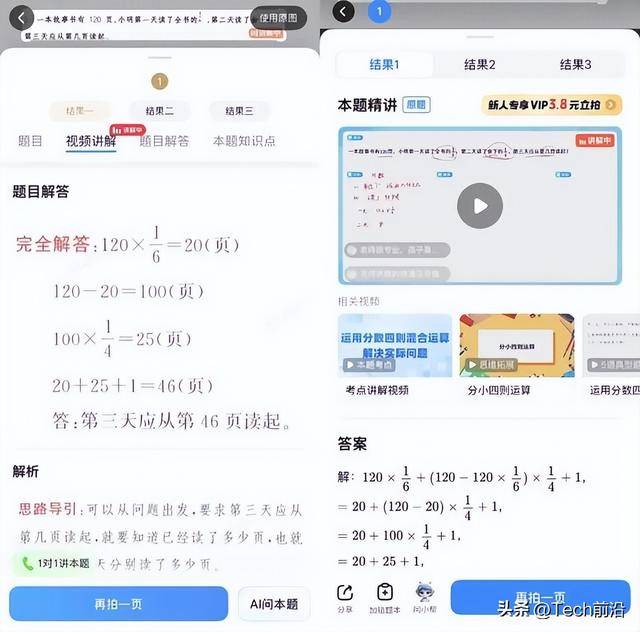
Core Insights - The education sector is experiencing renewed interest from major tech companies, with ByteDance and Alibaba launching AI-driven educational tools to capture market share [1][2] - The AI education market in China has seen significant growth, with monthly active users of AI education applications surpassing 120 million, a 340% year-on-year increase [1] - The competition is primarily between tech giants leveraging their traffic and technology and traditional education players focusing on content and educational services [1][2] Group 1: Market Dynamics - Major tech companies are entering the education market due to clear demand and vast market potential, utilizing large model technology to reduce development costs and time [5][6] - The AI education landscape is divided into three main factions: tech giants focusing on rapid iteration and scenario validation, traditional education companies enhancing content with AI, and small startups targeting niche markets [1][2] - The monetization paths in the education market vary, with AI problem-solving tools being a low-barrier entry point for attracting users [2] Group 2: Business Models - The AI teaching assistant model for B-end clients is clearer in terms of commercial pathways, but its implementation is slower than expected [4] - The primary focus of major companies is on AI teaching, which requires a deep integration of technology and educational research, yet conversion rates and willingness to pay remain challenges [4][6] - The profitability of AI education products from major tech companies is uncertain, as they often prioritize data and traffic over direct revenue generation [6][20] Group 3: Product Differentiation - There are significant differences in the AI capabilities of various educational applications, with major tech companies offering integrated AI assistants while traditional players maintain a more segmented approach [7][14] - User experience varies greatly, with tech giants emphasizing seamless interaction and traditional companies relying on established educational methodologies [7][14] - The core functionalities of leading applications are similar, but the underlying technology and user engagement strategies differ significantly [6][7] Group 4: Challenges and Opportunities - Major tech companies face challenges in educational research, as their data often lacks the systematic organization and validation found in traditional education firms [17] - The phenomenon of "AI hallucination," where AI provides incorrect answers, poses a risk to user trust and product reliability [18][20] - The future of the education sector may lie in niche markets such as B/G-end solutions for schools and adult education, where demand is stable and payment structures are clearer [21][22]

模力工场 030 AI 应用榜:字节新品硬刚 Sora,“随变”登顶榜首
AI前线· 2026-01-30 09:58
Core Insights - The article discusses the rapid development and integration of AI applications across various sectors, emphasizing their role in enhancing creativity, learning, and automation [9][16][18]. Group 1: AI Applications in Content Creation - A variety of AI tools are emerging to facilitate content creation, such as "随变" for short videos and "PixVerse" for cinematic video generation, allowing users to produce high-quality content with minimal effort [10][16]. - Applications like "小云雀" and "WHEE" enable users to generate engaging content from simple prompts, significantly lowering the barriers to entry for content creation [13][16]. Group 2: AI in Education and Learning - AI tools like "千问智学" and "豆包爱学" are transforming educational support by providing personalized tutoring and efficient question-answering capabilities, aligning with global trends towards AI-driven personalized education [11][16]. - These applications are designed to cater to various educational needs, enhancing the learning experience and efficiency for students [11][16]. Group 3: Automation and Task Execution - Tools such as "Atoms" and "offer 快" are showcasing the potential of AI in automating workflows and job application processes, allowing users to focus on higher-level tasks [17][18]. - "MetaSight" introduces AI into personal development and decision-making, reflecting a shift towards AI that not only executes tasks but also assists in strategic thinking [18]. Group 4: User Experience and Feedback - User feedback highlights the strengths and weaknesses of various AI applications, with many praising the ease of use and efficiency while also noting limitations in customization and output quality [10][11][12][13]. - The article emphasizes the importance of user experience in the adoption of these AI tools, as they must meet the practical needs of users in real-world scenarios [19][20].

12月24日早餐 | 中芯国际部分产能涨价10%
Xuan Gu Bao· 2025-12-24 00:07
Group 1: Market Overview - US stock market has seen four consecutive days of gains, with the Dow Jones up 0.16%, Nasdaq up 0.57%, and S&P 500 up 0.46% [1] - Nvidia shares rose by 3.01%, while Amazon, Google A, Meta, Apple, and Microsoft saw increases of up to 1.62%, with Tesla down by 0.65% [1] - US GDP for Q3 exceeded expectations, growing by 4.3%, marking the fastest growth in two years [1] Group 2: Semiconductor Industry - Semiconductor company SMIC has implemented a price increase of approximately 10% on some of its production capacity, driven by rising demand from mobile applications and AI [9] - TSMC confirmed the consolidation of its 8-inch capacity and plans to shut down some production lines by the end of 2027, reinforcing industry price increase expectations [9] - Analysts believe that the sustained growth in demand will provide long-term growth momentum for domestic semiconductor companies [9] Group 3: Robotics Sector - Hangzhou Yundongchu Technology Co., a national high-tech enterprise, is set to launch its IPO in December 2025, focusing on embodied intelligent robotics [8] - The company aims to establish a full-chain technology system for robotics, with applications in various sectors including industrial and logistics [8] - Analysts predict that the humanoid robot market in China will see a compound annual growth rate of over 61% from 2024 to 2030, reaching nearly 38 billion yuan by 2030 [8] Group 4: Uranium Market - Goldman Sachs predicts that the supply shortage of uranium will expand to 32%, with at least a 20% price increase expected by the end of next year [4] Group 5: Chemical Industry - The price of chlorosulfonic acid has surged, with the latest market average reaching 3,500 yuan per ton, a daily increase of 222 yuan, marking a 6.77% rise [10][11] - The demand for high-purity battery-grade chlorosulfonic acid is expected to grow due to the increasing performance requirements in the electric vehicle and energy storage markets [11] Group 6: Corporate Announcements - ServiceNow is acquiring cybersecurity startup Armis for $7.75 billion in cash to expand its network security capabilities [3] - Zhenyu Technology plans to raise no more than 1.88 billion yuan for lithium battery precision structural components expansion projects [14]

阿里推出“千问智学” 加码AI教育
Ge Long Hui A P P· 2025-12-23 13:27
Core Insights - Alibaba has launched the "Qianwen Zhixue" App, an AI education application that integrates a new learning model [1] Group 1 - The app provides one-on-one assistance from an AI tutor named "Xiao Qian" for users ranging from elementary school to graduate school [1] - The service is offered for free, aiming to address various learning issues faced by students [1]
阿里推出“千问智学”,加码AI教育;字节在海外上线AI办公App“AnyGen”
3 6 Ke· 2025-12-23 11:17
Group 1: Alibaba's "Qianwen Zhixue" App Launch - Alibaba has launched the "Qianwen Zhixue" App, an AI education application that provides free one-on-one tutoring from elementary to graduate levels through its built-in intelligent agent, Xiao Qian [1][7] - The app features a simple registration process and offers three core interaction methods: photo Q&A, voice inquiries, and text input, along with modules for Chinese dictation and text recitation [3][4] - The app's core advantages include being free and having a user-friendly interface, making it suitable for daily inquiries from middle and primary school students [7] Group 2: Market Trends and Competitive Landscape - The trend of AI technology penetrating vertical fields is evident, with education being a core area for large models due to its stable user demand [7] - Other major companies are also entering the AI education space, with ByteDance launching the "Doubao Aixue" App and Baidu exploring both software and hardware products for learning scenarios [7] - The CEO of online education platform Banfish noted that AI-generated content significantly reduces production costs, shifting competition from asset barriers to understanding learning patterns and product iteration speed [7] Group 3: ByteDance's "AnyGen" App Launch - ByteDance has launched "AnyGen," an AI office product designed as a voice-driven workspace that converts voice notes, photos, and ideas into documents and presentations [9][11] - The app features a clean interface and an "instant recording" function that addresses high-frequency pain points in office scenarios, allowing users to record voice notes without manual typing [9][11] - As demand for AI office tools continues to rise, "AnyGen" has the potential to become a significant part of ByteDance's overseas AI ecosystem if it continues to iterate and expand its functionalities [12]