
单桩

Search documents
欧洲塔桩市场供需情况梳理
2026-03-19 02:39
Summary of Key Points from Conference Call Records Industry Overview - The European offshore wind market is accelerating, driven by energy security and self-sufficiency, addressing electricity shortages and dependency on external energy sources [2][3] - Key macro signals include the EU's clean energy investment strategy, the UK lifting tariffs on imported wind components, and the initiation of AR7 and AR8 projects [2] Market Demand and Supply Dynamics - The demand for monopiles in Europe is projected at 15GW annually, translating to a market size of nearly 100 billion RMB, with European prices 10,000-20,000 RMB per ton higher than domestic prices [1][3] - There is a significant local production capacity shortfall in Europe, with a current gap of 580,000 tons, exacerbated by slow expansion rates of local manufacturers like Sif and SeAH [1][5][6] Competitive Landscape - Monopiles account for 94% of the offshore wind foundation structures in Europe, with a market share shift towards Chinese suppliers like 大金重工, which has captured 30% of the market [4][9] - Local manufacturers face challenges in meeting new project demands due to outdated production capacities, leading to potential order transfers to Chinese firms [3][4][6] Cost Advantages of Chinese Firms - Chinese companies benefit from lower raw material and labor costs, with steel prices in China being 3,000-7,000 RMB per ton cheaper than in the EU, offsetting higher shipping costs [7][8] - The labor cost disparity is significant, with European labor costs being substantially higher than those in China [8] Core Competencies of 大金重工 - 大金重工's competitive edge lies in delivery assurance, cost advantages, first-mover benefits, and integrated service capabilities [9][10] - The company has established a robust production capacity and logistics network, allowing for reduced delivery times and costs [9][10] Future Growth Opportunities - Starting in 2026, 大金重工's own shipping fleet is expected to enhance profitability, with additional contributions from shipbuilding, port services, and offshore installation by 2027-2028 [11] - Other domestic companies like 海力 and 天顺 are also expected to break into the European market by 2026, with significant production capacities and ongoing project engagements [12]

再call欧洲海风景气度-政府支持力度一次次加强
2026-03-16 02:20
Summary of Key Points from Conference Call on European Offshore Wind Industry Industry Overview - The European offshore wind market is entering an accelerated construction phase from 2025 to 2030, with net profit per ton of offshore wind products reaching 4,000-5,000 RMB, significantly higher than the domestic level of 800-1,000 RMB [1][2] - The UK AR7 auction reached a historic high of 8.4 GW, and the cancellation of 33 import tariffs on wind power components is expected to boost the market [1][2] - The Hamburg Declaration aims for 300 GW of offshore wind capacity by 2050, indicating a strong policy support for the industry [1][4] Key Companies and Their Performance - **Dajin Heavy Industry**: Holds a 30% market share in Europe with over 10 billion RMB in orders, expected to double to 20 billion RMB by 2026, with profits projected to increase from 1-1.1 billion RMB to over 2 billion RMB [1][8] - **Tianshun Wind Power**: Recently secured a 700 million RMB order for offshore wind projects and is expected to achieve net profits of 2.5-3 billion RMB by 2027, with a market cap target of 50 billion RMB [1][6][7] - **Oriental Cable**: Currently has 3-4 billion RMB in overseas orders, benefiting from tariff cancellations in the UK, and is involved in both offshore wind and power interconnection projects [1][11][12] - **Mingyang Smart Energy**: Plans to invest 1.5 billion GBP in a manufacturing base in Scotland, tracking 10 GW of orders in the AR7 project, with potential for significant growth in the European market [1][13][14] - **Zhenjiang Co.**: Secured a 154 billion RMB long-term agreement with Siemens, with a production capacity expansion plan to meet European demand [1][14] Market Dynamics and Opportunities - The European offshore wind market is experiencing a supply shortage in local marine engineering capacity due to high demand and slow domestic expansion, creating opportunities for Chinese companies with established manufacturing capabilities [1][5] - The geopolitical climate and rising fossil fuel prices are accelerating the shift towards renewable energy, particularly offshore wind, as a solution for energy security in Europe [2][3] - The European energy structure shows a significant reliance on fossil fuels, with 40% of natural gas being imported, highlighting the urgency for energy independence [3][4] Government Policies and Support - Recent government policies in Europe have significantly increased support for offshore wind, including accelerated auction schedules and substantial investment commitments [4][5] - The EU's clean energy investment strategy requires an annual investment of 660 billion euros from 2026 to 2030, focusing on generation and grid infrastructure [4][5] Conclusion - The European offshore wind industry is poised for rapid growth, driven by strong government support, increasing demand, and the entry of capable Chinese manufacturers. Companies that can establish a foothold in this market are expected to see substantial improvements in performance and profitability [1][2][5]


欧洲能源安全诉求下的海风板块投资机会
2026-03-13 04:46
Summary of Key Points from Conference Call Industry Overview - The focus is on the European offshore wind sector, driven by the EU's Clean Energy Investment Strategy, which plans to invest an average of €660 billion annually from 2026 to 2030, nearly tripling the previous decade's average investment of €240 billion [1][3][4]. Core Insights and Arguments - The EU's strategy aims to enhance energy security and independence, as over 90% of fossil energy is imported, making the energy supply vulnerable to geopolitical tensions [3]. - The UK will eliminate import tariffs on 33 wind turbine components starting April 2026, which is expected to lower local manufacturing costs and boost project returns [4][11]. - The offshore wind industry is projected to see a shift in demand from single pile foundations to turbine installation and component supply starting Q1 2026, indicating a potential performance turnaround for related companies [1][6]. Investment Opportunities - Companies like Zhenjiang Co. and Daikin Heavy Industries are highlighted for their significant exposure to the European market, with Zhenjiang's European revenue accounting for about 70% and Daikin's single pile exports making up 90% of its business [2][8]. - The profitability of offshore wind projects in Europe is significantly higher than in China, with potential profits exceeding ¥1 billion (approximately €140 million) for a 1 GW project [7][9]. Market Dynamics - The offshore wind sector's investment landscape is changing, with a focus on leveraging public funds to attract private capital, supported by the European Investment Bank's commitment to provide over €75 billion in financing over the next three years [4][10]. - The average annual investment in clean energy is expected to rise to nearly €700 billion from 2031 to 2040, indicating a long-term commitment to renewable energy [4]. Emerging Trends - The European offshore wind market is expected to see an average annual installation of nearly 7 GW from 2026 to 2030, a 150% increase from the previous five years [13]. - Domestic Chinese companies are increasingly penetrating the European market due to local supply constraints, with firms like Mingyang Smart Energy positioned to benefit from high-value projects [14]. Company-Specific Developments - Zhenjiang Co. is expected to see a significant performance rebound in Q1 2026, driven by increased delivery schedules and a strong order book [6][8]. - Daikin Heavy Industries has secured over ¥10 billion (approximately €1.4 billion) in orders, positioning it well for future growth as European demand strengthens [2][14]. - Oriental Cable has over ¥3 billion (approximately €420 million) in European orders, with optimistic expectations for future contracts [15]. Conclusion - The European offshore wind sector presents substantial investment opportunities, driven by policy support, market dynamics, and the strategic positioning of key companies. The anticipated growth in installations and the shift in supply chain dynamics favor companies with established European operations and strong order books.
中东一打仗,中国风电订单被催疯了
经济观察报· 2026-03-09 08:30
Core Viewpoint - The intensifying conflict in the Middle East has heightened Europe's strategic anxiety regarding energy security, leading to a shift in focus from carbon neutrality to ensuring stable energy supply, creating opportunities for Chinese wind power equipment manufacturers to fill the supply gap [1][2][3]. Group 1: Market Dynamics - The urgency for energy security has transformed offshore wind power in Europe from a "carbon neutrality option" to a "mandatory choice for energy security" [3]. - European clients are now prioritizing delivery assurance over pricing, with procurement decision cycles shrinking from 3-6 months to 1-2 months [4][10]. - The demand for offshore wind energy components has surged, with companies like 大金重工 (Dajin Heavy Industry) securing over 10 billion yuan in overseas orders, extending production schedules to 2027 and beyond [5]. Group 2: Competitive Advantages - Chinese companies are leveraging their delivery certainty as a core competitive advantage, with 大金重工 increasing its market share in the European offshore wind component market from 18.5% in 2024 to 29.1% in the first half of 2025 [9]. - The establishment of local production bases in Europe, such as 天顺风能 (Tianshun Wind Power) in Germany, is aimed at mitigating risks associated with supply chain disruptions and enhancing local compliance [11][14]. - Cost advantages are being realized through long-term agreements with domestic steel suppliers, allowing companies to secure materials at prices approximately 30% lower than European rates [10]. Group 3: Strategic Initiatives - Companies are proactively expanding their international presence, with 东方电缆 (Oriental Cable) establishing subsidiaries in the Netherlands and the UK to address potential supply chain gaps [11]. - The focus on localization is evident, as companies aim to transition from being perceived as "Chinese exporters" to becoming integral partners in European energy security [13][14]. - The Middle East is emerging as a strategic market, with inquiries from Middle Eastern clients increasing by over 300% year-on-year, indicating a shift in focus towards this region for future growth [14][15].

电力设备与新能源行业周观察:持续看好北美缺电产业链,海外户储工商储中长期成长明确
HUAXI Securities· 2026-03-08 14:32
Investment Rating - Industry Rating: Recommended [5] Core Insights - The report maintains a positive outlook on the North American electricity shortage industry chain, highlighting the sustained high demand for power equipment due to both domestic and international AIDC construction and increasing overseas grid construction needs [3][31]. - The report emphasizes the clear long-term growth logic for household and commercial energy storage in Europe, driven by rising electricity prices and government subsidies, with a projected 55.7% CAGR for new installations by 2029 [1][13]. - The report identifies key beneficiaries in the power equipment sector, particularly companies with strong channel resources and technological advantages, such as SiYuan Electric and HuaMing Equipment, which are expected to benefit from ongoing demand in the transformer and gas turbine supply chains [3][31]. Summary by Sections 1. New Energy - The report notes that the significant rise in Dutch TTF natural gas futures prices will directly impact European wholesale electricity prices, enhancing the economic viability of household and commercial energy storage [1][13]. - It predicts that distributed energy storage will play a crucial role in alleviating electricity shortages, supported by clear subsidy policies from multiple European countries [1][13]. 2. Power Equipment & AIDC - The report highlights the ongoing high demand for power equipment driven by AIDC construction and overseas grid expansion, with a focus on companies that have established overseas operations and high gross margins [3][31]. - It points out the strong fundamentals and order visibility in the transformer and gas turbine sectors, identifying key beneficiaries such as SiYuan Electric and Dongfang Electric [3][31]. 3. New Energy Vehicles - The report discusses BYD's launch of its second-generation blade battery, which significantly improves fast-charging capabilities, addressing a critical pain point in the electric vehicle market [4][39]. - It emphasizes the importance of advancements in battery materials and technologies to enhance fast-charging performance and overall consumer experience [39]. 4. Wind Power - The report indicates that domestic and overseas wind power projects are progressing, with a focus on the growth potential of offshore wind projects and the increasing demand for related equipment [26][30]. - It identifies key players in the wind power sector that are expected to benefit from the tightening supply of components and the growing international market [30]. 5. Energy Storage - The report highlights the increasing demand for large-scale energy storage solutions, particularly in the U.S. and Europe, driven by the need for grid stability and the integration of renewable energy sources [22][23]. - It notes that the global large-scale energy storage installation capacity is expected to exceed 400 GWh by 2026, with significant growth opportunities for leading energy storage integrators [23].

002531,火了!迎近240家机构调研!
证券时报· 2026-02-15 03:17
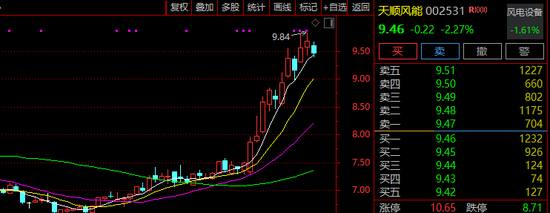
Group 1 - The article highlights that during the last week before the holiday (February 9-13), 65 A-share listed companies were surveyed by institutions, with over 60% of the surveyed stocks achieving positive returns, led by Chongde Technology with a weekly increase of 28.62% [3] - TianShun Wind Power was particularly favored by institutions, receiving attention from 237 institutional investors, focusing on its offshore wind power shipment expectations for 2026, domestic and international capacity layout, and zero-carbon business planning [5][7] - NanKun Group was cautious in its mining resource investments, participating in various precious metal mining projects while adhering to strict investment principles, emphasizing a stable production capacity and ongoing upgrades to processing equipment [9][10] Group 2 - GuoNeng RiXin received inquiries from 39 institutions regarding its strategic layout and investment in the electricity trading sector, highlighting its focus on increasing personnel and developing AI-driven trading capabilities [10][12] - DuoLi Technology engaged with 35 institutions, discussing its acquisition of a 70% stake in HanMeng Transmission to enhance its core components business for robots, aiming to leverage synergies in production and product development [13][14]

002531,火了!迎近240家机构调研!
Xin Lang Cai Jing· 2026-02-15 00:23
Group 1: Market Performance and Institutional Research - In the last week before the holiday (February 9-13), 65 A-share listed companies were surveyed by institutions, with over 60% of the surveyed stocks achieving positive returns [1][7] - Chongde Technology topped the weekly gain with a 28.62% increase, followed by Guangli Technology at 26.24%, Baichuan Co. at 24.33%, and Aidi Te at 24.12% [1][7] Group 2: TianShun Wind Power - TianShun Wind Power (002531) was highly favored by institutions, with 237 institutional investors participating in its research, focusing on the company's offshore wind power shipment expectations for 2026, domestic and international capacity layout, and zero-carbon business planning [1][3] - The company stated that due to the correlation between offshore wind power shipment volume and industry construction progress, it refrains from making shipment volume predictions [3][9] - TianShun has multiple offshore wind power production bases planned in China, including Yancheng, Jiangsu, and Guangdong, with an overseas base in Germany progressing steadily, designed for a capacity of 500,000 tons of monopiles [3][10] - The zero-carbon business is a core focus, with plans to expand scale, aiming for a grid-connected project capacity of 1.8GW by the end of 2025, and considering partial sales or REITs to enhance yield and capital turnover efficiency [3][10] Group 3: Nanmin Group - Nanmin Group was surveyed by 49 institutions, discussing its cautious approach to participating in mining resources, emphasizing a strategy of not investing in high-risk greenfield mines or projects with uncertain returns [4][11] - The company has no significant capacity bottlenecks and has invested in capacity construction, including a new factory and upgrades to processing equipment [4][11] Group 4: Guoneng Rixin - Guoneng Rixin received attention from 39 institutions regarding its strategic layout and investment in the electricity trading sector, focusing on increasing personnel in research, trading, and product development [5][12] - The company has developed an AI-driven trading model to enhance efficiency and strategy in electricity trading, aiming to create a closed-loop capability from forecasting to optimization [5][12] Group 5: Doli Technology - Doli Technology was surveyed by 35 institutions, primarily due to its acquisition of a 70% stake in Hanmeng Transmission, focusing on the core components of robotics [6][13] - The company aims to leverage synergies in manufacturing, product development, and supply chain channels to accelerate its strategic advancement in the robotics sector [6][13] - Doli Technology plans to optimize its industrial layout and expand its market coverage while being responsive to customer demand changes [6][13]
天顺风能接待238家机构调研,包括淡水泉、Allianz Global Investors、Capstone Capital、China AMC等
Jin Rong Jie· 2026-02-11 16:01
Core Viewpoint - The company is actively expanding its offshore wind power production capabilities both domestically and internationally, with a focus on increasing capacity and securing overseas orders, particularly in Europe and Southeast Asia. Domestic Production Capacity - The company has established multiple production bases in China, including a 200,000-ton capacity for monopiles in Yancheng, Jiangsu, and a combined 300,000-ton capacity for large monopiles and floating modular products in Tongzhou Bay [3] - The company is also developing a 600,000-ton capacity for jacket foundations in Guangdong, with the Yangjiang base expected to be operational by March [3] - The company is planning a 500,000-ton capacity facility in Zhangzhou, primarily targeting the global marine engineering market [3] International Production Capacity - The German base in Cuxhaven is progressing steadily, with a designed capacity of 500,000 tons for monopiles, also considering the production of floating platforms [3] Zero-Carbon Business Strategy - The zero-carbon business is a core focus, aiming to expand capacity to 1.8 GW of operational projects by the end of 2025, with plans to enhance returns through partial sales or REITs [5] Overseas Orders and Market Strategy - The company is actively pursuing overseas projects, particularly the UK AR7 project, with supplier selection expected in the first half of 2026-2027 [4] - The overseas team is primarily composed of local European personnel, integrated with Chinese management, and has established two marketing centers to manage orders [7] Cost Management and Production Efficiency - The company plans to produce jacket foundations in China due to high labor costs in Europe, while monopiles will be produced in Germany and Tongzhou Bay, leveraging automation to control costs [2][8] - The company aims to achieve a balance between domestic and international production, with a focus on efficiency and cost-effectiveness [8] Market Outlook - The global offshore wind power demand is expected to grow significantly, with the European Wind Energy Association predicting an annual growth rate of 15%-20% [2][13] - The company anticipates a surge in domestic offshore wind project tenders and construction, particularly in Guangdong, from 2025 to 2026 [2] Capital Operations - The company plans to complete a private placement by the end of 2023 to fund the acquisition of specialized vessels and support delivery services [11][12] - The management is committed to focusing resources on offshore wind equipment manufacturing, reflecting confidence in future industry growth [12]
天顺风能(002531) - 投资者关系活动记录表(2026年02月11日)
2026-02-11 14:01
Group 1: Company Production and Capacity - The company does not provide a forecast for 2026 shipment volumes due to the correlation with industry construction progress and lengthy approval processes [2] - Domestic production capacity includes: - Jiangsu Yancheng Sheyang base: 200,000 tons for monopiles - Tongzhou Bay base: 300,000 tons for large monopiles and floating modular products - Guangdong Jieyang and Yangjiang bases: 600,000 tons for jacket foundations - Other bases under planning with a total expected capacity of 500,000 tons [2][4] - The overseas production capacity at the German Cuxhaven port is progressing steadily with a design capacity of 500,000 tons for monopiles [2][4] Group 2: Market Trends and Demand - The domestic offshore wind market is expected to accelerate in 2025-2026, particularly in Guangdong, with a global demand surge driven by Europe, Southeast Asia, Japan, and South Korea [2][4] - The European offshore wind market is projected to grow at an annual rate of 15%-20% over the next decade, influenced by the shift towards offshore wind energy post-Russia-Ukraine conflict [12] Group 3: Zero-Carbon Business Strategy - The zero-carbon business is a core focus, aiming for a grid-connected capacity of 1.8 GW by the end of 2025, with potential plans for asset sales or REITs to enhance returns [4] Group 4: International Operations and Team Structure - The overseas team primarily consists of local European personnel, integrated with key members from the Chinese core team [6] - The company is actively pursuing AR7 projects, with supplier selection expected in 2026-2027 [3][6] Group 5: Financial and Capital Operations - The company plans to initiate a targeted capital increase by the end of 2025, pending regulatory approvals, to support its transition towards offshore wind equipment manufacturing [11] - The capital increase aims to align with the management's commitment to the offshore wind sector, which is seen as having significant growth potential [11] Group 6: Cost and Production Efficiency - The cost comparison indicates that the German factory is designed to enhance manufacturing efficiency while maintaining competitive costs against domestic facilities [8] - The company aims to maintain a strong market share in the southern offshore wind market, focusing on regions like Guangdong, Zhejiang, and Hainan [9] Group 7: Project Timelines and Delivery - The company anticipates that 2028-2030 will be significant years for the delivery of initiated overseas projects, while the next three years are expected to be peak years for domestic project deliveries [10]
看射阳如何“向海风要电力”
Xin Hua Ri Bao· 2026-02-07 19:57
Core Insights - The article highlights the significant development of the offshore wind power industry in Sheyang, showcasing the role of TianShun Marine Engineering as a key player in manufacturing offshore wind power foundation equipment [1][2][3] Company Overview - TianShun Marine Engineering has established itself as a leader in the offshore wind power foundation equipment manufacturing sector since its establishment in Sheyang in 2017, contributing to the local wind power industry's growth [1][2] - The company maintains an annual production of approximately 200,000 tons of steel pipes and other products, with peak annual revenue exceeding 2 billion yuan [2] Industry Development - By 2025, the Sheyang wind power equipment industry chain is expected to achieve sales of 13.4 billion yuan, reflecting a 15% year-on-year growth, driven by the clustering effect of 55 enterprises [3] - Major companies like Hengtong Cable and CRRC are leading growth with double-digit increases, while new projects are injecting fresh momentum into the industry [3] Challenges and Opportunities - The industry faces challenges such as the need for stronger market linkages and the underutilization of local production capacity for nearby orders [3] - There is a focus on enhancing technological capabilities, particularly in high-tech components like main bearings and control systems [3] Future Plans - Sheyang aims to become a core hub for wind power development in Jiangsu, with plans to reach a "trillion-level wind power industry cluster" [6] - The strategy includes strengthening local resource development, enhancing collaboration with leading enterprises, and advancing technological innovation [4][5][7]