
原矿

Search documents
重磅信号!全球锂矿暴涨,津巴布韦全面禁运,中国恐被冲击
Sou Hu Cai Jing· 2026-02-27 07:45
Group 1 - Zimbabwe, the world's fourth-largest lithium producer, has announced a sudden export ban on all lithium concentrates and ores, impacting global supply dynamics significantly [2][4] - The ban aims to reshape the distribution of industrial chain profits by forcing foreign companies to invest locally and only allowing the export of higher-value lithium sulfate [4] - Zimbabwe accounts for 15% of China's lithium concentrate imports, and the ban is expected to exacerbate existing supply-demand gaps in the lithium market [4][5] Group 2 - Current domestic lithium concentrate inventory in China is below 20,000 tons, with turnover days for material factories under 10 days, indicating a critical supply shortage [5] - The lithium price is projected to rise significantly, potentially exceeding 200,000 yuan per ton and possibly reaching 300,000 yuan per ton due to low inventory, supply disruptions, and recovering demand [5] - The global competition for mineral resources is intensifying, with countries increasing capital expenditures to secure self-sufficiency in industrial products, making basic resources a strategic commodity [7][12] Group 3 - The resource nationalism trend is evident as countries tighten export controls to enhance local processing and retain higher profit margins, as seen with recent actions from Congo and Indonesia [14][20] - The first tier of countries likely to follow Zimbabwe's lead includes those in the lithium triangle of South America, particularly Chile, which may restrict new mining permits [16][18] - The second tier includes Southeast Asian and African nations, with Indonesia likely to extend its export restrictions to copper and bauxite, while Congo may halt cobalt concentrate exports [18][20] Group 4 - The overarching strategy for resource-rich countries is to control resource sources, prohibit raw mineral exports, and leverage geopolitical tensions to enhance bargaining power [22][25] - Key areas to monitor for potential policy changes include cobalt resources in Congo, lithium resources in Chile, and copper and bauxite in Indonesia, as these are likely to be the next focal points for stringent controls [24]

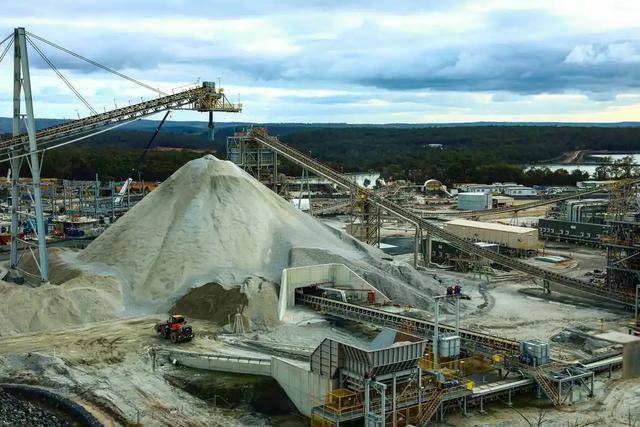
津巴布韦暂停所有原矿和锂精矿出口
Xin Hua She· 2026-02-26 08:44
Core Viewpoint - The Zimbabwean government has announced a suspension of all raw mineral and lithium concentrate exports, indicating a significant policy shift in the mining sector [1] Group 1: Government Announcement - The Ministry of Mines and Mining Development, led by Minister Polite Kambamura, issued a statement regarding the suspension of exports [1] - The government plans to engage with industry stakeholders to discuss new policy requirements and future development directions [1]
A股早评:沪指小幅高开,锂矿、磷化工板块盘初活跃
Ge Long Hui· 2026-02-26 01:35
Market Overview - The A-share market opened with mixed performance among the three major indices, with the Shanghai Composite Index rising by 0.09% to 4151.07 points, the Shenzhen Component Index increasing by 0.14%, while the ChiNext Index fell by 0.24% [1] Lithium Industry - Zimbabwe announced a suspension of lithium concentrate and raw ore exports, leading to a significant increase in lithium carbonate futures, which hit the daily limit [1] - Lithium mining stocks generally opened higher in response to the news from Zimbabwe [1] Phosphate Industry - The phosphate chemical sector continued its upward trend, with Chengxing Shares achieving a third consecutive trading limit increase [1]

属实!津巴布韦声明立即暂停所有原矿和锂精矿的出口
Xin Lang Cai Jing· 2026-02-25 10:04
Core Viewpoint - Zimbabwe's Ministry of Mines announced an immediate suspension of all raw mineral and lithium concentrate exports to enhance mineral regulation and accountability [3][5] Group 1: Export Regulations - Only companies holding valid mining rights and approved processing plants will be eligible for export, while agents and third-party traders are prohibited from exporting [3][5] - Applications for export licenses must include a recommendation from the provincial mining office regarding processing capacity and compliance, along with a declaration of mineral composition [3][5] - Violators, such as those continuing to use expired licenses, will face revocation of export permits and even mining rights [3][5] Group 2: Future Plans - The government plans to ban concentrate exports by 2027 [3][5] - Companies currently producing lithium salts or lithium sulfate in Zimbabwe can still apply for lithium concentrate export licenses, and lithium sulfate is currently allowed for export [3][5]

美股锂矿股盘前走强,报道:津巴布韦暂停出口锂精矿和原矿
Hua Er Jie Jian Wen· 2026-02-25 09:42
Core Viewpoint - The article emphasizes the importance of understanding market risks and the necessity for investors to conduct thorough research before making investment decisions [1] Group 1 - The market presents inherent risks that require careful consideration by investors [1] - Individual investment goals and financial situations should be taken into account when interpreting opinions and conclusions [1]
津巴布韦宣布立即暂停所有原矿和锂精矿的出口
Xin Lang Cai Jing· 2026-02-25 09:35
Core Viewpoint - Zimbabwe has announced an immediate suspension of all raw mineral and lithium concentrate exports, including in-transit shipments, to strengthen mineral regulation and accountability in the national interest [3][5]. Group 1: Export Suspension Details - The suspension applies to all raw minerals and lithium concentrates until further notice [3][5]. - Only mining companies holding valid mining rights and approved processing plants will be eligible for export in the future [3][5]. - The export of minerals by agents and third-party traders is prohibited [3][5]. Group 2: Export Application Requirements - Export applications must include a recommendation from the provincial mining office regarding processing capacity and compliance, in addition to standard documentation [3][5]. - Companies are required to declare the mineral composition of the goods being exported [3][5]. Group 3: Regulatory Enforcement - Regulatory authorities will enforce strict compliance, with penalties including the revocation of export licenses and mining rights for violations, such as continuing operations without proper permits [3][5]. - The measures aim to promote domestic processing and value retention within the country [3][5].
美国突袭委内瑞拉影响快评:美委地缘扰动不改中国出海大势
Orient Securities· 2026-01-05 13:12
Group 1: Geopolitical Impact - The U.S. launched a large-scale military operation against Venezuela on January 3, 2026, capturing President Maduro, signaling a strategic shift towards consolidating influence in Latin America[7] - The immediate economic impact on China-Venezuela trade is limited, with exports to Venezuela accounting for only 0.14% and imports for 0.06% of China's total trade in 2024[7] - However, the event raises concerns about increased uncertainty for China's trade and investment in the region due to U.S. strategic adjustments[7] Group 2: Trade and Investment Implications - China's exports to Latin America represent 7.7% of total exports, while imports from the region account for 9.3%, indicating significant reliance on Latin American markets[7] - Agricultural and mineral imports from Latin America constitute 42% and 16.1% of China's total imports in these categories, respectively, highlighting potential supply risks[7] - Direct investment from China to Venezuela is minimal, under 0.1%, but overall investment in Latin America ranges from 7.5% to 10%, suggesting a broader regional concern[7] Group 3: Strategic Shifts - The military action may further diminish Chinese enterprises' confidence in investing in Latin America, as evidenced by a slowdown in capital goods exports to the region in 2024[7] - The event could reinforce a strategic pivot for Chinese companies towards "Belt and Road" countries, providing new opportunities amid U.S. regional adjustments[7] - Despite U.S. trade regulations, China's export resilience was evident in 2025, with significant contributions from the EU, ASEAN, and Africa, while Latin America's share in export growth declined[7]