叠层光伏电池

Search documents
申万宏源:钙钛矿助力光伏行业反内卷 市场发展潜力巨大
Zhi Tong Cai Jing· 2025-11-14 06:49
Core Viewpoint - The photovoltaic industry is actively promoting anti-involution through polysilicon inventory management, but faces challenges due to the involvement of multiple companies and the need for substantial financial support. Technological iteration is seen as a less resistant option to clear excess capacity, with perovskite technology showing significant efficiency advantages over existing crystalline silicon technology, potentially accelerating the exit of outdated capacity and helping the industry recover from cyclical lows [1]. Group 1: Efficiency and Stability - Conversion efficiency of perovskite has significantly improved from 3.8% in 2009 to over 26% currently, with companies like GCL-Poly achieving 19.04% efficiency on 1m*2m panels and tandem cells nearing 30% efficiency [2]. - The stability of high-efficiency laboratory results is being addressed, with notable advancements in stability research, including a perovskite solar cell developed by the Chinese Academy of Sciences that exceeds 27% efficiency with controlled degradation [3]. Group 2: Commercialization and Policy Support - GW-level production lines are set to be launched by companies like Extreme Solar and GCL-Poly in 2025, with more planned capacity expected to come online by 2026. The first full-size perovskite module from GCL-Poly was produced on October 29, 2025, indicating a push towards commercial viability [4]. - Policy support for the development of new photovoltaic technologies is evident, with recent government initiatives focusing on perovskite materials and advanced photovoltaic technologies, which could enhance capacity iteration in the current anti-involution phase of the industry [5]. Group 3: Investment Opportunities - Companies to watch in the perovskite sector include equipment manufacturers such as Dier Laser, Jiejia Weichuang, and others, as well as perovskite module producers like Hangzhou Colin and GCL Technology. Additionally, TCO glass and perovskite encapsulant manufacturers are also highlighted as potential investment opportunities [6].

东吴证券:工信部发文加快钙钛矿中试平台建设 产业化加速设备商优先受益
智通财经网· 2025-11-13 12:57
Group 1 - The Ministry of Industry and Information Technology (MIIT) has issued a notice to accelerate the construction of pilot platforms for the manufacturing industry, focusing on advanced photovoltaic technologies such as perovskite solar cells and tandem solar cells [1] - The value of equipment in the early stage of perovskite industrialization is high, with the value of a single GW equipment exceeding 1 billion yuan, and the price of a 100MW production line equipment ranging from 300 million to 400 million yuan [3] - Companies such as Jiejia Weichuang (300724.SZ) are recommended as leading players in the semiconductor equipment sector, with other companies like Manstech (301325.SZ), Jing Shan Light Machine (000821.SZ), and others also suggested for attention [1] Group 2 - The GW production lines of companies like BOE and Jidian Energy are set to be operational between the second half of 2024 and the first half of 2025, with GCL-Poly's first perovskite module having been produced recently, marking significant advancements in efficiency, stability, and manufacturing costs [2] - The transition from laboratory and pilot stages to large-scale commercial applications for perovskite technology is being marked by the release of a 2.88m² module with a power output of 509.21W, certified by TÜV Rheinland [2] - Equipment manufacturers are expected to benefit first as the perovskite industry moves from the 0-1 stage of industrialization, with customized production capacity designs and advanced technologies being highlighted in the offerings of leading equipment suppliers [3]

唯一跟踪光伏龙头30指数的光伏ETF龙头(560980)盘中涨超2%,连续7日累计“吸金”超2亿元!标的指数年内涨超46%高于光伏产业指数
Xin Lang Cai Jing· 2025-11-13 06:13
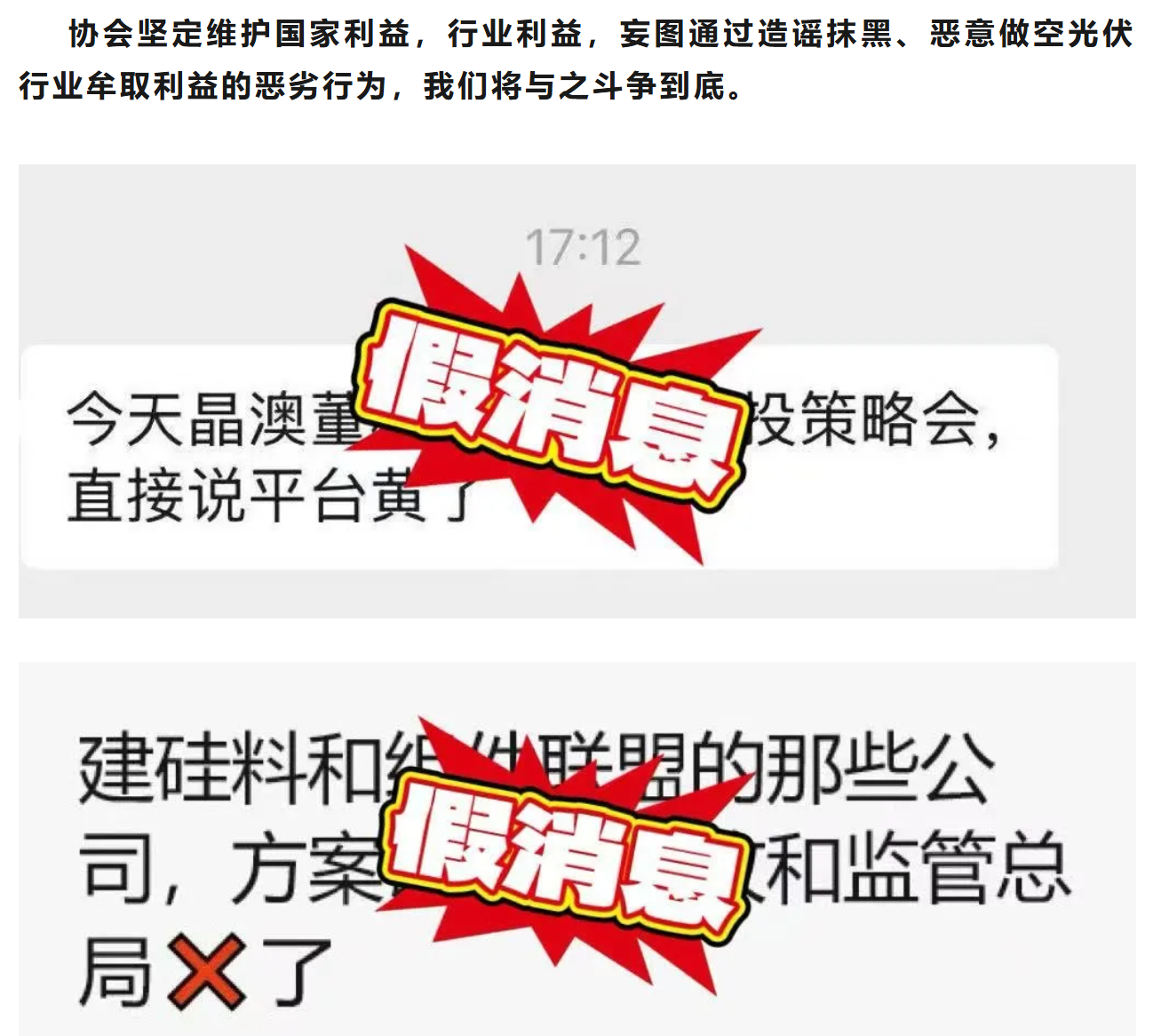
Core Insights - The China Photovoltaic Industry Association has issued a statement refuting false information circulating online, emphasizing the industry's commitment to maintaining national and industry interests and combating malicious actions against the photovoltaic sector [1] Industry Dynamics - The 2025 World Power Battery Conference opened in Yibin, Sichuan, on November 12, with 180 signed projects totaling 86.13 billion yuan, covering areas such as power batteries, new energy storage, photovoltaics, and smart connected new energy vehicles, showcasing strong industrial clustering effects and development momentum [1] - Tongwei Co. expressed strong support for the photovoltaic "anti-involution" initiative, believing that relevant policies will gradually be implemented [1] Policy Developments - On November 12, the National Energy Administration proposed guidelines to promote the integrated development of new energy, aiming for significant improvements in the reliability of new energy by 2030, enhancing market competitiveness, and supporting the green transformation of the economy [1] Technological Advancements - The Ministry of Industry and Information Technology released a document on November 11 to accelerate the construction of pilot platforms for advanced photovoltaic technologies, such as perovskite and tandem solar cells, indicating that the perovskite industry is at a critical stage of commercialization [2] - East Wu Securities noted significant technological breakthroughs by companies like GCL-Poly and Xina Solar, marking progress towards large-scale commercial applications [2] Financial Performance - Leading photovoltaic companies reported improved profitability in Q3 2025, driven by stabilized prices in the photovoltaic supply chain and reduced inventory impairment losses, with notable increases in gross margins, particularly in the silicon material segment [2] - As of November 13, 2025, the CSI Photovoltaic Leaders 30 Index rose by 1.83%, with significant gains in component stocks such as Sungrow Power and MicroNano [2] ETF Market Activity - The leading photovoltaic ETF reached a new high of 561 million yuan in size and 752 million shares in circulation, with a net inflow of 204 million yuan over the past week [3] - The ETF closely tracks the CSI Photovoltaic Leaders 30 Index, which has seen a year-to-date increase of over 46%, outperforming similar indices [3]
光伏设备:工信部发文加快钙钛矿中试平台建设,产业化加速设备商优先受益
Soochow Securities· 2025-11-12 15:17
Investment Rating - The report maintains an "Accumulate" rating for the photovoltaic equipment industry [1] Core Insights - The Ministry of Industry and Information Technology has issued a notice to accelerate the construction of perovskite pilot platforms, which will benefit equipment manufacturers [4] - The gradual implementation of GW lines and accelerated industrialization progress are noted, with major companies like BOE and Jinko Solar starting production [4] - The initial stage of perovskite industrialization presents high equipment value, with single GW equipment valued over 1 billion and 100MW complete line equipment priced between 300-400 million [4] - Investment recommendations include leading semiconductor equipment manufacturers and specific companies such as Jiejia Weichuang and others [4] Summary by Sections - **Policy Development**: The Ministry of Industry and Information Technology has focused on advanced photovoltaic technologies, including perovskite solar cells [4] - **Industrial Progress**: Companies like BOE and Jinko Solar have begun production of GW lines, marking significant advancements in efficiency and cost [4] - **Equipment Value**: The report highlights the high value of equipment in the early stages of perovskite industrialization, with significant investment opportunities for equipment manufacturers [4] - **Investment Suggestions**: Recommendations include specific companies in the semiconductor equipment sector, indicating a positive outlook for these firms [4]
光伏“反内卷”遇到了“鬼故事”
虎嗅APP· 2025-11-12 13:33
Core Viewpoint - The article discusses the recent turmoil in the photovoltaic (PV) industry due to rumors about the failure of anti-involution policies, which led to significant stock declines. However, the industry association's clarification has stabilized the market, highlighting the determination to combat unhealthy competition and restore value in the sector [3][4][17]. Group 1: Industry Context - The term "involution" has become synonymous with the PV industry in 2023, characterized by homogenized expansion, price wars, and inefficient competition amid slowing installation demand [7]. - The capital market's reaction is evident, with the PV ETF experiencing a dramatic decline of 68.39%, reflecting the industry's struggles and the negative sentiment surrounding it [8]. - The anti-involution initiative began planning in May 2024, officially launching in October 2024, with policies aimed at curbing unhealthy competition and restoring market balance [9][10]. Group 2: Policy Measures - Current policies focus on "price protection" and "volume control," aiming to eliminate below-cost sales and facilitate the exit of outdated production capacities [10]. - Initial results of the price protection measures show significant price increases in key materials: silicon materials up 33.33%, silicon wafers up 17.39%, batteries up 8.92%, and modules up 2.45% [11]. - The silicon material segment is crucial for reversing the industry's overcapacity, as it has the least production elasticity and is capital-intensive, making it difficult to restart production once halted [12][13]. Group 3: Market Recovery - The anti-involution actions have led to expectations of rapid capacity reduction in the silicon material sector, which is essential for improving the overall PV industry landscape [17]. - The establishment of a joint storage platform for silicon material by multiple companies is anticipated to facilitate the exit of smaller players and further stabilize the market [16]. Group 4: Asset Revaluation - The article posits that the anti-involution policies will drive a revaluation of PV assets, transitioning the industry from scale expansion to quality competition [20]. - Companies like Tongwei, TCL Zhonghuan, and Longi Green Energy are showing signs of recovery, with some reporting improved quarterly performance despite still being in the red [22]. - The focus on technological advancements, such as perovskite solar cells, is seen as a pathway for companies to differentiate themselves and enhance their market value [24][25].







光伏“反内卷”遇到了“鬼故事”
Hu Xiu· 2025-11-12 12:49
Core Viewpoint - The recent rumors regarding the failure of the "anti-involution" policy in the photovoltaic industry led to significant stock declines, but subsequent clarifications from industry associations helped stabilize the market, indicating a strong commitment to reversing negative competition in the sector [1][5][18]. Group 1: Market Reaction - Following the spread of rumors, the photovoltaic sector experienced a sharp decline, with companies like Jingao Technology and Tongwei Co. seeing drops of 6.84% and 6.06% respectively [5]. - The China Photovoltaic Industry Association issued a statement to refute the rumors, emphasizing the importance of maintaining industry integrity and combating malicious market manipulation [1][5]. Group 2: Anti-Involution Policy - The term "involution" has become synonymous with the photovoltaic industry since 2023, characterized by homogenized expansion and price wars amid slowing installation demand [7]. - The core of the current policy focuses on "price protection" and "volume control," aiming to eliminate below-cost sales and facilitate the exit of outdated production capacities to restore market balance [9][10]. Group 3: Price Recovery - Initial results from the price protection measures show positive trends, with significant price increases in key materials: silicon materials up 33.33%, silicon wafers up 17.39%, and battery cells up 8.92% [10]. - The recovery of prices is expected to improve profitability for companies, laying a solid foundation for valuation increases [20]. Group 4: Capacity Control - The silicon material segment is crucial for addressing overcapacity issues, as it has the least production flexibility and is capital-intensive [11][12]. - Companies are beginning to implement production and sales controls, with expectations to limit annual output to 1.4 million tons, aligning with earlier targets [14]. Group 5: Asset Revaluation - The anti-involution policies are transitioning from expectation to substantial implementation, driving the revaluation of assets in the photovoltaic sector [18][19]. - Companies like Tongwei Co., GCL-Poly Energy, and Daqo New Energy are expected to attract market attention as they benefit from reduced silicon material production and subsequent price increases [22]. Group 6: Technological Advancements - The Ministry of Industry and Information Technology has initiated efforts to accelerate the development of advanced photovoltaic technologies, such as perovskite solar cells, which have the potential for higher efficiency compared to traditional silicon cells [23]. - Recent announcements from companies like GCL-Poly regarding the commercialization of perovskite technology indicate a shift towards innovative production methods, which could lead to significant market opportunities [24].