
哇库库

Search documents
玩具新潮催生“包挂经济”(看中国好物七十二变)
Ren Min Ri Bao· 2026-01-14 07:00
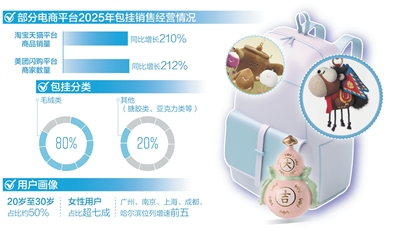
Core Viewpoint - The rise of "bag-hanging economy" reflects a shift in consumer preferences towards portable, emotionally resonant products, particularly among younger demographics, emphasizing emotional value over mere utility [2][3][4]. Group 1: Changing Consumer Demand - Bag-hanging products serve as "emotional companions" and social symbols, allowing consumers to express their emotions and connect with like-minded individuals [3][4]. - The trend towards smaller, more affordable bag-hanging items aligns with the emotional consumption trend, where young consumers prioritize products that provide joy and a sense of belonging [3][4]. - Consumers are increasingly treating bag-hanging toys as personal items, often customizing them to reflect their moods and styles, thus enhancing their emotional connection [3][4]. Group 2: Industry Transformation - The bag-hanging economy is supported by a robust supply chain in Guangdong, where over 4,000 toy manufacturers and nearly 1,500 supporting companies create a complete industry chain from design to sales [5][6]. - The shift from mass production to flexible manufacturing allows for rapid design iterations and small-batch production, catering to the fast-changing market demands [6][7]. - Advanced manufacturing technologies, such as 3D printing, enable low-cost, small-scale production, making it feasible to produce unique items without significant upfront investment [6][7]. Group 3: Global Expansion - Chinese bag-hanging products are gaining international popularity, with brands like Labubu and collaborations with local cultural elements resonating with global consumers [8][10]. - The export of Chinese cultural products is seen as a new growth area, with significant sales increases reported in regions like Southeast Asia and the Americas [10]. - The narrative of Chinese creativity and cultural confidence is being reinforced through the global success of these products, showcasing a blend of local culture and international appeal [11].

看中国好物七十二变丨玩具新潮催生“包挂经济”
Ren Min Ri Bao· 2026-01-14 04:58
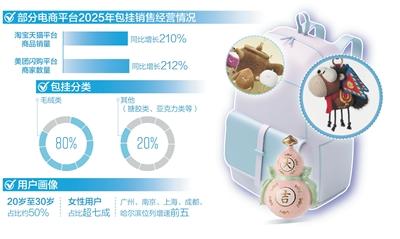
Core Insights - The article discusses the emerging "bag-hanging economy," characterized by the popularity of small, portable accessories that serve as emotional expressions and social symbols among young consumers [4][5][6][8]. Group 1: Consumer Trends - Bag-hanging products are increasingly favored for their small size, low cost, and strong emotional value, catering to the psychological needs of young consumers who prioritize emotional satisfaction over mere utility [6][7][12]. - These accessories serve as "visual emotional expressions," helping consumers identify like-minded individuals and form new social circles [8][9]. - The trend reflects a shift in consumer behavior, where items are not just toys but also personal statements and reminders of experiences, often linked to local culture and personal memories [9][10]. Group 2: Industry Dynamics - Dongguan, known as the "Toy Capital of China," has become a manufacturing hub for bag-hanging products, housing over 4,000 toy manufacturers and 1,500 supporting companies, creating a complete industry chain from design to sales [10][11]. - The industry has shifted from mass production to flexible manufacturing, allowing for rapid design iterations and small batch production, which meets the fast-changing market demands [11][12]. - The integration of smart manufacturing and digital workshops has enabled lower production costs and quicker turnaround times, facilitating the production of unique items even in small quantities [11][12]. Group 3: Global Expansion - Chinese bag-hanging products are gaining international traction, with successful examples like the "Labubu" character and collaborations with popular media, enhancing their appeal in overseas markets [14][15]. - The rise of Chinese cultural products in global markets is supported by a growing acceptance of Chinese culture and aesthetics, with brands adapting their offerings to resonate with local consumers [15][16]. - The Chinese toy industry is leveraging its strong supply chain to enhance its global presence, with significant growth in regions like Southeast Asia, Europe, and the Americas projected for 2025 [15][16].
玩具新潮催生“包挂经济”
Xin Hua Wang· 2026-01-14 00:07
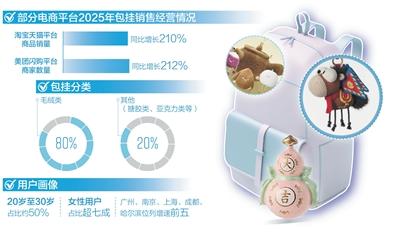
Core Insights - The rise of "bag-hanging economy" reflects a shift in consumer preferences towards portable, emotionally resonant products that serve as social symbols and personal expressions [3][4][5][6][7][8] Group 1: Consumer Trends - Bag-hanging products are increasingly popular among young consumers, characterized by small sizes and emotional value, fulfilling psychological needs beyond mere utility [5][6] - Consumers view bag-hanging items as "emotional companions" and social symbols, facilitating connections among individuals with similar values [7][8] - The trend is driven by a desire for personal expression and emotional connection, with products often reflecting local culture and personal experiences [8] Group 2: Industry Dynamics - Dongguan, known as the "capital of trendy toys," has become a manufacturing hub for bag-hanging products, housing over 4,000 toy manufacturers and 1,500 supporting companies [9][10] - The industry has shifted from mass production to flexible manufacturing, allowing for rapid design iterations and small-batch production to meet changing consumer demands [10][11] - The integration of smart manufacturing and digital workshops has enabled cost-effective production of small quantities, enhancing responsiveness to market trends [10] Group 3: Global Expansion - Chinese bag-hanging products are gaining international traction, with successful entries into markets in North America, Europe, and Southeast Asia, driven by unique cultural narratives and emotional resonance [12][13][14] - The rise of local brands and IP collaborations has enhanced the appeal of Chinese products abroad, showcasing a blend of traditional culture and modern design [14][15] - Future strategies include adapting products to local cultures while maintaining a connection to Chinese heritage, aiming to build emotional ties with global consumers [14][15]
北京朝阳区推动文化产业高质量发展:朝阳涌新“潮”
Ren Min Ri Bao· 2025-09-28 00:29
Group 1 - The article highlights the integration of cultural, commercial, and tourism sectors in Beijing's Chaoyang District, exemplified by the success of the Pop Mart City Park, which attracts visitors through unique IP interactions and immersive experiences [1][3] - The district is leveraging its status as a national cultural industry innovation experimental zone to promote high-quality cultural industry development, focusing on new cultural consumption models and enhancing people's cultural satisfaction [1][2] - Significant investments are being made in the cultural sector, with an annual allocation of 150 million yuan for cultural industry guidance funds, resulting in the establishment of five hundred billion yuan parks and over thirty-six municipal parks [2] Group 2 - The opening of the "Weibo IN" esports venue, which spans 42,000 square meters, is expected to host hundreds of events annually, contributing to the vibrant commercial landscape of the area [2] - The rise of trendy toys, such as "Labubu" and "Wakuku," is positioning Chaoyang District as a key player in the trendy toy industry, supported by a complete ecosystem that facilitates product design and market entry [3] - The district is actively creating diverse cultural consumption scenarios through events like concerts and esports, which are expected to drive significant economic activity, with projections of 170 million attendees and over 7.5 billion yuan in consumption by mid-2025 [4]

北京朝阳区推动文化产业高质量发展—— 朝阳涌新“潮”
Ren Min Ri Bao· 2025-09-27 22:04
Group 1: Cultural Industry Development - The article highlights the importance of high-quality development in the cultural industry, emphasizing the need for a modern cultural industry system and market system to enhance cultural consumption and people's sense of happiness [1][2] - Beijing's Chaoyang District is leveraging its status as a national cultural industry innovation experimental zone to explore new directions and models for cultural industry development, integrating technology with cultural innovation [1][2] Group 2: Technological Integration - The integration of new digital technologies such as AI, blockchain, virtual reality, and 5G is accelerating innovation in the cultural industry, with significant investments in cultural technology fusion [2] - Chaoyang District has established a cultural industry guidance fund of 150 million yuan annually to support the development of cultural technology [2] Group 3: New Business Models - The opening of the "Weibo IN" esports venue in Chaoyang District is expected to host hundreds of events annually, creating a new commercial scene that combines various cultural elements [2] - The rise of trendy toys, such as "Labubu" and "Wakuku," is positioning Chaoyang District as a key player in the trendy toy industry, benefiting from a complete ecosystem for product design and market entry [3] Group 4: Economic Impact - In the first half of 2025, Chaoyang District is projected to host 41 large concerts, attracting approximately 1.7 million attendees and generating over 7.5 billion yuan in comprehensive consumption [4] - The 15th Beijing International Film Festival saw hundreds of merchants participating in a ticket-root linkage mechanism, boosting foot traffic and sales in key commercial areas [4]
朝阳涌新“潮”
Ren Min Ri Bao· 2025-09-27 21:54
Core Insights - The article highlights the integration of culture, commerce, and tourism in Beijing's Chaoyang District, emphasizing the development of new cultural consumption models and the importance of high-quality cultural supply to enhance people's sense of cultural fulfillment and happiness [1][2]. Group 1: Cultural Industry Development - Chaoyang District is leveraging its status as a national cultural industry innovation experimental zone to promote high-quality cultural industry development through technology-driven cultural innovation [1][2]. - The district has established a cultural industry guidance fund of 150 million yuan annually to support the integration of culture and technology, resulting in the formation of five cultural parks with a valuation of over 10 billion yuan each [2][3]. Group 2: New Business Models and Consumer Engagement - The opening of the "Weibo IN" esports venue, which spans 42,000 square meters, is expected to host hundreds of events annually, enhancing consumer engagement and attracting a significant number of visitors [2][3]. - The rise of trendy toys, such as "Labubu" and "Wakuku," is positioning Chaoyang as a key player in the trendy toy industry, benefiting from a complete ecosystem that facilitates product design and market entry [3]. Group 3: Economic Impact and Consumer Activity - In the first half of 2025, Chaoyang District is projected to host 41 large concerts, attracting approximately 1.7 million attendees and generating over 7.5 billion yuan in comprehensive consumption [4]. - The 15th Beijing International Film Festival saw hundreds of merchants participating in a ticket-root linkage mechanism, boosting foot traffic and sales in key commercial areas [4].