
哌柏西利

Search documents
奥翔药业(603229.SH):获得化学原料药上市申请批准通知书
Xin Lang Cai Jing· 2025-12-30 08:48
Core Viewpoint - The approval of the raw materials for Palbociclib and Dapagliflozin indicates compliance with national drug registration requirements, enhancing the company's product line and competitiveness, and promoting sustainable and healthy development [2]. Group 1: Product Approvals - The company received the approval notice for the raw materials of Palbociclib and Dapagliflozin from the National Medical Products Administration [1]. - Palbociclib is a CDK4/6 inhibitor used for treating hormone receptor-positive, HER2-negative locally advanced or metastatic breast cancer [1]. - Dapagliflozin is an SGLT-2 inhibitor used for improving blood sugar control and reducing cardiovascular risks in adults with heart failure [1]. Group 2: Strategic Implications - The approval of these raw materials will enrich the company's product line, enhancing its competitiveness in the pharmaceutical market [2]. - The introduction of these drugs is expected to contribute to the company's continuous, stable, and healthy development [2].

奥翔药业:哌柏西利原料药、达格列净原料药获上市许可
Xin Lang Cai Jing· 2025-12-30 08:40
Core Viewpoint - The company has received approval from the National Medical Products Administration for the marketing of two active pharmaceutical ingredients: Palbociclib and Dapagliflozin [1] Group 1: Product Approvals - Palbociclib is a CDK4/6 inhibitor indicated for the treatment of hormone receptor-positive (HR+), HER2-negative locally advanced or metastatic breast cancer [1] - Dapagliflozin is a novel oral hypoglycemic agent classified as an SGLT-2 inhibitor, which can be used as monotherapy or in combination therapy to improve blood glucose control based on diet and exercise [1]
润承经典,愈见新生丨2025乳腺癌精准诊疗与长生存价值研讨会圆满落幕,开启患者净获益新时代
Ren Min Wang· 2025-11-18 07:57
Core Viewpoint - Breast cancer has become the most prevalent malignant tumor globally, and its prevention and treatment are crucial for public health. The "2025 Breast Cancer Precision Diagnosis and Long-term Survival Value Seminar" held in Shanghai focused on optimizing breast cancer diagnosis and treatment under the context of precision medicine, emphasizing patient-centered long-term survival strategies [1]. Group 1: Conference Overview - The seminar was chaired by prominent figures in the field, including Professor Shen Zhenzhou and Academician Xu Binghe, gathering top scholars to discuss the enduring value of classic treatment protocols and long-term patient management [1][3]. - The event highlighted the evolution of treatment philosophies, transitioning from "maximum tolerated" to "minimum effective" approaches, underscoring the importance of established treatment protocols as foundational elements in breast cancer care [3][5]. Group 2: Clinical Insights - Professors Shao Zhimin and Zhang Jin emphasized the clinical significance of classic drugs, advocating for deep academic exchanges to solidify consensus on their value while accelerating the development of innovative therapies [5][6]. - The discussion included the need for a dual focus on innovation and the enduring efficacy of classic treatments in enhancing patient survival and quality of life [6]. Group 3: Industry Perspectives - Dong Hao, Deputy General Manager of China Resources Pharmaceutical Group, articulated the company's commitment to integrating classic treatment strategies into clinical practice to meet unmet patient needs [8]. - The seminar also addressed the challenges and opportunities within the Chinese pharmaceutical industry, particularly in the context of drug approval reforms and the need for efficient commercialization strategies [10]. Group 4: Quality Control and Standardization - The establishment of quality control alliances and standardized treatment protocols was discussed, with a focus on enhancing regional healthcare delivery and ensuring equitable access to breast cancer care [11]. Group 5: Future Directions - The seminar concluded with a focus on the future of breast cancer treatment, emphasizing the importance of classic drugs alongside innovative therapies, particularly in the context of ongoing clinical trials and research [35][38]. - The "Net Benefit Long-term Survival Navigation Plan" was launched, aiming to improve overall management of breast cancer through collaborative efforts [31].



吡洛西利亮相ESMO,轩竹生物-B(2575.HK)国产创新药的突围样本
Ge Long Hui· 2025-10-23 02:24
Core Viewpoint - The ESMO annual meeting serves as a significant platform for innovative drug companies to disclose critical clinical data, which often catalyzes stock price increases for the companies involved [1] Group 1: Clinical Data and Market Reaction - XuanZhu Biotech presented promising Phase III clinical data for Pyrotinib at the ESMO conference, demonstrating efficacy and safety advantages [1] - Following the announcement, XuanZhu Biotech's stock surged by 31.87%, reaching a new high, reflecting market confidence in the clinical results and the company's future [1] Group 2: Clinical Trial Insights - The randomized double-blind trial involved 397 patients across 58 centers in China, showing that the combination of Pyrotinib with Letrozole or Anastrozole significantly outperformed the control group in terms of median progression-free survival (mPFS) and objective response rate (ORR) [2] - The mPFS was not reached at a median follow-up of 20.7 months, while the ORR was 63.5%, 21 percentage points higher than the control group [2] - The risk of disease progression or death was reduced by 47%, with a 64% reduction in liver metastasis patients, indicating clear therapeutic advantages [2] Group 3: Comprehensive Treatment Strategy - Pyrotinib's data represents a key component of its "full-cycle treatment strategy," having received approval for two indications earlier this year [3] - The drug is positioned to cover the entire treatment spectrum from late-line to first-line therapy, enhancing its market potential [3] Group 4: Competitive Advantages - Pyrotinib has established a unique competitive barrier through its efficacy, safety, and broad indications, outperforming competitors in key metrics [5] - The ORR of 63.5% for Pyrotinib in first-line treatment is significantly higher than that of similar products, indicating its long-term benefit potential [6] - Pyrotinib is the first and only CDK4/6 inhibitor approved for single-agent use in China, filling a critical gap in the treatment of difficult-to-treat breast cancer patients [6] Group 5: Market Potential and Evidence Support - The commercial potential of Pyrotinib is bolstered by strong clinical evidence and progress in reimbursement approval [8] - The drug has established a credible evidence base through publications in top journals and inclusion in clinical guidelines, enhancing trust among healthcare providers [9] - Pyrotinib has passed the initial review for inclusion in the national medical insurance directory, which is expected to significantly boost its sales [10] Group 6: Future Outlook - The successful approval of Pyrotinib for first-line treatment and its anticipated inclusion in the insurance directory could lead to substantial revenue growth for XuanZhu Biotech [10] - The product's comprehensive indication coverage and superior efficacy data position it well for market penetration, potentially replicating or exceeding the sales growth seen with similar products [10] - Pyrotinib's presence at ESMO symbolizes a shift for domestic innovative drugs from "catching up" to "leading," with its clinical advancements and reimbursement progress warranting ongoing investor attention [12]

锚定百亿美元乳腺癌用药市场 中国生物制药库莫西利冲刺一线最佳疗法
Zheng Quan Shi Bao Wang· 2025-10-15 07:48
Core Insights - The 2025 European Society for Medical Oncology (ESMO) annual meeting will take place in Germany from October 17 to 21, where several significant oral reports from domestic innovative pharmaceutical companies are expected to be disclosed [1] - China National Pharmaceutical Group is set to present key data on its CDK2/4/6 inhibitor, Kumosili, and HER2 dual-target ADC, TQB2102, highlighting its comprehensive coverage in the breast cancer treatment landscape [1] Industry Overview - Breast cancer is the second most common cancer globally, following lung cancer, and has the highest incidence and mortality rates among women [1] - The breast cancer market is highly competitive, particularly in the HR+/HER2- subtype, which accounts for approximately 65%-70% of all breast cancer cases [2] - The global market for CDK4/6 inhibitors is projected to approach $13 billion by 2024, with ongoing growth driven by products from Pfizer, Eli Lilly, and Novartis [2] Company Developments - Kumosili capsules, a new generation CDK2/4/6 inhibitor, are expected to receive approval for second-line treatment of HR+/HER2- locally advanced or metastatic breast cancer by the end of this year [3] - The company is also advancing its clinical trials for Kumosili in first-line and adjuvant settings, aiming for comprehensive coverage across treatment lines [3] - TQB2102, another product from China National Pharmaceutical Group, will present phase Ib clinical data for HER2-positive recurrent/metastatic breast cancer at ESMO [3] Competitive Landscape - The ADC market for HER2-positive breast cancer is evolving, with significant sales from existing products like DS-8201, which reached $3.8 billion last year and is projected to peak at $10 billion [4] - TQB2102 has been optimized in terms of target binding, toxin load, and payload compared to DS-8201, and has been recognized as a breakthrough therapy for multiple indications [4] - The company has a diverse pipeline covering various cancer types, including breast, colorectal, lung, bile duct, and gastric cancers, with several indications entering phase III clinical trials [4]

开盘涨超153%!轩竹生物登陆港交所,依旧难掩“造血”焦虑
2 1 Shi Ji Jing Ji Bao Dao· 2025-10-15 02:27
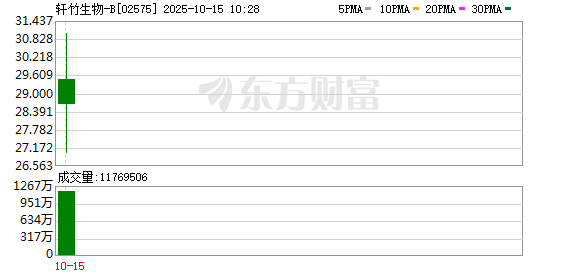
Core Viewpoint - The ongoing trend of biopharmaceutical companies going public in Hong Kong is driven by the need for funding and the advantages of Hong Kong's research infrastructure and regulatory environment [2][3] Group 1: IPO Activity - Over 12 biopharmaceutical companies have submitted IPO applications in Hong Kong since mid-September, covering areas such as innovative drug development and vaccines [2] - Xuan Zhu Biotech, which completed its IPO application in June, opened at HKD 29.46 per share, a 153.97% increase from its issue price of HKD 11.6, with a market capitalization exceeding HKD 15 billion [2] - The company plans to use 45% of the raised funds for core product R&D, 14% for key product development, and 20% for enhancing commercialization and marketing capabilities [2] Group 2: Market Dynamics - The collaboration between mainland Chinese pharmaceutical companies and Hong Kong is expected to deepen in product R&D, market strategy, and capital operations [3] - The capital market is returning to the essence of value recognition for biopharmaceutical assets, with innovative companies gaining continuous attention [3] Group 3: Competitive Landscape - Xuan Zhu Biotech has three core products approved for market, including KBP-3571, which has become a major revenue source [4] - The PPI market in China has remained above CNY 10 billion from 2018 to 2024, but competition is intensifying due to the inclusion of several common PPIs in centralized procurement [5] - Xuan Zhu Biotech is expanding the indications for KBP-3571 to include reflux esophagitis, which is currently in Phase III clinical trials [6] Group 4: Financial Performance - Xuan Zhu Biotech is experiencing revenue growth but also increasing losses, with revenues of CNY 2.9 million and CNY 30.09 million in 2023 and 2024, respectively, and total losses of CNY 3 billion and CNY 5.56 billion [7] - The company has over ten drug assets in development, with a significant focus on R&D spending, which was CNY 3.84 billion, CNY 2.85 billion, and CNY 1.06 billion for 2023, 2024, and the first half of 2025, respectively [8] Group 5: Future Outlook - The biopharmaceutical industry is characterized by high investment, long cycles, and high risks, leading to a continuous need for funding [7] - Companies must demonstrate tangible results in clinical value or commercial revenue to attract capital and resources in a competitive market [9]
全球“药王”易主
2 1 Shi Ji Jing Ji Bao Dao· 2025-08-11 15:57
Core Insights - The global pharmaceutical sales ranking for the first half of 2025 has been released, highlighting the dominance of GLP-1 drugs in the market, with the top three drugs surpassing $10 billion in sales, driving industry growth [2][5] - The competition among pharmaceutical giants is intensifying, particularly in the GLP-1 category, with Novo Nordisk and Eli Lilly leading the charge [5][6] Group 1: GLP-1 Drug Market - GLP-1 drugs are the main drivers of market growth, contributing nearly 30% to the global biopharmaceutical market [3][5] - Semaglutide from Novo Nordisk topped the sales chart with $16.632 billion, while Eli Lilly's tirzepatide followed closely with $14.734 billion, marking a significant year-on-year growth of 121.3% [5][6] - The competitive landscape is shifting, with semaglutide's various formulations (injection, oral, and weight loss) ending Keytruda's long-standing dominance [5][6] Group 2: Emerging Therapies - New therapies such as bispecific antibodies, antibody-drug conjugates (ADC), and fusion proteins are gaining traction, accounting for over 15% of the top-selling drugs [3][10] - ADC drug Enhertu made its debut in the top rankings with $3.9 billion in sales, indicating a growing interest in innovative therapies [3][10] Group 3: CDK4/6 Inhibitors - The CDK4/6 inhibitor market is experiencing a reshuffle, with Eli Lilly's Abemaciclib leading at $2.648 billion, while Novartis' Ribociclib showed a remarkable growth rate of 58.7% [10] - Pfizer's Palbociclib, once a market leader, has seen a decline, dropping to $2.026 billion in sales [10] Group 4: BTK Inhibitors - The BTK inhibitor market is projected to reach approximately $12.5 billion by 2024, with Ibrutinib, Zebrutinib, and Acalabrutinib dominating the market [11][12] - Zebrutinib from BeiGene has entered the global top 50 list with $1.742 billion in sales, marking a significant achievement for Chinese innovation in the pharmaceutical sector [12][13]


全球“药王”易主
21世纪经济报道· 2025-08-11 15:47
Core Insights - The global pharmaceutical sales ranking for the first half of 2025 has been released, highlighting the dominance of GLP-1 drugs in the market, with the top three drugs surpassing $10 billion in sales, driving industry growth [1][6][13] - The competition among global pharmaceutical giants is intensifying, particularly in the metabolic drug sector, with companies like Novo Nordisk and Eli Lilly expected to expand their advantages [2][4] Group 1: GLP-1 Drug Market - GLP-1 drugs are leading the market, with Novo Nordisk's semaglutide family generating $16.632 billion in sales, marking its first position in the ranking [6] - Eli Lilly's tirzepatide follows closely with $14.734 billion in sales, showing a remarkable year-on-year growth of 121.3% [6] - The sales dynamics indicate that semaglutide's injection version holds a 61% market share, while the oral version accounts for 29% [6][7] Group 2: Emerging Therapies - New therapies such as bispecific antibodies, antibody-drug conjugates (ADC), and fusion proteins are gaining traction, accounting for over 15% of the market [1][13] - ADC drug Enhertu has entered the top rankings with $3.9 billion in sales [1] - mRNA vaccines have collectively contributed $9.4 billion, showcasing the impact of innovative therapies in the pharmaceutical landscape [1] Group 3: CDK4/6 Inhibitors - The CDK4/6 inhibitor market is experiencing a reshuffle, with Eli Lilly's Abemaciclib leading at $2.648 billion, while Novartis's Ribociclib has surged with a 58.7% growth [10][11] - Pfizer's Palbociclib has seen a decline, dropping to $2.026 billion, marking a significant shift in market dynamics [11] Group 4: Chinese Pharmaceutical Innovations - The entry of Chinese innovation, specifically BeiGene's Zebrutinib, into the global top 50 with $1.742 billion in sales signifies a breakthrough for domestic drugs [12] - Zebrutinib's success reflects the potential for Chinese pharmaceuticals to transition from thematic investments to performance-driven investments in the global market [12]

全球“药王”半场易主,国产创新药首入TOP50
2 1 Shi Ji Jing Ji Bao Dao· 2025-08-11 12:28
Core Insights - The global pharmaceutical sales ranking for the first half of 2025 has been released, highlighting the dominance of GLP-1 drugs, with the top three drugs surpassing $10 billion in sales, marking them as key growth drivers in the industry [1][2][3] - The competition among global pharmaceutical giants is intensifying, particularly in the metabolic drug sector, with companies like Novo Nordisk and Eli Lilly expected to further strengthen their market positions [2][3] GLP-1 Drug Market Dynamics - Novo Nordisk's GLP-1 family, particularly semaglutide, achieved sales of $16.632 billion, securing the top position, while Eli Lilly's tirzepatide followed closely with $14.734 billion, reflecting a year-on-year growth of 121.3% [3][4] - The sales of GLP-1 drugs are reshaping the "king of drugs" competition, with semaglutide and tirzepatide leading the market, and the latter's rapid growth could potentially position it as the top-selling drug for the year [3][4] Emerging Drug Categories - New therapeutic modalities, including bispecific antibodies, antibody-drug conjugates (ADC), and fusion proteins, are gaining traction, accounting for over 15% of the top-selling drugs, with ADC drug Enhertu entering the list with $3.9 billion in sales [1][8] - The mRNA vaccine category also contributed significantly, with three vaccines generating a total of $9.4 billion in sales [1] CDK4/6 Inhibitor Market - The CDK4/6 inhibitor market is experiencing a reshuffle, with Eli Lilly's Abemaciclib leading at $2.648 billion, followed by Novartis' Ribociclib, which saw a remarkable growth rate of 58.7% [6] - Pfizer's Palbociclib, once a market leader, has seen a decline, with sales dropping to $2.026 billion, marking a significant shift in market dynamics [6] BTK Inhibitor Landscape - The global BTK inhibitor market is projected to reach approximately $12.5 billion by 2024, with Ibrutinib, Acalabrutinib, and Zanubrutinib dominating over 97% of the market share [7] - Chinese innovation is making strides, with BeiGene's Zanubrutinib entering the global top 50 list for the first time, achieving sales of $1.742 billion [7][8] Future Outlook - The GLP-1 market is expected to maintain high growth, potentially securing two of the top three positions in the overall sales ranking for 2025, indicating a significant shift in the weight loss drug market [8] - The rise of new molecular entities such as bispecific antibodies and ADCs suggests that the next wave of major innovations will stem from modality innovations, further transforming the pharmaceutical landscape [8]
2025年上半年全球药品销售额TOP50出炉
Zheng Quan Shi Bao Wang· 2025-08-11 03:26
Group 1: Pharmaceutical Sales Overview - The Insight database released the TOP 50 pharmaceutical sales list for the first half of 2025, highlighting that chemical drugs and monoclonal antibodies dominate the list, with additional contributions from dual antibodies, preventive vaccines, ADCs, and fusion proteins [1] - A total of 44 drugs exceeded $2 billion in sales, with 10 surpassing $5 billion, and 3 drugs exceeding $10 billion in sales [1] - Semaglutide, with sales of $16.632 billion from its three versions (Ozempic, Rybelsus, and Wegovy), surpassed Keytruda, which maintained $15.161 billion in sales, to take the top position [1] Group 2: CDK4/6 Inhibitors Market Dynamics - The CDK4/6 inhibitor market is characterized by intense competition among major pharmaceutical companies, with Pfizer's Ibrance initially leading the market [2] - However, the market dynamics shifted as Eli Lilly's Verzenio gained significant traction, and in 2024, it surpassed Ibrance in sales for the first time [2] - In the first half of this year, Ribociclib experienced a remarkable growth rate of 58.7%, generating $2.133 billion, while Abemaciclib led the market with $2.648 billion, and Ibrance fell to $2.026 billion [2] Group 3: BTK Inhibitors Market Analysis - There are currently six approved BTK inhibitors globally, with Ibrutinib, Acalabrutinib, and Zanubrutinib holding over 97% of the market share [3] - Ibrutinib, despite its initial success with sales reaching $9.777 billion in 2021, has seen a decline, with sales dropping below $3 billion in the first half of 2025, a 9% year-over-year decrease [3] - In contrast, Zanubrutinib has shown impressive growth, achieving $2.644 billion in sales for 2024, a 103.4% increase, and breaking into the TOP 50 list with $1.742 billion in the first half of 2025, a 54.7% year-over-year growth [3]