大众ID. Polo

Search documents
不学英法!德国推出30亿欧元电动车补贴 中国车企同样可享
Zhi Tong Cai Jing· 2026-01-19 12:24
Group 1 - The German government has launched a €3 billion (approximately $3.5 billion) electric vehicle subsidy program open to all car manufacturers, including Chinese brands, aimed at boosting electric vehicle sales in Europe’s largest automotive market [1] - The new subsidy policy, announced on Monday, is part of a broader stimulus initiative by the German government, following a significant drop in electric vehicle demand after the previous subsidy program ended in 2023 [1] - German Environment Minister Carsten Schneider expressed confidence in the quality of European and German brands, stating that there is no evidence of a significant influx of Chinese car manufacturers into the German market, leading to a decision to face competition rather than impose restrictive barriers [1] Group 2 - Germany's open attitude towards Chinese car manufacturers contrasts sharply with other European countries, such as the UK and France, which have implemented stringent standards that effectively exclude Chinese electric vehicles from their markets [2] - The new subsidy plan, initially disclosed in October of last year, is expected to facilitate the sale of approximately 800,000 electric vehicles by 2029, with subsidy amounts ranging from €1,500 to €6,000 based on household income, population size, and vehicle type [2] - Major automakers like Volkswagen Group and Stellantis are expected to benefit from this subsidy policy as they increase their focus on affordable electric vehicle models [2] Group 3 - The ruling coalition led by Chancellor Merz has extended the electric vehicle tax exemption policy until 2035, with the German Finance Ministry estimating a tax revenue loss of approximately €600 million by 2029 [3] - Chancellor Merz has publicly advocated for slowing down the EU's proposed phase-out of combustion engine vehicles [3]

跨国车企的“廉价”小车反攻
第一财经· 2026-01-09 03:24
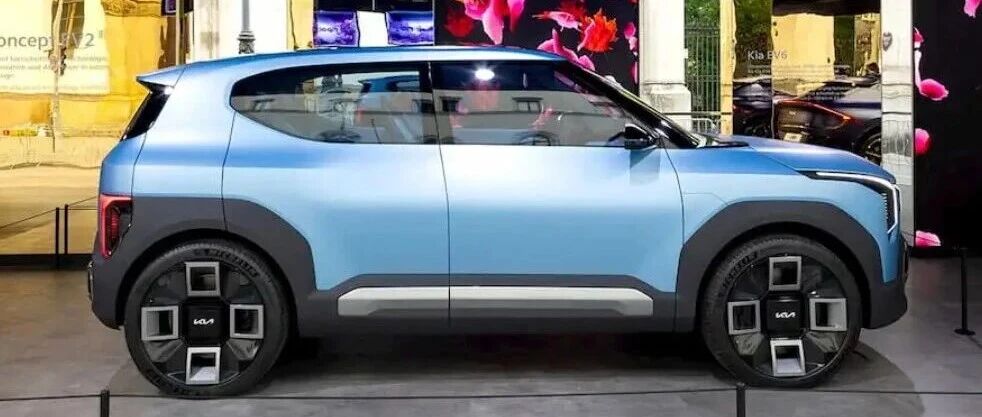
Core Viewpoint - The article discusses the increasing competition in the European electric vehicle (EV) market, highlighting the strategies of multinational car manufacturers to counter the growing presence of Chinese brands like BYD and MG by launching more affordable electric models [3][5]. Group 1: New Electric Vehicle Launches - Kia has confirmed the launch of its new entry-level model, the EV2, which will debut at the Brussels Motor Show on January 9, 2026. This compact electric SUV is set to be the smallest and cheapest electric vehicle from Kia, targeting a price point around €30,000 [3]. - Volkswagen plans to reintroduce its classic Polo as an electric model named ID. Polo, which will be based on the new MEB+ platform and is expected to start at €25,000, with a launch planned for spring 2026 [3]. - Renault, Nissan, Hyundai, and Ford are also set to introduce more economical electric models in 2026, with Renault's new electric Twingo expected to be priced below €20,000, relying on Chinese components for about 40% of its parts [4]. Group 2: Market Dynamics and Competition - Despite facing increased tariffs, Chinese brands are making significant inroads into the European market. In the first 11 months of 2025, the total registration in the broad European market reached 12.099 million vehicles, a 1.9% increase year-on-year, with electric vehicles driving this growth [5]. - The sales of pure electric vehicles reached 2.276 million units, marking a 27.4% year-on-year increase, while plug-in hybrid vehicles saw a 33.1% increase with 1.149 million units sold [5]. - Among the top ten car manufacturers in Europe, SAIC (mainly MG) ranked eighth with sales of 274,000 units, a 26.1% increase, while BYD ranked tenth with 160,000 units sold, experiencing a substantial growth of 276% [5][6]. Group 3: Emerging Chinese Brands - Chinese brands like Leap Motor and Chery's Omoda have shown remarkable growth in the European market, with Leap Motor's electric vehicle sales surging over 4000% year-on-year, and Omoda's sales increasing by 1100% during the same period [6].


跨国车企的“廉价”小车反攻
Di Yi Cai Jing· 2026-01-09 02:24
Group 1 - The core viewpoint of the articles highlights the increasing competition in the European electric vehicle (EV) market, driven by the entry of Chinese brands and the response from multinational automakers who are planning to launch more affordable electric models [1][2][3] Group 2 - Kia has confirmed the launch of its new entry-level model, the EV2, which is a pure electric small SUV set to debut at the Brussels Motor Show on January 9, 2026, with an expected price around €30,000 [1] - Volkswagen is reintroducing its classic Polo as a pure electric vehicle named ID. Polo, which will be based on the new MEB+ platform and is expected to start at €25,000 in spring 2026 [1] - Renault plans to launch a new pure electric Twingo in early 2026, with a price below €20,000, relying on Chinese market components for about 40% of its parts [2] - The European market for electric vehicles is experiencing significant growth, with pure electric vehicle sales increasing by 27.4% year-on-year, and plug-in hybrid sales up by 33.1% [2] - Despite facing tariff increases, Chinese brands are gaining traction in the European market, with SAIC (MG) and BYD ranking eighth and tenth in sales, respectively, with significant year-on-year growth [2][3] - Smaller Chinese EV manufacturers are also seeing remarkable growth, with Leap Motor's sales increasing by over 4000% and Chery's Omoda brand growing by 1100% in the European market [3]
为什么说欧盟撤回,但又没完全撤回“禁燃令”
Zhong Guo Qi Che Bao Wang· 2025-12-22 08:28
Core Viewpoint - The European Commission has officially withdrawn its plan to ban the sale of new gasoline vehicles starting in 2035, opting for a more flexible emissions reduction strategy that requires a 90% reduction in CO2 emissions from new cars compared to 2021 levels by 2035, rather than the previous 100% target [2][3][4]. Emission Reduction Changes - The initial aggressive target of a complete ban on gasoline vehicles was proposed in 2021, which led to significant industry upheaval. The European Parliament passed a zero-emission agreement in February 2023, but under pressure from countries like Germany and Italy, the EU made compromises, allowing for exemptions for vehicles using synthetic fuels [3][4]. - The new proposal allows for a 90% reduction in emissions, with the remaining 10% potentially offset by using low-carbon steel, synthetic fuels, or non-food biofuels. Additionally, a three-year window from 2030 to 2032 has been established, requiring a 55% reduction in passenger car emissions and a 40% reduction for vans compared to 2021 levels [3][4]. Market Implications - The policy shift allows for various vehicle types, including plug-in hybrids and traditional gasoline vehicles, to remain in the market while still aiming for significant emissions reductions. However, the majority of vehicles sold will still need to be zero-emission to meet the 90% reduction target [4][9]. - The slow adoption of electric vehicles has been a critical factor in this policy adjustment, with European automakers like Volkswagen and Stellantis advocating for more lenient targets due to weak demand for electric vehicles [4][5]. Competitive Landscape - European automakers are facing competitive pressure from companies like Tesla and Chinese manufacturers, prompting the need for policy adjustments to protect local market shares. The German government has been a key advocate for this policy change, emphasizing a "technology-neutral" approach to maintain industrial competitiveness [5][6]. - The decision to retain the internal combustion engine market while offsetting emissions through other means is seen as a pragmatic approach that aligns with current market conditions [5][6]. Legislative Process - The new proposal requires approval from EU member states and the European Parliament, indicating that the coordination process may be complex and contentious due to differing national interests [6]. Support for Small Electric Vehicles - The EU has introduced a new regulatory category for small electric vehicles (M1E), aimed at promoting urban commuting solutions. This category includes vehicles under 4.2 meters in length, with incentives for manufacturers producing these models [9][10]. - The EU plans to set more lenient requirements for safety and range for M1E vehicles and will implement a "super credit" system, allowing manufacturers to earn additional carbon credits for each small electric vehicle sold, thereby easing overall emissions reduction pressures [10][11]. Corporate Strategy - Companies like Stellantis and Renault are positioned to benefit significantly from the new M1E category, as they have been advocating for differentiated regulatory policies for small vehicles. Stellantis has noted a drastic reduction in affordable small car models due to regulatory costs, highlighting the need for additional support [10][11]. - The EU's push to increase the electric vehicle procurement ratio in corporate fleets is seen as a crucial lever to boost electric vehicle demand, as corporate fleets account for a significant portion of vehicle sales in the EU [12]. Overall Assessment - While the EU has abandoned the "one-size-fits-all" ban on internal combustion vehicles, it has not relinquished its core emissions reduction goals. The new approach seeks a balance between industrial protection and environmental objectives, although internal disagreements among member states and increasing global competition in the electric vehicle sector present challenges for successful implementation [13].

大众汽车在德启动自有电池生产
Zhong Guo Xin Wen Wang· 2025-12-18 00:24
Core Insights - Volkswagen Group has officially launched battery cell production at its subsidiary PowerCo in Salzgitter, Germany, marking a significant milestone for both the company and the European battery industry [1][2] - The Salzgitter factory represents the first full-process layout of battery cell production in Europe, enhancing the company's technological sovereignty and autonomy [1] - Volkswagen aims to reduce electric vehicle manufacturing costs and improve its competitiveness in the global electrification market through this initiative [1] Investment and Production Details - The Salzgitter factory project has seen an investment exceeding €1 billion since its construction began in July 2022 [1] - Initial production capacity is limited to several hundred battery cells per day, with plans to gradually increase to 60,000 to 70,000 cells per day, targeting an annual capacity of 20 GWh, sufficient for approximately 250,000 electric vehicles [1] - The self-produced battery cells are expected to be used in new small electric vehicles like the Volkswagen ID. Polo and Cupra Raval starting in 2026 [1] Strategic Importance - CEO Oliver Blume stated that the Salzgitter factory sends a strong technological signal for Europe and is a crucial part of the group's overall strategy [2] - As the first European automaker to achieve in-house battery cell development and production, Volkswagen strengthens its position and independence in global competition [2]
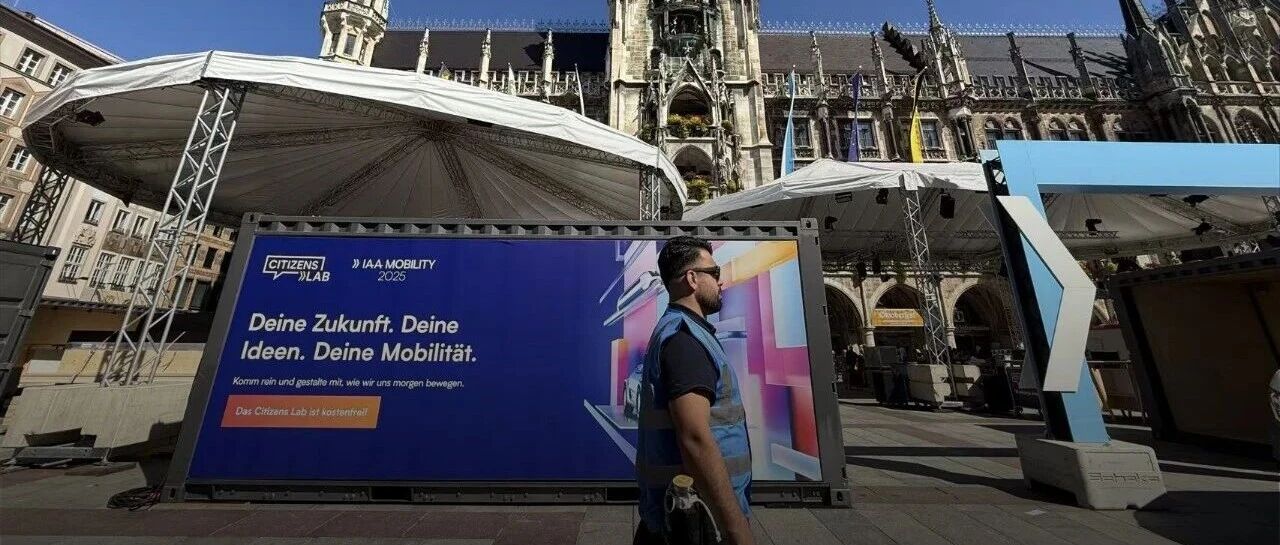
慕尼黑车展:德国分量和中国力量
汽车商业评论· 2025-09-10 05:28
Core Insights - The 2025 Munich Auto Show highlights the competition between Germany and China in the electric vehicle sector, with a significant presence of Chinese exhibitors [3][11][26] - The event showcases the rapid growth of electric vehicles in Europe, driven by EU regulations and the slower pace of local automakers in transitioning to electrification [3][26] Group 1: Event Overview - The Munich Auto Show, officially known as the IAA Mobility, emphasizes a broader theme of mobility, including electrification and smart transportation [4] - The event features two main venues: an indoor exhibition center for B2B interactions and an outdoor space open to the public [6] Group 2: Chinese Exhibitors - Chinese exhibitors dominate the show with 116 companies participating, accounting for nearly one-third of all overseas exhibitors [3][26] - Notable Chinese brands include BYD, Xpeng, and Hongqi, with plans for significant market expansion in Europe, including the introduction of multiple electric and hybrid models [11][13][20] Group 3: European Market Dynamics - The European automotive market is the third largest globally, with annual sales stable between 12 million and 14 million vehicles [3] - The penetration rate of electric vehicles in the EU is expected to exceed 20% by 2024, creating opportunities for Chinese brands to enter the market [3] Group 4: Major Automaker Highlights - Volkswagen Group introduced several new models, including the ID. Polo and ID. Cross concept cars, showcasing their scale advantages [29][31] - BMW launched the iX3, marking a new phase in their electrification strategy, with plans to release 40 new or upgraded models by 2027 [34][36] - Mercedes-Benz unveiled the GLC 400 4MATIC electric model, emphasizing its commitment to luxury and advanced technology in its electric lineup [40][42] Group 5: Competitor Analysis - South Korean automakers like Hyundai and Kia showcased their electric vehicle strategies, with multiple new models and concepts [46][49] - Japanese automakers were less prominent, with a focus on suppliers rather than vehicle manufacturers, indicating a shift in strategy in the European market [49][50]