电池电芯

Search documents
春节我在岗,生产不打烊
Zhong Guo Hua Gong Bao· 2026-02-25 02:21
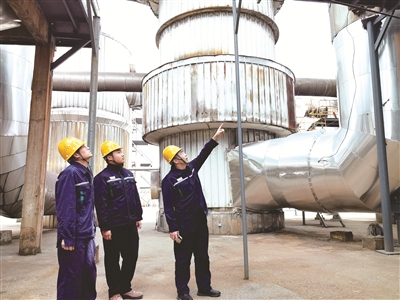
Core Viewpoint - The article highlights the dedication and responsibility of workers in the oil and chemical industries who continue to operate during the Spring Festival, ensuring safety and production efficiency while many others celebrate the holiday [1][7]. Group 1: Production Operations - Anhui Liuguo Chemical Company has implemented a detailed safety production plan and emergency response measures to ensure safe operations during the holiday, focusing on raw material reserves and product dispatch coordination [2]. - Zhuhai Guanyu Power Battery Company maintains 100% production capacity during the Spring Festival, aiming to fulfill a 20GWh battery order for domestic and international electric vehicle clients, contributing to a target of 1.5 billion yuan in output for the first quarter [2]. - The Central Plains Oilfield Puguang Branch's sulfur production facility operates at full capacity, producing over 5,000 tons of sulfur daily to support fertilizer production for spring farming [3]. Group 2: Safety Management - The Shengli Oilfield Gas Collection and Transportation Factory ensures continuous production and strict safety management during the holiday, with staff adhering to a 24-hour duty system and conducting regular inspections of critical equipment [5]. - The Fushun Petrochemical Company maintains a 24-hour duty rotation, with staff conducting equipment inspections and promptly addressing any safety issues to ensure stable operations during the holiday [6]. - The upgraded intelligent system at the Tonghua Group's production scheduling center allows for real-time monitoring and precise scheduling to ensure safe production during the Spring Festival [5]. Group 3: Employee Commitment - Workers in the petrochemical industry demonstrate commitment by choosing to remain on duty during the holiday, ensuring production safety and operational stability [7]. - Employees at the Qixiang Company conduct thorough inspections of equipment during the holiday, emphasizing the importance of maintaining operational stability even during festive times [8]. - Young employees at Huangmailing Phosphate Chemical New Materials Company have voluntarily given up their holiday breaks for two consecutive years to ensure safe and efficient production operations [9].

23亿天价索赔43天闪电和解:吉利亮剑 欣旺达买单?
Xin Lang Cai Jing· 2026-02-10 08:32
Core Viewpoint - The dispute between domestic power battery supplier XWANDA and Geely's subsidiary Weirui Electric Vehicle Technology has been resolved quickly, with Weirui withdrawing its lawsuit after a settlement agreement was reached, reflecting the complexities of the supply chain in the new energy vehicle industry [1][3][6] Group 1: Dispute Background and Resolution - The lawsuit initiated by Weirui in December 2025 claimed that battery cells supplied by XWANDA from June 2021 to December 2023 had quality issues, leading to significant losses, with a compensation demand of 2.314 billion yuan [1] - The settlement agreement stipulates that XWANDA will pay Weirui a remaining amount of 608 million yuan, to be paid over five years, with specific percentages allocated for each year [2] Group 2: Financial and Market Impact on XWANDA - The settlement is expected to impact XWANDA's net profit for 2025 by 500 to 800 million yuan, which could consume nearly half of its net profit for the first three quarters of 2025 [4] - XWANDA's stock price fell by 11.39% following the lawsuit announcement, resulting in a market value loss of 6.26 billion yuan, and the stock has seen a cumulative decline of 19% by the time of the settlement announcement [4] - The brand reputation and market trust of XWANDA have been severely affected, potentially leading to lost orders and a long recovery period for market confidence [4] Group 3: Industry Implications - The rapid resolution of the dispute highlights the delicate interdependence within the automotive supply chain, where major manufacturers rarely file such large lawsuits against core suppliers [3] - The incident emphasizes the need for companies in the new energy sector to balance quality, scale, and collaborative relationships to remain competitive in an increasingly challenging market [6]

电池产业"出海"正当时!2026国际电池产业大会4月22日吉隆坡启航
鑫椤锂电· 2026-02-09 08:07
Group 1 - The core viewpoint of the article emphasizes the rapid growth and technological innovation in the battery industry, driven by the global energy transition, with a projected growth rate of 34.6% in 2026, and a remarkable 70% growth in the energy storage sector [1][2] - The 2026 International Battery Industry Conference will be held from April 22-24, 2026, in Kuala Lumpur, Malaysia, aiming to create a platform for dialogue among industry elites and to explore new paths for industry development [2] - Malaysia is positioned as a key hub for the global battery industry chain, with over 26 billion yuan invested by Chinese battery companies by 2025, covering all aspects of the battery supply chain [2] Group 2 - The conference will focus on core industry pain points and cutting-edge trends, promoting collaborative innovation within the industry chain and optimizing global resource allocation for sustainable development [2] - The event will include a business networking cocktail on the first day, the main conference on the second day, and site visits on the third day [5]

电池产业"出海"正当时!2026国际电池产业大会4月22日吉隆坡启航
鑫椤锂电· 2026-02-05 08:35
Group 1 - The core viewpoint of the article emphasizes the rapid growth and technological innovation in the battery industry, driven by the global energy transition, with a projected growth rate of 34.6% in 2026, and a remarkable 70% growth in the energy storage sector [1][2] - The 2026 International Battery Industry Conference will be held from April 22-24, 2026, in Kuala Lumpur, Malaysia, aiming to create a platform for dialogue among industry elites and to explore new paths for industry development [2] - Malaysia is positioned as a crucial hub for the global battery industry chain, with over 26 billion yuan invested by Chinese battery companies by 2025, covering all aspects of the battery supply chain [2] Group 2 - The conference will focus on key industry pain points and cutting-edge trends, promoting collaborative innovation within the supply chain and optimizing global resource allocation for sustainable development in the battery industry [2] - The event will include a business networking cocktail on the first day, followed by the main conference activities on the second day, and site visits on the third day [5]

电池产业"出海"正当时!2026国际电池产业大会4月22日吉隆坡启航
鑫椤锂电· 2026-02-03 08:07
Group 1 - The core viewpoint of the article emphasizes the rapid growth and technological innovation in the battery industry, driven by the global energy transition, with a projected growth rate of 34.6% in 2026, and an even higher growth rate of 70% in the energy storage sector [1][2] - The 2026 International Battery Industry Conference will be held in Kuala Lumpur, Malaysia, from April 22 to 24, 2026, aiming to create a platform for dialogue among industry elites and to explore new paths for industry development [2] - Malaysia has become a significant hub for the global battery industry chain, with over 26 billion yuan invested by Chinese battery companies by 2025, covering all aspects of the battery supply chain [2] Group 2 - The conference will focus on key industry pain points and cutting-edge trends, promoting collaborative innovation within the supply chain and optimizing global resource allocation for sustainable development in the battery industry [2] - The event will include a business networking cocktail on the first day, the main conference on the second day, and site visits on the third day [5]

特斯拉计划从2027年起在德国工厂开始电芯生产
起点锂电· 2025-12-26 10:05
Group 1 - Tesla announced plans to start battery cell production at its Gigafactory Berlin-Brandenburg in Grünheide from 2027, with an investment of €100 million and a target annual capacity of approximately 8 GWh to enhance European battery production capacity [2] - Since the launch of the Grünheide electric vehicle factory in 2022, Tesla has invested several billion euros and plans to inject hundreds of millions more to upgrade existing production infrastructure for full-scale battery production [3] - Tesla aims to create a vertically integrated production range at the Grünheide factory, completing all stages from battery to vehicle in one location, which is unique in Europe and enhances supply chain resilience [3] Group 2 - The Grünheide factory employs around 11,500 workers and is Tesla's only Gigafactory in Europe [3] - Despite the investment and plans for vertical integration, European battery production faces challenges in profitability compared to Chinese and American manufacturers, making large-scale battery production in Europe currently difficult [3]


特斯拉(TSLA.O):正在柏林-勃兰登堡超级工厂创造条件,计划从2027年起每年生产高达8吉瓦时(GWh)的电池电芯。
Jin Rong Jie· 2025-12-22 10:28
Core Insights - Tesla is creating conditions at its Berlin-Brandenburg Gigafactory to produce up to 8 gigawatt-hours (GWh) of battery cells annually starting in 2027 [1] Group 1 - Tesla's Berlin-Brandenburg Gigafactory is set to significantly increase its battery production capacity [1]
宝马高管:在中国更大规模地采购半导体,正变得具有吸引力
Guan Cha Zhe Wang· 2025-12-22 02:03
Group 1 - The core viewpoint is that BMW's new procurement director, Nicolai Martin, emphasizes the need to balance cost opportunities with geopolitical risks, particularly in the semiconductor sector [1][4] - Martin acknowledges the risks associated with reliance on Nexperia for chip supply, indicating that discussions to reduce dependency were ongoing when the situation escalated [1][2] - He highlights the attractiveness of sourcing semiconductors from China due to cost factors, noting that the Chinese semiconductor market is rapidly growing with nearly 100 production bases being established [2][4] Group 2 - Martin states that Chinese suppliers are crucial not only for semiconductors but also for other components, such as battery cells and interior/exterior parts, which are supplied globally [3][4] - He argues that closer relationships with Chinese suppliers do not equate to increased dependency risks, but rather enhance BMW's competitiveness in the global market [4][5] - The challenging situation faced by German and European suppliers, including layoffs and supply chain pressures, has prompted BMW to proactively assess the financial stability and quality of its partners [5]

大众汽车在德启动自有电池生产
Zhong Guo Xin Wen Wang· 2025-12-18 00:24
Core Insights - Volkswagen Group has officially launched battery cell production at its subsidiary PowerCo in Salzgitter, Germany, marking a significant milestone for both the company and the European battery industry [1][2] - The Salzgitter factory represents the first full-process layout of battery cell production in Europe, enhancing the company's technological sovereignty and autonomy [1] - Volkswagen aims to reduce electric vehicle manufacturing costs and improve its competitiveness in the global electrification market through this initiative [1] Investment and Production Details - The Salzgitter factory project has seen an investment exceeding €1 billion since its construction began in July 2022 [1] - Initial production capacity is limited to several hundred battery cells per day, with plans to gradually increase to 60,000 to 70,000 cells per day, targeting an annual capacity of 20 GWh, sufficient for approximately 250,000 electric vehicles [1] - The self-produced battery cells are expected to be used in new small electric vehicles like the Volkswagen ID. Polo and Cupra Raval starting in 2026 [1] Strategic Importance - CEO Oliver Blume stated that the Salzgitter factory sends a strong technological signal for Europe and is a crucial part of the group's overall strategy [2] - As the first European automaker to achieve in-house battery cell development and production, Volkswagen strengthens its position and independence in global competition [2]
美股冰火两重天:道指标普三连跌、纳指独涨,特斯拉狂飙3%创历史新高,超博通成美国市值第七大科技公司
Jin Rong Jie· 2025-12-17 00:49
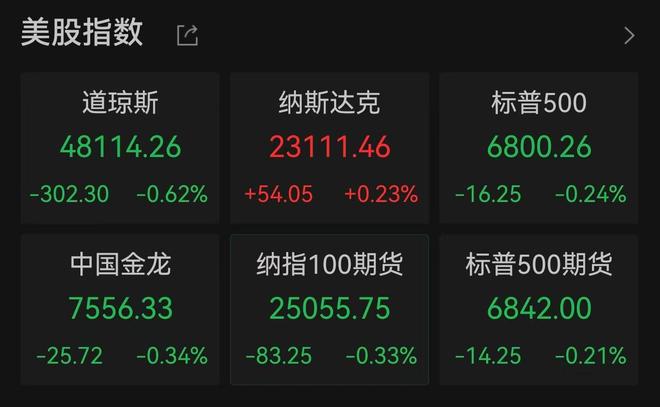
Market Performance - The three major US stock indices showed mixed performance, with the Dow Jones and S&P 500 both declining, while the Nasdaq saw a slight increase driven by technology stocks [1] - The Dow Jones Industrial Average fell by 0.62% to 48,114.26 points, the S&P 500 decreased by 0.24% to 6,800.26 points, and the Nasdaq Composite rose by 0.23% to 23,111.46 points [2] Tesla's Performance - Tesla's stock reached a new all-time high, closing up 3.07%, with a market capitalization surpassing $1.6 trillion, making it the seventh-largest company in the US by market value [2] - The strong performance of Tesla is attributed to multiple favorable factors, including plans to produce battery cells in Germany starting in 2027 and optimistic market expectations regarding its autonomous driving and robotics businesses [2] - Morgan Stanley's latest report predicts that Tesla's Robotaxi fleet will grow from a few vehicles to approximately 1,000 by 2026, further boosting investor confidence [2] Broader Technology Sector - The overall performance of large technology stocks was strong, with the Wande American Technology Seven Giants Index rising by 0.45% [3] - Notable stock movements included Meta rising by 1.49%, Nvidia by 0.81%, Microsoft by 0.33%, Apple by 0.18%, and Amazon slightly increasing by 0.01%, while Google A shares fell by 0.54%, making it the weakest performer among tech giants [3] Commodity Market - In the commodity market, oil prices fell to their lowest levels since 2021, with WTI crude oil futures dropping to $55.27 per barrel, a decrease of 2.73% [4] - The decline in oil prices is attributed to increased possibilities of peace talks between Russia and Ukraine, leading to reduced geopolitical risk premiums [4] - Gold prices rose by 0.2% to $4,310.21 per ounce, driven by expectations of interest rate cuts and a weaker dollar [5] Chinese Stocks Performance - The Nasdaq Golden Dragon China Index fell by 0.34%, with Alibaba down 0.53%, Pinduoduo down 1.25%, and NetEase down 1.85%, while Baidu, NIO, and Xpeng saw slight increases [5] - Notably, Pony.ai's stock surged by 7.28%, becoming the standout performer among Chinese stocks [5] Economic Data - The US Labor Department reported an increase of 64,000 non-farm jobs in November, slightly above market expectations, while the unemployment rate rose to 4.6%, higher than the expected 4.5% [6] - Retail sales in October remained flat, below economists' expectations for a 0.1% increase [6] - Following the economic data release, market expectations for a Federal Reserve interest rate cut in January increased slightly to 31% [7]