天垓100

Search documents
天数智芯(09903.HK):上市开盘大涨31.54%,稳居国产GPU第一梯队
Ge Long Hui· 2026-01-08 01:40
Core Viewpoint - The rise of domestic general GPU companies is highlighted as they support the underlying computing power for large model companies, marking a shift in the Chinese large model industry from "concept validation" to "engineering implementation" [2][17]. Group 1: Industry Overview - The competition among large models fundamentally revolves around computing infrastructure, with domestic general GPUs emerging as a critical industrial base as reliance on imported GPUs and cloud rentals is deemed unsustainable [2]. - The Chinese general GPU market is projected to grow at a compound annual growth rate (CAGR) of 72.8% from 2022 to 2024, and 33.0% from 2025 to 2029, with domestic GPU market share expected to rise from 8.3% in 2022 to over 50% by 2029 [5]. Group 2: Company Positioning - The company, Tensu Zhixin, aims to be a key provider of domestic computing power for large models, with a diverse client base including cloud service providers, AI developers, and various industries [3]. - Tensu Zhixin's training general GPU products hold the third-largest market share in China, while its inference GPUs rank second, positioning the company to benefit from a growing market [6]. Group 3: Competitive Advantages - The company has established a "three-fold moat" consisting of deep hardware-software collaboration, comprehensive full-stack solution capabilities, and a forward-looking ecological layout [6][10]. - The company employs over 480 R&D professionals, with a significant portion having over ten years of industry experience, and holds numerous patents covering key technologies [7]. Group 4: Financial Performance - From 2022 to 2024, the company's revenue is expected to grow from RMB 189.4 million to RMB 539.5 million, reflecting a CAGR of 68.8%, with a revenue of RMB 324.3 million recorded in the first half of 2025, a 64.2% year-on-year increase [12]. - The proportion of R&D expenditure relative to revenue has decreased significantly, indicating improved efficiency in R&D activities [12]. Group 5: Future Growth Prospects - The company is actively developing next-generation products, with plans for multiple product launches between 2025 and 2027, ensuring a continuous growth trajectory [15]. - The customer base has expanded from 22 in 2022 to 106 by mid-2025, demonstrating strong market penetration and diversification of revenue sources [13][14].
GPU四小龙忙上市:“中国英伟达”的较量,才刚刚开始
3 6 Ke· 2025-12-29 10:29
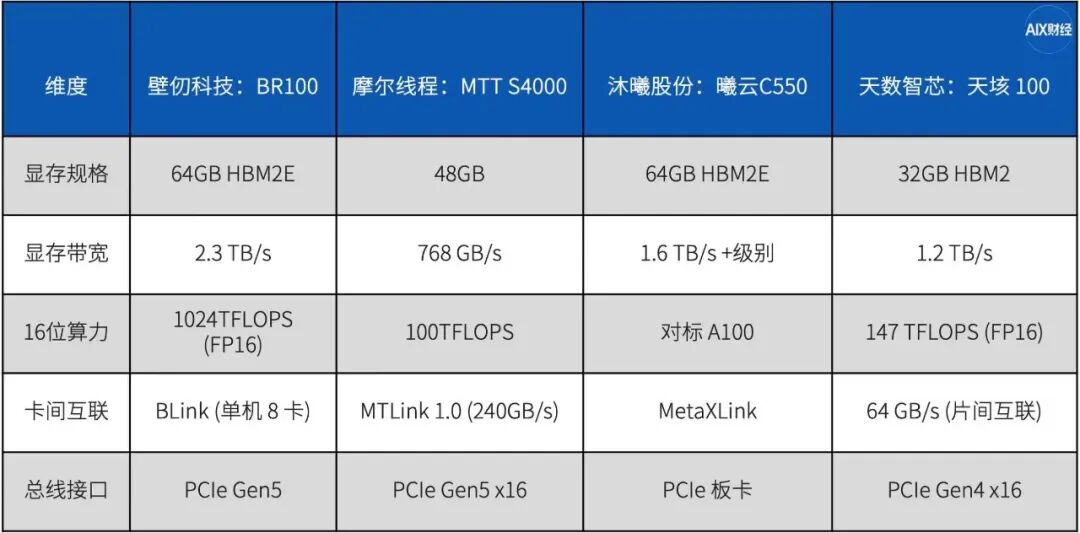
Core Viewpoint - The emergence of the "Four Little Dragons" of domestic GPUs—Mole Thread, Muxi Technology, Bilan Technology, and Tensu Zhixin—marks a significant moment in the capital market, raising questions about their sustainable growth amidst international competition [1][8]. Group 1: Company Profiles and Strategies - Mole Thread, with a team rooted in Nvidia, emphasizes ecosystem compatibility and parallel development of graphics rendering and AI computing, utilizing its self-developed MUSA architecture [2][3]. - Muxi Technology and Tensu Zhixin adopt a pragmatic approach similar to AMD, focusing on high-performance parallel computing while sacrificing complex graphics rendering capabilities [2][3]. - Bilan Technology stands out with its original architecture and Chiplet technology, aiming for extreme computing performance and flexibility in product offerings [3][4]. Group 2: Market Position and Performance - The "Four Little Dragons" have begun to establish their presence in various sectors, with Bilan achieving commercial success in heterogeneous training solutions, Mole Thread securing large-scale delivery contracts, Muxi reporting significant orders, and Tensu being the first to achieve mass production of 7nm GPGPU [7][8]. - The competitive landscape is characterized by overlapping targets among the four companies, particularly in securing contracts from major internet firms and local government data centers [15][16]. Group 3: Financial Insights and Challenges - All four companies exhibit high growth accompanied by significant losses, with R&D expenses consuming a large portion of their revenues, particularly for Muxi and Tensu [19][20]. - The R&D expenditure for 2024 shows that Mole Thread has 886 R&D personnel with a rate of 309.88%, while Muxi has 706 personnel with a rate of 121.24% [21]. - The timeline for achieving profitability is projected around 2026-2027, mirroring Nvidia's early growth trajectory [22]. Group 4: Ecosystem and Market Dynamics - The competition extends beyond hardware performance to include software ecosystems, with each company developing its own software stack to attract developers and enhance product value [23][24]. - The ability to expand customer bases and maintain high repurchase rates will be crucial for validating the true value of their products in a market increasingly driven by performance and cost [24][25]. - The stability of supply chains is critical, as the GPU industry is interconnected with various sectors, and any disruptions could significantly impact production and market presence [25].


国产GPU企业扎堆上市
财联社· 2025-12-19 06:35
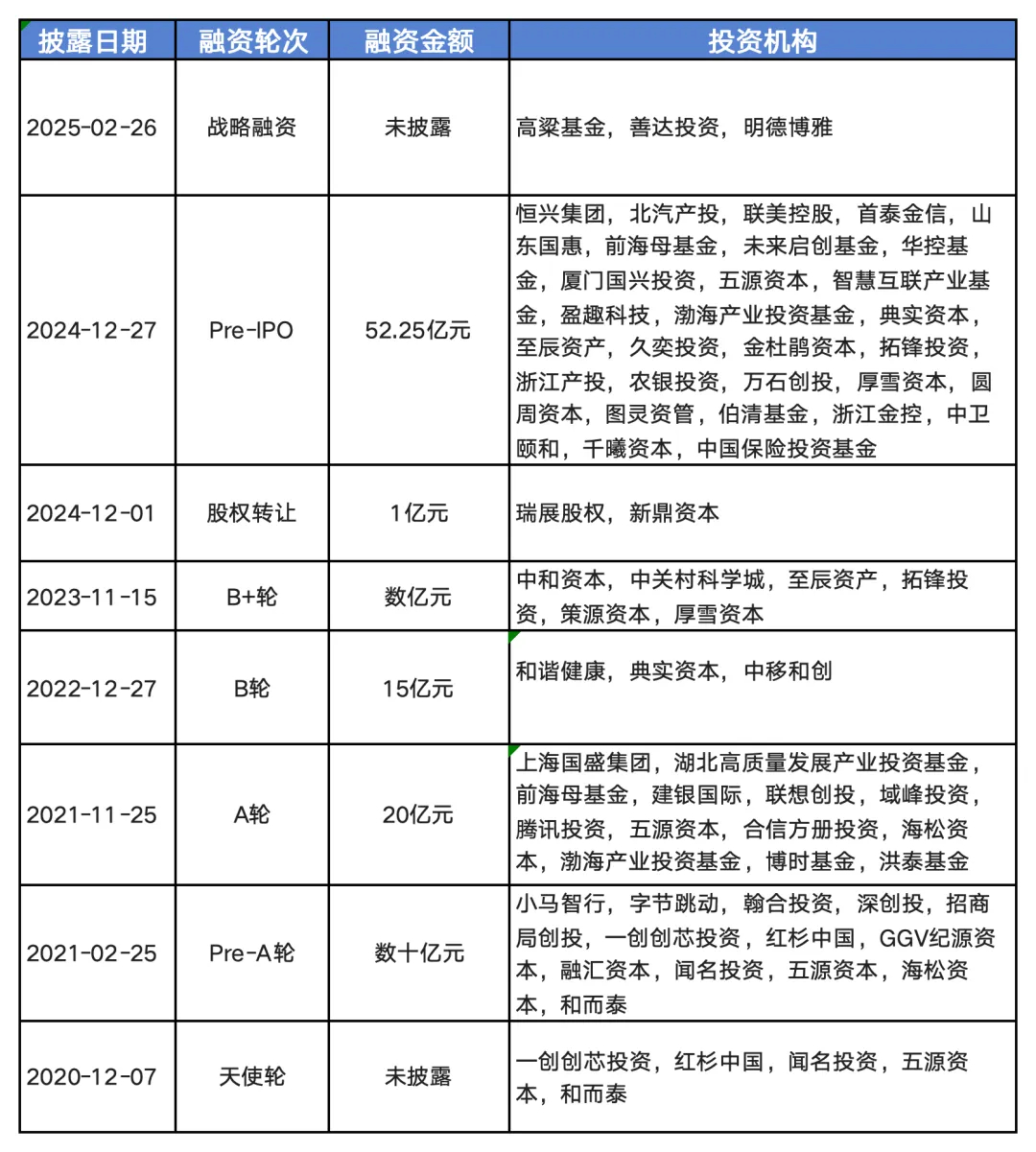
Core Viewpoint - The article highlights the recent developments in the domestic GPU chip industry, particularly focusing on the upcoming IPO of TianShuZhiXin and the competitive landscape among various GPU companies in China [1][2]. Group 1: IPO Developments - TianShuZhiXin has passed the listing filing with the China Securities Regulatory Commission and the Hong Kong Stock Exchange [1]. - Other GPU companies such as BiRan Technology, MoEr Thread, MuXi, and SuiYuan Technology are also advancing their IPO plans, with MuXi and MoEr Thread recently listing on the STAR Market, achieving significant stock price increases of 692.95% and 425.46% on their debut [2]. - BiRan Technology, like TianShuZhiXin, is also pursuing a listing in Hong Kong and has passed the Hong Kong Stock Exchange hearing [3]. Group 2: Financial Performance and Market Position - TianShuZhiXin aims to raise $300-400 million through its IPO and has positioned itself as a domestic general-purpose GPU manufacturer [4]. - The company launched its first general-purpose GPU product, "TianYai 100," in 2021, followed by the AI inference-focused "ZhiKai 100" series in 2022. In 2022, the total sales orders for the TianYai 100 series exceeded 500 million yuan [4]. - For the years 2023 and the first half of 2024, TianShuZhiXin reported sales revenues of 307 million yuan and 192 million yuan, respectively, totaling 499 million yuan, with net losses of 565 million yuan and 252 million yuan, leading to a cumulative loss of 815 million yuan [4]. Group 3: Investment and Valuation - TianShuZhiXin has completed multiple rounds of financing since its establishment in 2015, with notable investors including DaChuang Capital and Princeville Capital [4][5]. - In its Series C financing in 2021, the company raised 1.2 billion yuan (approximately $167 million), and in a subsequent round in 2022, it secured 1 billion yuan [5]. - According to the Hurun Research Institute's 2024 Global Unicorn List, MuXi is valued at 10 billion yuan, MoEr Thread at 25.5 billion yuan, SuiYuan Technology at 16 billion yuan, and BiRan Technology at approximately 15.5 billion yuan [5].

国产“英伟达”们集体冲刺IPO
Tai Mei Ti A P P· 2025-10-29 12:17
Core Insights - A significant trend is emerging as leading domestic GPU companies are rapidly pursuing IPOs, with notable examples including Moer Thread and Muxi Co., which have set records for the speed of their listing processes [1][3][10] - This capital frenzy is driven by the expectation for self-controlled computing power and the exit demands of numerous VCPEs during their fund lifecycle [2] Group 1: Moer Thread and Muxi Co. - Moer Thread's IPO process is remarkable, with its application accepted on June 30, 2025, and approval granted on September 26, 2025, taking only 88 days. The IPO aims to raise 8 billion yuan [3][7] - Founded in 2020 by Zhang Jianzhong, a former NVIDIA executive, Moer Thread focuses on full-function GPUs and has developed the MUSA architecture to support AI computing and graphics rendering on a single chip [3][4] - Moer Thread's revenue figures show a growth trajectory, with revenues of 46.09 million yuan in 2022, projected to reach 438 million yuan in 2024, and 702 million yuan in the first half of 2025, marking a compound annual growth rate of 208% [7][9] - Muxi Co. followed closely, with its IPO approved on October 24, 2025, after 116 days of review, aiming to raise 3.904 billion yuan for the development of next-generation GPU chips [10][12] - Muxi, also founded in 2020, focuses on high-performance general-purpose GPUs and has established a complete domestic supply chain for design, manufacturing, and testing [10][12] Group 2: Other Companies and Market Dynamics - Suiruan Technology is taking a more cautious approach to its IPO, currently in the counseling phase, with a complex shareholder structure potentially affecting its progress [13][17] - Suiruan's products include the domestic cloud training chip "Suis 1.0" and the fourth-generation training and inference chip "Suiruan L600," which features significant advancements in computing power and storage [14][15] - Wallran Technology's IPO path remains uncertain, with reports suggesting it has submitted a confidential listing application to the Hong Kong Stock Exchange [19][24] - Tian Shu Zhixin is also rumored to be pursuing a listing, focusing on GPGPU products that have already achieved commercial success [25][27] Group 3: Industry Trends and Challenges - The market for AI computing power is expanding rapidly, with national strategies emphasizing self-sufficiency in computing capabilities, and the Sci-Tech Innovation Board providing a pathway for unprofitable but technologically critical companies to go public [28][30] - Companies are seizing the historic opportunity for domestic substitution, particularly in light of supply constraints from NVIDIA, creating a significant market gap [29][30] - The collective IPO rush signals a broader industry trend where national interests and capital markets are aligning to promote high-end computing autonomy [30][31] - The limited capacity of the capital market means that the first companies to successfully list will gain a competitive financing advantage, potentially leading to a "Matthew effect" in the industry [31][32]