Blackwell架构

Search documents
电子行业研究:英伟达FY27Q1指引强劲,继续关注英伟达GTC新技术方向
SINOLINK SECURITIES· 2026-03-01 12:24
Investment Rating - The report maintains a positive outlook on the AI-PCB and core computing hardware sectors, as well as the Apple supply chain and self-controlled beneficiary sectors [4][26]. Core Insights - NVIDIA's FY27Q1 revenue guidance is strong at $78 billion (±2%), indicating sustained demand for AI [1][26]. - The demand for AI-related products, particularly the new LPU chip, is expected to drive significant growth in the PCB industry, with potential increases in material requirements and production capacity [1][26]. - The report anticipates explosive growth in the ASIC numbers from major tech companies like Google, Amazon, Meta, OpenAI, and Microsoft between 2026 and 2027 [4][26]. Summary by Sections 1. Consumer Electronics - The report highlights the ongoing expansion of AI applications in consumer electronics, particularly within the Apple supply chain and smart glasses, driven by advancements in multi-modal interaction and AI model optimization [5]. - AI mobile applications are expected to see significant growth, with Apple focusing on innovations in chips, systems, and hardware [5]. 2. PCB - The PCB industry is experiencing high demand, particularly for copper-clad laminates, driven by the automotive and industrial sectors, as well as AI applications [6][26]. - The report notes that many AI-PCB companies are currently operating at full capacity and are expanding production to meet demand [4][26]. 3. Semiconductor and Components - The semiconductor sector is projected to benefit from increased demand for storage solutions, particularly DRAM, as cloud service providers expand their data center capacities [20][22]. - The report emphasizes the importance of domestic semiconductor equipment and materials in light of global supply chain challenges and export controls [23][25]. 4. Market Trends - The report indicates a robust upward trend in the semiconductor equipment sector, with significant growth expected in 2025 driven by advanced logic processes and increased demand for HBM applications [24]. - The overall electronic industry has shown a positive performance, with specific segments like PCB and passive components leading in growth [35][38]. 5. Company Highlights - Companies like NVIDIA, Micron Technology, and various PCB manufacturers are highlighted as key players benefiting from the current market dynamics [1][26][27]. - The report suggests that firms such as North Huachuang and Zhongwei Company are well-positioned to capitalize on the growing demand for semiconductor equipment and materials [28][29].

英伟达FY27Q1指引强劲,继续关注英伟达GTC新技术方向
SINOLINK SECURITIES· 2026-03-01 10:55
Investment Rating - The report maintains a positive outlook on the AI-PCB and core computing hardware sectors, as well as the Apple supply chain and self-controlled beneficiary sectors [4][26]. Core Insights - NVIDIA's FY27Q1 revenue guidance is strong at $78 billion (±2%), indicating sustained demand for AI [1][26]. - The demand for AI-driven products is expected to lead to significant growth in the PCB industry, with many AI-PCB companies experiencing strong orders and production [4][26]. - The report anticipates explosive growth in the number of ASICs from major tech companies like Google, Amazon, Meta, OpenAI, and Microsoft between 2026 and 2027 [4][26]. Summary by Sections 1. Industry Overview - The AI demand is driving a significant increase in PCB value, with expectations for material upgrades and increased production layers [1][26]. - The report highlights the strong performance of the AI sector, with NVIDIA's new LPU chip expected to create new demands in the PCB market [1][26]. 2. Semiconductor and PCB Sector - The PCB industry is maintaining high demand due to the growth in automotive and industrial control sectors, alongside AI expansion [6][26]. - The report notes that the price of copper-clad laminates is expected to rise, indicating a tightening supply situation [6][26]. 3. Consumer Electronics - The report emphasizes the ongoing expansion of consumer electronics applications, particularly in the Apple supply chain and smart glasses [5][26]. - AI applications are expected to continue their rapid growth, with significant advancements in mobile and wearable technologies [5][26]. 4. Storage and Memory - The storage sector is projected to enter an upward cycle, driven by increased demand from cloud service providers and consumer electronics [20][22]. - The report suggests that the DRAM market will see price increases due to supply constraints and rising demand [20][22]. 5. Semiconductor Equipment - The semiconductor equipment sector is expected to benefit from the ongoing trend of domestic production and self-sufficiency in the face of global supply chain challenges [23][25]. - The report highlights the strong demand for advanced packaging and the need for domestic semiconductor equipment [23][25]. 6. Key Companies - Companies such as North Huachuang, Zhongwei Company, and Sanhua Group are highlighted for their strong positions in the semiconductor and PCB markets [27][28][33]. - The report notes that these companies are well-positioned to benefit from the ongoing trends in AI and semiconductor demand [27][28][33].
【招商电子】英伟达(NVDA.O)FY26Q4跟踪报告:本季营收与指引均高增
Xin Lang Cai Jing· 2026-02-27 11:13
Core Insights - Nvidia reported record revenue of $68.1 billion for FY26Q4, a year-over-year increase of 73% and a quarter-over-quarter increase of 20%, exceeding previous expectations of $65 billion [2] - The company has strategically increased inventory and locked in capacity to meet future market demand, with a non-GAAP gross margin of 75.2% [2][23] - Data center revenue reached a new high of $62.3 billion, driven by strong demand for the Blackwell architecture, while gaming revenue saw a quarter-over-quarter decline due to supply chain issues [2][3] Financial Performance - FY26Q4 revenue was $68.1 billion, with a non-GAAP gross margin of 75.2%, reflecting a year-over-year increase of 1.7 percentage points and a quarter-over-quarter increase of 1.6 percentage points [2][23] - Free cash flow for the quarter was $35 billion, contributing to a total of $97 billion for FY26, with $41 billion returned to shareholders through buybacks and dividends [26] - The company expects FY27Q1 revenue guidance to be around $78 billion, a year-over-year increase of 77% and a quarter-over-quarter increase of 14% [4][27] Business Segments - Data Center: Revenue of $62.3 billion, up 75% year-over-year and 22% quarter-over-quarter, primarily due to the Blackwell architecture [3][14] - Gaming: Revenue of $3.73 billion, a year-over-year increase of 47% but a quarter-over-quarter decline of 13%, impacted by supply chain constraints [3][19] - Professional Visualization: Revenue reached $1.32 billion, a significant year-over-year increase of 159% and a quarter-over-quarter increase of 74% [3][20] - Automotive: Revenue of $604 million, a year-over-year increase of 6%, driven by strong demand for autonomous driving solutions [3][21] Future Outlook - The company anticipates continued growth in data center revenue throughout 2026, with a focus on meeting increasing demand for AI and GPU-accelerated computing [4][12] - The introduction of the Rubin platform is expected to further enhance performance and reduce costs, with production set to begin in the second half of 2026 [18][37] - Nvidia's partnerships with major cloud service providers and AI model developers are expected to drive significant revenue growth, with a projected increase in capital expenditures among the top CSPs [6][16] Strategic Initiatives - Nvidia is focusing on enhancing its AI infrastructure capabilities, with significant investments in R&D and partnerships with leading AI companies like OpenAI and Anthropic [28][29] - The company is expanding its ecosystem to include a diverse range of clients beyond traditional data centers, including AI model developers and sovereign entities [43] - The introduction of the Vera CPU and continued optimization of the CUDA architecture are key components of Nvidia's strategy to maintain its competitive edge in the AI and computing markets [44]

英伟达 FY26Q4 业绩点评:指引超预期,Token 经济学的最佳增长引擎
GUOTAI HAITONG SECURITIES· 2026-02-27 10:30
Investment Rating - The investment rating for the company is "Buy" [7] Core Insights - The report indicates a long-term revenue upgrade and stable gross margins, with the Agent application reaching a turning point, positioning the company to lead in AI infrastructure with optimal token costs [3][4] - The company has adjusted its revenue forecasts for FY2027E-FY2029E to $380.1 billion, $523.8 billion, and $637.4 billion respectively, with corresponding Non-GAAP net profits of $223.6 billion, $306.4 billion, and $371.0 billion [11] - The data center revenue exceeded expectations, with a year-on-year increase of 73% to $68.1 billion, driven by a diverse customer base and significant growth in data center computing and networking revenues [11] Financial Summary - Revenue projections for the company are as follows (in million USD): - FY2025: $130,497 - FY2026: $215,938 - FY2027E: $380,098 - FY2028E: $523,847 - FY2029E: $637,418 - Year-on-year growth rates are projected at 114.2% for FY2025, 65.5% for FY2026, 76.0% for FY2027E, 37.8% for FY2028E, and 21.7% for FY2029E [5] - Non-GAAP net profit projections are as follows: - FY2025: $74,266 - FY2026: $116,996 - FY2027E: $223,590 - FY2028E: $306,380 - FY2029E: $371,027 - The Non-GAAP gross margin is expected to be approximately 75% for FY2027Q1, reflecting significant performance improvements [11][5] Market Data - The current stock price is $184.89, with a 52-week price range of $94.31 to $207.04 [8] - The current market capitalization is approximately $4,492.827 million [8]
英伟达(NVDA):FY26Q4 业绩点评:指引超预期,Token经济学的最佳增长引擎
GUOTAI HAITONG SECURITIES· 2026-02-27 08:17
Investment Rating - The report assigns an "Accumulate" rating to Nvidia (NVDA.O) [7] Core Insights - Nvidia's long-term revenue guidance has been raised, and its gross margin remains robust. The company is expected to lead AI infrastructure with optimal token costs as the agent application inflection point has been reached [3][4] - The financial summary indicates significant revenue growth, with projected revenues of $380.1 billion in FY2027, $523.8 billion in FY2028, and $637.4 billion in FY2029, reflecting year-on-year growth rates of 76.0%, 37.8%, and 21.7% respectively [5][11] - Nvidia's data center revenue exceeded expectations, with a 75% year-on-year increase in Q4 FY26, driven by diverse customer growth and significant contributions from cloud service providers (CSPs) [11] Financial Summary - Revenue projections for FY2027E, FY2028E, and FY2029E are adjusted to $380.1 billion, $523.8 billion, and $637.4 billion respectively, with corresponding Non-GAAP net profits of $223.6 billion, $306.4 billion, and $371.0 billion [11][12] - The Non-GAAP gross margin for Q4 FY26 reached 75.2%, with guidance for Q1 FY27 around 75% (±50 basis points), indicating strong performance [11][12] - The report highlights a significant improvement in token economics, with the cost per million tokens reduced to one-thirty-fifth compared to previous architectures, enhancing revenue potential [11] Market Data - The current stock price is $184.89, with a market capitalization of approximately $4.49 trillion [7][8] - The stock has traded within a 52-week range of $94.31 to $207.04 [8]
【招商电子】英伟达(NVDA.O)FY26Q4跟踪报告:本季营收与指引均高增,战略备货以满足未来市场需求
招商电子· 2026-02-27 04:23
Core Viewpoint - Nvidia's FY26Q4 earnings report shows record revenue of $68.1 billion, a 73% year-over-year increase, driven by strong demand in data center and AI sectors, with strategic inventory buildup to meet future market needs [2][12][25]. Group 1: Financial Performance - FY26Q4 revenue reached $68.1 billion, exceeding expectations of $65 billion, with operating profit and free cash flow also at historical highs [2][12]. - Non-GAAP gross margin was 75.2%, up 1.7 percentage points year-over-year, supported by increased production capacity of the Blackwell architecture [2][25]. - Free cash flow for FY26 was $97 billion, with $41 billion returned to shareholders through buybacks and dividends [26]. Group 2: Business Segments - Data Center: Revenue of $62.3 billion, up 75% year-over-year, driven by strong demand for Blackwell architecture and network services, which saw a revenue increase of over 350% [3][15][16]. - Gaming: Revenue of $3.73 billion, a 47% increase year-over-year, but down 13% quarter-over-quarter due to supply chain constraints [3][21]. - Professional Visualization: Revenue reached $1.32 billion, a 159% increase year-over-year, driven by new product launches [3][22]. - Automotive: Revenue of $604 million, up 6% year-over-year, primarily due to strong demand for autonomous driving solutions [3][23]. Group 3: Future Outlook - FY27Q1 revenue guidance is set at $78 billion, a 77% year-over-year increase, primarily driven by data center business growth [4][11]. - Data center revenue is expected to grow sequentially throughout 2026, with significant contributions from major cloud service providers [4][18]. - The company anticipates maintaining a gross margin around 75% for the fiscal year 2027, with ongoing investments in technology and talent [4][27]. Group 4: Strategic Initiatives - Nvidia is focusing on expanding its ecosystem through partnerships with major AI companies like OpenAI and Anthropic, enhancing its position in the AI infrastructure market [28][41]. - The introduction of the Rubin platform is expected to reduce GPU requirements for training mixed expert models by 75% and lower inference costs significantly [20][39]. - The company is actively investing in AI infrastructure, with a projected capital expenditure increase among top cloud service providers, which is expected to exceed $700 billion by 2026 [5][18].
补齐AI推理拼图:英伟达黄仁勋揭秘Groq LPU整合路线图
Sou Hu Cai Jing· 2026-02-27 03:45
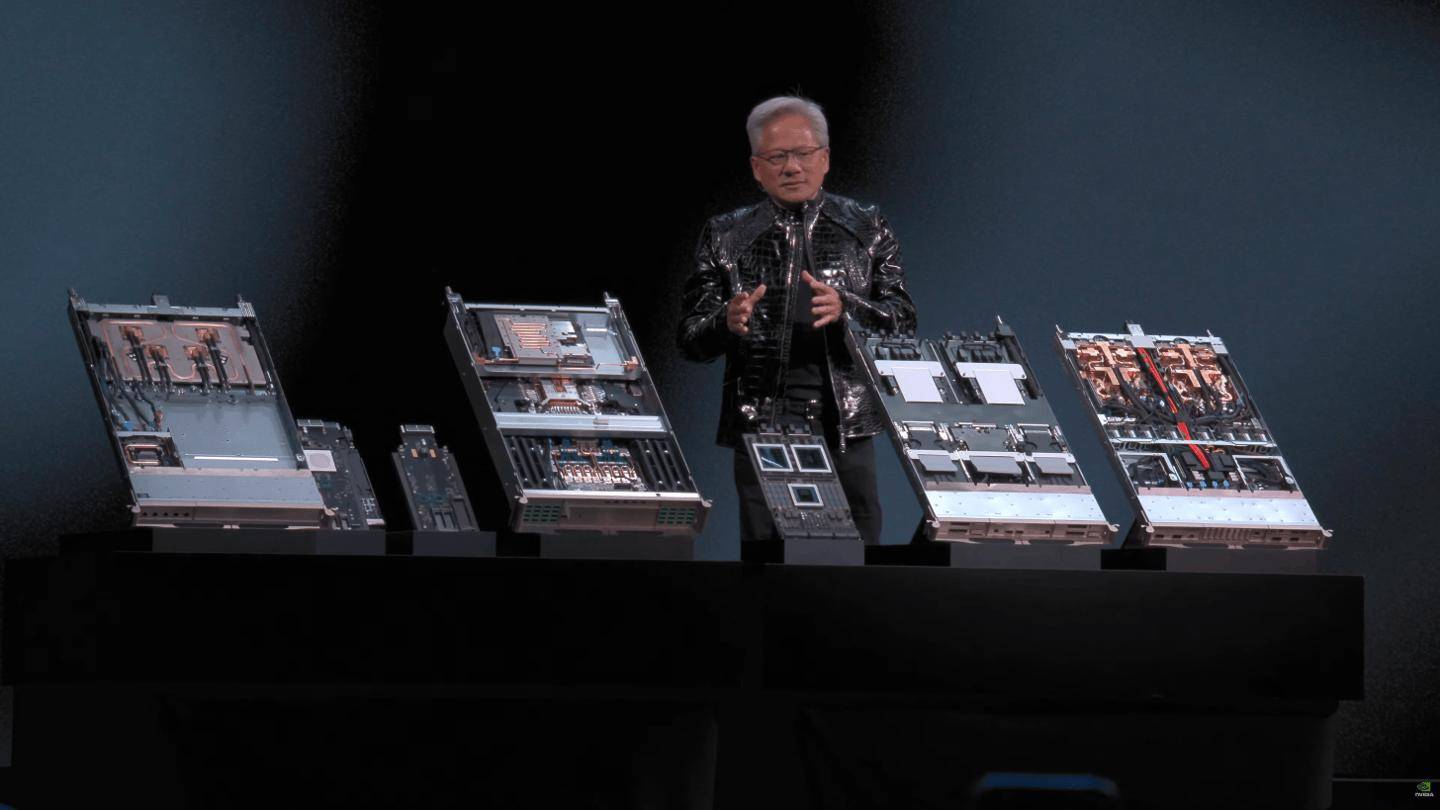
Core Insights - NVIDIA's CEO Jensen Huang announced a $20 billion acquisition of Groq, which is expected to play a revolutionary role in NVIDIA's AI strategy, comparable to the acquisition of Mellanox [1] - The integration of Groq is aimed at addressing the latency issues in the AI inference phase, as the industry moves towards an Agentic AI era requiring ultra-low latency and rapid response [1] - NVIDIA currently dominates the AI model training market with its Hopper and Blackwell architectures, but needs Groq's technology to set industry standards in the decoding phase, which is highly sensitive to latency [1] Strategic Layout - Groq is expected to enhance NVIDIA's capabilities in AI inference, particularly in achieving ultra-low latency decoding, which is critical for multi-agent collaboration [1] - The AI industry is accelerating towards a multi-agent collaborative environment, necessitating advancements in response speed and latency [1] Technical Implementation - NVIDIA aims to fully leverage Groq's hardware potential, specifically its Language Processing Unit (LPU) that utilizes on-chip SRAM to provide internal bandwidth of tens of TB per second [2] - This technology has been adopted by other industry leaders like Cerebras and Microsoft, allowing AI agents to perform complex logical reasoning in seconds, thus overcoming computational bottlenecks in multi-agent collaboration [2] Hardware Deployment - GF Securities predicts that NVIDIA will unveil a hybrid computing solution called "LPX Rack" at the GTC conference, which is expected to integrate 256 LPU units within a single rack [4] - The LPU units will connect using a native quasi-synchronous inter-chip protocol, while LPU and GPU connections are anticipated to utilize NVLink Fusion technology for efficient processing of massive KV cache offloads during the prefill phase [4]
日进22.6亿!英伟达营收暴涨73%再破纪录,盘后股价重返200美元
Xin Lang Cai Jing· 2026-02-26 02:48
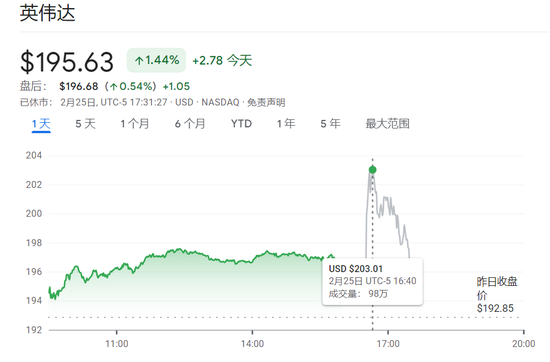
Core Viewpoint - Nvidia's latest quarterly earnings report for fiscal year 2026 showcases record-breaking performance, alleviating market concerns about AI growth, leading to a post-report stock price increase of over 3.7% [1][2]. Financial Performance - For Q4 of fiscal year 2026, Nvidia reported revenue of $68.1 billion (approximately ¥467.8 billion), representing a year-over-year increase of 73% and a quarter-over-quarter increase of 20% [3][22]. - The company's total revenue for the fiscal year reached $215.9 billion (approximately ¥1,483.1 billion), marking a 65% year-over-year growth [4][25]. Business Segments - The data center segment, which is the core of Nvidia's business, generated $62.3 billion (approximately ¥428 billion) in Q4, reflecting a 75% year-over-year increase and a 22% quarter-over-quarter increase [6][25]. - The annual revenue for the data center segment was $193.7 billion (approximately ¥1,337.9 billion), up 68% year-over-year [6][25]. - The gaming and AI PC segment reported Q4 revenue of $3.7 billion, a 47% year-over-year increase, although it experienced a 13% quarter-over-quarter decline due to seasonal factors [8][27]. - Annual revenue for the gaming and AI PC segment reached a record $16 billion, growing 41% year-over-year [8][27]. - Professional visualization and automotive segments reported quarterly revenues of $1.3 billion and $0.6 billion, respectively, with year-over-year growth of 159% and 6% [8][28]. Profitability Metrics - Nvidia's Q4 gross margin was 75%, an increase of 1.6 percentage points quarter-over-quarter and 2 percentage points year-over-year [10][30]. - The net profit for Q4 was $42.96 billion (approximately ¥29.51 billion), a 94% year-over-year increase and a 35% quarter-over-quarter increase [12][32]. - For the entire fiscal year, net profit reached $120.07 billion (approximately ¥82.48 billion), up 65%, equating to daily earnings of approximately ¥22.6 billion [14][34]. Future Outlook - Nvidia forecasts a record revenue of $78 billion (with a 2% margin of error) for Q1 of fiscal year 2027, representing a 14% quarter-over-quarter increase and a projected 77% year-over-year increase [15][35]. - CEO Jensen Huang expressed optimism for continued revenue growth throughout fiscal year 2026, anticipating opportunities exceeding $500 billion driven by the Blackwell and Rubin platforms [15][36]. - The next-generation platform Rubin is set to launch with six new chips, expected to reduce token costs by 10 times compared to Blackwell, with strong demand anticipated from existing major clients [15][36]. - Huang emphasized the emergence of the "token economy," suggesting that the rise of Agentic AI will significantly increase computational demand, which is crucial for generating revenue [17][38].
暴降 90%!英伟达 Blackwell 压缩 AI 推理成本至1/10
是说芯语· 2026-02-15 01:30
Core Insights - Nvidia has made significant progress in AI inference with its Blackwell architecture, achieving a milestone in "token economics" [1] - The company has implemented an "extreme hardware-software co-design" strategy, optimizing hardware efficiency for complex AI inference workloads, reducing the cost of token generation to one-tenth compared to the previous Hopper architecture [1] Industry Applications - Several inference service providers, including Baseten, DeepInfra, Fireworks AI, and Together AI, are utilizing the Blackwell platform to host open-source models [2] - These companies have successfully achieved cross-industry cost reductions by combining cutting-edge open-source intelligent models, Blackwell's hardware advantages, and their own optimized inference stacks [2] - For instance, Sentient Labs, focusing on multi-agent workflows, reported a cost efficiency improvement of 25% to 50% compared to the Hopper era, while companies in the gaming sector, like Latitude, have achieved lower latency and more reliable responses [2] Technical Specifications - The core of Blackwell's efficiency lies in its flagship system, the GB200 NVL72, which features a configuration of 72 interconnected chips and up to 30TB of high-speed shared memory [6][7] - This design is well-suited for the current mainstream "Mixture of Experts (MoE)" architecture, allowing for efficient splitting and parallel processing of token batches across multiple GPUs [6][7]

对标英伟达 天数智芯公布芯片四代架构路线图
2 1 Shi Ji Jing Ji Bao Dao· 2026-01-29 13:19
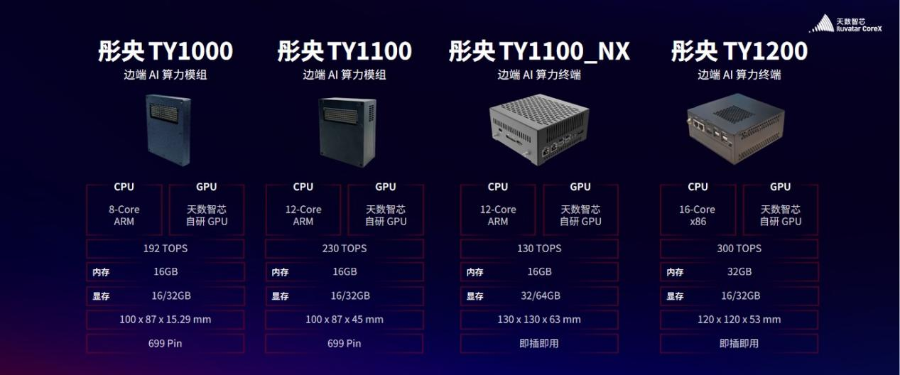
Core Insights - Domestic GPU companies are seizing the industry window period with intensive initiatives, exemplified by TianShu ZhiXin's release of its fourth-generation architecture roadmap, aiming to surpass NVIDIA's Rubin architecture by 2027 [1][2] Group 1: Product Development and Architecture - TianShu ZhiXin has introduced a roadmap for its four-generation GPU architecture, with specific timelines: "TianShu TianShu" in 2025 to surpass NVIDIA's Hopper architecture, "TianShu TianXuan" in 2026 to match Blackwell, and "TianShu TianQuan" in 2027 to exceed Rubin [3] - The company emphasizes energy efficiency and improved parallel computing resource utilization in its architecture design, achieving over 90% effective utilization in AI-related calculations [3][4] - The efficiency of the "TianShu TianShu" architecture is reported to be 60% higher than the industry average, with a 20% performance increase over NVIDIA's Hopper architecture in specific scenarios [4] Group 2: Product Launches and Market Positioning - TianShu ZhiXin has launched the "TongYang" series of products aimed at edge computing, which includes four models catering to various computational needs [5][6] - The "TongYang" series has demonstrated superior performance compared to NVIDIA's AGX Orin in multiple real-world scenarios, with the goal of becoming the leading domestic solution for edge computing [6][8] Group 3: Market Dynamics and Competitive Landscape - As of now, TianShu ZhiXin's products have served over 300 clients and completed more than 1,000 deployments across various sectors, indicating a growing commercial application [8] - The domestic GPU market is witnessing increased activity, with several companies like MoEr Thread, MuXi Co., and BiRan Technology completing IPOs, reflecting the ongoing interest in hard technology [8][9] - Despite the enthusiasm in the capital market, domestic GPU companies still hold a small market share compared to NVIDIA, which commands a significant global market presence [9]