
家政机器人

Search documents
新华鲜报·规划建议新看点丨具身智能 未来科技将走进寻常生活
Zhong Guo Zheng Quan Bao· 2025-11-20 09:24
Group 1 - The core viewpoint of the articles emphasizes the strategic importance of embodied intelligence as a new economic growth point, transitioning from laboratory technology to large-scale application in everyday life [1][6] - Embodied intelligence is defined as artificial intelligence equipped with a physical body, enabling it to perceive, decide, act, and provide feedback, marking a significant leap from traditional AI applications [3][5] - China's industrial robot market is projected to sell 302,000 units in 2024, with domestic brands covering 71 major sectors of the national economy, indicating a solid foundation for the development of embodied intelligence [3][6] Group 2 - The integration of embodied intelligence in manufacturing is expected to enhance production efficiency and drive upgrades in key components such as sensors, precision motors, and control chips [5][6] - Embodied intelligence is anticipated to address various industry pain points, such as reducing caregiver burdens in nursing homes and improving logistics efficiency with delivery robots [5][6] - The market for embodied intelligence in China is forecasted to reach 400 billion yuan by 2030 and exceed 1 trillion yuan by 2035, indicating significant growth potential across multiple application fields [6]

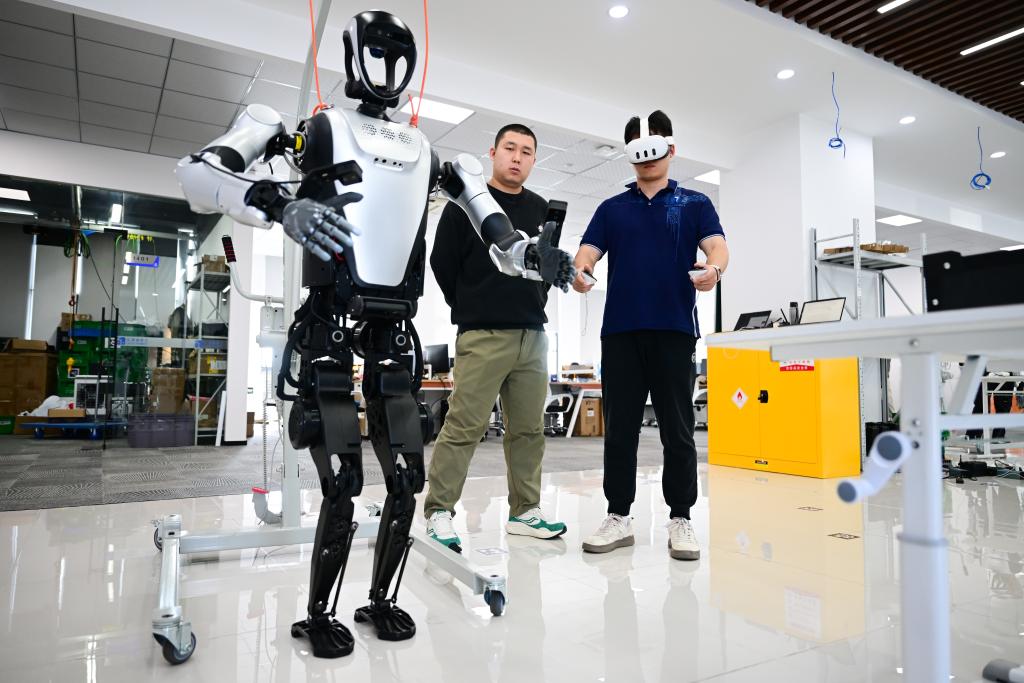
新华鲜报·规划建议新看点丨具身智能,未来科技将走进寻常生活
Zhong Guo Zheng Quan Bao· 2025-11-20 00:32
Group 1 - The core viewpoint of the article emphasizes the strategic importance of embodied intelligence as a new economic growth point, transitioning from laboratory technology to large-scale application in everyday life [1] - Embodied intelligence is defined as artificial intelligence equipped with a physical body, enabling it to perceive, decide, act, and provide feedback, marking a significant leap from traditional AI applications [2] - China has maintained its position as the world's largest industrial robot application market for 12 consecutive years, with projected sales of industrial robots reaching 302,000 units in 2024, indicating a strong foundation for the development of embodied intelligence [2] Group 2 - The integration of embodied intelligence into manufacturing is expected to enhance production efficiency and drive upgrades in key components such as sensors, precision motors, and control chips [5] - Embodied intelligence is anticipated to address various industry pain points, such as reducing the burden on caregivers in nursing homes and improving logistics efficiency through delivery robots [5] - The market for embodied intelligence in China is projected to reach 400 billion yuan by 2030 and exceed 1 trillion yuan by 2035, indicating significant growth potential across multiple application fields [6]
规划建议新看点丨具身智能,未来科技将走进寻常生活
Xin Hua Wang· 2025-11-20 00:11
Group 1 - The core viewpoint of the article emphasizes the strategic importance of embodied intelligence as a new economic growth point, transitioning from laboratory technology to large-scale application in everyday life [1][5][6] - Embodied intelligence is defined as an intelligent system with a physical body that can "perceive-decision-act-feedback," marking a significant leap from traditional AI applications like voice assistants and image recognition [3][5] - China has maintained its position as the world's largest industrial robot application market for 12 consecutive years, with projected sales of industrial robots reaching 302,000 units in 2024, covering 71 major sectors of the national economy [3][5] Group 2 - The integration of embodied intelligence into manufacturing is expected to act as a "multiplier" for industrial upgrades, enhancing production efficiency and driving the iteration of key components such as sensors and control chips [5][6] - Embodied intelligence is anticipated to address various industry pain points, including the use of care robots in nursing homes and delivery robots in logistics systems, thereby improving operational efficiency [5][6] - The market for embodied intelligence in China is projected to reach 400 billion yuan by 2030 and exceed 1 trillion yuan by 2035, significantly impacting sectors like transportation, logistics, and industrial manufacturing [5][6]
新华鲜报·规划建议新看点 | 具身智能,未来科技将走进寻常生活
Xin Hua She· 2025-11-19 08:13
Core Insights - The "14th Five-Year Plan" emphasizes the forward-looking layout of future industries, promoting embodied intelligence as a new economic growth point, transitioning from "laboratory technology" to "scaled application" in everyday life [1] Group 1: Definition and Current Status - Embodied intelligence refers to giving artificial intelligence a "body," enabling it to possess both a "powerful brain" and "flexible limbs," allowing for a system that can "perceive-decide-act-feedback" [2] - China has maintained its position as the world's largest industrial robot application market for 12 consecutive years, with projected sales of industrial robots reaching 302,000 units in 2024 [2] - The application of domestic brand industrial robots has covered 71 major sectors of the national economy by 2024, indicating a solid foundation for the development of the embodied intelligence industry in China [2] Group 2: Impact and Future Prospects - Embodied intelligence is seen as a "multiplier" for manufacturing upgrades, enhancing production efficiency and driving the iterative upgrade of key components such as sensors, precision motors, and control chips [3] - It is expected to address various industry pain points, such as reducing the burden on caregivers in nursing homes and improving efficiency in logistics through delivery robots [3] - The market for embodied intelligence in China is projected to reach 400 billion yuan by 2030 and exceed 1 trillion yuan by 2035, significantly boosting productivity across multiple application fields [3] Group 3: Policy and Technological Integration - The integration of the robotics industry with artificial intelligence and other new technologies will be accelerated, focusing on the demand for embodied intelligence application scenarios [4] - Embodied intelligence is anticipated to become as ubiquitous as smartphones, emerging as a new "pet" of the digital economy [4]
科技赋能造好房子 产业升级促新发展
Xin Hua Cai Jing· 2025-11-07 14:25
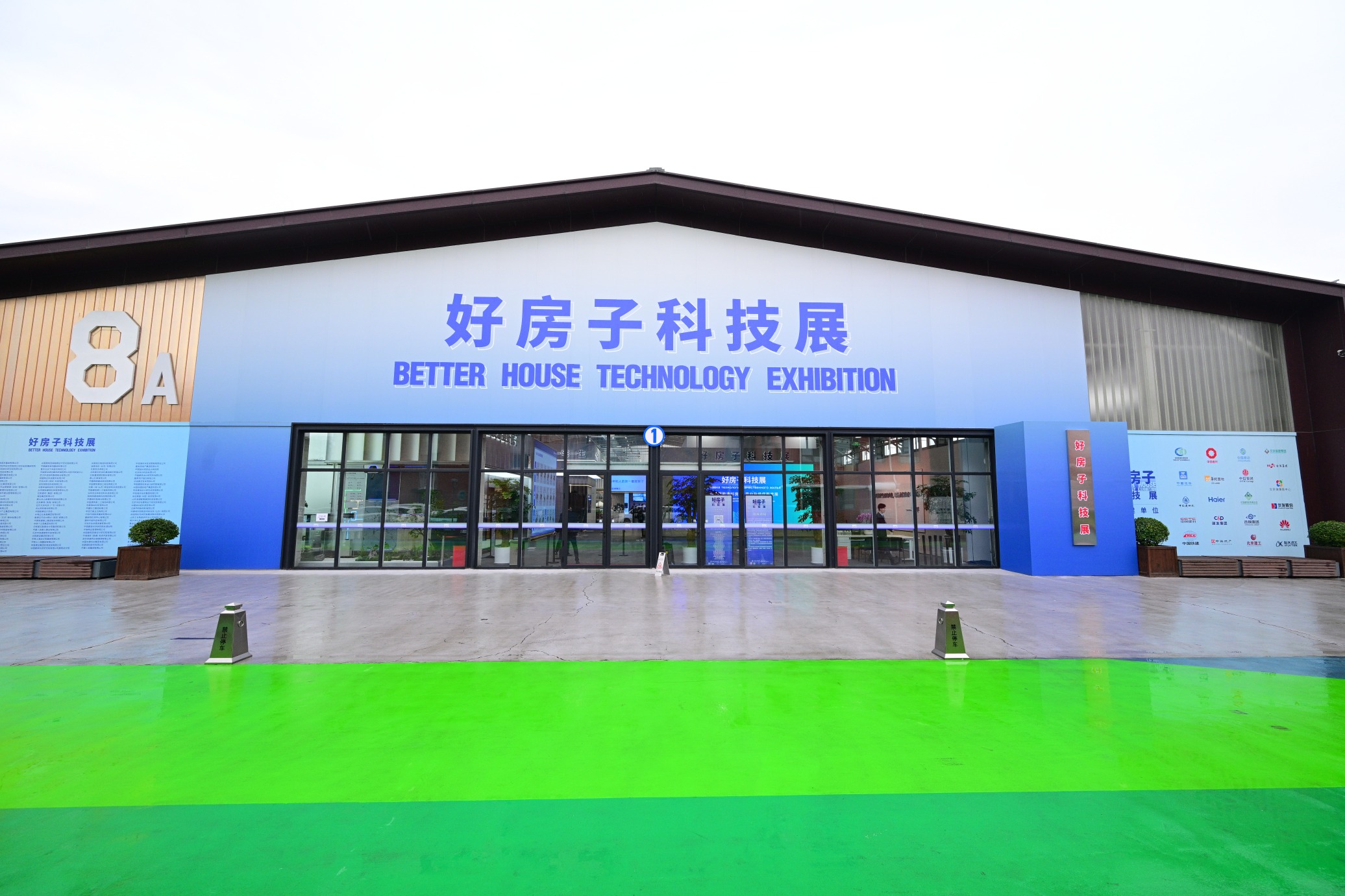
Core Viewpoint - The "Good House Technology Exhibition" in Beijing focuses on the theme of "Technology Empowering Good House Construction and Industrial Upgrade Promoting New Development," showcasing innovative housing concepts and technologies to meet public needs [1][3]. Group 1: Exhibition Overview - The exhibition is organized by the Ministry of Housing and Urban-Rural Development, in collaboration with over 20 entities including state-owned enterprises and research institutions, aiming to promote the concept of "Good House" [3]. - It features ten exhibition areas, including model houses, standards, designs, construction methods, materials, maintenance, smart construction, national heavy equipment, future technologies, and residential parks [3][4]. Group 2: Definition of "Good House" - A "Good House" is defined as one that is liked, desired, and affordable by the public, varying in size and price to meet diverse needs, with the common standard being "public satisfaction" [4]. - The exhibition showcases 18 model houses, including commercial housing, affordable housing, and renovated old residences, emphasizing safety, comfort, sustainability, and intelligence [4]. Group 3: Key Exhibition Areas - The "Good Standards" area displays the "Residential Project Specifications" and utilizes AI tools to present standardization achievements in the construction of "Good Houses" [5]. - The "Good Design" area highlights modern design concepts and innovative integration technologies, showcasing exemplary works and practical cases [5]. - The "Good Materials" area features high-quality building materials with characteristics of health, safety, and sustainability, such as carbon fiber and self-healing waterproof materials [5]. Group 4: Construction and Maintenance - The "Good Construction" area demonstrates the complete process of building a "Good House," from design to construction, emphasizing industrialized and low-carbon methods [5]. - The "Good Maintenance" area showcases property services and smart community operations, illustrating successful practices in enhancing service quality [5]. Group 5: Technological Integration - The exhibition emphasizes the role of new technologies in construction, promoting smart homes, digital families, and renewable energy applications to enhance building standards [6]. - The "Smart Construction" area features advanced construction robots and software, showcasing the integration of new information technologies with industrialized construction [6]. - The "National Heavy Equipment" area displays models of significant construction machinery, highlighting advancements in construction capabilities [6]. Group 6: Future Innovations - The "Future Technology" area presents innovations such as photovoltaic energy storage and AI smart home scenarios, redefining future living environments [6]. - An outdoor residential park area is being developed to showcase low-carbon buildings and age-friendly designs, catering to the public's demand for high-quality living [6].
广东人大助力现代化产业体系建设,7场专题会议聚合力促发展
Sou Hu Cai Jing· 2025-07-10 23:43
Group 1: Economic Resilience and Industrial Development - In the first half of 2025, China's economy, particularly in Guangdong, demonstrated strong resilience and vitality, with a focus on traditional industries leveraging technological innovation to secure global orders [1] - Guangdong's industrial robot production accounts for 44% of the national total, and smartphone production exceeds 40%, indicating a robust manufacturing sector [1] - The province has formed nine trillion-yuan industrial clusters and has eight national advanced manufacturing clusters, showcasing its industrial strength [1] Group 2: Legislative Support for Industrial Modernization - The Guangdong Provincial People's Congress is actively promoting the implementation of key tasks for building a modern industrial system, including organizing seven specialized meetings on various topics such as AI, traditional industry integration, and high-quality talent cultivation [2] - Legislative measures are being taken to provide a solid legal guarantee for the acceleration of the modern industrial system, reflecting the evolving "Guangdong phenomenon" in legislative support [2] Group 3: Innovation and Technological Advancement - The construction of a modern industrial system in Guangdong is accelerating, focusing on upgrading traditional and advantageous industries while fostering emerging and future industries [3] - Guangdong's innovation capacity has ranked first nationally for eight consecutive years, with 408 companies listed on the Science and Technology Innovation Board and the Growth Enterprise Market, raising a total of 331.2 billion yuan [3] - Companies like Yirui Technology exemplify the successful transformation of traditional industries through innovation, with a significant portion of their revenue coming from foreign markets [3] Group 4: Future Industries and Global Standards - The low-altitude economy, computing power, and robotics are becoming key areas for reshaping global competition, with Guangdong aiming to turn future industries into market leaders and standard setters [4] - The Shenzhen Artificial Intelligence and Robotics Research Institute has made significant strides in developing various applications for robots, indicating a strong focus on innovation in this sector [5] Group 5: Collaborative Development and Economic Environment - Guangdong aims to cultivate more leading enterprises and industrial clusters through a collaborative development approach, enhancing its competitive advantage in manufacturing [5] - The Guangdong Provincial People's Congress is reinforcing the legal framework to support the modern industrial system, ensuring a market-oriented, law-based, and international business environment [6][7] Group 6: Focused Research and Development - The Guangdong Provincial People's Congress has conducted in-depth research on key industrial clusters, identifying challenges and forming actionable reports to support the development of the modern industrial system [7][8] - Future efforts will focus on enhancing the legal system's coherence and promoting cross-sectoral regulatory alignment to support new economic and business models [8]
宇树科技首席执行官王兴兴:人形机器人大批量应用的节点还没到来
news flash· 2025-06-26 01:19
Core Viewpoint - The discussion at the Summer Davos 2025 highlighted the development trends of AI technology in China, with a focus on potential collaborations between major companies like Haier Group and Yushu Technology [1] Group 1: Company Insights - Haier Group is actively involved in the development of industrial robots and home service robots, indicating its commitment to advancing AI technology [1] - Yushu Technology, led by CEO Wang Xingxing, is seeking partnerships with large corporations like Haier to enhance its AI initiatives [1] Group 2: Industry Trends - The application of humanoid robots is not expected to occur in large volumes in the near future, suggesting a cautious approach to market readiness [1] - AI robots are anticipated to develop in a stepwise manner, emphasizing the need for products to be precisely matched with market demands [1]

