
导航卫星

Search documents
低轨卫星行业研究系列之四:卫星星座组网加速,商业应用不断拓展
EBSCN· 2026-01-09 12:18
Investment Rating - The report maintains a "Buy" rating for the aerospace sector, particularly focusing on low Earth orbit (LEO) satellite communications and applications [5]. Core Insights - The construction of low Earth orbit satellite constellations is accelerating, with increasing competition for orbital and spectrum resources. LEO satellites are becoming a core direction for commercial space development due to their low latency and global coverage advantages [1][2]. - The industry is transitioning from traditional C and Ku frequency bands to higher frequency bands like Ka to support high-throughput data transmission. This shift is essential for meeting the growing demand for quality communication services in mobile applications and the Internet of Things (IoT) [1][2]. - The commercial application scenarios for satellites are expanding beyond traditional communication to include IoT, aviation, maritime, and emergency disaster reduction, indicating a significant market potential [3]. Summary by Sections 1. Industry Overview - LEO satellites are favored for real-time communication and global IoT connectivity due to their low transmission loss and delay. The competition for LEO orbital resources is intensifying as countries accelerate their satellite deployment efforts [1][19]. - The report highlights the importance of satellite platform and payload technology advancements, which are driving improvements in satellite performance and reductions in manufacturing costs [2][4]. 2. Commercial Applications - The report emphasizes the diversification of satellite applications, with examples like Starlink, which has developed a multi-faceted business model including home broadband, mobile services, and aviation maritime communication [3][66]. - The advancements in hyperspectral payload technology are opening new avenues for satellite applications in mineral exploration and agricultural monitoring [4][25]. 3. Investment Recommendations - The report suggests focusing on the mobile application and IoT markets, as well as the satellite navigation sector, particularly in areas like vehicle networking and wearable device navigation [4][27]. - It identifies key companies to watch in the satellite and rocket sectors, including Shaanxi Huada, Shanghai Port, and others, as they are positioned to benefit from the upcoming surge in satellite launches [4][66].
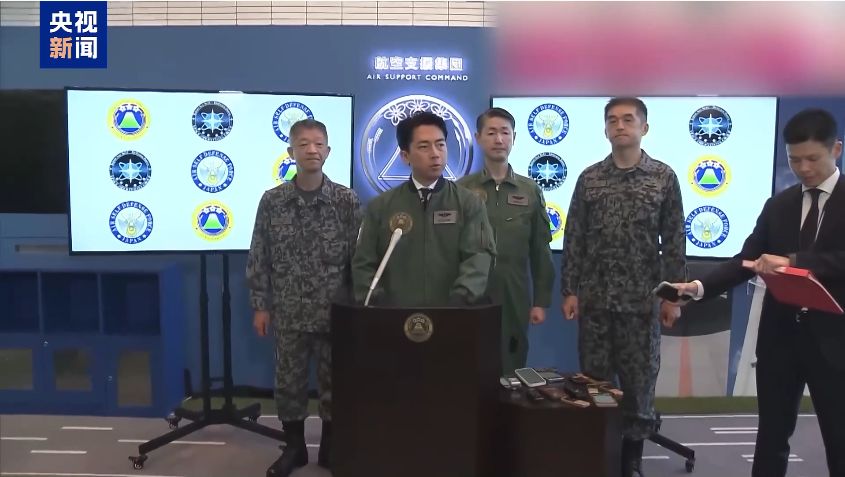
日本新动作曝光!拟打造“航空宇宙自卫队”和“宇宙作战集团”:会和美国太空军联合演习、训练 甚至联合作战
Mei Ri Jing Ji Xin Wen· 2025-12-04 02:14
Core Viewpoint - Japan's government, under Prime Minister Kishi Nobuo, is aggressively pursuing military expansion under the guise of "self-defense," with a strong focus on militarizing space [1][3]. Group 1: Military Expansion Plans - Japan's Defense Minister Koizumi Shinjiro emphasized the importance of space as a critical area for both military and civilian purposes during a visit to the Air Self-Defense Force base [3]. - The Japanese government plans to reorganize the Air Self-Defense Force into an "Aerospace Self-Defense Force" by the fiscal year 2026, with the "Space Operations Group" expected to be upgraded to a "Space Operations Corps" by 2025 [3]. - Japan is also developing "bodyguard satellites" to enhance its space defense capabilities and plans to invest heavily in a "low-orbit satellite constellation" project, akin to the Starlink initiative [3]. Group 2: Strategic Considerations - Japan aims to establish a more comprehensive space reconnaissance system using optical infrared imaging satellites and radar reconnaissance satellites to monitor foreign military targets [4]. - The military communication and navigation satellites will support Japan's Self-Defense Forces in the Indian and Pacific Oceans, facilitating overseas deployments for intelligence and information support [4]. - New early warning satellites are being launched to strengthen Japan's overall missile defense capabilities, reducing the effectiveness of other nations' ballistic missile capabilities [5]. Group 3: International Reactions and Concerns - International observers have expressed concerns that Prime Minister Kishi Nobuo's statements signal a resurgence of Japanese militarism, which could threaten regional and global peace and stability [6][7]. - Critics argue that Japan's military expansion and provocative statements could escalate tensions and potentially lead to conflict, highlighting the historical context of Japan's military actions in Asia [7][8].

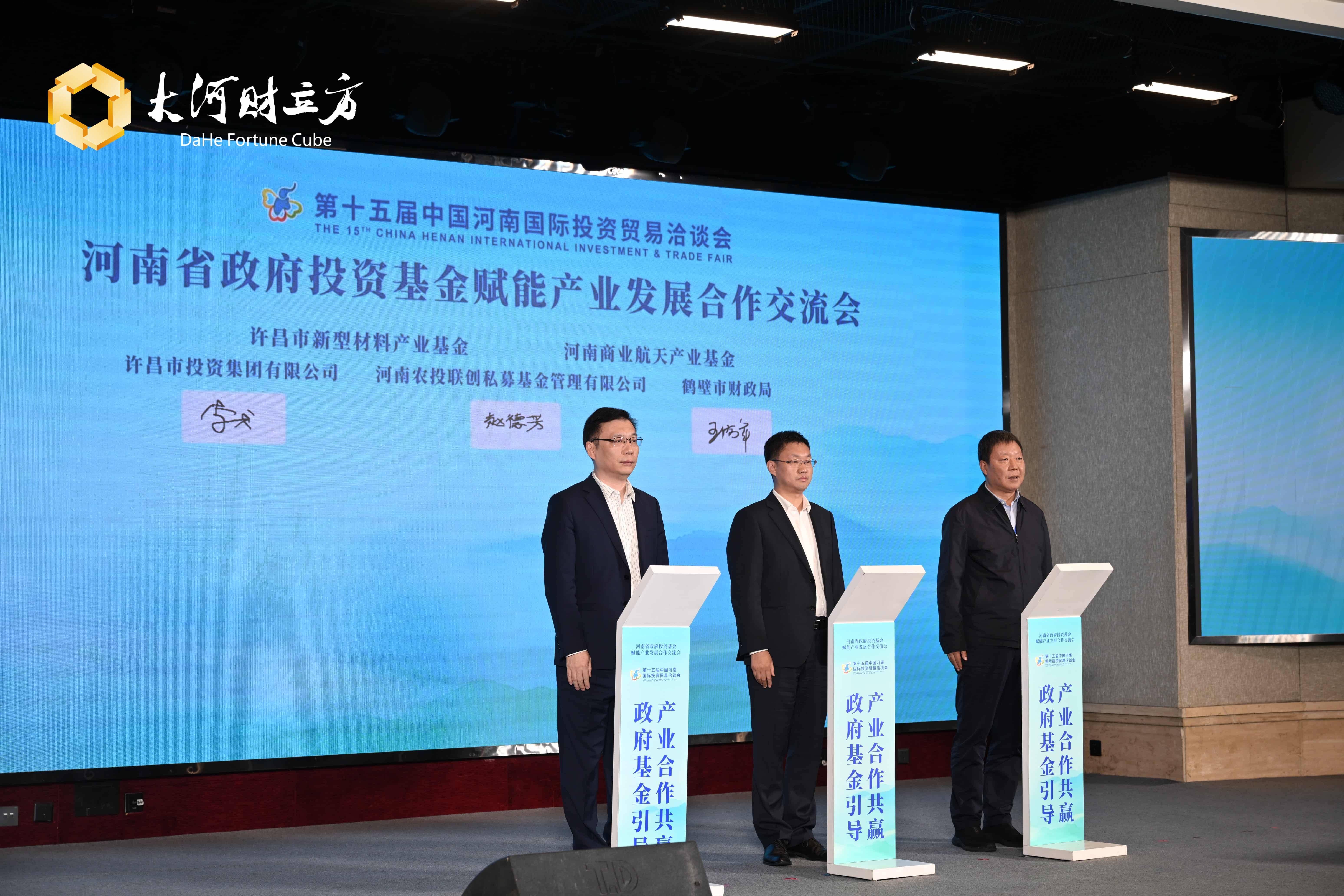
规模暂定5亿,河南商业航天产业基金正式签约
Sou Hu Cai Jing· 2025-09-28 12:21
Core Viewpoint - The establishment of the Henan Commercial Aerospace Industry Fund, with a planned scale of 500 million yuan and an initial subscription of 200 million yuan, aims to support the development of the aerospace industry in Hebi City, focusing on the entire industrial chain from rocket manufacturing to satellite applications [1][6]. Group 1: Fund Overview - The Henan Commercial Aerospace Industry Fund is currently in the establishment phase and will be managed by Henan Agricultural Investment and Innovation Private Fund Management Co., Ltd. [1] - The fund's primary investment focus includes the commercial aerospace industry chain in Hebi, specifically in rocket manufacturing and ground equipment [6]. Group 2: Industry Context - The commercial aerospace industry has been rapidly developing, with continuous launches of remote sensing, navigation, and communication satellites, leading to a gradual commercialization of satellite applications [6]. - Hebi City is integrating into the national aerospace strategy, positioning the commercial aerospace industry as a key driver for cultivating new productive forces [6]. Group 3: Government Support and Infrastructure - The Henan provincial government has actively supported the development of the satellite industry in Hebi, issuing several strategic plans to enhance the region's capabilities [6]. - Hebi City has established a comprehensive industrial ecosystem that includes upstream satellite and rocket manufacturing, midstream satellite control, and downstream application scenarios, supported by the establishment of the "Henan Satellite Industry Park" [7][8]. Group 4: Strategic Goals - The fund is seen as a crucial tool for promoting technological innovation and industrial upgrading, leveraging government investment to attract social and financial capital [8]. - The goal is to enhance the competitive advantage of Hebi's commercial aerospace industry through a synergistic effect of capital and policy, ultimately fostering a robust industrial ecosystem [8].
王坚:人工智能不应在太空缺失,会出现第四种卫星“计算卫星”
Bei Ke Cai Jing· 2025-09-11 07:55
Core Insights - The emergence of artificial intelligence (AI) in space is highlighted as a significant advancement, with the introduction of "computational satellites" alongside existing communication, navigation, and remote sensing satellites [1][2] - The successful launch of 12 satellites by Zhijiang Laboratory marks the first instance of deploying a complete 8B AI model into space, enabling comprehensive data processing in any location the satellites reach [1] - The interconnectivity of satellites in space is emphasized as a groundbreaking opportunity for AI, which previously relied solely on ground communication [1] Group 1 - The concept of "computational satellites" is introduced, suggesting that AI should not be absent in space exploration [1] - The launch of 12 satellites represents a milestone in integrating AI capabilities directly into space operations, allowing for real-time data processing [1] - The inter-satellite communication established by these satellites opens new avenues for AI applications in space, enhancing the potential for future space missions [1] Group 2 - The integration of AI and computational power in space is deemed essential for humanity's exploration beyond Earth, particularly in missions to Mars [2] - The next decade or two is anticipated to be a thrilling period for space exploration, driven by advancements in AI and computational technologies [2]