居家适老化改造产品

Search documents
西藏银发经济发展持续深化
Zhong Guo Jing Ji Wang· 2026-01-14 14:16
Group 1 - The core viewpoint emphasizes the continuous improvement of social security, elderly services, and health support systems in Tibet, integrating positive aging concepts into economic and social development [1] - The seventh national population census indicates that the population aged 60 and above in Tibet is 311,000, accounting for 8.52% of the resident population, while those aged 65 and above are 207,000, making up 5.67% [1] Group 2 - The development of the silver economy in Tibet is deepening, with plans for a "Quality Life for the Elderly" themed consumption season in 2025, encouraging businesses to offer discounts and promotions [2] - The Tibet Autonomous Region's big data center has compiled 211 data resource directories and over 400 million data entries related to the silver economy, facilitating cross-departmental data sharing [2] Group 3 - By 2025, a personal pension system will be fully implemented, with 539,200 personal pension accounts opened and total contributions reaching 161 million yuan [3] - The basic pension for urban and rural residents has reached 295 yuan per person per month, benefiting 318,200 individuals, while adjustments to pensions for retirees from enterprises and public institutions will benefit over 120,000 people [3] - A total of 318 individuals have undergone elderly care vocational training, with 979 obtaining certification in elderly service skills [3]
八部门发文加快培育养老服务经营主体
Xin Lang Cai Jing· 2026-01-13 19:50
Core Viewpoint - The Ministry of Civil Affairs and seven other departments have jointly issued measures to cultivate the elderly care service industry and promote the silver economy, focusing on brand building, supply-demand matching, technological empowerment, environmental optimization, and support for resources [1][2] Group 1: Policy Measures - The measures include 14 specific initiatives aimed at optimizing the development environment and fostering the elderly care service industry [1] - The goal is to stimulate operational vitality and promote structural reforms in the supply side of elderly care services, contributing to high-quality development of the silver economy [1] Group 2: Market Context - China has over 310 million people aged 60 and above, necessitating the development of a suitable elderly care service system to address aging population challenges and enhance the well-being of the elderly [1] - The silver economy, with a market size in the trillions, is entering an opportunity phase, demanding higher levels of specialization and refinement in the industry [2] Group 3: Service Optimization - The measures propose optimizing the supply of elderly care services and age-friendly products, encouraging community-based service integration through chain operations [2] - Initiatives include promoting mobile bathing services in communities and developing fashionable elderly care consumption products [2] Group 4: Supply-Demand Matching - The measures support local governments in establishing dedicated elderly care sections on existing platforms to enhance supply-demand matching and resource utilization [2] - Encouragement for e-commerce platforms and large supermarkets to host themed shopping festivals and create dedicated interfaces for elderly consumers [2]
八部门发文促进银发经济发展
Mei Ri Jing Ji Xin Wen· 2026-01-13 12:33
Core Viewpoint - The Ministry of Civil Affairs and eight other departments have jointly issued measures to stimulate the vitality of various elderly care service providers, promote the development of the silver economy, and better meet the diverse needs of the elderly population [1] Group 1: Policy Measures - The measures aim to create a favorable environment for investment and entrepreneurship in the elderly care sector, encouraging the development of community-based services through chain operations [1][2] - The initiative emphasizes the importance of home care services for the elderly, promoting the integration of resources within communities to enhance service delivery [2] Group 2: Market Dynamics - By the end of 2025, there will be approximately 41,700 elderly care institutions in China, with 722,000 employees, reflecting a year-on-year growth of 12.2% [3] - Private elderly care institutions account for 52.2% of the total, indicating that social forces are becoming the mainstay of diversified elderly care service supply [3] Group 3: Technological Support - The measures encourage technological advancements in elderly care, including the application of big data, cloud computing, and artificial intelligence for health monitoring and personalized services [4] - There is a focus on developing smart elderly care products and robotics to meet the daily care and emotional support needs of the elderly [4] Group 4: Investment Opportunities - The push for technology-enabled elderly care services is expected to create new investment opportunities in the capital market [5] - Research indicates that the demand for smart elderly care products is increasing, driven by policy support and the advancement of AI technology [6]
八部门鼓励养老服务机器人产业发展,为老年人提供全方位智能化养老支持
Jin Rong Jie· 2026-01-13 02:32
Core Viewpoint - The Ministry of Civil Affairs and seven other departments have introduced measures to cultivate the elderly care service industry and promote the silver economy, focusing on technological innovation and market-oriented solutions to meet the diverse needs of the elderly population [2][6]. Group 1: Brand Development - Strengthening brand recognition by supporting chain-based elderly care service providers to establish distinctive branding [3]. - Encouraging the registration of trademarks for elderly care service providers to enhance brand protection and recognition [3]. - Promoting well-known brands through various initiatives to create exemplary brands in the elderly care sector [3]. Group 2: Market Supply and Demand - Optimizing the supply of elderly care services and age-friendly products by integrating community resources and encouraging home care services [4]. - Establishing platforms for supply and demand matching to enhance resource utilization in elderly care services [5]. - Encouraging e-commerce platforms and supermarkets to create dedicated sections for elderly products to facilitate consumption [5]. Group 3: Technological Empowerment - Promoting technological advancements in elderly care, including the use of big data, AI, and robotics for health monitoring and personalized services [6][7]. - Supporting the development of innovative technologies such as exoskeleton robots and brain-machine interfaces to assist elderly individuals with declining physical functions [6][7]. Group 4: Development Environment - Creating a fair competitive environment by reforming the classification of elderly care institutions and optimizing support policies [8]. - Establishing a standard certification system for elderly products and services to guide procurement and ensure quality [8]. - Protecting the rights of the elderly by implementing educational programs and regulating the elderly care service market to prevent exploitation [8][9]. Group 5: Support Measures - Improving government services by providing information on elderly demographics and available support policies to service providers [10]. - Streamlining the licensing process for elderly care institutions to facilitate easier access to necessary permits [10]. - Supporting stable operations of elderly care facilities through land supply and financial assistance for construction and operation [10].

民政部等八部门:促进养老服务市场化供需对接
Xin Lang Cai Jing· 2026-01-13 02:01
Core Viewpoint - The article emphasizes the need to optimize elderly care services and the supply of age-friendly products, promoting community-based solutions and innovative service models for the aging population [1] Group 1: Elderly Care Services - The initiative encourages the expansion of community-based elderly care services through chain operations of care institutions, integrating local resources to provide comprehensive services [1] - Support is provided for the development of specialized medical accompaniment services for the elderly, ensuring regulated assistance during medical visits [1] - The introduction of mobile bathing services to communities is encouraged, offering convenient in-home assistance for elderly individuals [1] Group 2: Age-Friendly Products - The promotion of fashionable elderly care consumer products, including smart rehabilitation aids and lifestyle care items, is highlighted [1] - There is encouragement for the development of cosmetics suitable for older adults, as well as food products that are low in sugar, high in protein, and easy to chew [1] - The initiative supports clothing companies in launching elderly product lines, focusing on safety features, warmth retention, and specific functionalities [1] Group 3: Market Integration and Support - A platform for supply and demand matching is to be established, enhancing the efficiency of regional elderly care resource utilization [1] - Local governments are encouraged to utilize existing expos and fairs to create dedicated sections for the silver economy, facilitating connections among manufacturers, service providers, and consumers [1] - E-commerce platforms and large supermarkets are urged to host themed shopping festivals and create dedicated interfaces for elderly consumers, promoting both online and offline shopping experiences [1]
八部门印发《关于培育养老服务经营主体 促进银发经济发展的若干措施》
Zheng Quan Shi Bao Wang· 2026-01-13 02:00
Core Viewpoint - The Ministry of Civil Affairs and seven other departments have issued measures to cultivate elderly care service operators and promote the silver economy, focusing on optimizing the supply of elderly care services and age-friendly products [1] Group 1: Elderly Care Services - The initiative encourages the expansion and upgrading of convenient living circles within communities, promoting chain operations of elderly care institutions to integrate surrounding resources [1] - There is a push for home care services for the elderly, encouraging housekeeping companies to actively develop these services [1] - Support is provided for the cultivation of specialized medical accompaniment institutions to standardize services for elderly patients [1] Group 2: Product Development - The measures advocate for the introduction of mobile bathing services to communities, offering on-site assistance [1] - A focus on promoting fashionable elderly care consumer products, including smart rehabilitation aids and life care items [1] - Encouragement for the development of cosmetics suitable for the elderly, as well as food products that are low in sugar, high in protein, and easy to chew [1] Group 3: Clothing and Home Adaptation - The initiative promotes clothing and apparel companies to establish product lines for the elderly, emphasizing age-friendly designs [1] - Research into clothing with specific functions such as safety protection, heat retention, and positioning is encouraged [1] - There is a call to advance home adaptation products to create suitable living environments for the elderly [1]
泰安|每年投入7000余万元,114家养老机构中星级占比达85% 看泰安如何打响“寿比泰山”品牌
Da Zhong Ri Bao· 2025-10-24 01:17
Core Insights - The article highlights the effective integration of medical and elderly care services in Tai'an, showcasing a case where a timely response to a stroke incident exemplifies the city's commitment to elderly health care [1] - Tai'an is developing a comprehensive elderly care system that combines home, community, and institutional services, aiming to enhance the quality of life for senior citizens [1][2] Elderly Care System Development - Tai'an has established a "Longevity Like Mount Tai" brand for elderly services, coordinating home, community, and institutional care with a focus on medical and wellness integration [1] - The city has allocated over 70 million yuan annually to support elderly care services, including facility construction, operational subsidies, and talent training [1] Community and Home Care Services - The city has built 5,016 home care beds and provided 850,000 home care services to 7,527 individuals, indicating a strong preference for home-based care among the elderly [2] - Community dining services are also thriving, with 170 "Happy Canteens" serving over 1.42 million elderly individuals annually, providing affordable and nutritious meals [2] Medical Integration in Elderly Care - Tai'an's medical integration is advanced, with 114 elderly care institutions, 85% of which are rated as star institutions, and 76.1% offering nursing beds [3] - The Tai Mountain Nursing Center provides comprehensive medical services, including imaging and monitoring, ensuring high-quality care for residents [3] Financial Support and Subsidies - Since August, Tai'an has issued 10,362 elderly care consumption vouchers, with 8,013 specifically for institutional care, to support elderly individuals [4] - The city has increased the subsidy rate for home adaptation products from 20% to 30%, with total sales reaching 2.38 million yuan [4]
使用商品条码消费品达2.3亿种
Ren Min Ri Bao· 2025-10-15 22:22
Core Insights - The number of new consumer goods registered with barcodes in China reached 19.922 million in the first three quarters, representing a year-on-year growth of 31.4% [1] - The total variety of consumer goods reached 230 million by the end of September, with a projected growth of 12.5% in 2024 [1] Consumer Goods Sector - The implementation of the old-for-new policy in consumer goods has driven significant growth in the home decoration sector [1] - Five major categories of consumer goods in home decoration saw an increase of 3.324 million new products, marking a year-on-year growth of 471.4% [1] - The categories include renovation materials, sanitary ware, furniture lighting, smart home products, and home aging transformation products, involving 20,000 enterprises [1]
前三季度中国使用商品条码消费品新增近2000万种
Zhong Guo Xin Wen Wang· 2025-10-15 08:49
Group 1 - The core viewpoint of the articles highlights the significant growth in the number of consumer goods registered with barcodes in China, with a total of 19.92 million new products added in the first three quarters of the year, representing a year-on-year increase of 31.4% [1] - The total number of consumer goods varieties reached 230 million by the end of September, indicating a sustained upward trend in the market [1] - The top ten categories of newly registered consumer goods include clothing, furniture, daily necessities, food, healthcare, hardware, cosmetics, office supplies, building materials, and home appliances, accounting for 86.6% of the total new products [1] Group 2 - The home appliance sector saw a notable increase, with 181,000 new products added, reflecting a year-on-year growth of 47.3%, driven by the "old for new" policy [2] - Among the home appliance categories, televisions, range hoods, and cooking stoves showed remarkable growth rates of 151.7%, 136.8%, and 124.3% respectively, becoming the main contributors to this sector's growth [2] - The regional distribution of new consumer goods shows that the eastern region led with 15.84 million new products, followed by the central, western, and northeastern regions with 2.35 million, 1.24 million, and 493,000 new products respectively [2]
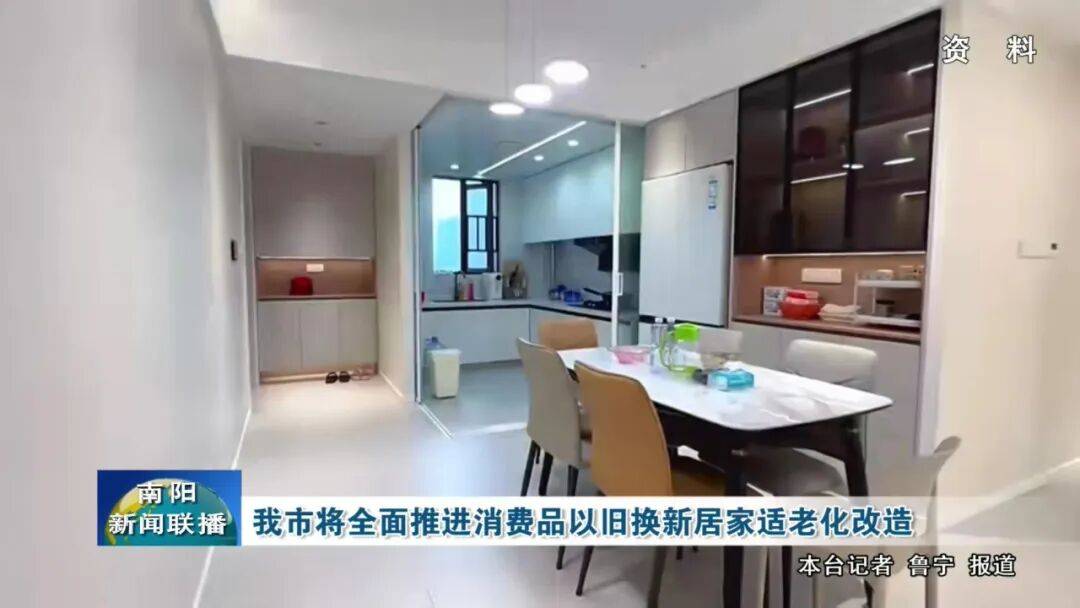
南阳将全面推进消费品以旧换新居家适老化改造
Sou Hu Cai Jing· 2025-09-26 01:49
Core Points - The initiative aims to enhance the safety, convenience, and comfort of elderly individuals living at home through a home renovation subsidy program in Nanyang City [1][3] - The program follows principles of voluntary renovation, need-based modifications, first-come-first-served subsidy distribution, and limits the subsidy to one property per elderly individual [3] Subsidy Details - Elderly individuals aged 60 and above residing in Nanyang City can apply for the subsidy when purchasing home renovation products for elderly adaptation [3] - The subsidy covers 30% of the total purchase cost, with a maximum subsidy of 12,000 yuan per property [3] - Unused subsidy amounts reset at the end of each month, allowing for reapplication in the following month if not utilized [3]