
智能康复辅具

Search documents
“中国康湾”浮出水面,为这座城市打开新的想象空间
Xin Jing Bao· 2026-02-12 09:17
Core Viewpoint - The "silver economy" is emerging as a trillion-level industry, with the "China Health Bay" initiative in Qingdao positioning the city as a new hub for health and wellness in response to the aging population [2][4]. Group 1: Development Plans and Goals - Qingdao has launched the "China Health Bay" three-year action plan (2025-2027), aiming for a life and health industry scale of 100 billion yuan by 2027, focusing on integrating real estate, healthcare, wellness, and cultural tourism [3][5]. - The plan emphasizes "full-area wellness and all-age health," with 19 key tasks to enhance the city's influence as an international health and wellness destination [3][5]. Group 2: Strategic Advantages - Qingdao's strategy is based on its unique resources, including being a pilot city for rehabilitation assistive devices and housing the only rehabilitation university in the country, which fosters talent and technological innovation [4][5]. - The city benefits from a solid foundation in marine biomedicine, with an expected industry output of over 30 billion yuan in 2024, supported by leading companies like Huang Hai Pharmaceutical and Huaxi Biological [5][6]. Group 3: Policy Support and Implementation - Qingdao has established a leadership group to oversee the "China Health Bay" initiative, with 31 departments collaborating and nine supporting policies introduced to facilitate funding, land, and talent [5][6]. - The city is promoting deep integration of "medical + wellness + cultural tourism + real estate," creating convenient wellness services within communities [6][7]. Group 4: Challenges and Opportunities - Despite the growth potential, Qingdao faces challenges such as uneven resource allocation, a shortage of professional talent, and insufficient innovation capabilities compared to other renowned wellness cities [6][7]. - The city is actively addressing these issues through initiatives like a training verification center for technological advancements and a talent cultivation alliance [7]. Group 5: Future Outlook - The "China Health Bay" initiative is not only a strategic move to capture industry opportunities but also a commitment to enhancing the quality of life for residents and addressing the aging population [7]. - As the three-year action plan progresses, Qingdao aims to provide a replicable model for the national wellness industry, contributing to sustainable urban development [7].


财政部等部委明确:杜绝“玻璃门”排斥这类主体
Xin Lang Cai Jing· 2026-02-02 14:56
Core Viewpoint - The joint measures issued by multiple government departments aim to cultivate the elderly care service industry and promote the silver economy, ensuring fair competition and market vitality in the sector [1][3]. Group 1: Brand Development - Support for the establishment of distinctive branding for chain elderly care service providers to enhance brand recognition [4]. - Encouragement for elderly care service providers to implement trademark strategies and protect their brands [4]. - Promotion of quality elderly care brands through various initiatives to create leading enterprises in the sector [4]. Group 2: Market Supply and Demand - Optimization of elderly care services and products to meet community needs, including home care services and specialized medical assistance [6]. - Development of platforms for supply and demand matching in the elderly care market, enhancing resource utilization and facilitating connections among stakeholders [6]. Group 3: Technological Empowerment - Encouragement for technological advancements in elderly care, including the use of AI, big data, and robotics to enhance service delivery [7]. - Support for the application and testing of smart elderly care products within service institutions to improve user experience [7]. Group 4: Development Environment Optimization - Creation of a fair competitive environment by prohibiting restrictive clauses in government procurement processes for elderly care services [8]. - Establishment of standards and certification systems for elderly care products and services to ensure quality and safety [8]. Group 5: Support Measures - Improvement of government services for elderly care providers, including streamlined licensing processes and access to information on policies and resources [11]. - Provision of land and operational support for elderly care facilities, prioritizing areas based on local aging population needs [11].
康尼机电:公司智能健康业务尚处于产业孵化阶段,智能轮椅、老年代步车等产品已实现批量销售
Zheng Quan Ri Bao Wang· 2026-01-27 13:12
Core Viewpoint - The company is in the incubation stage of its smart health business, with products like smart wheelchairs and elderly mobility vehicles already achieving bulk sales [1] Group 1: Product Development - Smart wheelchairs and elderly mobility vehicles have achieved bulk sales [1] - Transfer machines have been used in relevant hospitals and rehabilitation institutions, achieving small batch sales [1] - Smart rehabilitation aids are currently being trialed in relevant medical institutions [1] Group 2: Market Strategy - The company adopts a dual strategy of "self-market development and external channel cooperation" [1] - In the domestic market, the company is advancing negotiations with both online and offline channel partners [1] - For the overseas market, sales are primarily conducted through foreign agents [1]

当“银发”遇见“新潮”
Jing Ji Wang· 2026-01-19 02:33
Core Viewpoint - The "silver economy" in China is rapidly evolving, focusing on diverse products and services for the elderly, reflecting a shift from traditional perceptions to a modern consumer landscape that enhances the well-being of older adults [1][2][3]. Group 1: Market Trends - The demand from the elderly demographic is increasingly fashionable, with many older individuals engaging in social media and participating in trendy courses, indicating a shift in consumer behavior [2][3]. - By the end of 2024, the population aged 60 and above in China is projected to reach 310 million, with 161 million of them being internet users by mid-2025, highlighting the significant digital engagement among the elderly [2][3]. Group 2: Consumer Preferences - Older consumers are seeking high-quality food, healthcare services, and smart technology products, showing a willingness to invest in their quality of life and health [3][4]. - The silver economy is no longer limited to basic necessities but encompasses a wide range of sectors including technology, education, entertainment, and fashion [2][3]. Group 3: Policy and Support - The Chinese government has introduced measures to foster the silver economy, focusing on brand development, supply-demand platforms, and optimizing the business environment to support elderly care services [4][5]. - Policies are being implemented to encourage the expansion of products and services for the elderly, with a strong emphasis on financial support for these industries [5][6]. Group 4: Economic Impact - The silver economy is estimated to be worth approximately $1 trillion annually, with significant growth potential as the elderly population continues to expand [6][7]. - From 2015 to 2025, household spending led by individuals aged 60 and above is expected to increase by 129%, indicating a substantial shift in consumer spending patterns [8]. Group 5: Innovation and Investment - There is a growing focus on technological innovation in elder care, with investments in areas such as brain-computer interfaces and robotic nursing, aimed at improving the quality of life for older adults [7][8]. - The aging population is driving demand for health and retirement insurance products, with projections indicating that China will contribute to over 25% of global premium growth by 2030 [7][8].
集中整治非法集资、“坑老”低价游等乱象
Xin Lang Cai Jing· 2026-01-14 11:25
Core Viewpoint - The Ministry of Civil Affairs and seven other departments have introduced measures to cultivate the elderly care service industry and promote the silver economy, aiming to enhance the vitality of various elderly care service providers and better meet the diverse needs of the elderly population [2] Group 1: Brand Development - The measures emphasize strengthening brand development for elderly care services, encouraging the establishment of distinctive brand signage and enhancing brand recognition [3] - Local civil affairs departments are encouraged to standardize the names and signage of various elderly care service providers to improve brand identification [3] - Support for trademark registration and protection for well-known elderly care brands is also highlighted [3] Group 2: Market Supply and Demand - The measures propose optimizing the supply of elderly care services and age-friendly products, promoting community-based service integration through chain operations [4] - Encouragement for the development of specialized medical accompaniment services and mobile bathing services for the elderly is included [4] - The initiative also promotes the development of age-appropriate clothing and home modifications to create suitable living environments for the elderly [4] Group 3: Supply and Demand Platforms - The establishment of local platforms for elderly care services is encouraged to enhance resource utilization and service integration [5] - Support for exhibitions and trade fairs focused on the silver economy is included to facilitate connections between manufacturers, service providers, and consumers [5] - E-commerce platforms are encouraged to create dedicated sections for elderly products to enhance online and offline shopping experiences [5] Group 4: Technological Empowerment - The measures advocate for technological advancements in elderly care, including the use of big data, AI, and smart home technologies [7] - Support for the development of care robots and other innovative technologies to meet the daily needs of the elderly is emphasized [7] - Collaboration between elderly care institutions and technology developers is encouraged to enhance user experience and facilitate the adoption of new technologies [7] Group 5: Development Environment Optimization - The measures call for a fair competitive environment in the elderly care sector, including the reform of institutional classifications and support policies [8] - Establishment of standards and certification systems for elderly products and services is proposed to guide consumer choices [8] - Protection of elderly rights through education and regulation against fraudulent practices is also highlighted [8] Group 6: Support for Operating Entities - The measures aim to reduce administrative burdens on elderly care institutions and ensure fair pricing practices [9] - Public awareness campaigns to promote positive narratives about elderly care services are encouraged [9] Group 7: Resource Support - Local civil affairs departments are tasked with providing information on elderly demographics and service facilities to support the industry [10] - Streamlining the licensing process for elderly care providers and ensuring land availability for service facilities are also part of the measures [10] - Policies to support the stable operation of elderly care institutions, including financial assistance and regulatory measures, are proposed [10]
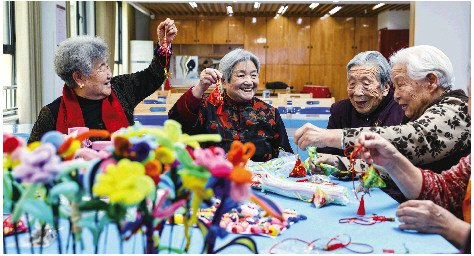
八部门发文加快培育养老服务经营主体
Xin Lang Cai Jing· 2026-01-13 19:50
Core Viewpoint - The Ministry of Civil Affairs and seven other departments have jointly issued measures to cultivate the elderly care service industry and promote the silver economy, focusing on brand building, supply-demand matching, technological empowerment, environmental optimization, and support for resources [1][2] Group 1: Policy Measures - The measures include 14 specific initiatives aimed at optimizing the development environment and fostering the elderly care service industry [1] - The goal is to stimulate operational vitality and promote structural reforms in the supply side of elderly care services, contributing to high-quality development of the silver economy [1] Group 2: Market Context - China has over 310 million people aged 60 and above, necessitating the development of a suitable elderly care service system to address aging population challenges and enhance the well-being of the elderly [1] - The silver economy, with a market size in the trillions, is entering an opportunity phase, demanding higher levels of specialization and refinement in the industry [2] Group 3: Service Optimization - The measures propose optimizing the supply of elderly care services and age-friendly products, encouraging community-based service integration through chain operations [2] - Initiatives include promoting mobile bathing services in communities and developing fashionable elderly care consumption products [2] Group 4: Supply-Demand Matching - The measures support local governments in establishing dedicated elderly care sections on existing platforms to enhance supply-demand matching and resource utilization [2] - Encouragement for e-commerce platforms and large supermarkets to host themed shopping festivals and create dedicated interfaces for elderly consumers [2]
八部门发文促进银发经济发展 这些赛道迎来风口
Mei Ri Jing Ji Xin Wen· 2026-01-13 16:17
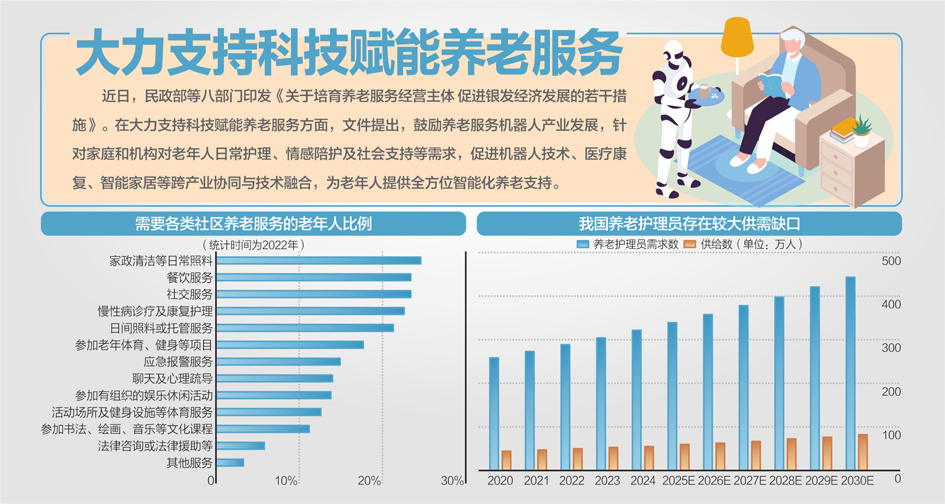
Core Viewpoint - The Ministry of Civil Affairs and eight other departments have jointly issued measures to stimulate the vitality of various elderly care service providers, create a favorable investment environment, and promote the development of the silver economy to better meet the diverse needs of the elderly [1][3] Group 1: Policy Measures - The measures aim to optimize the supply of elderly care services and age-friendly products, encouraging community-based operations and integration of resources to enhance service delivery [4] - The initiative supports the development of home care services for the elderly, including professional medical accompaniment and mobile bathing services [4] - There is a focus on promoting smart rehabilitation aids and age-appropriate food and clothing products, enhancing the living environment for the elderly [4] Group 2: Market Dynamics - By the end of 2025, there will be 41,700 elderly care institutions in China, with 722,000 employees, reflecting a 12.2% year-on-year increase, and 52.2% of these institutions will be privately owned [5] - Social forces are becoming the main contributors to the diversified supply of elderly care services, indicating a shift in the service landscape [5] Group 3: Technological Support - The measures encourage technological advancements in elderly care, integrating big data, AI, and other technologies for health monitoring and personalized services [6] - There is a push for the development of elderly care robots and smart home technologies to meet the daily care and emotional support needs of the elderly [6] - The market is expected to see new opportunities driven by the integration of technology in elderly care, with a focus on smart home products and AI solutions [7]
精准施策推动“银发经济”健康有序高质量发展 进一步激发经营主体活力
Yang Shi Wang· 2026-01-13 09:28
Core Viewpoint - The Ministry of Civil Affairs and seven other departments have jointly issued measures to cultivate the elderly care service industry and promote the silver economy through systematic and targeted policy support, aiming to enhance the vitality of various elderly care service providers and optimize the development environment [1][3]. Group 1: Policy Measures - The measures include 14 specific initiatives across five key areas: brand building, supply-demand matching, technological empowerment, environmental optimization, and support for essential factors [1]. - A fair competitive environment is to be established by accelerating the classification reform of elderly care institutions and optimizing support policies for various types of operators [3]. - The Ministry of Civil Affairs will rationally determine the frequency, methods, and scope of administrative inspections for elderly care institutions, implementing a "double random, one public" regulatory approach to minimize interference with normal operations [5]. Group 2: Standards and Certification - The measures call for the establishment of national standards for elderly products and services, along with a certification system for silver products and services, including a mechanism for tracking certified information and a credit evaluation system [6]. Group 3: Support for Operators - By the end of 2025, there will be a total of 41,700 elderly care institutions in China, with private institutions (including privately-run non-enterprise units) accounting for 52.2% [8]. - The measures propose to regularly publish information on the elderly population, distribution and utilization of elderly care facilities, and support policy lists, providing robust support in terms of land, duration, and funding for elderly care service providers [9]. - There will be an optimization of the licensing process for elderly care institutions, encouraging cross-regional online processing of licenses and exploring the application of electronic licenses [11]. Group 4: Land and Funding Support - Support will be provided from land, duration, and funding perspectives to ensure stable operations of elderly care institutions, prioritizing land supply for elderly care facilities based on local aging population levels [13]. - The Ministry of Civil Affairs aims to resolve site issues for operators, ensuring that elderly care facilities have available land for construction and optimizing funding support through various subsidies [15]. Group 5: Market Demand and Supply Matching - The measures emphasize the establishment of supply-demand matching platforms, encouraging e-commerce platforms and large supermarkets to create dedicated areas for silver consumption [16][18]. - There is a push to support the development of specialized medical accompaniment services for the elderly and promote the use of mobile bathing services in communities [17]. - The Ministry encourages the creation of unique shopping experiences for elderly products and the optimization of e-commerce platforms to cater to the elderly demographic [20].
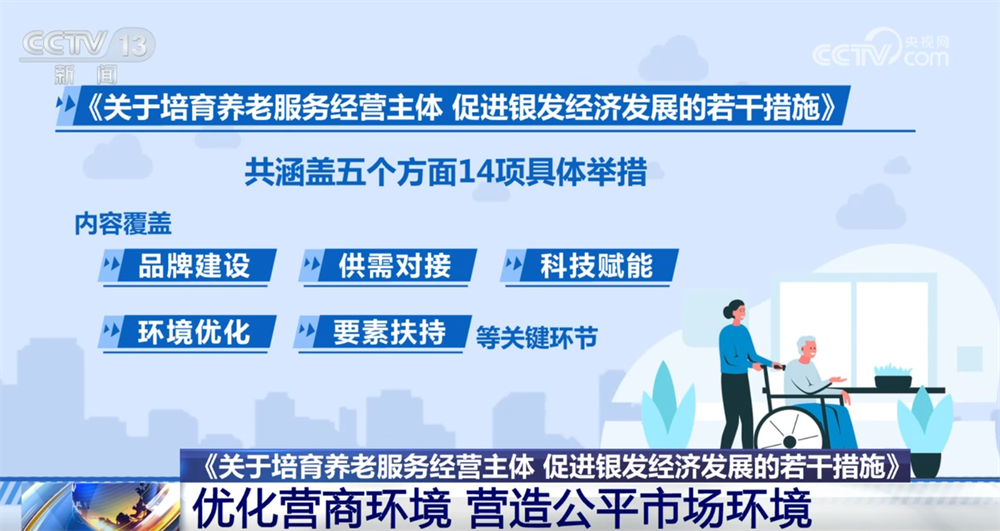
视频丨优化养老服务发展环境 民政部等八部门出台多项措施
Yang Shi Xin Wen Ke Hu Duan· 2026-01-13 07:12
Core Viewpoint - The Ministry of Civil Affairs and seven other departments have introduced measures to cultivate the elderly care service industry and promote the silver economy, aiming to enhance the vitality of various elderly care service providers and better meet the diverse needs of the elderly population [2] Group 1: Brand Development - The measures emphasize strengthening brand building for elderly care services, encouraging the establishment of distinctive brand signage and enhancing brand recognition [3] - Provincial civil affairs departments are encouraged to standardize the names and signage of various elderly care service providers to improve brand identification [3] - Support for trademark registration and protection for well-known brands in the elderly care sector is also highlighted [3] Group 2: Market Supply and Demand - The measures propose optimizing the supply of elderly care services and age-friendly products, promoting community-based service integration [4] - Encouragement for the development of specialized medical accompaniment services and mobile bathing services for the elderly is included [4] - The initiative also promotes the development of age-appropriate clothing and food products tailored to the elderly [4] Group 3: Supply-Demand Platform - Support for local governments to establish dedicated elderly care sections within existing platforms to enhance service demonstration and resource linkage is outlined [5] - The measures encourage the use of trade fairs and exhibitions to facilitate connections between manufacturers, service providers, and consumers in the elderly care market [5] - E-commerce platforms and supermarkets are encouraged to create special shopping events and interfaces for elderly consumers [5] Group 4: Technological Empowerment - The measures advocate for technological advancements in elderly care, including the use of big data, AI, and smart home technologies [6] - Support for the development of care robots and other innovative technologies to meet the daily needs of the elderly is emphasized [6] - The initiative encourages collaboration between elderly care institutions and technology developers to enhance user experience with smart products [6] Group 5: Development Environment - The measures call for the creation of a fair competitive environment for elderly care institutions, including the reform of classification and support policies [7] - Restrictions that hinder fair competition in government procurement processes for elderly care services are to be eliminated [7] Group 6: Standards and Certification - The establishment of national standards for elderly products and services is prioritized, along with a certification system to guide procurement practices [8] - The measures aim to protect the rights of the elderly by combating fraudulent practices and ensuring compliance in the elderly care market [8] Group 7: Support and Resources - Local civil affairs departments are tasked with providing regular updates on elderly population statistics and available support policies [9] - The measures encourage the establishment of a nurturing mechanism for elderly care service providers and the optimization of licensing processes [9] - Support for stable operations of elderly care institutions through land supply and financial assistance is also included [9]
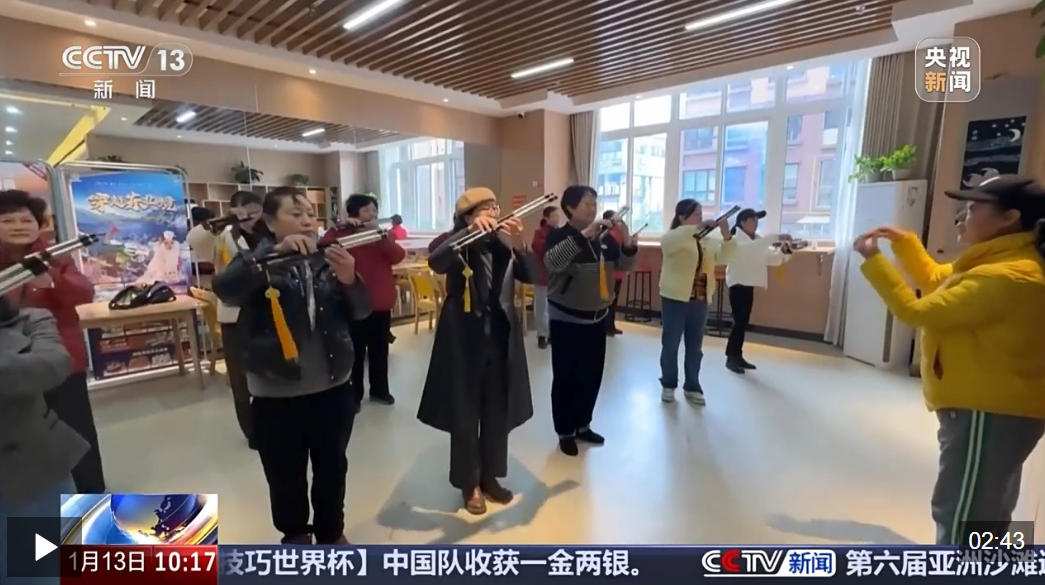
优化养老服务发展环境 民政部等八部门出台多项措施
Yang Shi Wang· 2026-01-13 02:36
Core Viewpoint - The Ministry of Civil Affairs and seven other departments have introduced measures to cultivate the elderly care service industry and promote the silver economy, aiming to enhance the vitality of various elderly care service providers and better meet the diverse needs of the elderly population [1] Group 1: Brand Development - The measures emphasize strengthening brand building for elderly care services, encouraging the establishment of distinctive brand signage and enhancing brand recognition [2] - Provincial civil affairs departments are encouraged to standardize the names and signage of various elderly care service providers to improve brand identification [2] - Support for trademark registration and protection for well-known elderly care brands is highlighted, promoting the implementation of brand strategies [2] Group 2: Market Supply and Demand - The measures propose optimizing the supply of elderly care services and age-friendly products, promoting community-based service integration through chain operations [3] - Encouragement for the development of specialized medical accompaniment services and mobile bathing services for the elderly is included [3] - The initiative also promotes the development of age-appropriate food and clothing, as well as home modifications to create suitable living environments for the elderly [3] Group 3: Supply and Demand Platforms - Support for local governments to establish dedicated elderly care sections within existing platforms to enhance service demonstration and resource linkage is outlined [4] - The use of expos and fairs to facilitate connections between manufacturers, service providers, and consumers in the elderly care sector is encouraged [4] - E-commerce platforms and supermarkets are urged to create dedicated shopping sections for elderly consumers to enhance convenience [4] Group 4: Technological Empowerment - The measures advocate for technological advancements in elderly care, including the application of big data, AI, and smart home technologies for health monitoring and personalized services [5] - Development of robotic solutions for daily care and emotional support for the elderly is promoted, along with collaboration across industries [5] - Support for the testing and application of smart elderly care products in service institutions is emphasized to enhance user experience [5] Group 5: Development Environment Optimization - The measures call for creating a fair competitive environment by reforming the classification of elderly care institutions and optimizing support policies [7] - Establishment of a standard certification system for elderly products and services is proposed to guide procurement practices [7] - Protection of elderly rights through education and regulation against fraudulent practices in the elderly care market is highlighted [7] Group 6: Support for Operating Entities - The measures suggest reducing administrative inspections on elderly care institutions to prevent arbitrary practices and ensure fair treatment [8] - Promotion of reasonable pricing and positive publicity for elderly care services through various media channels is encouraged [8] Group 7: Resource Support - Local civil affairs departments are tasked with providing regular updates on elderly population statistics and service facility distributions to support service providers [9] - Encouragement for the establishment of a nurturing mechanism for elderly care service providers to apply for specialized small and medium enterprises is included [9] - Support for land supply and operational stability for elderly care facilities based on local aging population needs is emphasized [9]