
废旧手机

Search documents
废旧手机回收价暴涨,“原来值10元,现在涨到500元”
新华网财经· 2026-03-26 07:35
Group 1 - The core viewpoint of the article highlights the recent surge in the recycling prices of old mobile phones, which has attracted significant public attention and discussion online [1][2]. - The recycling market for old mobile phones is experiencing a "hot period," with prices generally increasing. Some recyclers are now accepting phones regardless of their condition, with prices for severely damaged devices rising from around 10 yuan to approximately 500 yuan [3][4]. - A specific example includes the OPPO R9, which saw its recycling price increase from 20-30 yuan last year to 150-180 yuan this year, indicating a rapid price escalation in the market [4]. Group 2 - The increase in recycling prices is attributed to the high demand for storage products driven by the rapid development of AI technology. Major manufacturers like Samsung and Micron are shifting their production focus to high-end AI storage products, leading to a shortage of consumer-grade storage products and further price increases [6]. - Consumers are actively selling their old phones, with some individuals bringing in multiple devices at once, resulting in significant cash returns. The recycling prices are fluctuating frequently, sometimes changing within a single day [6]. - There are concerns regarding data privacy when selling old phones, as sensitive information may still be recoverable even after factory resets. Users are advised to take precautions to protect their personal data [11][8].

商务部:2024至2025年全国报废汽车回收1767.3万辆 年均增速45.8%
Zheng Quan Shi Bao Wang· 2026-01-06 07:37
Group 1 - The core viewpoint of the article highlights the projected growth in the automotive and recycling sectors in China for 2024 to 2025, with significant increases in the number of scrapped vehicles and second-hand car transactions [1] Group 2 - The total number of scrapped vehicles is expected to reach 17.673 million, with an annual growth rate of 45.8% [1] - The second-hand car transactions are projected to be 39.686 million [1] - The recycling of old household appliances and mobile phones is estimated at approximately 53 million units, with an annual growth rate of about 12% [1]
废旧手机处置藏隐患
Xin Lang Cai Jing· 2025-12-24 06:29
Core Viewpoint - The article highlights the importance of properly disposing of old mobile phones due to the potential security risks associated with residual personal data that can be recovered, leading to privacy breaches and legal consequences [3]. Group 1: Security Risks - Many users only perform basic data deletion or factory resets when replacing their phones, unaware that residual data can still be recovered, posing significant security risks [3]. - Potential consequences of improper disposal include theft of account information, loss of private data, and leakage of work-related information, which can result in severe financial losses and legal liabilities for individuals [3]. Group 2: Recommended Practices - Users are advised to enhance their data privacy awareness by thoroughly cleaning their devices before disposal, such as removing SIM and storage cards for personal safekeeping or destruction [3]. - It is recommended to utilize official trade-in services from mobile brands or authorized recycling platforms to ensure secure disposal, rather than discarding old phones carelessly or selling them to unverified vendors [3].
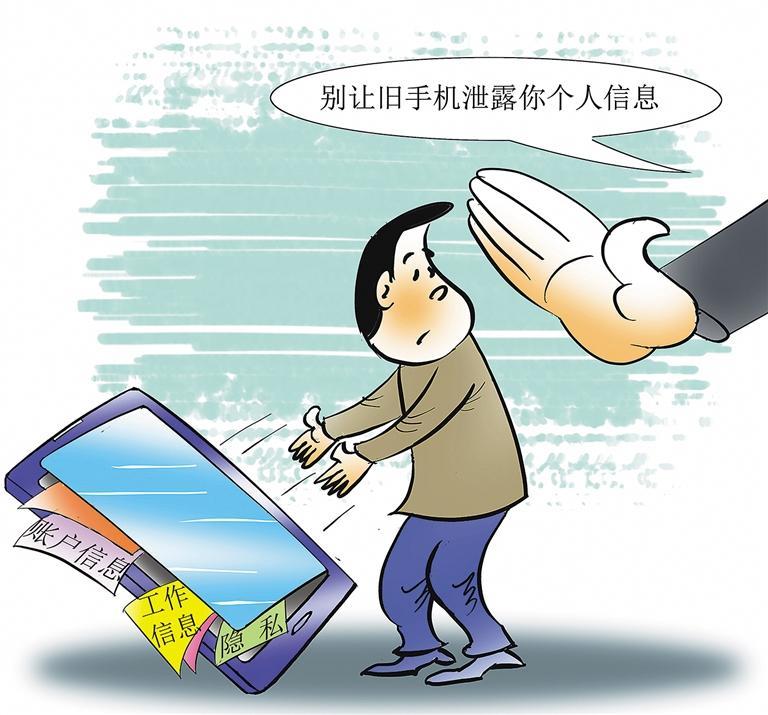
为旧电子产品装上“数据安全锁”
Jing Ji Ri Bao· 2025-12-23 00:03
Group 1 - The core viewpoint of the article is the introduction of the mandatory national standard "Technical Requirements for Data Security - Information Clearing Technology for Electronic Products," which aims to address consumer concerns about data privacy when disposing of old electronic devices [1][2][3] - The new standard will be implemented on January 1, 2027, and it provides clear guidelines on what data to clear, how to clear it, and who is responsible for the clearing process [1][2] - The standard covers all traces of user information generated by electronic devices, specifies scientifically validated methods for data clearing, and mandates that manufacturers provide built-in data clearing functions or free tools for users [1][2] Group 2 - During the 14th Five-Year Plan period, China has an estimated 6 billion idle mobile phones, with only 10% entering the second-hand market due to consumer fears of incomplete data clearing [2] - The implementation of the new standard is expected to alleviate consumer concerns about privacy, thereby promoting resource recycling and allowing dormant electronic products to regain value [2][3] - A 13-month transition period has been established to allow the industry to adapt to the new requirements, ensuring orderly technical upgrades and process development before the standard takes effect [3]
更多旧电子产品有望“变废为宝”
Zhong Guo Jing Ji Wang· 2025-12-19 07:19
Group 1 - The core viewpoint of the news is the introduction of a new national standard for data security in electronic products, which aims to address consumer concerns about data privacy and promote the recycling of old devices [1][2][3] Group 2 - The new national standard, effective from January 1, 2027, provides clear guidelines on what data to clear, how to clear it, and who is responsible for the clearing process [1] - The standard covers all traces of user information generated by electronic devices and specifies scientifically validated methods for data clearing, such as data overwriting and block erasure [1] - It mandates that electronic products must offer built-in data clearing functions or free data clearing tools, and that recycling operators must ensure data is cleared from second-hand electronic products [1] Group 3 - During the 14th Five-Year Plan period, China has 6 billion idle mobile phones, with only 10% entering the second-hand market due to consumer fears of incomplete data clearing [2] - The new standard is expected to alleviate consumer concerns about privacy, thereby encouraging the recycling of old devices and enhancing resource utilization [2] - There is a growing demand for verifiable and traceable data clearing, which may lead to increased R&D efforts by companies and the emergence of specialized data clearing service providers [2] Group 4 - A 13-month transition period has been established to allow industries to adapt to the new standard, ensuring orderly technical upgrades and process improvements before its official implementation [3] - The expectation is that the new standard will strengthen personal information security and facilitate the transformation of old electronic products into valuable resources [3]
家里有废旧手机的要留意,手机店员工透露关键内幕,提醒身边的人
Xin Lang Cai Jing· 2025-12-02 11:22
Core Insights - The article emphasizes the hidden dangers associated with old mobile phones, particularly regarding personal data security and environmental impact. It highlights the importance of proper disposal methods to mitigate these risks. Group 1: Industry Insights - The mobile repair industry may not always provide accurate assessments of old devices, as seen when a repair shop owner falsely claimed a phone was worthless despite it being operational [4] - There is a significant market for recovering data from old phones, with some data being recoverable even after multiple factory resets, which poses a risk to personal information [5] - The environmental impact of discarded mobile phones is alarming, with over 500 million phones being discarded annually in China, and less than 10% being recycled through proper channels [6] Group 2: Data Security Measures - Proper data disposal should involve three steps: encrypting data, deleting it, and physically destroying the device [11] - The use of professional services that provide data destruction certificates is recommended to ensure data security [10] Group 3: Recycling and Repurposing - Companies should consider official recycling programs offered by mobile brands or participate in trade-in events organized by major e-commerce platforms [12] - There are creative ways to repurpose old phones, such as turning them into security cameras or dedicated learning devices for children [13][14]

AI算法察“颜”观“色” 来看旧手机的“重生考核”
Yang Shi Xin Wen· 2025-11-03 07:47
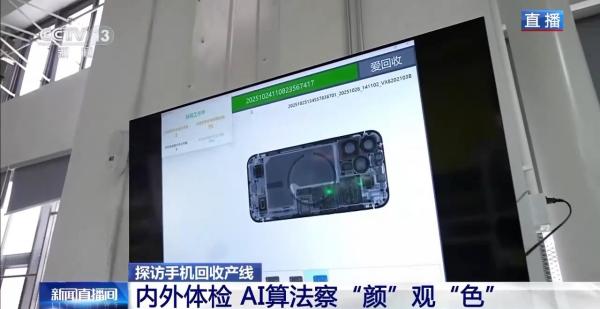
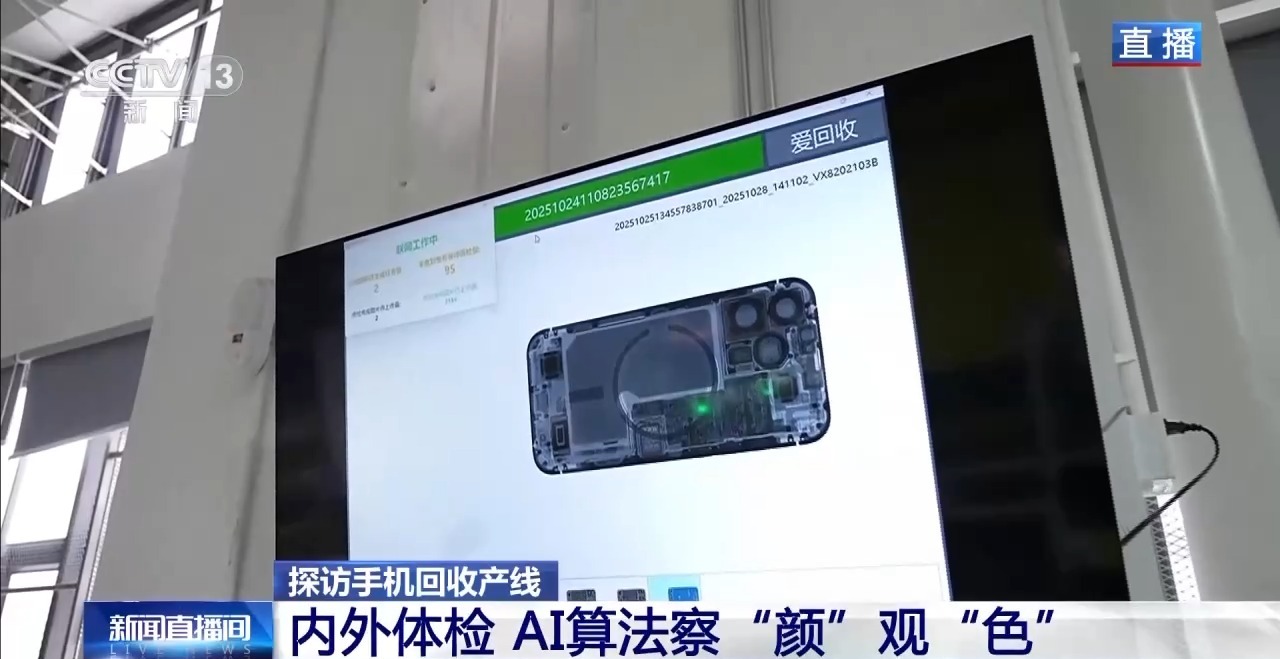
Core Insights - The production of mobile phones in China reached 961 million units in the first eight months of the year, with 758 million being smartphones, reflecting a year-on-year growth of 1% [1] Group 1: Mobile Phone Recycling Process - The automated operation center in Dongguan processes old mobile phones through a 100-meter long automated production line, where each phone is assigned a unique QR code for tracking [1] - The phones undergo X-ray inspection to assess internal components without disassembly, completing the process in just 7 seconds [1] - A 360-degree photo capture system evaluates the phone's exterior condition, achieving a precision of 24 microns and a quality inspection accuracy of over 99.5% [1][3] Group 2: Functionality and Health Assessment - The "function diagnosis room" tests over 70 indicators, including camera functionality, microphone performance, battery health, and charging speed, using robotic arms to simulate human interaction [5] - Each phone receives a comprehensive "health record," allowing for accurate grading based on extensive data, which helps match different quality levels to market demands [5] Group 3: Economic and Environmental Impact - The automation in the recycling process has reduced the comprehensive quality inspection cost per phone by 30% and cut labor costs by 80% [7] - China generates over 400 million old mobile phones annually, and effective recycling can recover valuable resources while preventing electronic waste, contributing to a multi-billion dollar second-hand market [9]
视频丨AI算法察“颜”观“色” 来看旧手机的“重生考核”
Yang Shi Xin Wen Ke Hu Duan· 2025-11-03 06:10
Core Insights - The Ministry of Industry and Information Technology reported that China's mobile phone production reached 961 million units in the first eight months of this year, with 758 million of those being smartphones, reflecting a year-on-year growth of 1% [1] Group 1: Mobile Phone Recycling Process - In an automated operation center in Dongguan, old mobile phones are processed along a 100-meter long automated production line, where each phone is assigned a unique QR code for tracking [3] - The phones undergo an X-ray inspection to assess internal components without disassembly, completing the process in just 7 seconds [5] - A 360-degree photo booth captures 22 images of each phone, which are analyzed by a self-developed quality inspection model, achieving a precision of 24 microns and an accuracy rate of over 99.5% [7] - The "function diagnosis" area tests over 70 indicators, including camera functionality, microphone performance, battery health, and charging speed, creating a comprehensive "health record" for each device [11] Group 2: Economic and Environmental Impact - The automation in the recycling process has reduced the comprehensive quality inspection cost per phone by 30% and cut labor assistance costs by 80% [13] - China generates over 400 million waste mobile phones annually, and improper disposal can lead to resource wastage and electronic pollution. The new standardized detection and grading process not only recovers real value but also supports a billion-level second-hand market [15] - This process exemplifies a closed-loop system of "recycling-detection-grading-reuse," benefiting companies through cost savings and profit generation, while providing consumers with reliable second-hand options and promoting environmental sustainability [15]
中国循环经济协会估算:1吨旧手机可以提取约200克黄金
Ge Long Hui· 2025-10-30 02:42
Core Insights - The China Circular Economy Association estimates that over 400 million old mobile phones are generated annually in China, with approximately 60% of them (around 250 million units) left idle at home, and less than 40% entering the market [1] - Only 5% of the total old mobile phones are processed through formal channels, indicating a significant gap in recycling practices [1] - Concerns over low recycling prices and personal information security are major obstacles to the recycling of old mobile phones [1] - The large number of idle old mobile phones represents an underutilized "resource mine," as each phone contains over 60 types of elemental materials [1] - One ton of old mobile phones can yield about 200 grams of gold and other recyclable materials, with the extracted gold amounting to significantly more than that from an equivalent weight of gold ore [1]
1吨旧手机能提取约200克黄金?你家的闲置手机可以这样处理→
Sou Hu Cai Jing· 2025-10-29 11:21
Core Insights - The production of mobile phones in China reached 961 million units in the first eight months of this year, with 758 million being smartphones, while the stock of old mobile phones is also increasing [1] - The annual generation of waste mobile phones in China exceeds 400 million units, with about 60% of these being kept by consumers and less than 40% entering the market, and only 5% being processed through formal channels [1][2] Group 1: Waste Mobile Phone Statistics - Approximately 250 million old mobile phones are idle at home each year, with only 150 million circulating in the market, leading to an estimated total stock of around 4 billion old mobile phones [3] - The low recovery rate of waste mobile phones is attributed to concerns over recovery prices and personal information security [3] Group 2: Resource Recovery Potential - Old mobile phones are considered a "resource treasure trove," containing over 60 types of elemental materials, with 1 ton of old phones capable of extracting 200 grams of gold and other recyclable materials [5] - The current recovery volume of old mobile phones is insufficient to meet production needs, with only 30% of the dismantling capacity being utilized [5] Group 3: Policy and Market Activation - The "old-for-new" policy is being implemented to stimulate the waste mobile phone recovery market by providing economic incentives for consumers to trade in their old devices [6][7] - Following the implementation of this policy, some platforms have seen mobile phone sales double, and the recovery volume of old phones in physical stores has increased by over 50% [7] Group 4: Technological Upgrades - Concerns regarding data security and the potential resale of recovered phones are being addressed through advanced technologies such as data erasure and full-process traceability [8][9] - Recovery companies are implementing thorough testing and data clearing processes to ensure consumer confidence and prevent refurbished phones from re-entering the market [9]